Edinburgh, 1878. In the respectable New Town, behind the polished doors of 81 George Street, a young wife lies dying in her bed, a broken gas pipe whispering its false story of accident. But the vomit-stained pillow and the empty lemonade glass tell a different tale—one of calculated murder. This is the case that would ignite the career of forensic legend Henry Littlejohn and inspire the creation of Sherlock Holmes.
Elizabeth Chantrelle, born Elizabeth Cullen Dyer, was just seventeen when she married her French teacher, Eugene Chantrelle. What followed was a decade of drunken rages, verbal abuse, and physical violence, witnessed by servants and their own son. By 1877, the family’s finances were crumbling, and Eugene took out a £1,000 insurance policy on Elizabeth’s life—payable only in the event of accidental death.
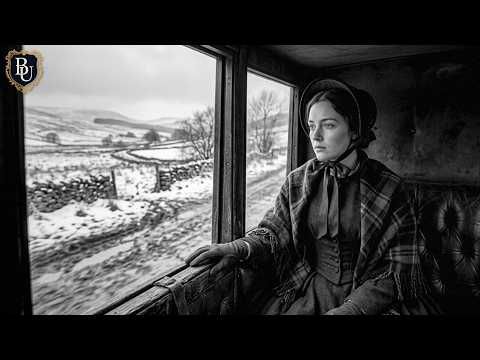
On the morning of January 2, 1878, housemaid Mary Byrne brought tea to her mistress as usual. She found Elizabeth unconscious, vomiting onto the bedding. Byrne left to fetch a doctor, but when she returned, the half-full glass of lemonade was empty, the fruit had vanished, and the room reeked of coal gas. A gas pipe behind the window shutter had been deliberately broken.
“The vomiting was inconsistent with simple asphyxiation,” noted Dr. Henry Littlejohn, Edinburgh’s police surgeon. He rejected the accidental gas leak theory outright. Together with surgeon Joseph Bell, he examined the vomit-stained bedding and found traces of opium. Elizabeth had been drugged—the gas was merely a cover-up.
As investigators dug deeper, the evidence mounted. Eugene had purchased opium days before his wife’s death. The gas pipe showed signs of intentional damage. The insurance policy, with its accidental-death clause, provided a clear motive. And the testimony of Mary Byrne, the couple’s son, and a former servant painted a picture of a violent, controlling man.
Eugene Chantrelle was arrested and charged with murder. His trial, held at the High Court of Justiciary in May 1878, lasted four days. The prosecution’s case rested on forensic science—a novel approach at the time. Littlejohn and Bell’s chemical analysis of the vomit, the damaged gas pipe, and the insurance policy proved damning.
“I have nothing to say,” Chantrelle reportedly muttered when the guilty verdict was announced. He was sentenced to hang.
On May 31, 1878, Eugene Chantrelle stood on the scaffold at Calton Prison. His last words were directed at Henry Littlejohn: “I acknowledge that I owe my conviction to you and Dr. Bell.” The trapdoor opened. The case was closed—but its legacy was only beginning.
Joseph Bell’s meticulous observation and deduction, which helped secure Chantrelle’s conviction, would later inspire one of his students—a young man named Arthur Conan Doyle—to create Sherlock Holmes. And the haunting story of Elizabeth Chantrelle, the woman betrayed by the man who swore to protect her, would echo through the annals of forensic history.
Yet the story of Elizabeth Chantrelle did not end with the drop of the trapdoor. In the decades that followed, her case became a cornerstone of Scottish legal and medical history, cited in textbooks, lectures, and courtrooms as the definitive example of forensic toxicology overturning a staged crime scene. The trial transcript, preserved in full by the High Court of Justiciary, ran to several hundred pages when reprinted for public sale—a rarity in an era when most criminal proceedings survived only as brief newspaper summaries.
Mary Byrne’s testimony, recorded verbatim, remained a model of servant-witness testimony for generations of legal scholars. Her precise account of the empty lemonade glass and the missing fruit—details she repeated without contradiction from her initial precognition to her sworn statement before Lord Moncrieff—demonstrated how careful observation from within a household could dismantle a killer’s alibi.
The chemical methods Littlejohn and Bell employed, while crude by later standards, proved sufficient to isolate opium alkaloids from organic matter. Their work was cited in successive editions of standard forensic medicine texts produced by Edinburgh University faculty well into the twentieth century. The case became a teaching staple: how to detect poisoning when the perpetrator has manufactured a secondary cause of death.
But the most enduring cultural echo came not from the courtroom but from the lecture hall. Joseph Bell’s clinical teaching—his habit of deducing a patient’s occupation, habits, and recent travels from minute physical details before a single question was asked—captivated a young medical student named Arthur Conan Doyle, who served as his outpatient clerk in 1878, the very year of the Chantrelle trial.
Doyle never participated in the investigation. He arrived at Bell’s side only after the case had been solved. Yet in later interviews, he credited Bell’s diagnostic method—applied so devastatingly to Elizabeth Chantrelle’s vomit-stained bedding—as the direct inspiration for Sherlock Holmes’s deductive technique. The connection, though cultural rather than direct, cemented the case’s place in the popular imagination.
As the nineteenth century waned, 81 George Street transformed with the rest of Edinburgh’s New Town. The elegant stone townhouse became commercial premises—banks, offices, retail spaces—its residential past erased by the city’s changing economy. No plaque marked the site. No memorial commemorated Elizabeth. Her story survived only in archives, newspaper columns, and the occasional retrospective by crime historians who returned to the case with fresh eyes.
Legal scholars continued to cite Chantrelle in discussions of circumstantial evidence and the Scottish procurator fiscal system—a system that had moved the case from initial medical suspicion to trial in just four months, without a coroner’s inquest, without a preliminary hearing, but with a chain of precognitions and forensic findings that held firm under cross-examination.
“The Chantrelle case,” one later commentator wrote, “demonstrated that a jury would convict on medical and material evidence alone—no confession, no eyewitness to the act itself—provided the chain of proof was unbroken.”
That principle, established in a Victorian courtroom over four days in May 1878, would shape Scottish criminal jurisprudence for generations. And Elizabeth Cullen Dyer—the teenage student seduced by her French teacher, the battered wife whose death was meant to look like an accident—became, in death, the silent witness whose vomit-stained pillow spoke louder than any living voice.
The gas pipe, the opium, the insurance policy: each element had been designed to deceive. Together, they told the truth. And the men who read that truth—Littlejohn with his chemical tests, Bell with his diagnostic eye—wrote a new chapter in the history of forensic science, one that a young writer named Conan Doyle would carry from the autopsy room into the realm of fiction, where it would live forever.
Yet the full measure of what Littlejohn and Bell accomplished in that January of 1878 becomes clearer when set against the investigative world they inhabited. Scottish policing in the 1870s was still a patchwork of burgh forces and county constabularies, and the notion of a dedicated crime scene—preserved, photographed, catalogued—did not yet exist. Evidence was handled, moved, and sometimes lost. Littlejohn’s insistence that the broken gas pipe be examined before it was repaired, and that the vomit-stained bedding be retained rather than laundered, was itself an act of methodological discipline that few of his contemporaries would have thought to demand.
The room behind the shutter at 81 George Street had been altered between Mary Byrne’s first and second entries—the lemonade glass emptied, the fruit removed. In a modern investigation, this would trigger an immediate forensic sweep. In 1878, it triggered Littlejohn’s suspicion, but the physical traces of whoever had entered the room were never systematically sought. The case was built instead on chemistry, on the pipe’s fracture pattern, and on the testimony of those who had lived inside the household. It was, in that sense, a triumph of deduction over procedure.
Historians of Scottish law have since noted a quieter legacy: the Chantrelle case helped push Edinburgh’s authorities toward the formalization of police surgeon duties, embedding medical expertise more firmly within criminal investigation. Littlejohn himself, in the years after the trial, became an increasingly public figure—his annual reports on the city’s sanitation and mortality, his testimony in later poisoning cases, his lectures to medical students—all bore the imprint of the methods tested in the Chantrelle courtroom.
And what of Eugene Chantrelle’s own account? In the weeks between verdict and execution, he wrote letters protesting his innocence, insisting to the end that Elizabeth had died from the gas. He offered no explanation for the opium. He offered no explanation for the emptied glass. His final statement on the scaffold, acknowledging his debt to Littlejohn and Bell, was as close as he came to an admission—and even that was framed as a grudging tribute to his adversaries rather than a confession of guilt.
The prison records from Calton note only that he remained calm, ate sparingly, and spoke little to the guards. He was visited by a chaplain. He requested no special last meal. The ordinary machinery of Victorian execution ground on without drama, and by the time the black flag rose above the prison wall, the crowd outside numbered fewer than a hundred—a modest turnout for a case that had gripped the city’s newspapers for months. The age of public spectacle at the gallows had passed, and Chantrelle’s death was, in its way, as private as Elizabeth’s had been public in the courtroom.
What remained, after the flag came down, was the record. The precognitions taken in January. The trial transcript sold as a pamphlet. The testimony of a housemaid who noticed a glass that should have been half full and was empty. The chemical residue that no amount of staged gas could explain. These fragments, preserved and reprinted, would outlast every person who had touched them.
In the archive, the case file sits among the papers of the Eastern Circuit High Court—a bundle of handwritten statements, printed transcripts, and official correspondence that researchers can still request, still read, still weigh. Elizabeth Cullen Dyer left no diary, no letters, no portrait that survives in the reviewed records. Her voice reaches us only through the words of others: the servant who found her, the surgeons who examined her, the son who heard the violence through the walls.
But the record speaks. And in the long history of forensic science, few records have spoken more clearly—or more consequentially—than the one assembled in the winter of 1878, in a respectable house on George Street, where a broken gas pipe told a lie that chemistry refused to believe.
In the decades that followed, the case continued to surface in unexpected places. Forensic toxicology textbooks cited it as the first Scottish conviction secured primarily on chemical evidence from a staged scene. Legal historians returned to it whenever they discussed the procurator fiscal’s unique dual role—investigator and prosecutor—that had moved Elizabeth’s death from suspicion to gallows in under five months.
But the most human legacy belonged to neither Littlejohn nor Bell. It belonged to Mary Byrne, the housemaid whose quiet observation of an empty glass and missing fruit helped unravel a murderer’s careful lie. Her testimony, preserved verbatim in the trial transcript, became a teaching example of how domestic servants—often dismissed as invisible—could be the most reliable witnesses of all.
“She noticed what others overlooked,” a later legal scholar observed. “And in doing so, she gave Elizabeth Chantrelle a voice from beyond the grave.”
Today, no plaque marks 81 George Street. The building houses offices, its Victorian residential past long erased. Yet the case endures—in archives, in lectures, in the fictional deductive genius of Sherlock Holmes, and in the quiet principle it established: that a staged crime scene, however clever, cannot survive the scrutiny of careful science.
Elizabeth Cullen Dyer died at twenty-six, betrayed by the man who should have protected her. But her death changed Scottish justice forever. And somewhere, in the annals of forensic history, her story still speaks.
What do you think—was justice truly served in the Chantrelle case, or did the system fail Elizabeth long before that January morning?
Report this article
Select a reason for reporting:






