In the vibrant streets of 1920s Berlin, gay bars thrived and a nascent LGBTQ+ rights movement dared to challenge centuries of prejudice. But beneath the glittering surface, a storm was brewing. The Nazi Party, with its ideology of racial purity and social conformity, saw homosexuality as a threat to the German nation. As Adolf Hitler rose to power in 1933, the freedom that Germany’s gay community had briefly tasted would be violently snatched away, replaced by a reign of terror that would leave thousands dead and countless lives shattered.
The persecution began swiftly. Gay bars and clubs were raided and shut down, their patrons beaten and arrested. Paragraph 175, the archaic law criminalizing homosexual acts between men, was revised and weaponized, turning the police into instruments of state-sponsored homophobia. The Night of the Long Knives in 1934, a purge of Hitler’s political rivals, also claimed the life of Ernst Röhm, a high-ranking Nazi and openly gay man. This event signaled a terrifying shift: homosexuality was no longer just a crime, but a target for elimination.
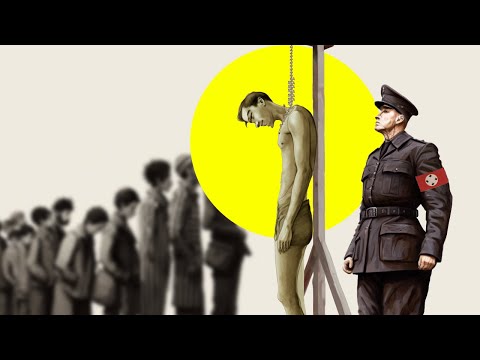
Heinrich Himmler, the architect of the SS and the Gestapo, was a rabid homophobe who saw gay men as a plague that needed to be eradicated. Under his direction, the Reich Central Office for the Combating of Homosexuality and Abortion was established in 1936, leading to a systematic crackdown. Between 1937 and 1939, nearly 95,000 men were arrested for homosexuality—an average of 600 arrests per week. The courts, flooded with cases, handed down harsh sentences, and many were sent to concentration camps.
In the camps, gay men were forced to wear the pink triangle, a symbol that marked them as the lowest of the low. They faced brutal labor, medical experiments, and arbitrary executions. At Sachsenhausen, the entire homosexual population was massacred in 1942. The suffering did not end with the fall of the Nazi regime; Paragraph 175 remained on the books for decades, and survivors were denied recognition and compensation until the 21st century.
This is the story of their courage and their agony—a chapter of history that must never be forgotten.
Yet the full weight of the Nazi war on homosexuality did not fall overnight. In the early years, many gay men in smaller cities like Hamburg or Leipzig clung to a fragile illusion of safety. They kept their heads down, avoided the bustling cafés of Berlin, and convinced themselves that the storm would pass. “If we stay quiet, they will leave us alone,” was the whispered hope in dimly lit apartments and private gatherings. But the regime’s reach only grew longer, and silence offered no sanctuary.
The machinery of persecution was methodical. Himmler’s directives in 1937 demanded that police compile exhaustive lists of suspected homosexuals—a chilling precursor to the surveillance states of later decades. Any change of address had to be registered; known meeting spots were watched around the clock. Neighbors were encouraged to inform on one another, turning ordinary streets into webs of suspicion. For gay men, every knock at the door could mean arrest, every letter a potential trap.
The courts, however, proved an awkward instrument for the Nazis’ ambitions. Paragraph 175 required proof of a physical act, and such evidence was difficult to obtain. Frustrated by legal bottlenecks, some police units resorted to crude and illegal tactics. Entire classes of young men were dragged from schools and workplaces and grilled about their sexual habits. Confessions were extracted through intimidation, and prosecutions proceeded on the flimsiest of pretexts. The rule of law, already crumbling, became a farce.
By 1938, the concentration camps had become the regime’s preferred solution. Homosexuals who had served their prison sentences were often re-arrested and sent directly to camps like Buchenwald, Dachau, and Sachsenhausen. There, the pink triangle marked them for special cruelty. Guards singled them out for the most grueling labor—stone-carrying, trench-digging, and construction details in freezing conditions—designed to break their bodies and spirits.
Survival in the camps depended on forging alliances, yet homophobia among other prisoners made this nearly impossible. Gay men were often shunned even by fellow inmates, who viewed them as pariahs. Isolated and brutalized, many perished within weeks. The SS, meanwhile, devised grotesque “treatments” to cure their victims. At Buchenwald, the Danish doctor Carl Vaernet implanted artificial testosterone glands into gay prisoners, hoping to alter their orientation. Most of his subjects died from the experiments or the infections that followed.
Outside the camps, the Gestapo wielded castration as a weapon of terror. Up to 800 men are estimated to have been mutilated under the guise of medical intervention. These acts were not punishments for crimes but rituals of dehumanization, intended to strip gay men of their dignity and their very identities.
And yet, even in this abyss, flickers of resistance endured. Some prisoners hid scraps of paper and wrote poetry. Others exchanged whispered names of lovers, keeping memory alive when everything else was being erased. Their stories, buried for decades, would eventually emerge to challenge the silence that followed the war.
For when the guns fell silent in 1945, the persecution did not simply end. The Allied occupation authorities, preoccupied with rebuilding a shattered continent, left Paragraph 175 untouched. Gay men who had survived the camps could still be arrested under the same law that had condemned them. Many remained in prison, their suffering unrecognized, their pink triangles quietly discarded but never forgotten.
The war’s end brought no liberation for Germany’s gay community. In the chaos of defeat, many survivors of the camps found themselves re-arrested under Paragraph 175, their suffering dismissed and their identities still criminalized. The Allies, focused on denazification and reconstruction, had little interest in revisiting the fate of the pink triangle prisoners. For them, homosexuality remained a moral failing, not a political persecution.
In the decades that followed, silence became the default. Gay men who had endured the camps rarely spoke of their experiences. Shame, fear, and the continued illegality of their existence kept their stories buried. Even within the emerging gay rights movements of the 1970s, the Nazi persecution was a taboo subject—too painful, too complicated.
The first cracks in this wall of silence appeared in the 1970s, when activists began to reclaim the pink triangle as a symbol of resistance. In 1972, the first memorial to gay victims of the Nazis was unveiled in Dachau, though it was met with hostility and vandalism. It would take another decade for official recognition to begin.
In 1985, West German President Richard von Weizsäcker became the first head of state to acknowledge the Nazi regime’s crimes against homosexuals. His speech marked a turning point, but it was only a beginning. The legal battle continued: Paragraph 175 was not fully repealed until 1994, and it took until 2002 for the German parliament to annul the Nazi-era convictions.
Compensation for survivors was agonizingly slow. It was not until 2017 that the German government formally offered payments to the dwindling number of gay men persecuted under Paragraph 175. By then, most had already died, their stories fading into history.
Yet the legacy of the pink triangle endures. Today, it stands as a reminder of the horrors of intolerance and the resilience of those who survived. Memorials in Berlin, Amsterdam, and beyond ensure that the world never forgets the men who were forced to wear it.
The silence that followed the war was not merely a void—it was a deliberate forgetting. In the 1950s and 60s, gay men who had worn the pink triangle lived double lives, their pasts a secret even from themselves. Some married, hoping to bury their history; others fled to cities where no one knew their names. The trauma festered in the dark, unspoken and untreated.
But history has a way of surfacing. In the 1970s, a new generation of activists, unaware of the pink triangle’s origins, rediscovered it in the archives. They made it their own, transforming a badge of shame into a defiant emblem of pride. The symbol spread from protest marches to pride parades, its meaning inverted by sheer force of will.
Official recognition came in fits and starts. The 1985 speech by President von Weizsäcker was a milestone, but it was not until the 1990s that the German government began to seriously address the injustices of the past. In 1994, Paragraph 175 was finally struck from the books—nearly sixty years after the Nazis had weaponized it. Yet the survivors, by then elderly and few, received little more than apologies.
The 2002 annulment of Nazi-era convictions was a symbolic victory, but compensation remained elusive. It took until 2017 for the German government to offer financial reparations to the remaining survivors. By then, most had passed away, their stories interred with them. The payments, though welcome, felt like too little, too late.
Today, the pink triangle is a global symbol of LGBTQ+ resistance. Memorials from Berlin’s Nollendorfplatz to San Francisco’s Castro District honor the men who suffered under the Nazi regime. Their stories are taught in schools, their names etched into stone. But the fight against discrimination is far from over—in many parts of the world, homosexuality remains criminalized, and the shadow of persecution lingers.
As we remember the victims of the pink triangle, we must also ask ourselves: How many other voices have been silenced by hate, and how many still wait to be heard? The lessons of history are clear, but are we listening?
What will you do to ensure that the horrors of the past are never repeated?
Report this article
Select a reason for reporting:






