The photograph lay on the table, its sepia tones faded but the image sharp enough to pierce through time. Five figures posed stiffly, their faces frozen in that peculiar Victorian solemnity. At first glance, nothing seemed amiss—just another family portrait from an era when photographs were rare and every subject held their breath. But then, the whisper came: One of these people is already dead.
Most viewers, I knew, would study the eyes first—searching for a glint of life, a spark of humanity. Then the hands, perhaps, looking for a telltale twitch. Or the posture, hoping to catch some unnatural stiffness. But they were all looking in the wrong place. The secret wasn’t in the face or the fingers. It was in the chest.
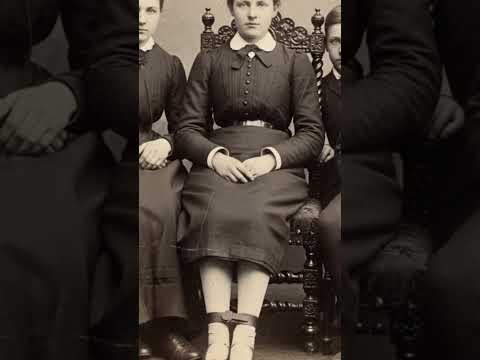
In long Victorian exposures, even the smallest movement could blur the image. Breathing left traces—a slight softness, a subtle shift in fabric. I leaned closer, my breath catching in my throat. Two figures showed faint natural tension in their clothing, a hint of life. But one remained perfectly smooth, perfectly still. The fabric did not move. The body did not rise.
That same figure sat in a high-backed chair, support behind the body, stillness in the chest. The living breathe; the dead do not. A cold certainty settled over me. The photograph was not just a memory—it was a confession.
I had seen this image before, in a dusty album tucked away in my grandmother’s attic. The faces were familiar, the story half-remembered. But now, with the whisper echoing in my mind, the past seemed to shift, revealing a darker truth. Who was the dead one? And why had no one noticed?
The answer, I realized, was waiting in the details—in the chest that never rose, in the fabric that never stirred. The photograph held its secret, and I was determined to uncover it.
I pulled the album closer to the lamp, tilting the photograph until the glare slid away. The figure in the high-backed chair sat slightly apart from the others—a woman in a dark dress, hands folded in her lap, chin lifted as if listening to something beyond the room. Her name, scrawled beneath in faded ink, was Eleanor Ashcombe. My grandmother’s grandmother.
Three days after the photograph was taken, the family records said, she had died of a sudden fever. But the records also said something stranger: the portrait had been commissioned on the morning of her death, and the photographer had refused to speak of it afterward.
I set the album down and went looking for the photographer’s name. It took an hour of squinting at the corner stamp and another hour of searching old trade directories, but at last I found him—Silas Rooke, portraitist, of Harrow Lane, with a single line beneath his listing: Likenesses of the living and the lately departed.
That phrase stayed with me. Likenesses of the living and the lately departed. As though the two were simply different services on the same card.
The next morning I took the photograph to an archivist I knew, a quiet man named Pell who had spent thirty years cataloguing Victorian portraiture. He examined it under a magnifier for a long time without speaking, and when he finally looked up, his face had changed.
“Where did you get this?” he asked, and his voice was careful, the way people speak when they are deciding how much to tell you.
I told him about the attic, the album, the whisper I had read somewhere and could not forget. He nodded slowly, then turned the photograph over and pointed to a faint pencil mark along the bottom edge—so faint I had mistaken it for a scratch.
“That’s not a scratch,” he said. “It’s a date. And beneath it, a time. Eleven o’clock in the morning.” He paused. “The question is whether she was photographed before eleven or after.”
I asked him what difference it made. He set down the magnifier and looked at me the way a teacher looks at a student who has asked the right question by accident.
“Because Silas Rooke was known for one thing above all others,” he said. “He never used a living subject for a death portrait. He used the body.”
The room felt colder. I looked back at the photograph, at Eleanor Ashcombe sitting so still in her high-backed chair, and I understood that the stillness I had found was not a trick of the exposure. It was the truth, preserved in silver and glass, waiting for someone to look in the right place.
Pell closed the folder and slid it back across the table. “If you want to know which of them died first,” he said quietly, “you’ll have to find Rooke’s ledger. Every portrait he took, he recorded—name, date, and whether the subject was breathing when he began.”
The ledger, Pell told me, had last been seen in a private collection in Sussex, sold off decades ago when Rooke’s studio was cleared. The owner was a recluse named Mrs. Harrowby, and she did not receive visitors. But she did answer letters—slowly, in a spidery hand that looked as though it had been written by candlelight.
I wrote to her that same evening. I told her about the photograph, about Eleanor Ashcombe, about the date and the time pencilled on the back. I did not mention the whisper, or the stillness in the chest. Some things are better left for the second letter.
Three weeks passed. Then a package arrived, wrapped in brown paper and tied with string, the postmark smudged beyond reading. Inside was a single page torn from a larger book, the edges ragged, the paper foxed with age. Rooke’s ledger.
The entry was dated the twelfth of October, 1871. The subject’s name was written in a firm, sloping hand: Eleanor Ashcombe, of Ashcombe Hall. And beside it, in the column reserved for the photographer’s notes, two words that made my skin prickle.
Began breathing.
I read it four times before the meaning settled. Began breathing. Not was breathing, as the other entries read. Not ceased. Began.
I turned the page over, hoping for more, but there was only a note in a different hand—Mrs. Harrowby’s, I assumed—pinned to the corner: You asked which of them died first. The answer is none of them. Ask instead who was buried.
That night I could not sleep. I kept thinking of Eleanor in her high-backed chair, chin lifted, listening to something beyond the room. The family records said she had died of a fever three days after the portrait. But Rooke’s ledger said she had begun breathing on the morning the photograph was taken.
Which meant the woman in the chair was not the woman they buried. Or the woman they buried was not the woman who sat for the portrait.
I went back to the album at dawn and studied the other four figures for the first time—truly studied them, the way Pell had taught me. The man standing at Eleanor’s shoulder, one hand resting on the chair back. The two children seated on a low bench. The elderly woman at the far edge, half in shadow.
All of them showed the faint softness of breath in their clothing. All except Eleanor. And yet the ledger said she began breathing.
Unless the breath I was looking for was not hers.
I fetched a stronger lens and bent over the photograph again, and this time I looked not at the chest but at the space around it—the chair back, the folds of the dark dress, the shadow pooled beneath the folded hands. And there, just at the edge of the high-backed chair, I saw it: a second shadow, thin and wavering, cast by something the camera had caught but the family had not.
A wisp of breath, rising from a mouth that was not Eleanor’s.
I pulled back from the lens, my heart hammering. The wisp of breath did not belong to the woman in the chair. It rose from below—from the shadow pooled at her feet, from something crouched there, hidden by the folds of her dress. Someone was beneath the chair.
I thought of Rooke’s ledger, of the two words that had haunted me for weeks. Began breathing. Not Eleanor. The thing beneath the chair. The photographer had recorded the moment life returned—but not to the subject he had posed.
I wrote to Mrs. Harrowby again, this time with a single question: Who was buried? Her reply came faster than the first, as though she had been waiting for me to ask. “No one,” she wrote. “That is the secret of Ashcombe Hall. Eleanor never died. She was hidden—kept beneath the chair, in the dark, where the camera could not see her clearly. The family buried an empty coffin to end the gossip. The woman you see was her twin, who took her place.”
I stared at the photograph again. The chin lifted, listening. The hands folded, patient. Not a corpse—a woman waiting for the sister crouched beneath her to be freed. The living breathe; the dead do not. But the living can also hide, and the dead can be a story told to cover the shame of what was done.
I closed the album and sat in the lamplight a long while, thinking of Eleanor Ashcombe, breathing in the dark beneath her own portrait, while the world above her learned to look at the chest and see only stillness. The photograph had kept its secret for a hundred and fifty years. Now it was mine.
But one thing still troubles me. Mrs. Harrowby’s letter ended with a line I cannot shake: You have found the breath. Now ask yourself why Rooke recorded it at all. And when I turned the ledger page over one last time, I saw what I had missed—a third word, scratched out so violently the paper had torn. Began breathing again.
What do you think Rooke was really recording that morning—a miracle, or a warning?
Report this article
Select a reason for reporting:






