In the predawn darkness of March 3, 1943, a Japanese convoy of sixteen ships—eight destroyers and eight transports—threaded through the waters off northern Papua, carrying thousands of troops toward the embattled coast of New Guinea. The men aboard were the vanguard of the 51st Division, veterans of jungle warfare, and their mission was simple: land, reinforce, and hold. Yet as the first light crept over Cape Ward Hunt, the sky above them filled with the drone of Allied aircraft. What followed would become one of the most devastating aerial attacks in the Pacific War—a battle that would leave every single transport at the bottom of the sea.
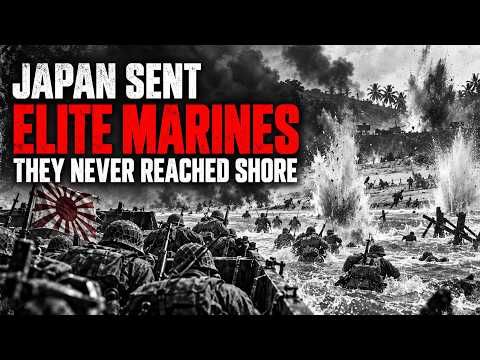
The convoy’s commander, Rear Admiral Masatomi Kimura, knew the danger. His destroyers formed a protective ring, their anti-aircraft guns trained skyward. Japanese fighters from nearby bases were supposed to provide cover, but the weather had other plans. Storms and low clouds had shielded the ships for days, but now the skies were clearing. And the Allies had been waiting.
For weeks, American and Australian air forces had rehearsed a new kind of attack—one that would send bombers in at mast-height, their forward guns blazing, to suppress the enemy’s defenses while bombs tore into the hulls below. The modified B-25 Mitchells of the 90th Bombardment Squadron were the centerpiece of this plan. “We were going in low, so low you could see the faces on the deck,” one pilot later recalled. “The guns were firing, the ship was firing back, and you just held your course.”
The first wave struck just after 10 a.m. Australian Beaufighters swept across the convoy, their cannons and machine guns raking bridges and gun positions. Above them, B-17 Flying Fortresses dropped heavy bombs, forcing the ships to maneuver wildly. Then came the B-25s, twelve of them, breaking formation to select individual targets. “The whole sea seemed to explode,” a Japanese survivor remembered. “Ships were burning, men were in the water, and the planes kept coming.”
Within minutes, the transport *Kyokusei Maru* was hit and sinking. Destroyers rushed to rescue survivors, but the attack was far from over. The convoy’s formation was shattered. The flagship *Shirayuki* took a direct hit, forcing Kimura to transfer his flag. The destroyer *Arashio* collided with the damaged *Nojima*, and both vessels were left crippled. By noon, the surviving ships were scattered, each fighting its own desperate battle.
The afternoon brought no respite. Despite worsening weather that grounded some Allied aircraft, fresh strikes pounded the remaining transports. American PT boats, alerted to the convoy’s position, moved in for the kill. By nightfall, the *Oigawa Maru* was torpedoed and sunk. When the sun rose on March 4, the sea was littered with debris, oil slicks, and the wreckage of what had once been a formidable reinforcement fleet. All eight transports and four destroyers had been lost.
Yet the story does not end with the sinking ships. For the men who survived—thousands of them—the ordeal was only beginning. Rescue operations would continue for days, and the battle’s aftermath would reveal as much about the nature of the Pacific War as the attack itself. The Battle of the Bismarck Sea was a decisive Allied victory, but it was also a human tragedy on an immense scale, one that would shape the course of the New Guinea campaign and the lives of every man who lived through it.
The men in the water did not know whether the aircraft would return. Many clung to rafts, wreckage, or each other as the surviving destroyers maneuvered through the debris field. “We could hear the engines before we could see them,” one rescued sailor recalled. “Everyone looked up. Some prayed. Some just waited.”
The rescue effort was improvised and dangerous. Destroyers like the *Shikinami* and *Uranami* moved slowly through oil-slicked water, lowering ropes and nets while lookouts scanned the sky. Every stop made them vulnerable. Japanese commanders knew that Allied aircraft were still searching the area, and that a stationary destroyer was an easy target.
For the Allies, the question was whether to attack the rescuers. Some crews received orders to strafe survivors and small craft. The official histories record the discomfort this caused. “We were told to prevent reinforcement,” one pilot later said. “But shooting at men in the water—that was something else.” The distinction between destroying a convoy and killing its survivors would trouble those who carried it out.
Meanwhile, the Japanese high command faced a harder truth. The convoy had been intended to deliver combat power, not merely men. The transports carried artillery, ammunition, vehicles, and communications equipment—the material that turned a collection of soldiers into a fighting formation. Most of that cargo now lay on the seabed. The survivors who reached Rabaul or Lae arrived without their weapons, without their supplies, and without the cohesion of a planned deployment.
The implications for the ground campaign were immediate. Japanese forces around Lae and Salamaua had counted on the 51st Division to strengthen their positions. Instead, they received a fraction of the men, stripped of the equipment that made them effective. “We had soldiers,” a Japanese staff officer later admitted, “but we did not have an army.”
The Allies, by contrast, drew a different lesson. The battle had proven that land-based air power could destroy a defended convoy and alter the course of a land campaign without a single warship engaging the enemy fleet. The modified B-25s, the coordinated strikes, and the relentless reconnaissance had worked together in a way that no single element could have achieved alone.
Yet the victory was not complete. Japanese forces remained in New Guinea. Lae would not fall for months. The battle had bought time, destroyed a reinforcement, and demonstrated a method—but it had not ended the war in the Southwest Pacific. The men who had survived the sinking would fight again, and the aircraft that had broken the convoy would fly more missions.
In the days that followed, intelligence officers pored over photographs and crew reports, trying to establish what had actually been destroyed. The wartime claims were extravagant—twenty-two ships sunk, including cruisers that had never been there. Postwar analysis would reduce the total to twelve. “The fog of war is not an excuse,” one historian later wrote. “It is a reminder that even victory must be examined.”
For the men who had flown the missions, the memory of that morning remained vivid. The sea burning, the ships turning, the guns firing back. Some would describe it as the most intense thirty minutes of their lives. Others would speak of the silence afterward, when the aircraft turned for home and the ocean below was littered with the wreckage of a defeated fleet.
The Battle of the Bismarck Sea did not end the campaign in New Guinea. It did something more specific: it proved that a convoy could be stopped, that a reinforcement could be prevented, and that air power could shape a land battle before the first soldier set foot on shore. The Japanese would try again—by barge, by submarine, by coastal routes—but they would never again send eight transports directly into the same waters.
The eight sunken hulls became a warning. For the Allies, they became a template. And for the men who survived, bobbing in the oil and the debris, they became a memory that would never fade.
The rescue continued through the night and into the following day, a grim arithmetic of ropes and fuel limits. The destroyer *Hatsuyuki* arrived from Kavieng to assist, and the official reconstruction describes a rendezvous where about 1,400 men were transferred to *Hatsuyuki* and *Uranami* for the return toward Rabaul. Other escorts went back toward the battle area, picking up more survivors. Japanese submarines would add roughly 275 more, though the surviving figures never reconciled cleanly.
What could not be rescued was the cargo. Heavy equipment, ammunition, vehicles, and stores had gone down with the hulls or remained sealed inside damaged compartments. “A soldier rescued from a sinking vessel might live without arriving at the intended battlefield,” the official account notes, and that distinction mattered more than any count of survivors. The men who reached Lae arrived stripped of the material that made them a formation.
The Japanese response on the ground was immediate and improvised. Large transports could no longer be treated as a dependable means of direct delivery to Lae. Greater reliance fell on barges, submarines, aircraft, and indirect coastal routes—methods that could sustain some movement but could never reproduce the capacity of eight loaded ships arriving together. A submarine had limited cargo space. Barges depended on short runs, concealment, and favorable weather. Men landed farther away still had to reach the front over difficult country.
Allied intelligence officers, meanwhile, faced their own accounting problem. The wartime claims of March 7 announced twenty-two ships destroyed, including cruisers. There had been no cruisers in the convoy. Large destroyers had been mistaken for them, and sightings from different attacks had been combined into a force larger than the one that sailed. “An aircraft might report a ship burning,” the official history explains. “Another reported sinking, and a later formation encountered the same vessel still afloat.”
Destroyers detached and returned. Rescue vessels appeared where none had been before. Smoke, weather, and the brevity of observation made matching every report to an individual hull nearly impossible. In 1943, the Army Air Force’s historical office examined the available reports and captured documents. The material established an original convoy of sixteen vessels and did not substantiate the additional ships assumed in the larger claim. Postwar Japanese evidence strengthened the smaller documented total.
The correction did not diminish the defeat. Eight transport and supply ships had sailed to deliver a force. All eight were lost. Invading additional vessels was unnecessary to explain a result that had already destroyed the movement’s entire carrying group. Aircraft claims required the same discipline. Allied crews reported fifty to sixty Japanese aircraft destroyed across the action—wartime claims, not a verified inventory of that many separate losses.
For the men who had flown the missions, the memory of that morning remained vivid. The sea burning, the ships turning, the guns firing back. Some would describe it as the most intense thirty minutes of their lives. Others would speak of the silence afterward, when the aircraft turned for home and the ocean below was littered with the wreckage of a defeated fleet. The Battle of the Bismarck Sea did not end the campaign in New Guinea. It did something more specific.
It proved that a convoy could be stopped before it ever became an army. The Japanese would try again—by barge, by submarine, by coastal routes—but they would never again send eight transports directly into those waters. The eight sunken hulls became a warning to one side and a template to the other.
For the men who survived, bobbing in the oil and debris, the memory never faded. “We had soldiers,” the staff officer had admitted, “but we did not have an army.” That sentence outlived the ships.
Years later, historians would still argue over the numbers—twelve ships or twenty-two, fifty aircraft or fewer—but the central fact remained fixed: every transport that sailed for Lae that March lay on the bottom, and the reinforcement it carried never arrived as planned.
So the question lingers, unanswered by any ledger: when a victory is built on machines and mathematics, what do we owe the men in the water?
Report this article
Select a reason for reporting:






