Hollywood has always sold us dreams, but behind the glitz and glamour, some of cinema’s most beloved classics left a trail of broken lives and haunted headlines. What if the films you adore actually cursed their stars with scandal, tragedy, or worse? Is the price of fame ever truly worth it? Or are some movies doomed from the first clapboard? Today, we’re diving into 15 classic films that left their biggest stars with scars they’d never escape. Ready to question everything you thought you knew about Hollywood legends?
From the outside, Rebel Without a Cause was the ultimate badge of youth rebellion. James Dean in that red jacket, smoldering with the angst and charisma of a generation hungry for change. But what nobody expected was just how closely Dean’s fate would mirror his doomed character.
Filming wrapped in September 1955. Weeks later, Dean’s Porsche Spyder collided with another car on a lonely California highway, killing him instantly at 24. The movie’s release turned into a national wake. Fans poured into theaters to watch a ghost. James Dean had become a martyr before he’d even become a true superstar.
The ripples didn’t stop with Dean. Co-star Sal Mineo was later murdered in a random stabbing. And Natalie Wood, another teen icon of the film, would drown under mysterious circumstances decades later. Suddenly, “Live fast, die young” wasn’t just a movie tagline. It felt like prophecy.
The tragedy cemented the film’s place in pop culture, but it also cast a shadow that would follow every actor attached to it. For Hollywood, Rebel Without a Cause wasn’t just a hit. It was a premonition, and nobody who watched it ever saw teenage rebellion the same way again.
Was it all coincidence, or did the reckless spirit of the film bleed into real life? Either way, Rebel Without a Cause left a body count and a legend no one could ever outrun.
Big, beautiful, and catastrophic, Cleopatra is the classic Hollywood disaster that ate a studio alive and nearly did the same to its stars. Elizabeth Taylor was the highest-paid actress in the world, and 20th Century Fox staked everything on her Cleopatra. Instead, the set turned into a circus of cost overruns, health emergencies, and scandal headlines that would have made the tabloid gods blush.
The pressure cooker boiled over when Taylor and co-star Richard Burton began a passionate, very public affair. Both were married to other people, and the press feasted on every illicit kiss. The Vatican called their romance “erotic vagrancy.” Taylor nearly died from pneumonia during filming, requiring a tracheotomy that left a scar. Burton’s marriage crumbled. Taylor’s reputation took a beating, and Fox teetered on the brink of bankruptcy as the budget ballooned past $30 million—a monstrous sum at the time.
The backlash was seismic. Taylor was branded a homewrecker and hounded by paparazzi around the globe. The pair’s on-again, off-again marriage became tabloid fodder for a decade. The film itself, while visually stunning, couldn’t outrun its behind-the-scenes infamy and became shorthand for Hollywood excess.
For Taylor and Burton, Cleopatra delivered fortune and fame, but at a staggering personal cost. What started as a silver screen romance nearly ruined them, proving sometimes the biggest disasters aren’t on the set, but in the hearts and headlines of the stars themselves.
You want a real Hollywood tragedy? Look no further than The Misfits. The film that looked like a last hurrah, but played out as a slow-motion car crash for everyone involved. This was the final completed film for both Marilyn Monroe and Clark Gable. And it’s almost eerie how the story’s themes—loneliness, regret, and fading dreams—mirrored the lives of its doomed cast.
By the time cameras rolled in the sweltering Nevada desert, Monroe’s marriage to playwright Arthur Miller was dissolving in front of the entire crew. She was frequently late or absent, heavily medicated, and visibly struggling with mental health issues. Clark Gable, the once-unbreakable king of Hollywood, insisted on doing his own dangerous stunts in an effort to prove he still had it. That decision would prove fatal.
Just days after shooting wrapped, Gable suffered a massive heart attack and died, with many blaming the physical demands of the film. Montgomery Clift, already notorious for his own demons, appeared gaunt and haunted, carrying the scars inside and out from his near-fatal car crash five years earlier. The atmosphere was heavy with gossip columnists circling like vultures, and the set itself became a microcosm of Hollywood’s cruelty.
When The Misfits premiered, audiences were stunned by its raw, unvarnished tone. But the true heartbreak played out offscreen. Monroe’s spiraling health and career never recovered, and she died of a drug overdose a year later. Clift’s decline only accelerated. If there was ever a film that felt cursed by fate, it’s this one.
In the end, The Misfits didn’t just mark the end of an era. It wrote the final tragic chapter for three of its brightest stars.
You can’t talk about classic cinema without mentioning The Wizard of Oz. But behind the Technicolor magic was a personal hell for its teenage star, Judy Garland. This wasn’t just a demanding film shoot. It was the starting line for a lifetime of exploitation, addiction, and heartbreak.
Studio execs were obsessed with preserving Judy’s girl-next-door image, which meant draconian control over her appearance. Garland was forced onto a strict diet, reportedly living on little more than coffee, chicken soup, and amphetamines to keep her thin. Studio doctors prescribed pills to help her sleep and pills to keep her awake, creating a dependency that would haunt her for the rest of her short, turbulent life.
The horrors didn’t end there. Garland endured long hours under hot studio lights, abusive treatment from some of the crew, and the constant threat of being replaced if she didn’t measure up. The psychological scars were deep. Friends and co-stars would later say Judy never escaped the insecurity and anxiety that Oz had carved into her psyche.
While The Wizard of Oz became a beloved classic, its making set off a tragic domino effect. Judy’s struggles with addiction, her series of failed marriages, and her untimely death at just 47 all have roots in this supposedly wholesome production. Behind the yellow brick road was a factory that chewed up and spat out its biggest star. Hollywood magic—sometimes it’s just smoke and mirrors hiding a much darker reality.
Some movies just feel cursed, and Poltergeist has haunted that territory ever since its release. Onscreen, it’s a supernatural thrill ride, but offscreen, the tragedy that stalked its stars is the stuff of Hollywood nightmares.
Heather O’Rourke, the cherubic face of the franchise, was just six years old when she became America’s haunted sweetheart. But the Poltergeist curse reared its head with terrifying speed. Dominique Dunne, who played her older sister, was murdered by her ex-boyfriend just months after the first film premiered. The story was splashed across headlines, and the shadow only grew darker as the sequels moved forward.
O’Rourke herself suffered a series of unexplained health issues during filming. During production of the third movie, she fell gravely ill and died unexpectedly at the age of 12 from septic shock. Hollywood tabloids exploded with talk of curses, haunted sets, and real skeletons being used as props—urban legends fueled by genuine loss and confusion.
Behind all the speculation, what’s undeniable is that Poltergeist left a legacy far scarier than its script intended. For the families of Dunne and O’Rourke, the franchise’s runaway success was just another gut punch. Proof that sometimes Hollywood’s scariest stories play out long after the credits roll. Coincidence or curse? Either way, the real horror was never on the screen.
If you think horror only happens on screen, Rosemary’s Baby begs to differ. Roman Polanski’s supernatural thriller wasn’t just a turning point for horror. It became a turning point for everyone involved, especially Mia Farrow. Imagine stepping into a role that demands you play a woman gaslit and terrorized at every turn while your real life collapses in parallel. That’s the price Mia Farrow paid.
She arrived on set already walking a tightrope. Her marriage to Frank Sinatra was hanging by a thread, and the pressure of starring in a boundary-pushing film didn’t help. Sinatra delivered the final blow in the most Hollywood way possible—by serving her divorce papers on set. But that’s not where the film’s shadow stopped.
The movie’s runaway success catapulted Farrow to new heights but left her emotionally gutted. And the Polanski connection would turn even darker. Just as the film was drawing crowds, Polanski’s pregnant wife, actress Sharon Tate, was brutally murdered by the Manson family. The media couldn’t resist the connections between satanic horror and real-life evil. Suddenly, Rosemary’s Baby wasn’t just fiction. It was part of a chilling Hollywood narrative that seemed to be writing itself in blood and loss.
Farrow became a haunted figure, admired for her performance but forever marked by personal disaster. The film’s off-screen carnage left many believing some sets really are cursed. Rosemary’s Baby may have scared millions, but for Mia Farrow and those around her, the nightmares were achingly real.
You’d expect a movie about supernatural disasters to come with its own share of chills. But Twilight Zone: The Movie turned fiction into unthinkable tragedy, changing Hollywood safety standards forever. Vic Morrow, a respected character actor making a late-career comeback, was cast as a bitter bigot forced to confront the ugly consequences of hate. But no one could predict how real the danger would become.
During a nighttime shoot for director John Landis’ segment, Morrow and two young child actors, Myca Dinh Le and Renee Shin-Yi Chen, were filming a scene involving low-flying helicopters and explosive pyrotechnics. What happened next was pure nightmare fuel. The chopper was brought down by the blast, killing all three instantly. The accident, captured on film, was so shocking that it triggered a firestorm of lawsuits, criminal trials, and soul-searching throughout the industry.
Landis and other crew members faced charges of involuntary manslaughter, and the subsequent court case revealed a pattern of recklessness—child actors working without permits, stunts being rushed, and safety protocols being ignored. The fallout was nuclear. New regulations transformed how movies were made, with stricter child labor laws and a much sharper focus on onset safety.
The story of Twilight Zone: The Movie has become a cautionary tale whispered on soundstages ever since. For Vic Morrow, it was supposed to be a professional comeback. Instead, it became a horrifying legacy—a grim reminder that some film disasters leave marks no amount of movie magic can erase.
In the pantheon of Hollywood bad ideas, The Conqueror is a disaster of mythic proportions. You’ve got John Wayne, America’s favorite cowboy, cast as Genghis Khan, and a production that insisted on shooting in the Utah desert downwind from recent nuclear bomb tests. What could go wrong? As it turns out, everything.
The cast and crew spent months filming in radioactive fallout zones, with the US government assuring them there was no danger. John Wayne, Susan Hayward, director Dick Powell, and nearly a hundred others worked, camped, and even took home dirt as souvenirs. Within a few years, a staggering number—by some counts, over 90—would develop cancer. Wayne and Hayward both succumbed, as did Powell and co-star Agnes Moorehead.
Statistically, the cancer rate among cast and crew was astronomical. Hollywood gossip called it “the film that killed John Wayne.” The studio denied responsibility, but the evidence was impossible to ignore. The movie itself was a flop, universally mocked for its casting and toned-deaf script, but its real infamy comes from the suffering that followed.
In the end, The Conqueror became a dark cautionary tale about the price of ignorance, arrogance, and trusting the wrong experts. When a film’s legacy is measured in funerals rather than box office, you know you’re dealing with a true Hollywood disaster—one written not by screenwriters, but by fate and fallout.
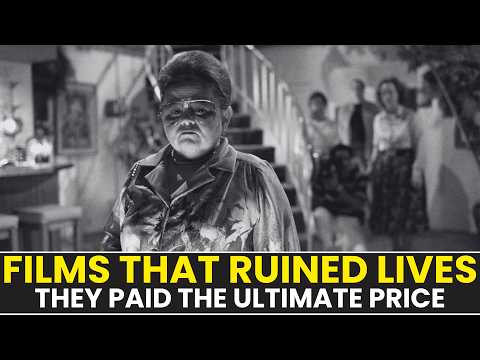
And then there’s Whatever Happened to Baby Jane?—where the on-screen horror was nothing compared to the off-screen war between Bette Davis and Joan Crawford. Davis installed a Coca-Cola machine just to annoy Crawford, the face of Pepsi. When a scene called for Davis to rough up Crawford, the blows were a little too real. Crawford loaded her pockets with weights so Davis would strain herself dragging her across the room.
The film was a hit, but it branded both women as monsters and has-beens, poisoning any chance at career revival. Their mutual bitterness became Hollywood lore. Sometimes the real horror isn’t on the screen—it’s in the makeup chair next to you.
These 15 films prove that Hollywood’s greatest classics often came at a devastating price. Which of these behind-the-scenes stories shocked you the most? Or did we miss a legendary calamity that should have made the list? Drop your thoughts in the comments below!
Report this article
Select a reason for reporting:






