Leaning back in the plush first-class carriage, Lieutenant Colonel Arno von Lenský watched the autumn landscape blur past, the thought of partisans never crossing his mind. He was heading home to Berlin—four carefree weeks with his wife and daughter. The train hummed with the chatter of young officers on leave, their laughter filling the compartment as they swapped stories of theaters, cinemas, and girlfriends. Not a word about the war. For a fleeting moment, von Lenský allowed himself to believe he had left the Eastern Front behind.
But the illusion shattered when a blonde second lieutenant, fresh from France, declared with naive confidence: “Paulus is certainly an outstanding Army Commander. He has already given the Russians a beating. Soon he will be chasing the last of them into the Volga.” The young man’s eyes sparkled with conviction, fed by newspapers and newsreels that painted a glorious picture of the campaign. Von Lenský’s jaw tightened. He had seen the bloody fighting in the city on the Volga—the shattered buildings, the endless stream of wounded, the despair that clung to every soldier.
With a few terse sentences, he described the reality. The cheerful atmosphere evaporated. “I had really believed that the Russians were finished,” the second lieutenant stammered, his face paling. Another officer admitted, “Apparently we are getting a quite false representation of the fighting in the east.” Von Lenský felt a pang of regret; he had not wanted to extinguish their joy, but the truth was a heavy burden. The conversation shifted to fallen comrades and heavy fighting, the laughter replaced by strained silence.
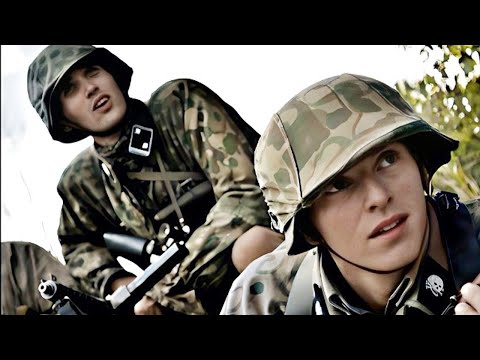
At Frankfurt’s main station, they parted with strong handshakes. Von Lenský had over two hours before his connection to Kronberg, so he wandered through the city he once knew. The bustling streets of his student days had changed. Field-gray uniforms dominated the crowds, and amputees hobbled on crutches—a stark reminder of the war’s toll. He paused before a shop window, recalling his youth at the university, when the name Stalingrad meant nothing to him.
On the train to Kronberg, he found an almost empty second-class carriage, save for a young officer by the window. To his surprise, it was the same second lieutenant from the station. The young man introduced himself, and they discovered a mutual friend—Second Lieutenant Vols, who had fallen in the western campaign. “I shared the same year of birth,” the lieutenant said quietly, and von Lenský looked away, the mention of his own son Heinz, also fallen in France, cutting deep.
They drove together to Falkenstein, the officer’s rest home nestled in the Taunus Mountains. The golden autumn sun dipped toward the horizon, and von Lenský breathed in the aromatic mountain air—homeland air, so different from the acrid smoke of Stalingrad. At the rest home, they were greeted by the chief doctor, and von Lenský was shown to a bright, tastefully furnished room. He stepped onto the balcony, where a heavenly peace reigned over the woods. He could hardly grasp that such beauty could exist when, 2,500 kilometers to the east, men were being torn and mutilated every second.
Days at Falkenstein passed in a blur of woodland walks and quiet afternoons. Yet the shadow of Stalingrad lingered. Every day, von Lenský waited tensely for the Wehrmacht report, hoping for news that the city was entirely in German hands. It never came. “He will soon do it, then hopefully the war will soon be over,” an old farmer said with confidence, but von Lenský knew better. A greeting card from Paulus offered no comfort: “Everything still just as when you left.”
His wife and daughter visited, bringing joy tinged with sorrow—his mother-in-law was dying, and he could not see her one last time. Together with the two young officers, they took a trip to Frankfurt. In civilian clothes, they blended into the crowd, but the city’s atmosphere was tense. Brown and black uniforms were everywhere, and “a critical word spoken aloud can result in an immediate arrest,” his wife whispered. At a restaurant, they overheard a woman weeping over a letter from Stalingrad—her son was still alive, but the uncertainty was unbearable.
At the cinema, the newsreel showed German troops storming forward as if on exercise, and the audience—many of them wounded soldiers—erupted in whistles and calls of “Swindle!” The severity of the fighting was concealed, and the protest grew until the security service dragged someone out. A deathly silence followed, and von Lenský left the cinema with a heavy heart.
When his cure ended, he returned to Stalingrad, the familiar dread settling in his chest. His deputy filled him in: the staff had changed, and the fighting had only worsened. “We had hardly moved forward in the city, and there was no end to the punishing fighting in sight,” Major General Schmidt admitted. Paulus himself looked tired, the nervous twitch in his face more pronounced. “The Army High command ignored our warnings about the north flank,” he said bitterly. Soviet troops were massing, and he had nothing to confront the deadly danger. The divisions were bleeding in Stalingrad, and the end was nowhere in sight.
Von Lenský returned to his desk that evening, the papers stacked high and the situation map marked with red arrows that seemed to mock every promise of victory. His orderly brought a pot of ersatz coffee, and for a long while he simply stared at the reports without reading them. The words of the young second lieutenant on the train echoed in his mind—“Soon he will be chasing the last of them into the Volga.” How distant that confidence felt now, here in the gloom of Golubinskaya, where the wind carried the smell of burning and the distant rumble of guns never ceased.
The next morning, Paulus summoned him again. The general stood by the window, his back to the room, and for a moment von Lenský thought he had not been heard. Then Paulus turned, and his eyes were those of a man who had not slept. “Adam, I want you to understand something,” he said quietly. “The Führer has ordered that Stalingrad be taken before the winter. Every day I receive messages demanding progress. But I look at the map, and I see only our own destruction being drawn around us.”
He gestured to the northern sector, where the Don bend curved like a scythe. “The Romanian Third Army holds that flank. They are brave men, but they have no anti-tank guns, no reserves. If the Russians strike there—and they will strike there—the whole front will collapse.” Von Lenský felt a cold knot tighten in his stomach. He had seen the Romanians on the march, their columns thin and poorly equipped, and had wondered then how they could possibly hold such a vast stretch of steppe.
That afternoon, von Lenský walked the perimeter of the airfield, watching the transport planes lumber in with supplies and stagger out again with the wounded. A young pilot, his face smeared with oil, told him they were losing aircraft faster than they could be replaced. “The Russians know we are flying in everything by air,” he said. “They are moving their fighters closer every day.” Von Lenský nodded, saying nothing. He had heard the same from the quartermaster: fuel, ammunition, food—all of it came through the air now, and all of it was never quite enough.
Back at headquarters, he found Lieutenant Zimmerman waiting with a sheaf of signals. One of them had come from the 376th Infantry Division, reporting increased Soviet reconnaissance activity along the Don. Another, from the 44th, spoke of enemy columns moving west under cover of darkness. “It is as the general feared,” Zimmerman said, his voice low. “They are massing for something.” Von Lenský read the reports twice, then set them down and rubbed his eyes. The pattern was unmistakable, and yet no reinforcements were coming. The divisions in the city were still being ordered to attack, to take the last few hundred meters of rubble, to push the enemy into the river.
That evening, he dined alone in the officers’ mess, the room nearly empty. Outside, the first snow of the season began to fall, light and silent, dusting the steppe with white. Von Lenský watched it through the window and thought of Falkenstein, of the autumn flowers in the garden and the peace of the woods. He thought of his wife’s tears at the station, of the words she had spoken: “What sorrow and distrust this unholy work has already brought us, and still no end in sight.” The snow fell harder, and he knew, with a certainty that settled into his bones, that the winter would be long and terrible.
The next day brought a new visitor to headquarters—a colonel from the army group staff, sent to review the situation. He was brisk and confident, speaking of the Führer’s faith in the Sixth Army and of the coming victory. Von Lenský listened in silence, and when the colonel asked for his assessment of the north flank, he hesitated. “The flank is weak,” he said at last. “The Romanians are stretched thin, and we have no reserves.” The colonel waved a dismissive hand. “The Russians are finished. They have nothing left to throw at us.” Von Lenský said nothing more. He had learned that some truths could not be spoken aloud, not even here.
When the colonel had gone, Paulus called von Lenský into his office and closed the door. “You spoke honestly,” he said. “I am grateful for that. But you must be careful. There are those who report every word to Berlin.” He paused, and the twitch in his face returned. “I have requested permission to withdraw the Sixth Army to a defensive line on the Don. The request was refused. We are to hold Stalingrad at all costs.” Von Lenský met his gaze, and for a moment neither man spoke. The snow continued to fall outside, blanketing the steppe in silence.
Paulus turned back to the window, his hands clasped behind him. “At all costs,” he repeated, the words hollow. “You know what that means, Adam. It means we stay until the last man, until the last round of ammunition.” Von Lenský felt the weight of the order settle over him like the snow outside, cold and inescapable.
That night he wrote a letter to his wife, the words coming slowly. He told her of the snow, of the quiet, of the men who still believed. He did not tell her of the Don flank, of the Romanian divisions without anti-tank guns, of the Soviet columns massing in the dark. “I will write again soon,” he ended, and sealed the envelope before he could change his mind.
November came, and with it the cold that gnawed at fingers and froze the oil in the guns. On the morning of the nineteenth, von Lenský was at his desk when Zimmerman burst in, his face white. “Colonel—the Russians have broken through the Romanian Third Army. North and south of Stalingrad. The flanks have collapsed.” Von Lenský rose slowly, the reports in his hand trembling.
He found Paulus at the situation map, staring at the red arrows that now curved behind them like a closing jaw. “They have encircled us,” Paulus said, his voice barely a whisper. “The Sixth Army is trapped.” Von Lenský looked at the map, at the thin blue lines that marked their own positions, and understood at last that the winter he had feared had come for them all.
Outside, the wind howled across the steppe, and the first distant thunder of Soviet tanks rolled toward the city. Von Lenský buttoned his coat and stepped into the cold, the question burning in his mind: how many of them would ever see home again?
Report this article
Select a reason for reporting:






