She was the highest-paid star in Hollywood, a vision of sophistication with her trademark bangs and impeccable cheekbones. Yet behind the dazzling smile, Claudette Colbert was a bundle of insecurities and contradictions that made her one of the most difficult actresses to work with. She refused to show the right side of her face to the camera entirely—a quirk that became legendary on set. But that was just the beginning of the nightmare.
Colbert never wanted to be a movie star. A stage actress at heart, she was lured to Hollywood when talkies created a demand for voices. Her first film experience was so awful she swore never to do it again. “I only stayed because I was locked in a contract,” she later admitted. That reluctance festered into a formidable technique—and a reputation for tantrums.
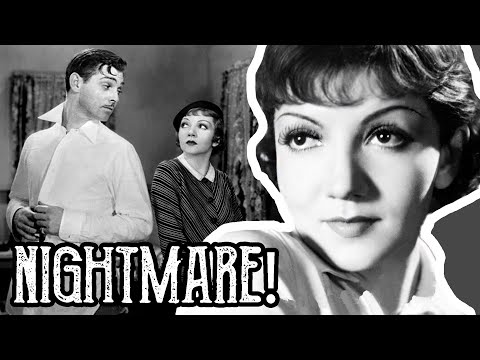
Her most famous film, It Happened One Night, was a battlefield. Director Frank Capra recalled her “many little tantrums,” mostly motivated by her antipathy toward him. She was his last choice after seven other starlets turned him down. She only accepted because Capra promised to double her salary and finish in four weeks. She disliked the film so much she didn’t even attend the Oscars when she won Best Actress—she was found about to leave on a trip and rushed to the ceremony in a travelling suit.
But the real scandal simmered with her co-star Clark Gable. Both were married at the time, yet Colbert later made a scandalous revelation: they carried on a steamy affair on set. The chemistry was palpable—but so was the tension. Gable played crude practical jokes, dropping a hammer down his pants before a love scene and simulating an erection with a tennis racquet. Colbert’s response was a forced laugh, but insiders sensed irritation beneath her “one of the boys” facade.
Off-screen, her personal life was equally turbulent. She secretly married actor Norman Foster in 1928, but they lived apart for most of their first year. A Mexican divorce ended it in 1935. That same year, she married Dr. Joel Pressman, her physician. When Pressman lay dying of liver cancer in 1968, Colbert received a chilling letter from a woman named Verna Hull, claiming the dying man would “take Colbert down with him” so they could be together forever. Colbert’s reaction was pure fury: she marched to Hull’s property, yelled at the maid, and sent back every gift Hull had ever given her.
Despite the drama, Colbert’s technique was undeniable—she could shift from sophisticated comedy to intense drama with ease. But her deep insecurities and exacting nature left a trail of exhausted directors and co-stars. As she aged, she outlasted many of her contemporaries, returning to the stage with great success. Yet the question remains: was Claudette Colbert a victim of her own perfectionism, or simply a nightmare who happened to be brilliant?
The answer, perhaps, lies in the contradiction that defined her from the very start. Claudette Colbert was born Lily Emilie Chauchoin in Saint-Mandé, France, the daughter of a French father and a British mother. Her parents nicknamed her Lily after the legendary actress Lily Langtry—a name that carried the weight of performance before she ever stepped on a stage. When the family immigrated to New York, they officially changed her name, and a star was quietly being assembled, piece by piece.
Her path to acting was almost accidental. She enrolled at the Art Students League, dreaming of becoming a fashion designer. To pay tuition, she worked in a store and gave French lessons. One of her students introduced her to playwright Anne Morrison, who asked her to audition for The Wild Westcotts. It was a tiny part, but it lit something in her.
What followed was a grueling apprenticeship. She toured the country in stock companies, performed in nearly a dozen plays between 1924 and 1926, and learned her craft by watching established actors from the wings. She never took a formal acting lesson in her life. Everything she knew, she absorbed through observation and sheer will.
That will carried her through the transition to talkies, but it also hardened into something brittle. Colbert’s perfectionism was legendary, and so was her need for control. She knew exactly how she wanted to be lit, how she wanted to be framed, and which side of her face the camera was permitted to see. Directors learned to work around her, not with her.
And yet, the results were undeniable. In It Happened One Night, she wore only four outfits across the entire film—a flimsy nightgown, a travelling suit, Gable’s pajamas, and a wedding dress. Her sparkling performance as a runaway heiress won her an Academy Award, and that year all three of her films were nominated for Best Motion Picture.
She continued to demonstrate expert comic timing in sophisticated comedies, creating characters who were relaxed and charming even in outlandish situations. She imbued them with intelligence, style, warmth, and humor—seemingly effortlessly. But the effort was always there, hidden beneath the surface.
Her secret marriage to Norman Foster in 1928 was another exercise in control. The couple preferred to live apart for much of their first year, and even after the press disclosed the marriage, they maintained separate addresses in California. The arrangement suited her. Distance was safer than intimacy.
When she finally married Dr. Joel Pressman in 1935, it seemed she had found stability. He was her physician, a steady presence who understood her lifelong sinus troubles. But even that marriage was shadowed by the bizarre. When Pressman lay dying, Verna Hull’s letter arrived like a curse—a claim that the dying man would somehow take Colbert with him so they could be together forever. Colbert’s response was swift and merciless: she cut Hull out of her life entirely, returning every gift, every trace of the friendship.
It was the act of a woman who had spent her entire life controlling her image—and who would not allow even death to distort it.
But the Verna Hull affair was not the first time Colbert had faced down a threat to her carefully constructed world. In Hollywood, she had learned early that survival meant building walls—and then defending them with a ferocity that startled even the studio bosses. She once walked off a set for three days over a lighting dispute, refusing to return until the cameraman agreed to shoot her exclusively from her favored left side. Paramount executives fumed, but they paid her price.
That same stubbornness followed her into middle age, when the phone stopped ringing as often. Colbert did not beg for roles. She simply retired—gracefully, deliberately, and on her own terms. “I have no regrets about leaving Hollywood,” she told a reporter in the 1950s. “I had a wonderful time, but it was never my whole life.” Whether that was true or a well-rehearsed line, no one could tell.
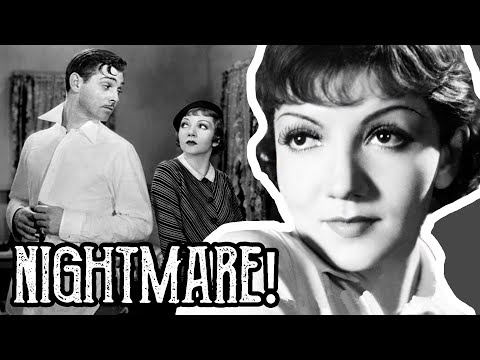
She returned to the stage, where her technique had been born, and found a new kind of freedom. There were no cameras to dodge, no right sides to hide. On Broadway and in London, she could command a theatre with nothing but her voice—that throaty, unmistakable instrument that had made her famous. At eighty-two, she starred opposite Rex Harrison in Aren’t We All, still hitting her marks, still stealing scenes from younger actors who marveled at her stamina.
But the years took their toll in quieter ways. Her husband was gone. Her brother had passed. The friends who remembered the old Hollywood grew fewer with each season. Colbert lived out her final decades in a kind of splendid isolation, surrounded by her paintings and her memories. She had outlasted nearly everyone—yet the woman who had once refused to show her right side to the camera now had no one left to perform for.
In 1996, at the age of ninety-two, Claudette Colbert died in her sleep. The obituaries called her a legend, a survivor, the last of a golden era. They mentioned It Happened One Night, the Oscar she nearly missed, the legs that had once been insured by Paramount for a reputed half-million dollars. What they did not mention was the terror beneath the polish—the insecurity that had driven her to control every frame, every lighting cue, every whisper of her own image.
Perhaps that was the final victory. She had spent her life ensuring that the world saw only what she permitted. And when the curtain finally fell, the world remembered exactly the version of Claudette Colbert she had designed.
But the question lingers, even now. Was the affair with Clark Gable real, or another story she told to shape her legend? Did the hammer and the tennis racquet amuse her, or humiliate her? Was Verna Hull’s letter the ravings of a jealous woman, or did it touch something Colbert already feared?
The woman who controlled everything left behind a puzzle she never intended to solve—and a legacy that refuses to sit quietly in the archives.
Perhaps the real Claudette Colbert was never meant to be solved. She was a woman who built her stardom on precision—the bangs, the cheekbones, the throaty voice, the left side of her face—and then dared anyone to look too closely. She gave the world a masterpiece and kept the messy sketches for herself.
Her legacy endures not because she was easy, but because she was exacting. Every director who cursed her name also knew they were filming something rare. Every co-star who rolled their eyes at her tantrums also felt the electricity she brought to a scene. She was difficult because she cared too much—and too little for anyone who got in her way.
In the end, Claudette Colbert outsmarted the industry that made her. She retired before it could retire her. She disappeared before it could diminish her. And she left behind a body of work that still sparkles with wit and warmth, even as the woman behind it remains a beautiful, baffling contradiction.
The legend of Claudette Colbert is not a confession—it’s a performance that never ended. And maybe that’s the only truth she ever wanted us to know.
But now it’s your turn: do you think the real Claudette Colbert was a victim of her own perfectionism or a brilliant architect of her own myth—and does it even matter which? Share your thoughts in the comments below.
Report this article
Select a reason for reporting:






