For over three decades, the world watched Kenny Rogers and Dolly Parton share a stage, a microphone, and a chemistry so electric it seemed to defy explanation. They sang about love, teased each other mercilessly, and denied rumors with a wink and a smile. But behind the laughter and the hit records, a question lingered: was there ever something more? In the final years of his life, Kenny Rogers finally answered that question—not with a denial, but with a confession that was far more human and surprising than anyone had guessed.
It was October 25th, 2017, inside Bridgestone Arena in Nashville. The room was packed with legends—Lionel Richie, Chris Stapleton, the Oak Ridge Boys—all gathered for Kenny Rogers’ farewell concert. But the night belonged to one woman: Dolly Parton. She walked out, and together they sang one last time. When the song ended, she didn’t just wave and leave. She turned to Kenny and told him that despite all the teasing, there was a place deep in her country heart that belonged only to him. Then she sang I Will Always Love You—not as a performance, but as a private message delivered in public. It was a moment of raw, undeniable emotion, and it came after Kenny had already quietly admitted the truth that had eluded the public for 30 years.
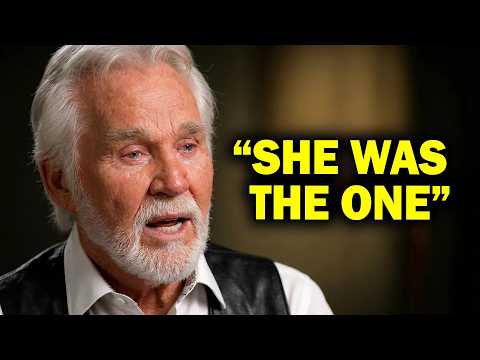
That truth wasn’t a scandal. It was something rarer. Kenny Rogers and Dolly Parton had flirted for three decades. He said it plainly, without shame. “We flirted with each other for 30 years,” he admitted in interviews late in life. But it never went further. According to Kenny, both he and Dolly believed that acting on that spark would risk losing something essential—the electricity itself. So they made a choice, a shared conviction, to let the tension live on stage and nowhere else. “She’s hard to get after me,” Dolly joked, but the truth was deeper: they valued the friendship too much to risk it.
Their story began in 1983, in a Los Angeles recording studio, when Islands in the Stream wasn’t working. Kenny’s manager noticed Dolly was recording nearby and suggested she add her voice. In 45 minutes, the song transformed. It shot to number one, and a partnership was born—not just professional, but personal. They toured, they bantered, they released more duets. And all the while, the public wondered. But Kenny and Dolly knew exactly what they were doing.
In 2013, they recorded You Can’t Make Old Friends, a song about the irreplaceable value of long history. During the session, Dolly told Kenny she could never sing at his funeral. He laughed, asking if she assumed he’d go first. It was a half-joking, entirely sincere moment that would haunt them both. Seven years later, in March 2020, Kenny Rogers died at 81, with his wife Wanda by his side. The pandemic made a grand funeral impossible. Dolly’s tribute was heartbreaking: “A large piece of my heart has gone with him,” she said. She admitted she couldn’t sing Islands in the Stream without him—it was too painful.
But the story doesn’t end there. In August 2026, Dolly Parton died at 80, and this time the world could gather. The Grand Ole Opry held a tribute, with Reba McEntire and others honoring her legacy. And as the world mourned, one thing became clear: what Kenny and Dolly had was never a secret affair. It was a friendship that lasted 37 years, built on a spark they chose to protect, not consume. They flirted, they laughed, they loved—but they never crossed the line. And that, perhaps, is the most remarkable love story of all.
But the story of what Kenny Rogers and Dolly Parton built together does not end with their final goodbyes. It lives on in the music, in the memories, and in the lessons their partnership offers about the strange, beautiful space between love and friendship. Long before the farewell concert, before the pandemic, before the tributes, there was a quiet understanding between them that most people never get to see. It was forged in the recording booth in 1983, tested on stages around the world, and protected by a discipline that was never cold or calculated—it was warm, deliberate, and deeply affectionate.
Kenny often said that Dolly was the one person who could surprise him every single time they were together. “You never knew what she was going to say next,” he recalled in one interview, laughing. “But whatever it was, it came from love.” That unpredictability kept their friendship alive, even when the hits stopped coming and the tours grew shorter. They didn’t need to be in the same room to feel connected. A phone call, a shared joke, a memory of a song—it was enough.
Dolly, for her part, described their bond in terms that were both poetic and plain. She said they were like two old trees whose roots had grown so tangled underground that you couldn’t tell where one ended and the other began. “We’re not lovers,” she said once, “but we’re something better. We’re history.” That word—history—captured what so many people misunderstood. The public wanted a scandal, a secret, a hidden romance. What they got instead was a slow, steady, unglamorous kind of love that didn’t need to be consummated to be real.
After Kenny’s death, Dolly found herself avoiding Islands in the Stream for a long time. She admitted it in interviews, her voice catching. “I can’t sing it without him,” she said. “It feels wrong. Like a part of the song is missing.” But eventually, she found a way back to it. Not by pretending he was still there, but by letting the song become a tribute. She began performing it again, sometimes with a video of Kenny playing behind her, sometimes with a guest singer, sometimes alone. And each time, she said, she felt him beside her.
There was one performance, years after his death, that she later called the hardest of her life. She was on stage in Nashville, the same city where they’d said goodbye in 2017. The crowd was full of people who had loved them both. She started singing, and halfway through, she stopped. The band kept playing, but she stepped back from the microphone and just stood there, eyes closed. Then she whispered something that the front rows could barely hear: “I’m okay, Kenny. I’m okay.” And she finished the song.
That moment, more than any interview or denial, revealed what they had. It was not a romance that never happened. It was a partnership that had always been enough. Kenny and Dolly never needed to cross the line because they were already on the same side of it. They had built something that most people spend a lifetime searching for—a connection that could survive fame, temptation, time, and even death.
Their story also offers a quieter lesson about restraint. In a culture that celebrates giving in to every impulse, Kenny and Dolly chose not to. They chose to protect what they had rather than risk it for something they knew might burn out. “Tension is better if you keep it,” Dolly once said, and she meant it. The spark between them was never a fire that needed to be put out. It was a flame they kept in a glass jar, safe and steady, warming them both for decades.
Now, with both of them gone, that flame belongs to us. It lives in every clip of them laughing together, in every duet, in every interview where they rolled their eyes at the rumors and then exchanged a glance that said more than words ever could. It lives in the songs they left behind, which will keep playing long after everyone who remembers them is gone.
And it lives in the question they answered without ever really answering it. Was there something between them? Yes. There was something. It wasn’t an affair. It wasn’t a secret. It was a friendship that flirted with the edges of something more and then chose, again and again, to stay exactly where it was. And in doing so, it became something rarer than romance: a love story that never needed a climax to be complete.
The final chapter of their story is still being written, in a way. Every time someone hears Islands in the Stream and wonders about the two people singing it, Kenny and Dolly get to live again. Every time a new generation discovers their banter, their chemistry, their refusal to give the public what it wanted, the choice they made gets renewed. They are still teaching us, even now, that some things are better left unsaid, some sparks are better left unburned, and some friendships are stronger than any romance could ever be.
And yet, for all the poetry we layer onto it now, the truth is simpler. Two people met in a studio, liked each other immediately, and then spent nearly four decades figuring out how to keep liking each other without ruining it. That’s it. That’s the whole miracle. No scandal, no hidden chapter, no confession waiting to be unearthed.
Kenny said it best himself, in that plain way of his: “We flirted for 30 years. And we never crossed that line.” He didn’t say it with regret. He said it like a man describing a house he’d built with his own hands and was proud to leave standing.
Dolly said it too, in her own language. “We’re history.” Not lovers. Not a rumor. History. The kind you can’t fake, can’t rush, and can’t buy. The kind that only comes from showing up, year after year, and choosing the same person to laugh with.
So when the tributes fade and the clips stop circulating, what remains is not a mystery solved. It’s a question answered—quietly, honestly, and far more beautifully than any affair could have been.
Was there something between Kenny Rogers and Dolly Parton? Yes. There was everything. And nothing. And somehow, that was enough.
But here’s what I want to know: do you think a spark like theirs is better protected or better spent? Would you rather have the flame in the jar, or the fire that burns out? Tell me in the comments—I genuinely want to hear your take.
Report this article
Select a reason for reporting:






