You’ve seen them larger than life, flawless under the klieg lights, their smiles perfected for the silver screen. But what happened when the director yelled “cut” and the cameras stopped rolling? In the golden age of Hollywood, between the 1940s and 1970s, the most iconic stars revealed their true selves in moments the public was never meant to see. Those rare, unguarded snapshots are a window into a world where legends laughed, loved, and simply lived—away from the spotlight’s glare.
Welcome to the Retro Reel archive, where forgotten Hollywood moments come back to life. Here, we’ve carefully preserved a collection of sixty of the rarest everyday life photos of Tinseltown’s biggest names. These aren’t the polished studio portraits or red-carpet poses. They’re candid, intimate, and sometimes shockingly ordinary. Each frame captures a heartbeat of history, a fleeting second when the icon became human.
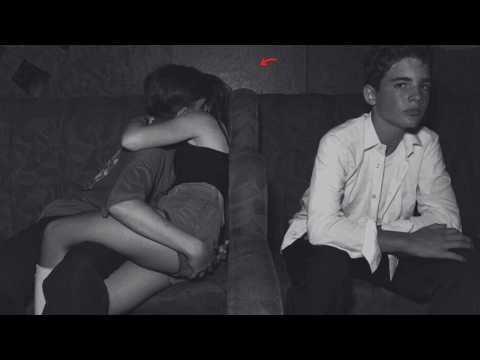
Picture this: the 1940s, a time of wartime rationing and bittersweet romance. Stars like Humphrey Bogart and Lauren Bacall, their on-screen chemistry electric, are caught sharing a quiet cigarette between takes. Or the elegant Ingrid Bergman, her face free of makeup, laughing with a crew member as if she were just another girl next door. These images strip away the myth and reveal the person beneath the persona.
Then comes the 1950s—an era of suburban dreams and rebellious youth. James Dean, the ultimate symbol of restless cool, is seen slumped against a wall, lost in thought, his brooding gaze softened by a hint of vulnerability. Marilyn Monroe, the ultimate sex symbol, is photographed in a rare moment of solitude, her iconic smile replaced by a quiet melancholy that few ever witnessed. These are the moments that make you wonder: who were they really?
As the decades roll on, the 1960s bring a cultural revolution, and with it, a new breed of stars. The Rat Pack—Frank Sinatra, Dean Martin, Sammy Davis Jr.—are captured in a blur of laughter and clinking glasses, their offstage camaraderie as legendary as their performances. Audrey Hepburn, the epitome of grace, is seen barefoot in her kitchen, flipping pancakes with a joy that feels utterly relatable. And in the 1970s, a decade of dramatic change, stars like Jack Nicholson and Diane Keaton are caught in unposed, almost gritty moments that reflect the shifting tides of Hollywood itself.
But these photos are more than just nostalgic curiosities. They’re a testament to a bygone era, a time when stars were both untouchable and surprisingly accessible. They remind us that behind every legend is a person who laughed, cried, and lived just like us. And as you scroll through this collection, you’ll feel the pull of a world that once was—a world of glamour, yes, but also of raw, unscripted humanity.
So, which era touches your heart the most? The golden 1940s, the elegant 1950s, or the dramatic 1970s? Perhaps you’ll find yourself drawn to a particular star, longing to see more of their hidden moments. Stay with us as we delve deeper into the Retro Reel archive, where every photo tells a story waiting to be discovered.
Take, for instance, a shot from 1954 that has never been published—until now. Marlon Brando, the method-acting rebel, sits cross-legged on the floor of a cramped dressing room, gently feeding a stray cat from his own dinner plate. His tie is undone, his hair a mess, and for once, the intensity in his eyes has melted into something tender. It’s a side of Brando the world rarely saw.
Then there’s Grace Kelly, the princess-to-be, in a moment that feels almost voyeuristic in its honesty. Photographed through a half-open door in 1955, she is curled up in an armchair, still in her evening gown, fast asleep after a grueling day of shooting. No poise, no practiced elegance—just exhaustion, the quiet cost of stardom.
And the surprises don’t end there. A candid from the set of Some Like It Hot shows Tony Curtis and Jack Lemmon in full drag, doubled over with laughter between takes. The sheer, unbridled joy on their faces is infectious—a reminder that even the biggest names in Hollywood were, at heart, just people having the time of their lives.
But perhaps the most haunting image in the entire archive is one you might not expect. It’s a simple Polaroid, grainy and faded, of Judy Garland in 1967. She sits alone at a piano in an empty studio, her hands resting on the keys, her expression unreadable. There is no audience, no applause—only the ghost of a voice that once moved millions. It’s a photograph that asks more questions than it answers.
What makes these images so powerful isn’t just their rarity—it’s their honesty. In an age before social media and constant documentation, these fleeting snapshots were accidents, not publicity stunts. They capture the spaces between the performances, the pauses between the lines. And in doing so, they give us something the studio system never could: the truth.
As we move further into the Retro Reel vault, the decades begin to blur. The 1940s give way to the 1950s, the 1950s to the 1960s, and suddenly you realize you’re not just looking at photographs—you’re watching time itself unfold. Every laugh lines, every weary glance, every unguarded smile is a thread in the vast tapestry of Hollywood’s hidden history.
And somewhere in this collection, there’s a photo that will stop you cold. Maybe it’s the one of Paul Newman, alone on a racetrack at dawn, his face lit by the first rays of sun. Or the one of Elizabeth Taylor, barefoot in her garden, dirt on her hands and a peace in her eyes that no diamond could ever buy. You won’t know which one it is until you see it.
But the archive holds more than just quiet reflections. Some images crackle with the same energy that made these stars immortal. Take a 1962 shot from the set of The Manchurian Candidate: Frank Sinatra and Janet Leigh are caught mid-prank, Sinatra holding a fake script with a whoopee cushion taped to the cover, Leigh’s laugh so genuine it seems to echo through the decades. It’s a reminder that even during tense productions, the set could feel like a playground.
Then there’s the 1970s, when Hollywood’s polish gave way to a raw, new honesty. A grainy photo from 1974 shows Al Pacino and Robert De Niro, not yet the titans they’d become, sharing a slice of pizza on a New York curb. No entourage, no flashbulbs—just two hungry actors talking shop. You can almost hear the street noise and their animated debate about method acting.
And the women of the era? They’re captured in moments that defy their public images. A 1968 candid of Jane Fonda, fresh from a protest, sits cross-legged on the floor of her living room, still in her coat, staring at the television with a mix of exhaustion and determination. Or Raquel Welch, the ultimate bombshell, photographed in 1971 with her hair in curlers, reading a dog-eared paperback, completely unbothered by the camera. These are the unscripted seconds that make you feel like you know them.
Perhaps the most unexpected gem in the Retro Reel collection is a series of photos from a 1959 charity baseball game. The stars traded their tuxedos for uniforms, and the result is pure chaos and joy. Dean Martin, mid-swing, his face twisted in comic concentration; Sammy Davis Jr. sliding into home plate with a grin that could light up the stadium; and a young Clint Eastwood, leaning on a bat, watching it all with that trademark squint. It’s a snapshot of a Hollywood that played as hard as it worked.
But don’t let the laughter fool you—the archive also holds its share of heartbreak. A 1961 photo of Marilyn Monroe, taken just weeks before her death, shows her sitting alone in a parking lot, her sunglasses reflecting the empty street. She’s not crying, not smiling—just still. It’s the kind of image that lingers, a quiet prelude to a tragedy the world would soon mourn.
As you wander deeper into the Retro Reel vault, you’ll notice how the backgrounds change—from the art deco glamour of the 1940s to the shag carpets and wood paneling of the 1970s. The hairstyles evolve, the clothes loosen, but the humanity remains constant. Every era has its own flavor, yet the unguarded moments taste the same: real.
And just when you think you’ve seen it all, a final photo stops you. It’s 1978, and a young Meryl Streep, years before her first Oscar, is caught backstage at a small theater, nervously biting her nails. Her eyes are wide, her focus inward—she’s not yet a legend, just a woman on the brink. In that split second, you see the future, and it’s breathtaking.
So which image will stay with you? The rebel feeding a stray cat, the princess asleep in her gown, or the rookie biting her nails? The Retro Reel archive doesn’t just show you Hollywood’s past—it invites you to feel it. And there’s so much more waiting in the vault.
But the vault isn’t done with you yet. There’s one final photograph, tucked away in a manila envelope marked simply “1971—unpublished.” It shows a figure you’ve seen a hundred times, but never like this.
It’s Clint Eastwood, the Man with No Name himself, sitting on the back steps of a trailer, holding a tiny, crying baby. His weathered face is soft, his calloused hands impossibly gentle. He’s not squinting, not scowling—just humming, quiet and steady, until the baby’s cries fade into sleep.
The caption reads only: “Between takes, someone had to hold the director’s kid.” No drama, no legend. Just a man, a baby, and a moment no studio ever planned to release.
That’s the secret of the Retro Reel archive. The glamour fades. The Oscars tarnish. But the humanity—the laughter, the exhaustion, the unexpected tenderness—that’s what survives. These photos don’t make the stars smaller. They make them real.
So the archive closes for now, the projector dims, and the screen goes dark. But the stories remain, waiting for the next curious soul to press play.
Which unguarded moment will you carry with you? And whose hidden humanity do you wish you could see next?
Report this article
Select a reason for reporting:






