Roy Decker lay face-down in a drainage ditch that stank of rot and diesel, doing the one thing seventeen years of naval special operations training had never prepared him for: nothing. No hand signal. No shift in position. No glance at his wingman for reassurance. Just his chin in the mud and his rifle cold on his forearm, watching four Australians vanish into trees that had offered no cover ten seconds earlier.
He had been in-country eleven months. He had run river ambushes through forests that left Viet Cong sandbars burning to the waterline. He had walked out of kill zones that swallowed other men. He believed, the way the young believe in gravity, that he understood elite. Then ten seconds in a ditch outside a village whose name he had already forgotten collapsed that belief entirely.
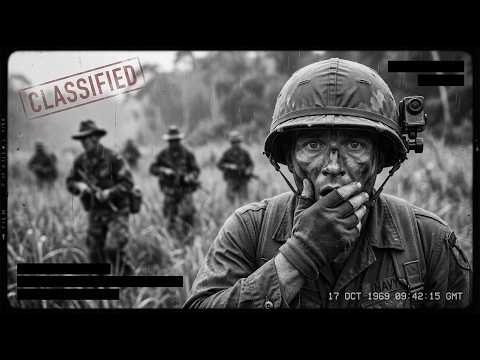
This is the story of what happened when the most ferocious maritime commandos on earth were deliberately paired with the ghosts of the Australian Special Air Service Regiment. And what those Americans said afterward—in Coronado bars, in reports no one outside the teams ever read—still tells you everything you need to know about the difference between being dangerous and being invisible.
Because by the end of this story, you will understand exactly why, forty years later, retired SEALs who fought in six different wars still go quiet and shake their heads when someone says the word “Kiwi” or “SAS.” And why one of them, an old man now, once looked a documentary film crew dead in the eye and said: “Those guys weren’t soldiers. They were something else. We didn’t have a word for them yet.”
To understand why that ditch outside an unnamed village broke something in Roy Decker’s confidence, you have to understand what the SEALs believed about themselves before 1968. And you have to understand that it wasn’t arrogance. It was earned certainty.
The SEALs had been forged from the Navy’s Underwater Demolition Teams less than a decade earlier. Men who blew gaps in beach defenses under enemy fire, then swam back through the same fire to do it again. By the time they reached the Rung Sat and the Mekong Delta, their doctrine had hardened into a single brutal philosophy: initiate violence. Strike fast, strike with overwhelming force, then withdraw before the jungle can organize a response.
Six-to-eight-man teams, stacked with suppressed heavy weapons, M60s, and riot guns for close work, moving through waterways like they owned the tides. Because in the Delta, they did. Decker’s platoon commander, a wiry, perpetually annoyed lieutenant named Frank Ostrander, used to tell new men there were two speeds in this war: dead and moving. The SEALs had built their entire identity on never stopping.
It worked. It worked so well that by 1968, the SEALs had a body count and a reputation that made even Viet Cong intelligence nets warn their cadres to avoid riverine areas after dark. So when word came of a joint reconnaissance mission with a detachment from the Australian SAS’s 3 Squadron, newly rotated into Phuoc Tuy and Nui Dat, most of Decker’s platoon treated it as a formality. A professional courtesy between allies. Maybe even a chance to show the Australians how jungle combat was done.
No one in that briefing tent expected to walk out of the operation with their entire view of war rearranged. No one expected the name that would echo in hushed conversations for the rest of the war to belong to a quiet, New Zealand-born soldier named Mick Sherrard. A man who, by every account Decker later gave, did not fight the jungle so much as become fluent in it.
Sherrard’s patrol of five had cycled through Borneo and the Malayan Emergency before Vietnam ever entered the conversation. That pedigree mattered more than anyone in the American briefing room realized. His team wasn’t built for firepower—it was built for absence.
His second-in-command, a lean tracker from the Western Australian outback named Owen Vickery, could read a broken fern frond from four meters and tell you within the hour whether wind, animal, or boot heel had bent it. The signaller, a quiet, almost ascetic soldier named Baz Colton, carried a radio he treated like a loaded weapon—meaning he rarely touched it, because silence in Sherrard’s patrol wasn’t a tactic. It was a founding principle.
Rounding out the patrol was a large, gentle-looking man named Ronnie Bray, who carried the section’s only machine gun and who, by Decker’s later account, went four consecutive patrols without firing a single round. Not because he lacked courage, but because firing in Sherrard’s world was an admission that something had gone wrong.
When the joint task force met at Nui Dat for their first combined briefing, Decker remembered being struck by how little the Australians spoke. The American officers laid out contingency plans, withdrawal corridors, extraction timetables—the full architecture of a plan designed to survive contact. Sherrard listened, nodded twice, and asked one question: “How close do you intend to let them get before you decide you’re in danger?”
Nobody had a good answer. Nobody had needed one before.
The insertion came at dusk on the eleventh, four kilometers northeast of a suspected NVA logistics corridor that ran through three layers of canopy toward the high ground. For the first two hundred meters, Decker felt nothing but the familiar electric hum of a mission beginning. Boots, rhythm, breathing, the settled cadence of a man who had done this hundreds of times.
Then, without ever noticing the moment it happened, the jungle around him turned inside out. Not dangerous. Not ambushed. Just wrong. It felt like standing in a strange room when the furniture has been rearranged while you slept.
The Australians weren’t acting like soldiers on patrol. They were acting like men who had lived in this patch of forest their entire lives. No signals, no quick scans, no chatter on the net—because there was no net. Colton’s radio might as well have been a rock in his pack. Their gear made no sound: buckles taped, canteens padded. Even their breathing seemed to follow a rhythm set by the wind moving through the branches above them.
And Decker, a man who prided himself on situational awareness, found himself straining to maintain visual contact with men walking directly beside him.
The first real test came forty minutes in—a soft crack from the brush somewhere ahead and to his left. A sound like that, in the Delta, triggered an immediate defensive reflex. Weapons up, eyes wide, the whole team compressing like a spring. Decker did exactly that, muscle memory moving before his conscious mind caught up.
He turned to check his flank, expecting to find Sherrard’s patrol doing the same. They were gone. Not repositioned. Not crouched nearby. Gone. As if the forest floor had opened and swallowed four grown men and their equipment whole.
Decker felt a knot in his stomach he hadn’t felt since his first month in-country. He scanned the treeline, the brush, the pools of shadow beneath the roots. Nothing. It took him nearly a full minute of straining until his eyes ached to find Vickery—lying behind a knot of roots less than three meters from Decker’s position, utterly still, blended into the terrain so completely that even knowing exactly where to look, Decker’s brain kept trying to convince him it was just another trail.
Twenty minutes passed. Then thirty. The mosquitoes descended in their usual merciless swarms, and nothing moved. Finally Decker leaned toward Ostrander and whispered the question every American on that patrol was thinking: “Are we blown?”
Sherrard, close enough to hear despite the whisper, answered simply: “If they haven’t found us yet, talking about it is the only way they will.”
It wasn’t harsh. It was the way a teacher corrects a promising but undisciplined student. And something in the total absence of ego in that correction stung Decker worse than any insult.
That first patrol ended without contact, a clean withdrawal, and hours of intelligence on NVA movement patterns along the corridor—without a single shot fired. On the walk back to the extraction point, Decker found himself doing something he rarely did after any mission: replaying every minute of it. Not for tactical lessons, but because some deep part of his professional identity had quietly come apart, and he was trying to understand how he had walked into that jungle believing he was one of the most dangerous men in Vietnam—and walked out having watched four Australians disappear and reappear at will, communicating in something that felt alarmingly close to telepathy, controlling the rhythm of an entire patrol without speaking more than a dozen words between them.
He would later tell a war correspondent, off the record, that the SEALs had entered that jungle as a varsity team and come out feeling like they had been quietly and politely shown to the freshman locker room.
The second lesson, the one that rearranged Decker’s understanding of discipline, came six days later at the slow brown river crossing Sherrard’s patrol had scouted the previous afternoon. Decker’s instinct—every American’s instinct on that patrol—was pure Delta muscle memory. Hit the water fast, cross hard, secure the far bank before anyone watching could react. That’s how they trained. That’s how they’d survived dozens of contested crossings in the first months, and it had never failed them.
Sherrard raised a closed fist before any American foot touched water, and Vickery, without a word, pointed upstream to a thicket of vegetation that looked impassable. They waited three hundred meters upriver, submerged to their necks, before finding a way through. Decker remembered the disbelief, the clenched jaw, the sheer fury of a trained operator told to abandon a plan that had never failed for one that made no sense.
But the Australians were running the show. And so the Americans followed, dragging themselves through leech-filled water for the better part of an hour.
Fifty-five minutes after they’d have crossed, soaked and furious, on a rock shelf chosen specifically for leaving no trace, Vickery raised two fingers and the entire patrol went still without a spoken order. From their hide on a low rise, they watched a Viet Cong tracking team emerge from the exact spot the Americans had wanted to exit the river. Lean men. Tight-muscled dogs straining at the leash, noses pressed to the muddy bank, searching for a scent that would have been abundant if the SEALs had crossed the way they’d wanted to.
The dogs found nothing. The trackers argued in low voices, scanned the treeline, and finally withdrew. Decker lay in the ferns beside Bray, watching his near-fatal mistake walk away unrewarded, and felt something settle permanently in his chest that was neither gratitude nor shame.
Ostrander later admitted, in a debrief that never officially happened, that the patrol’s survival that evening had nothing to do with American training and everything to do with a level of proactive caution he had not previously believed tactically useful. Sherrard didn’t lecture. He said, “No. I told you so,” and simply refilled his canteen and murmured to Decker that a wet boot print on dry clay is a signature no amount of aggression can erase.
What followed over the next weeks wasn’t friction, and it wasn’t one-sided humility either. The exchange, once it began in earnest, ran both ways with a force that surprised everyone involved. The Americans, stripped of their initial swagger, began absorbing the Australian approach with the focus of men who had genuinely been humbled. Ostrander learned to place the outside edge of his boot first, then roll his weight inward to feel the dry sticks before committing. Decker learned to read the sway of a bush not as random motion but as a signal, a tell, a thing to be avoided the way a man avoids stepping on broken glass.
They learned Sherrard’s discipline of absolute stillness during a night ambush on a suspected supply trail. Four hours lying in mud without a single turn, without a single mosquito bite. The Australians treated discomfort as data to be ignored, not a problem to be solved. And they learned, more than anything, restraint—the ability to put a precise shot on a target and then deliberately choose not to take it.
Because Bray’s patience during a long reconnaissance, watching three apparently unarmed scouts walk a clear trail for a full thirty minutes before a real column of over a hundred NVA regulars appeared behind them, taught Decker something about the difference between tactics and intelligence that no American training course had ever made clear.
But the SAS were pragmatists first and romantics never. It didn’t take long for Vickery, Colton, or Bray to notice the Americans had real advantages worth stealing without shame. The Australians still carried the heavy L1A1 rifles designed for the open plains of Europe—a battlefield that would never come. Weapons that felt alien in the tangled bamboo of Phuoc Tuy. The SEALs carried short, collapsible CAR-15s that could swing inside a tunnel entrance or dense scrub in a fraction of the time.
Sherrard watched Decker clear a snag of brush from his carbine in under two seconds and began, quietly and without ceremony, to inquire about acquiring similar weapons through informal channels—trading captured goods and ration allotments. The Australians were equally taken with the SEALs’ relationship to vertical extraction, the casual taxi-driver confidence with which American operators would call in a Huey gunship, lay down fire, and be extracted on three ropes in minutes regardless of terrain.
It was a stark contrast to SAS tradition of carrying eighty-pound packs for days of grinding exhaustion. Sherrard adopted elements of that mobility doctrine, coordinating rapid extractions with American gunship pilots in ways that would have been unthinkable to his patrol months earlier. No one in that first stiff briefing at Nui Dat had expected the exchange of knowledge to be mutual with such force that within weeks it would become impossible to tell the varsity team from the freshman locker room.
There was one more lesson, quieter than the rest, and in some ways the most humbling of all. It had nothing to do with movement or firepower. It was about what a man carries on his body without ever thinking about it. Colton was the one who finally said something after three weeks of joint deployment, after a routine patrol nearly collided with a sentry simply because he claimed he could smell the Americans from twenty meters away. The reek of aftershave and government-issue soap cut through the wet green smell of the forest.
Sherrard’s patrol had stopped using soap or shaving cream weeks before their rotation began, letting their scent fade to something closer to the forest itself. They wrapped every buckle, every zipper, every loose strap in dark cloth until their gear was silent. Even the faint metallic click of a rifle sling shifting against a chest rig.
Decker felt embarrassed in a way he hadn’t expected over something so trivial. He spent an entire night in camp taping his gear under a lamp, rubbing mud into the zippers of his jacket. Then he stripped the reflective cover off his compass, and Ostrander did the same beside him without either of them saying a word. Because at that stage of the deployment, there wasn’t much left to say.
It was a strange kind of humility, realizing that eleven months of hard jungle experience hadn’t taught him something as basic as the fact that his own smell could get a man killed. That lesson lodged deeper than almost any tactical one from the entire rotation. Because it meant the SAS weren’t simply more skilled in the jungle—they had restructured their entire relationship with it, down to the smallest detail. Most soldiers never even thought to ask the question.
The moment that cemented all of it—the moment Decker described decades later as the most terrifying experience of his military career—came on a pitch-black, rain-soaked night in what the operations map labeled simply as a high-density enemy sector. The kind of grid coordinate that made even the most experienced operators double-check their gear before insertion.
A navigational error born of torrential monsoon rain and a compass deflected slightly by dense canopy put the joint patrol roughly three hundred meters off course from its intended observation point. A negligible margin in most theaters, but in Phuoc Tuy in October 1968, it meant the difference between a quiet night and a catastrophe.
Sherrard’s patrol was in position, moving at the same measured, unhurried pace they always did, and Vickery was the first to freeze. His body went entirely still—so still that Decker, three men back, felt the change in the air before he understood its cause. Sherrard crept forward, expecting a trip flare, an observation post, some ordinary danger. What he found, illuminated by brief flashes of distant lightning through the branches, was hammocks. Dozens of them. Strung from tree to tree in every direction the darkness allowed them to see.
They hadn’t stumbled onto an enemy camp. They had walked straight into the sleeping heart of it—a Viet Cong battalion resting in place. Hundreds of men, so close that the smell of wet cloth and fish sauce and unwashed bodies was thick and suffocating in the humid air.
Ronnie Bray’s hand moved toward his weapon’s safety on pure instinct—the ingrained SEAL reflex, the belief that if you’re compromised, you attack with everything you have. A scream louder than any warning. Before his thumb could complete the motion, Sherrard’s hand closed over his wrist. Not hurried, not panicked, but with the certainty of a man who had run every scenario of this situation and settled on the only one that kept everyone alive until morning.
What followed was four hours. Four full hours in which the entire patrol reversed its course step by step. Sherrard placed his boot in the exact same spots his feet had left on the way in, so no new disturbance would betray them. The Americans forced their bodies into the discipline they had absorbed but never fully tested under this kind of pressure.
Decker later described a moment burned into his memory with perfect clarity, when he had to hold one boot suspended in the air for nearly five minutes because a sleeping soldier less than two meters away had rolled onto his side and muttered in his sleep. A hand stretched out and touched the toe of Decker’s boot. He didn’t breathe. He didn’t blink. He became, in his own words, a piece of furniture. And that was the hardest thing his nervous system had ever been asked to do.
When the patrol finally slipped out of the perimeter and collapsed at the treeline behind, hands shaking uncontrollably from an adrenaline surge unlike any they had ever known, Decker understood completely that the discipline Sherrard’s patrol had been quietly teaching him for weeks wasn’t just a preferred style. It was the difference between a war story and a body count with his name on it.
Word of that night spread through the American ranks the way it always does in tight units: quietly, informally, over cigarettes and warm beer, until Sherrard’s name became something close to legend among the SEAL platoon rotating through Phuoc Tuy. It was spoken in a specific tone Decker rarely heard American operators use about anyone outside their own teams. What made the story so affecting wasn’t just the Australians’ skill—every man on that front had met skilled operators from dozens of units. It was the total absence of ego behind that skill, the way Sherrard’s patrol treated a night that would have broken most men as a routine problem requiring a routine solution.
There’s a special kind of respect that forms only under that kind of pressure—the realization that a man beside you chose your survival over his instinct for glory in a single moment. And that realization, once formed, doesn’t fade. It becomes something closer to faith.
The final operation of that joint deployment in mid-November pulled every lesson of the previous weeks into a single savage encounter. Intelligence confirmed a large NVA logistics column moving supplies through the wet, rain-soaked hills toward the high ground. Enough ammunition to sustain weeks of offensive operations to the south.
The joint patrol inserted by helicopter into a landing zone so tight that the rotor wash slammed into the branches on both sides. For two full days the monsoon never paused, turning the ground under their feet into a gray, viscous swamp. They set an L-shaped ambush on a muddy knoll above the trail. For nearly three days, nothing happened at all except the rain. That particular kind of silence Sherrard’s patrol had mastered long ago.
On the morning of the third day, four Viet Cong scouts emerged through the mist, moving with the caution and twitchiness of men who suspect—but cannot confirm—that they are being watched. Decker, manning the section’s heavy weapon, felt every trained instinct in his body scream to attack. Four confirmed kills within reach. An easy, clean victory in sight.
Bray’s voice echoed in his memory—no hand on his weapon this time, just the lesson he’d remembered. Don’t take the soldier if you want the king. That’s what kept him from squeezing the trigger. The scouts passed close enough to see the mud caked on their sandals, and the patrol let them go, gambling on intelligence that might prove wrong.
Ninety minutes later, the ground began to shake with the rhythmic weight of a full column. Dozens of NVA regulars moving with the loose confidence of men who believed their scouts had cleared the way. Sherrard waited until the heart of the column settled over the buried claymores, exchanged one glance with Decker that required no words, and nodded.
What followed lasted seven seconds by Decker’s later count—a directed mine detonation that seemed to flatten the surrounding forest to the ground, followed instantly by a coordinated volley of fire from the SEALs and the SAS that was, in Decker’s description, closer to a demolition than a firefight. When the ceasefire signal passed silently down the line, the column was scattered across the muddy trail, and the forest had returned to its usual quiet as if nothing had happened.
What stuck in Decker’s memory most clearly from the minutes that followed wasn’t the violence itself but the stark contrast in its aftermath. The Americans, buzzing with adrenaline, checking their weapons with nervous energy, while the Australians rose slowly, almost bored, collecting spent brass methodically and checking their boots for leeches with the calm of men finishing a Sunday training exercise.
Decker asked Sherrard, half-joking, whether his pulse had risen even once above resting rate during the entire deployment. Sherrard wiped mud from his rifle without looking up and said panic was just a waste of energy. Decker never forgot that—not because it was clever, but because, as far as he could tell, it was disturbingly true.
On the final night before the two units exchanged positions in the Nui Dat perimeter under a dark purple sky thick with diesel smoke and wet earth, the formal distance between the two forces finally dissolved quietly. The Americans opened crates of Long Range Patrol rations—luxury food compared to standard field rations—and shared them generously, while the Australians introduced their counterparts to a small sacred ritual: boiling water for tea over a smokeless hexamine tablet in a black tin. A trick that let a man get something warm into his belly deep in enemy territory without revealing his position.
In that faint orange glow of those tiny stoves, Decker did something he had never done before, and never fully explained afterward, even to himself. He unclipped the leather-handled K-bar knife he had carried on every patrol of his service—a blade sharpened a thousand times, its handle worn smooth from eleven months of use—and without a word of ceremony, handed it to Sherrard.
Sherrard, the famously taciturn man, accepted it, studied it for a long moment, then removed his hat. Its brim was short, as SAS soldiers always wore it to preserve peripheral vision. The cloth was dark and stiff from a hundred patrols, and he placed it in Decker’s hands. No word was spoken, and none was needed. It was the language the two men spoke fluently in that moment. A silence full of meaning, an acknowledgment that everything dividing their doctrines, their training methods, their national flags had become utterly irrelevant before a much simpler truth: that each trusted the other absolutely, without hesitation.
When the war finally ended, and the two forces packed their gear one last time and vanished from those jungles, the trees closing over the ground behind them as they always do, something remained that no amount of foliage could reclaim. For the SEALs, Vietnam had already been the crucible that would define generations of American special warfare doctrine. But the lessons they absorbed during Sherrard’s patrol—the discipline of absolute silence, the art of reading the scene for what was missing rather than what was present, the restraint required to let three soldiers pass unharmed for the sake of the king standing behind them—never appeared in any official manual. They were passed on the way the most important lessons always are: in a whisper from an old hand to a new one, not as doctrine, but as hard advice for anyone who wants to learn patience. Spend a week walking behind an Australian soldier.
And for the men of 3 Squadron, the SEALs offered something no less valuable in return: a glimpse of surgical aggression they rarely allowed themselves. Proof that speed and firepower, applied with the same discipline usually reserved for stealth, could settle a battle in seconds when seconds were all the situation allowed. Neither side tried to become the other. They simply became sharper versions of themselves, and that sharpening continued for decades after the war ended. The experience carried into Panama, the Gulf, Afghanistan. And in every conflict since, an American soldier has found himself once again standing beside a quiet Australian who never seemed rattled, no matter what the jungle, desert, or mountain threw at him.
Roy Decker gave his last interview about that mission nearly forty years after it happened. He was an old man by then. His hands were steady, but his voice trembled in a way it never had during eleven months of actual combat. A young researcher, clearly expecting a war story full of firefights and body counts, asked him what the SAS had taught the SEALs in Vietnam.
He was silent for a long moment—that particular kind of silence Decker himself had once found so unnerving in Sherrard’s patrol decades earlier. Then he said everyone always asks about tactics, movement techniques, discipline, as if those were the real lessons. The real lesson, he added, was something hard to explain to anyone who hadn’t tasted the bitterness of that war themselves, watching men choose silence over glory again and again, night after night, without complaint.
He said those men weren’t fighting the same war we were. We fought for victory. They fought to survive tomorrow so they could keep fighting the day after, and the day after that. And somewhere during those eleven months, without any of us saying it out loud, we started fighting their war—because it was, he admitted, the only war that had any real meaning.
He kept that bush hat until the day he died. According to his family, he never let anyone touch it. Not out of possessiveness, but because it was, in his words, the one thing he owned that had taught him the true value of silence. And he was not about to let that lesson slip through his fingers twice.
So here’s the question that lingers long after the last shot: in a world that still measures strength by noise, by speed, by the volume of a man’s fury—how many of us would have had the discipline to lie still in that ditch, to let the enemy walk past, to choose the harder, quieter path to survival? And more importantly—who among us would you trust enough to hand your knife to, without a single word spoken?
Report this article
Select a reason for reporting:






