What if the legends who lit up the silver screen were, behind the scenes, hilariously, tragically human? We’re not talking about charming quirks or eccentric habits. We’re talking about decisions so baffling, so self-sabotaging, that even their closest friends and spouses couldn’t help but call it what it was: dumb.
These were the icons who had it all—fame, fortune, adoration—and somehow managed to fumble it with a naivety that bordered on genius. From Olympic champions who couldn’t memorize a line to actresses who weaponized their own intelligence, their stories are a masterclass in how not to handle success.
Take Johnny Weissmuller. Before he was Tarzan, he was a five-time Olympic gold medalist. MGM handed him the vine, and his primal yell became box office gold. But once cameras stopped rolling, the intelligence that had won him medals seemed to vanish. He struggled to read scripts, often improvised unintelligible grunts when he forgot lines, and one crew member quipped, “He was better with the rope than the script.” Despite earning a fortune, Weissmuller poured money into failed hotels and a bizarre chain of Tarzan-themed restaurants. By the 1960s, he was broke, wandering the halls of a Las Vegas hotel in his robe, still calling himself Tarzan.
Then there’s Ed Wood, the filmmaker who believed every line he wrote was pure Shakespeare. His 1959 film Plan 9 from Outer Space is widely labeled the worst movie ever made—paper plates on strings for flying saucers, a taller actor replacing the deceased Bela Lugosi with a cape over his face. Wood never understood basic filmmaking techniques, often filming entire scenes without checking focus. He died penniless, convinced his failures were ahead of their time.
Jane Mansfield had a reported IQ of 163, spoke five languages, and played classical violin. Yet she built her entire career on playing the dumb blonde—and leaned into it so heavily that even studio heads believed it was real. She turned down a Broadway revival because it didn’t include television exposure, and surrounded herself with fringe figures like Anton LaVey of the Church of Satan. Her tragic death in 1967 sealed her image not as a brilliant woman boxed in by the system, but as a cautionary tale of an actress who couldn’t escape the act when it started to sink.
Wallace Beery, MGM’s gruff, bankable star, memorized lines phonetically, lacking true understanding of the words. Joan Crawford allegedly called him “cruel, stupid, and arrogant.” He invested in ostrich farms and novelty candy shops, insisting they’d be the next gold rush. When asked to speak on political matters, he reportedly responded, “I ain’t got time for them kind of thinking.”
George Raft had the looks and swagger of a gangster icon, but he turned down The Maltese Falcon, Casablanca, and Double Indemnity—roles that made Humphrey Bogart a star. He rarely read scripts in full, choosing roles based on how tough the guy looked. One Warner Brothers memo described him as “consistently uncooperative and alarmingly short-sighted.” He gambled away his money at underground casinos and faded into cameos in second-rate films.
Buster Crabbe, Olympic gold medalist turned serial hero, never read full scripts and focused on stunts, not character arcs. In Flash Gordon, his lines were often dubbed post-production because he flubbed them during takes. He poured his earnings into a chain of backyard swimming pool franchises and was bankrupted by legal disputes. He stayed loyal to his action-man image long after the public had moved on.
Esther Williams, Hollywood’s Million-Dollar Mermaid, admitted to rarely reading her scripts. “If it doesn’t involve a pool, I’m not interested,” she once joked. She passed up television offers, believing the medium was beneath her, and her swimwear line collapsed due to poor management. By the late 1960s, she was financially insecure and struggling to re-enter the public eye.
Milton Berle, Mr. Television himself, stole jokes blatantly and refused to modernize his act. He turned down a lucrative MGM film contract because he didn’t want to cut back his nightclub appearances. He invested in a series of comedy clubs under his name but refused to visit any of them—they all collapsed within two years.
These legends had the world at their feet, but their inability to adapt, to learn, or simply to think beyond the surface turned their golden ages into cautionary tales. And the stories don’t end there—some were even more spectacular in their self-destruction.
Frank Fay was once considered the greatest stage comedian in America, but behind the curtain he was a toxic combination of arrogance, prejudice, and stunning social ignorance. He ignored cues, rewrote scripts without permission, and mocked crew members openly. George Burns once called him “the funniest man who ever lived and the most detestable human being I ever met.” Fay openly voiced anti-Semitic views in an industry run by Jewish studio moguls, and his wife, Barbara Stanwyck, eventually divorced him citing physical and emotional abuse. He turned down sound films believing talkies were beneath him, and by the 1950s he was performing at second-rate clubs and sleeping in rented rooms.
William Frawley, beloved as Fred Mertz on I Love Lucy, was a volatile, belligerent presence whose chronic alcoholism nearly cost him the role. Lucille Ball initially opposed his casting. He once had a scene removed entirely from Miracle on 34th Street because he couldn’t stay sober long enough to deliver it. He scoffed at rehearsals, once telling a younger co-star, “If you need to practice, you shouldn’t be in this business.” When the show ended, producers hesitated to cast him, fearing he’d regress to old patterns.
Jean Arthur possessed one of the most distinct voices of her era, yet she spent much of her career running from fame itself. She refused press interviews, rejected public appearances, and sometimes vanished between projects for months. During filming for The More the Merrier, she allegedly had breakdowns over lighting and costumes and insisted on filming without crew members watching. She turned down His Girl Friday, It’s a Wonderful Life, and parts written specifically for her. Her brilliance was real, but so was her detachment—she drifted away because she couldn’t function within the world that made her a star.
Rod Steiger’s extreme devotion to method acting, combined with emotional volatility, turned him into a cautionary tale. On Doctor Zhivago, he clashed with David Lean over his refusal to rehearse scenes cold, sometimes delaying production for hours. He turned down Patton—a role that won George C. Scott an Oscar—because he thought the script lacked emotional subtlety, and rejected The Godfather as too commercial. He later admitted regretting both decisions but continued to spurn mainstream roles. Director Sidney Lumet once said, “Rod was brilliant, but he made things harder than they had to be on everyone.”
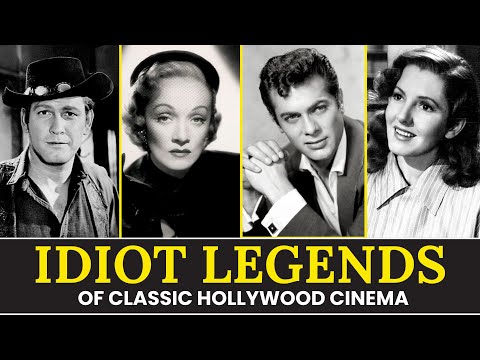
Earl Holliman entered Hollywood with the promise of a steady climb, winning a Golden Globe for The Rainmaker in 1956. Yet he repeatedly turned down roles requiring accent work or emotional complexity, insisting he was better suited for “good old American fellas.” He declined a part in Judgment at Nuremberg, calling it too political. Director Richard Fleischer later remarked, “He wasn’t difficult, he just didn’t stretch.” He invested most of his earnings into a Burbank restaurant that failed within three years, and declined television opportunities in the early ’60s, believing film roles would always come his way.
Peter Lorre had the mind of a philosopher and the heart of a ghost. Fluent in several languages and classically trained, he nevertheless accepted whatever roles came his way, terrified of unemployment in a new land. He became typecast as a villain or foreign eccentric and rejected more mainstream roles, believing audiences wouldn’t accept him outside the shadows. He rarely negotiated his contracts, allowing studios to pay him far below his co-stars—at one point he borrowed money from Boris Karloff to avoid eviction. Addicted to morphine during the 1940s, he drained his finances on pills and medical quackery, drifting through a system he never dared to defy.
Marlene Dietrich cloaked herself in strategic ignorance, feigning simplicity to maneuver through an industry that wanted her seductive but silent. Studio records from Paramount revealed she would pretend not to understand English during contract disputes, though she was fluent. “Men are frightened of smart women,” she once said. “They prefer a whisper to a sentence.” But this calculated naivety came at a cost—as the studio system weakened, she had no fallback. She hadn’t cultivated herself as a producer, director, or writer, and the film world moved on. She played the long game, but in playing it safe, she forfeited her full potential.
Tony Curtis rose from a tough New York upbringing to become one of Hollywood’s most recognizable leading men, but directors often noted he struggled with complex material. Billy Wilder once said he had to pull the performance out of him frame by frame. “I never read the scripts all the way through,” Curtis told a reporter in 1960. He passed on several serious roles that could have elevated his status, choosing projects that emphasized looks over substance. He married six times, often after whirlwind romances, and made headlines for petty, erratic behavior.
And then there was Guy Madison—born Robert Moseley, discovered while working as a telephone lineman. One glance at his chiseled features and he was whisked into stardom, but without acting skill or professional savvy. Director William Castle remarked that Madison “had the personality of a bookshelf,” adding that multiple takes were required just to capture passable scenes. He was known for asking producers which way to face the camera, even into his fourth film. He purchased a ranch in Wyoming with no staff or income plan, and it quickly failed. By the 1960s, his career had withered into dubbed European films and low-budget westerns.
Guy Madison had every opportunity, but no idea what to do with it. He was the poster boy for actors who relied solely on appearance, lacking even the basic instincts for navigating a studio career. By the time he realized the camera wouldn’t wait forever, the spotlight had moved on.
Looking back, a pattern emerges. These weren’t villains or fools in the traditional sense. They were human—flawed, stubborn, and often blinded by the very fame that made them legends. They mistook applause for wisdom, and image for identity.
Some, like Mansfield and Dietrich, weaponized ignorance as strategy, only to find the mask fused to their faces. Others, like Wood and Lorre, let fear and delusion quietly dismantle their potential. And a few—Raft, Crabbe, Madison—simply refused to grow, believing the world would never change.
But here’s the uncomfortable truth: their stories aren’t just old Hollywood anecdotes. They’re mirrors. Every generation produces its own Weissmullers and Madisons—talented people who confuse luck with skill and charisma with character.
The cameras stopped rolling decades ago, but the lesson lingers. Fame is a fickle spotlight. Adapt or fade. Learn or languish. And never, ever assume the rope will always be there when the script runs out.
So, which of these legends surprised you the most—and who do you think got exactly what they deserved?
Report this article
Select a reason for reporting:






