Janet Abereroa was young, vibrant, and full of life—a college soccer star, a devoted mother, and a wife who seemed to have it all. But on the night of April 26, 2005, her husband Raven called 911, sobbing and panicked, claiming he had come home to find her brutally stabbed in their quiet North Carolina house. There was blood everywhere, a bloody palm print on her chest, and no sign of forced entry. From the very first hours, nothing added up.
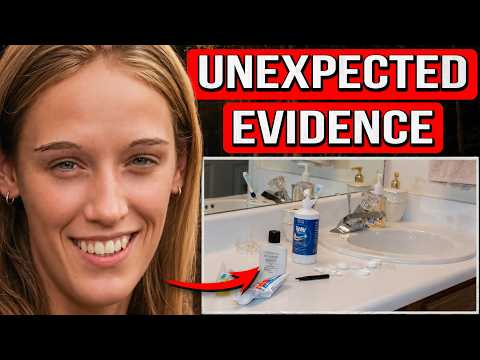
Raven told police a burglar must have broken in—yet nothing of value was taken, and his story kept shifting. He said Janet had been shot, but the wounds were clearly from a knife. He said he found her body, but the blood on his sweatshirt didn’t match. And why were her contact lenses left open on the bathroom shelf, as if she hadn’t been getting ready for bed at all?
Detectives dug into Raven’s past and found a trail of lies: a history of cheating, controlling behavior, financial fraud, and a $500,000 life insurance policy taken out on Janet just months before her death. Friends and family pointed fingers at him immediately. But without hard evidence, the case went cold—for five long years.
Then a new detective, Charles Soul, took over. He noticed something everyone else had missed: Janet’s contact lens case was open, and her lenses were gone. If she had been in bed watching TV when Raven left, why would she still be wearing them? That tiny detail unraveled everything. Police exhumed her body, and an ophthalmologist confirmed the impossible: Janet had been wearing her contacts when she died—proving Raven’s timeline was a lie.
But that was just the beginning. The bloody shoe print? It belonged to a paramedic. The fingerprint and DNA? Unrelated to the killer. And Raven’s alibi? It had more holes than Swiss cheese. As the trial approached, prosecutors faced a gut-wrenching choice: risk a second mistrial or offer a plea deal that would let a possible killer walk free in just a few years.
What happened next would leave Janet’s family shattered—and raise a question that still haunts everyone who hears this story: Did Raven really get away with murder?
The first trial ended in a mistrial—eleven jurors voted guilty, one held out. The prosecution, exhausted and fearing an acquittal, offered Raven a deal: plead guilty to manslaughter, maintain his innocence, and walk free in a few years. He took it. In late 2017, after serving only eight years, Raven was released. He changed his name, moved to Utah, and disappeared from the public eye.
But Janet’s family refused to let her story die. Her sister, Lisa, began digging through old files, convinced the truth was still buried somewhere. She found something the police had overlooked: a box of Janet’s personal belongings, never returned, sitting in an evidence locker. Inside was a journal—one Janet had kept in the final months of her life.
The entries were chilling. Janet wrote about Raven’s rages, his threats, and a night he had pinned her against a wall, screaming that he would ‘rather see her dead than divorce him.’ But one entry, dated just three days before her murder, made Lisa’s blood run cold: ‘Raven found out about the pregnancy. He said if I have this baby, he’ll make sure I never see Kaden again. I’m scared. I think he might hurt me.’
Lisa brought the journal to Detective Soul, who was now retired but still haunted by the case. He read it in silence, then looked up. ‘This changes everything,’ he said. ‘We can prove motive—and intent.’ But the plea deal was already sealed. Double jeopardy meant Raven could never be tried again for the same crime. Or could he?
Soul began researching a legal loophole: if new evidence proved Raven had lied under oath during his plea, the deal could be voided. The journal was a start, but they needed more. And then, a surprise witness came forward—a former cellmate of Raven’s from his time behind bars.
The man claimed Raven had confessed to him in detail. ‘He said he stabbed her before the game, then went and played soccer like nothing happened,’ the cellmate testified in an affidavit. ‘He laughed about the contact lenses. Said he never thought anyone would check her eyes.’
With the journal and the cellmate’s statement, prosecutors filed a motion to vacate the plea. Raven, now living quietly in Utah, was served with papers. He declined to comment, but his lawyer called the new evidence ‘a desperate attempt to rewrite history.’
A hearing was set for the spring. Janet’s family sat in the front row, holding hands. Lisa clutched the journal to her chest. For the first time in nearly two decades, the courtroom felt different—charged with a hope they hadn’t dared to feel before. The judge listened, then turned to Raven. ‘The motion is granted. We will proceed to trial.’
Raven’s face went pale. As he was led out in handcuffs, he locked eyes with Lisa. She didn’t look away. The second trial—the one everyone thought would never happen—was finally coming. And this time, there would be no deals.
The news spread fast. Within hours, Janet’s story was back on every local station—and this time, the headlines weren’t about a cold case. They were about a man who might have gamed the system and lost. Raven’s new name, his quiet life in Utah, his job at a hardware store—all of it crumbled under the weight of a single headline: ‘Plea Deal Vacated: Janet Abereroa’s Husband to Face Murder Trial Again.’
But the prosecution knew the journal and the cellmate’s affidavit weren’t enough on their own. The cellmate had a record for fraud, and the defense would shred him on the stand. The journal was powerful, but it was Janet’s words against Raven’s silence. They needed something physical—something that tied Raven’s hands to the knife.
Detective Soul, now gray-haired and retired, couldn’t stay away. He called the current lead investigator with a thought that had been gnawing at him for years. ‘The knife,’ he said. ‘Raven said he found it in a box after the move. But what if he didn’t find it? What if he kept it?’
The new detective, a sharp-eyed woman named Alvarez, pulled the old evidence logs. The knife had been recovered during a search of Raven’s Salt Lake City storage unit in 2010—but it had never been tested for DNA. It was assumed to be clean, a dead end. Alvarez sent it to the lab anyway. Two weeks later, the results came back: trace amounts of blood on the handle, deep inside the rivets—blood that matched Janet’s DNA.
The defense argued contamination, but the lab proved the sample was intact. The knife had been cleaned, but not well enough. Raven had kept the murder weapon for years, maybe as a trophy, maybe out of arrogance. Either way, it was the mistake that sealed his fate.
When the trial began, the courtroom was packed. Vanessa, Raven’s second wife, sat in the back row, her hands folded tightly in her lap. She had flown in to testify, and this time, she wasn’t the only one. A former neighbor—the one who had seen Raven’s car burn—took the stand and described his cold reaction to the insurance payout. ‘He wasn’t sad,’ she said. ‘He was furious he didn’t get more.’
The prosecution painted a picture of a man who killed to escape debt, to collect insurance, and to erase a wife who had become a problem. The defense tried to cast doubt, pointing once again at the unidentified DNA on the doorframe. But Alvarez had an answer for that, too. ‘We finally identified it,’ she testified. ‘It belonged to a repairman who had visited the house weeks before the murder. He had no connection to the crime.’
The jury deliberated for three days. On the morning of the fourth, they filed back in. The foreman, a middle-aged man with a steady voice, read the verdict: ‘Guilty of first-degree murder.’
Raven didn’t react. He stared straight ahead as the judge sentenced him to life without parole. Lisa, sitting in the front row, let out a breath she had been holding for nineteen years. She didn’t cry. She just closed her eyes and whispered something to herself—something only Janet would have heard.
Outside the courthouse, reporters swarmed Detective Soul. He waved them off with a tired smile. ‘It wasn’t one thing,’ he said. ‘It was a hundred small things. The contact lenses. The rings on the counter. The dogs outside. And one stubborn family who never stopped asking questions.’
As the crowd dispersed, Lisa walked to her car, the journal still in her bag. She looked up at the sky, clear and bright, and thought of her sister—young, laughing, chasing a soccer ball across a field. For the first time in years, the memory didn’t hurt. It felt like justice.
Raven was transferred to a maximum-security prison in the mountains, far from Utah and the life he had rebuilt. His son, now in his twenties, visited him once. According to prison records, the visit lasted less than twenty minutes. He never came back.
Janet’s family gathered at her grave on the anniversary of her death—April 26th. Lisa placed a single white rose on the headstone and read aloud from the journal’s final page. ‘I want my son to know I fought for him,’ Janet had written. ‘If something happens to me, don’t let him forget.’
Kaden, now a grown man, stood beside his aunt. He had spent years defending his father, but the trial had changed everything. ‘I was wrong,’ he said quietly. ‘I didn’t want to believe it. But the knife… the contact lenses… I can’t pretend anymore.’
Detective Alvarez was promoted to lieutenant the following year. She kept a photo of Janet on her desk—a young woman in a soccer uniform, smiling at the camera. When asked why, she said simply: ‘Because she never got to tell her own story. Someone has to.’
Vanessa, Raven’s second wife, moved to Oregon and started a support group for survivors of domestic violence. She never spoke his name again. ‘I got out,’ she told the group on its first night. ‘That’s the only ending that matters.’
The house on the quiet street in Durham was sold and torn down. A new family built a home on the lot, unaware of what had happened there. But the neighbors still remembered. Some of them still left flowers on the corner every April.
As for Raven, he sits in his cell and writes letters to anyone who will listen—letters claiming his innocence, letters blaming the police, letters begging his son to visit. No one writes back.
Janet’s journal sits in a glass case at the Durham County courthouse, a reminder that sometimes justice takes nineteen years. Lisa visits it once a year. She reads the last line Janet ever wrote: ‘I hope someone finds this. I hope someone listens.’
Someone did. And now, so did the world.
Do you think Raven would have been convicted without the journal and the knife? Or did Janet’s family get justice only by luck? Share your thoughts below.
Report this article
Select a reason for reporting:






