The air was thick with the smell of cordite and death. The city of Stalingrad, once a bustling industrial hub on the Volga River, was now a skeletal ruin, its buildings gutted by fire and artillery. The relentless roar of guns had become the heartbeat of this hellish landscape, a symphony of destruction that played day and night. In the midst of this chaos, a lone soldier crouched behind a crumbling wall, his hands trembling as he clutched his rifle. He had seen too much, yet the worst was still to come.
The battle for Stalingrad was not just a fight for territory; it was a clash of ideologies, a struggle for survival, and a test of human endurance. Both sides knew that the city bore the name of the Soviet leader, and to lose it would be a blow from which the nation might never recover. The Germans had thrown everything into the assault, while the Soviets vowed to defend every inch of soil. The stage was set for the bloodiest confrontation in human history.
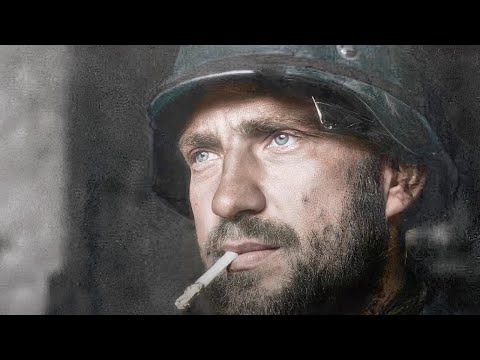
In the early days of the battle, the German war machine seemed unstoppable. Tanks rolled through the streets, crushing everything in their path, and Stuka dive bombers screamed from the sky, raining terror on the defenders. The Soviets, however, were not about to surrender. They fought with a ferocity born of desperation, using the ruins to their advantage. Every building became a fortress, every pile of rubble a sniper’s nest. The Germans soon realized that taking Stalingrad would be no easy victory.
The fighting was brutal, often hand-to-hand. Soldiers fought for control of stairwells, apartments, and even sewers. In one particularly vicious encounter, a Soviet sergeant recalled: “We fought for every step, every floor. The Germans would take the living room, and we would hold the kitchen. The next day, we would counterattack and take back the living room, only to lose it again. It was a nightmare of blood and fire.” The city had become a meat grinder, consuming men and machines alike.
As autumn turned to winter, the cold became as deadly as the enemy. Soldiers on both sides suffered from frostbite and hypothermia, their limbs turning black and useless. The Volga River froze, allowing the Soviets to move supplies across the ice, but the Germans were ill-prepared for the Russian winter. Their summer uniforms offered little protection against temperatures that plummeted to -30°C. The tide of the battle began to shift.
Despite the hardships, the Germans pressed on. Hitler was obsessed with capturing the city, and he poured more and more troops into the cauldron. The Sixth Army, led by General Paulus, was ordered to fight to the last man. But the Soviets, under the command of General Zhukov, were planning a massive counteroffensive. They massed troops and tanks on the flanks, where the German lines were held by weaker Romanian and Hungarian units. The trap was about to be sprung.
The young soldier’s name was Yuri, and he had been in Stalingrad for three weeks that felt like three lifetimes. His unit had been reduced from forty men to nine, and the nine were barely men anymore. They moved through the ruins like ghosts, their faces hollow and their eyes carrying the weight of things no one should ever see.
On the morning of November 19th, a strange quiet settled over the city. The relentless artillery barrage that had become the soundtrack of their existence suddenly seemed to falter. Yuri peered through a crack in the wall, his breath fogging in the freezing air. Something was happening.
Far to the north, beyond the smoke and the ruins, the thunder of a different kind of artillery began to roll. It was a deep, sustained rumble that shook the ground beneath their feet. Then came the sound that Yuri would remember for the rest of his life: the roar of Soviet tanks, thousands of them, surging forward.
The counteroffensive had begun. Operation Uranus, as the officers whispered, was the great encirclement. The Soviets struck the weakened Romanian flanks with overwhelming force, smashing through the lines that held the German flanks. Within days, the Sixth Army would find itself trapped in a pocket, cut off from supply and reinforcement.
Yuri’s sergeant, a grizzled veteran named Volkov, grabbed him by the shoulder. “Do you hear that, boy? That is the sound of the tide turning. The fascists are about to learn what winter truly means.” There was no joy in his voice, only a grim satisfaction. Victory would not come without a terrible price.
The news spread through the Soviet lines like wildfire. The Germans were surrounded. The Sixth Army, the pride of the Wehrmacht, was trapped in the frozen ruins they had fought so hard to conquer. But the battle was far from over. Hitler had forbidden Paulus from surrendering, ordering him to hold out until relief arrived.
The relief never came. The Luftwaffe attempted to supply the encircled army by air, but the Soviet air defenses and the brutal winter made the effort a disaster. Göring’s promise to deliver 300 tons of supplies a day was never met; on the best days, barely a fraction arrived. The soldiers of the Sixth Army began to starve.
Inside the pocket, conditions deteriorated rapidly. Soldiers ate their horses, then their dogs, then anything they could find. Frostbite claimed thousands of limbs, and disease spread through the crowded cellars and bunkers. The wounded lay on frozen ground, their moans filling the air. The once-proud army was being slowly ground to dust.
Yuri and his comrades watched from their positions as the noose tightened. They could hear the German lines at night, the desperate cries of men who knew they were doomed. Some of the younger soldiers felt a flicker of pity, but Volkov would have none of it. “Remember what they did to us,” he said. “Remember the children. Remember everything.”
The battle had become a siege within a siege, a war of attrition that would determine the fate of the entire Eastern Front. The world held its breath, waiting to see if the Sixth Army would break or fight to the bitter end. Yuri knew that the coming weeks would test everything he had left.
The first relief attempt came in December, and Yuri heard it before he saw it. The scream of engines, the clatter of tracks on frozen ground — German tanks, hundreds of them, pushing north through the fog. For a moment, the men around him tensed, gripping their rifles as if the pocket might yet burst open.
But the attack was blunted. The Soviet lines bent, then held. By the third day, the relief force had been thrown back, its tanks burning in the snow like funeral pyres. Yuri watched the smoke rise from the horizon and understood that the men inside the cauldron were now truly alone.
Volkov spat into the snow. “Mannstein came close. Closer than I’d like. But close is not enough.” He turned away and lit a cigarette with shaking hands. Even he, hardened by a year of slaughter, seemed to feel the weight of what was coming.
The weeks that followed were a slow, grinding death. The Germans inside the pocket fought on with a discipline that Yuri could not help but respect, even as he hated them. They held their lines, rationed their last crumbs, and dragged their frozen wounded from cellar to cellar. But each night, the Soviet patrols crept closer, and each morning, there were fewer voices on the other side of the rubble.
One evening, a small group of German soldiers stumbled out of a ruined factory with their hands raised. They were boys, Yuri realized — boys no older than his own younger brother, with hollow cheeks and eyes that had gone dark and distant. Their uniforms hung loose on bodies wasted by hunger, and their feet were wrapped in rags against the cold.
Volkov ordered them searched and sent to the rear. As they shuffled past, one of them looked at Yuri and said something in German. Yuri did not understand the words, but he understood the tone. It was not hatred. It was something closer to exhaustion, to surrender — the sound of a man who had nothing left to give.
That night, Yuri could not sleep. He lay in the frozen cellar and stared at the ceiling, listening to the distant crump of artillery. He thought of his mother’s kitchen, of the smell of bread, of a life that seemed to belong to another world entirely. He wondered if any of them would ever go home.
By January, the pocket had shrunk to a few square kilometers of rubble around the ruined city center. The Germans had been pushed back to the Volga, their backs against the frozen river, their ammunition nearly gone. The end was close, and everyone knew it.
Then came the offer of surrender. Soviet loudspeakers crackled to life across no-man’s-land, and a voice in German called on Paulus to lay down his arms. For two days, there was silence. Then the answer came: the Sixth Army would fight on.
Yuri’s unit was ordered to advance. They moved through the ruins in the gray dawn, past frozen corpses and burnt-out tanks, toward the last German strongholds. The fighting was savage, room to room, floor to floor, the same nightmare that had consumed the city for months. But this time, the Germans did not counterattack. They only held, and waited, and died.
And then, on a morning so cold that the air itself seemed to crack, the guns finally fell silent.
Yuri stood in the rubble of a shattered stairwell, his rifle hanging loose in his hands. The silence was louder than any bombardment, a pressure in his ears that made him dizzy. Around him, other soldiers emerged from cellars and holes, blinking in the pale winter light like men who had forgotten the sun.
Word came down the line: Paulus had surrendered. The Sixth Army was finished. Volkov listened to the report, then sat down heavily on a broken beam and stared at nothing. He did not cheer. None of them did.
They walked through the ruins toward the river, past columns of German prisoners shuffling through the snow. Thousands of them, wrapped in blankets and rags, their faces gray with frost and hunger. Yuri searched their faces without knowing why, looking for the boy who had spoken to him that night.
He never found him. Perhaps he had died in the final days, or perhaps he was somewhere in that endless column, one more ghost in a gray coat. Yuri felt nothing — not hatred, not pity, only a vast and terrible emptiness.
That evening, the survivors of his unit gathered in a half-collapsed cellar. Someone produced a bottle of vodka, and they passed it around without a word. Nine men had entered the cellar that morning. Seven remained.
Volkov raised the bottle. “To the ones who didn’t make it,” he said, his voice rough. They drank. Then they sat in silence, listening to the wind and the distant crackle of fires.
Yuri thought of his mother’s kitchen, of the bread she used to bake, of the brother whose face he could barely remember now. He had survived. He did not yet know if that was a gift or a curse.
Outside, the snow began to fall again, covering the ruins and the dead alike in a blanket of white. The battle was over. But for Yuri, and for the millions like him, the war would go on — in memory, in nightmares, in the long silence of the years to come.
He closed his eyes and let the exhaustion take him. Tomorrow, they would move again. Tomorrow, there would be another river, another city, another fight. But tonight, for the first time in months, there was no gunfire.
And so the question remains: what happens to a man after he has seen the worst of humanity — does he ever truly find his way home?
Report this article
Select a reason for reporting:






