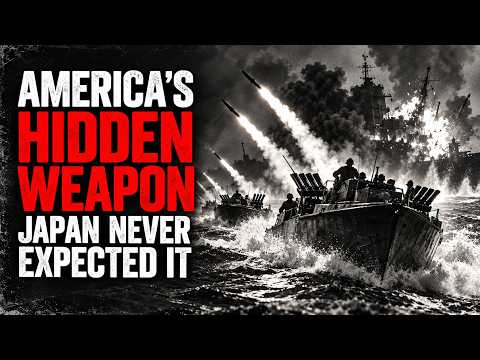
The radio had to survive being fired from a gun. It had to endure acceleration approaching 20,000 times gravity, then keep working inside a spinning artillery shell. Its available space was roughly the size of a small milk bottle. In 1940, those requirements described equipment that ordinary electronics factories could not supply. By January 1943, the equipment was aboard an American cruiser in the South Pacific.
USS Helena carried 5-in ammunition fitted with a secret radio proximity fuse. The device could trigger an explosion when a shell passed close to an aircraft. It did not steer the shell, and it did not need a gunner to predict the exact instant of detonation. On January 5, Helena engaged a Japanese dive bomber near Guadalcanal. Official Navy accounts credit her second salvo with bringing it down. The weapon developed through laboratories, proving grounds, and factories had crossed into combat without announcing its arrival through a new aircraft or a new ship. The visible weapon was a familiar gun. The important change was inside its ammunition.
The shell still needed accurate fire control, but the final decision to burst could now depend on the target itself. That Japanese bomber would never return to its base. The proximity fuse changed a small part of a large problem. American ships already possessed explosive shells that could burst in the air. They already used directors, range finders, and increasingly effective radar. Their difficulty was making all those elements place a destructive burst close enough to a moving aircraft. A time fuse answered the problem with a prediction. Before firing, the system estimated how long the projectile should travel before exploding. If that estimate was wrong, a well-aimed shell could burst ahead of the aircraft or behind it. An impact fuse required the projectile to strike something before functioning. The new fuse used information obtained during the shell’s flight. Radio energy reflected from a nearby object provided the condition for detonation. That reduced dependence on a preset bursting time. It did not remove the need to aim, track, identify, load, or fire correctly.
Its wartime designation was VT, generally explained as variable time. The name concealed more than it revealed about the device’s operating principle. What appeared to be another variation in ammunition was actually a compact electronic system built to survive an environment that destroyed ordinary radio components. The two uses of radio worked at different scales. A shipboard set helped find or track an aircraft at a distance. The fuse’s small system operated during the projectile’s brief passage near a target. One supported the decision about where to fire. The other supported the decision about when to burst. Combining their effects was useful, but treating them as interchangeable would conceal what the new ammunition actually changed. The result was important without being absolute. Japanese aircraft continued to hit American ships after VT ammunition entered service. The first ship credited with a VT victory was herself sunk six months later by torpedoes. Neither event disproved the fuse’s value. Both defined the limits of the problem it could solve.
The story therefore runs through more than one successful salvo. It includes British research, American development, manufacturing decisions, secrecy, fleet distribution, and the continued work of gun crews. Its decisive achievement was making a difficult function reliable enough to use repeatedly inside ammunition consumed every time a battery opened fire. The weapon’s immediate history began before the United States entered the war. Aircraft had become faster and more capable while the basic challenge of anti-aircraft gunnery remained unresolved. A ship could throw explosives into the sky without placing their fragments where the target would actually be. Increasing the volume of fire did not remove that uncertainty. The idea of detonating ammunition near a target was not exclusively American. British investigators had already explored approaches to proximity fuzing. The Tizard mission brought information about British technical work to the United States in 1940. The eventual American naval fuze grew within that larger exchange of research and wartime requirements.
In August 1940, the American effort received a formal organizational foundation. Section T of the National Defense Research Committee took responsibility for the project under physicist Merle Tuve. His group worked at the Carnegie Institution of Washington. The National Bureau of Standards also entered the wider proximity fuze effort. The arrangement connected scientific institutions to a naval requirement. The Bureau of Ordnance needed equipment that could function inside a projectile, not simply a laboratory demonstration of reflected radio signals. Researchers had to find out whether the necessary components could survive firing. The question was practical from its beginning. Naval officers, including William Sterling Parsons, helped connect the research to ordnance testing and service conditions. The program was not the work of one isolated inventor. It required specialists who understood radio, gunfire, materials, manufacturing, and the conditions aboard a fighting ship. Each field supplied limits that the others had to respect. Vannevar Bush’s wartime scientific organization gave the project administrative support and urgency.
In March 1942, Johns Hopkins University assumed administration of the program and established the Applied Physics Laboratory at Silver Spring, Maryland. VT remained central to the effort. The new laboratory coordinated work spread among contractors rather than producing every component itself. That structure mattered because the fuse had to become a manufactured article. A promising circuit was not yet a naval weapon. It needed components that could be made consistently, assembled correctly, stored safely, and delivered in quantity. A fleet fighting across the Pacific could not depend on a handful of individually perfected specimens. Administrative changes did not require every researcher to change assignments. The official history notes that many scientists and engineers were unaware of shifts in the program’s higher supervision. Their immediate work continued through the same technical problems. This continuity mattered within an organization expanding during war.
The laboratory’s coordinating role also reduced the need to concentrate every skill in one building. Contractors could work on different problems while the program compared results against a common naval requirement. The eventual weapon depended on that coordination. A successful component still had to function as part of the complete fuse. The program therefore developed along two paths at once. Scientists and engineers worked to make the fuse function. Industrial organizations prepared to reproduce its parts and assemble them. The Navy accepted financial risk before every technical question had been settled because waiting for a finished design would delay production. The official administrative history records more than $50 million obligated before a complete fuse could be tested. That figure represented a commitment to an uncertain result, not proof that the results had already been achieved. The expenditure bought parallel work and time. The proof still had to come from a gun.
By the spring of 1942, the Pacific Fleet had immediate reasons to need that proof. Aircraft were attacking ships, supply movements, and island positions across a widening theater. The problem being examined in Maryland was already killing sailors at sea. Japanese naval aviation entered the Pacific war with an effective combination of aircraft, trained crews, and coordinated attack methods. The Aichi D3A dive bomber approached a ship from above. The Nakajima B5N torpedo bomber threatened it from low altitude. Their different attack profiles forced defenders to solve more than one engagement at the same time.
The aircraft did not have to destroy every gun to succeed. One bomber reaching a carrier’s flight deck could start fires, interrupt flight operations, or ignite material already aboard. Its released torpedo traveled underwater beyond the task assigned to anti-aircraft fire. The ship’s defensive system had to stop the delivery aircraft before the weapon reached a useful release position. The advantage was partly geometric. A ship occupied a comparatively predictable path on the surface. An aircraft could change altitude, direction, and speed while approaching it. The gun mount had to follow those changes, and the projectile still needed time to reach the engagement area. The position observed by a lookout was already becoming obsolete.
Multiple attackers increased the burden. A director tracking one aircraft could not automatically provide the correct solution for another approaching from a different direction. Gun crews had to distinguish targets from friendly aircraft and respond to changing orders. The attacking formation could force decisions faster than a single ideal tracking problem suggested. Helena had experienced Japanese air power on the first day of the American war. On December 7, 1941, she lay at Pearl Harbor when a torpedo struck her starboard side. Flooding affected machinery spaces and damage interrupted power to her guns. Restoring power and controlling flooding were necessary before her armament could function properly.
The cruiser survived and returned to service after repairs. Her experience demonstrated that an effective defense involved much more than a projectile. Guns needed electrical power, communications, ammunition supply, and men able to operate under attack. A new fuse would eventually improve one link in a chain already tested by damage. During the Guadalcanal campaign in 1942, the same threat followed ships into waters needed for reinforcement and supply. Helena escorted transports and took part in the November fighting around the island. Air warnings could interrupt unloading and force ships into defensive dispositions. Aircraft could influence operations even when their bombs missed.
The Japanese advantage was not invulnerability. American fighters and anti-aircraft batteries shot down attacking aircraft before the proximity fuse arrived. Japanese carrier aviation also suffered major losses during 1942. The problem was that even a reduced attacking force could inflict serious damage when enough aircraft reached the ships. That distinction shaped the Navy’s requirement. The fleet did not need a device proving that aircraft could be destroyed. That was already established. It needed to make each useful opportunity more productive. A shell passing near an aircraft should have a better chance of releasing its fragments at the relevant moment.
Nor could the Navy simply solve the problem by placing a fighter above every threatened ship every hour. Weather, darkness, warning time, fuel, and competing assignments limited fighter coverage. Shipboard guns remained the defense against aircraft that reached their range. Their performance mattered after other parts of the defense had already been tested. By 1942, Japanese attack aircraft had demonstrated the cost of an imperfect final barrier. The Americans could build more ships and improve their guns, but each protected deck still depended on decisions made within seconds. The new ammunition was intended to change what happened when a shell arrived close enough to matter.
The American deficit lay in the final relationship between the shell and the aircraft. A director could estimate where a target would be when the projectile arrived. The gun could be pointed toward that predicted position. The shell could travel through the correct general region and still fail to damage anything. With an impact fuse, a near miss remained a near miss. The projectile had to make contact to trigger the intended burst. Against a small aircraft moving through open air, that requirement narrowed the useful result. Much of the space around the target contained nothing capable of initiating the explosion.
A time fuse provided another possibility. It could cause the shell to burst in flight without touching the aircraft. This was established technology, and it is incorrect to describe proximity ammunition as the first explosive shell that could work without a direct hit. The improvement concerned how the bursting moment was selected. Time fusing depended on a prediction made before the shell completed its journey. The firing system had to estimate the target’s future location and arrange an explosion at the corresponding point. Errors in range, motion, or timing could place the burst outside a useful distance.
Accurate direction alone was not enough. The ship’s own movement added work. A rolling or turning platform had to keep its weapons directed while the target maneuvered independently. Fire control equipment helped manage that relationship, but its information still had limits. A mechanical system could calculate from available inputs without knowing what an enemy pilot would do next. Radar improved the information entering that process. It could provide ranges and help track aircraft under conditions that challenged visual observation. Yet, shipboard radar did not reach into every conventional shell and alter its fuse after firing. Better measurement and better detonation were related requirements, but they were not the same invention.
The Navy also used different weapons for different parts of the engagement. Heavy anti-aircraft guns projected explosive shells to greater distances. Smaller automatic weapons supplied rapid fire against closer targets. Their calibers, projectiles, and methods of control were different, and a device suitable for a 5-in shell did not automatically fit a 20-mm round. A later fleet report would explicitly reject the assumption that the same proximity fuse could simply be placed inside a 40-mm projectile. Space inside ammunition was limited. Electronics occupied volume that would otherwise hold explosive material. Miniaturization had to preserve a useful complete projectile, not merely prove that a circuit could be made small.
The early naval program therefore concentrated on a weapon large enough to accept the new equipment. The 5-in gun was already widely established aboard American warships. Improving its ammunition offered a way to increase defensive value without replacing every mount. The change could travel through the supply system to ships already fighting. The distinction also affected how the weapon looked in an archival photograph. A ship firing its secondary battery did not reveal whether its ammunition carried a time fuse or a radio fuse. A visible burst beside an aircraft could not identify the mechanism by appearance alone. Reports and ammunition records supplied information that the image could not. The hidden nature of the improvement therefore complicates its later history as well as its original detection.
That possibility brought its own demands. Ammunition might spend time in storage, pass through several handling stages, and arrive in tropical service conditions. Its electronics could not depend on careful laboratory attention just before use. A fuse that worked only under ideal treatment would fail at the point where the fleet needed it most.
The requirement was therefore stricter than making a radio detect a nearby object. The Navy needed that function inside a shell, after storage, after handling, and after the violence of firing. The target would provide only a brief opportunity. Every component had to remain ready until that opportunity arrived.
The important design decision was to move the final sensing function into the ammunition. The ship would continue to aim the gun. The projectile would continue along its ballistic path. But the condition for detonation could come from radio reflections encountered during flight rather than entirely from a setting made aboard the ship. That was a limited form of independence.
The shell did not search the sky for an enemy aircraft or turn toward one. It had no understanding of Japanese markings, American markings, or mission. It responded to physical conditions. Friendly aircraft and nearby surfaces therefore remained matters that the firing ship had to consider. The attraction was that radio energy could interact with a target before the metal bodies touched.
The fuse’s electronics detected a relevant change in the return signal as the shell passed near an object. If the equipment functioned properly, it initiated the explosive burst. The aircraft then faced fragments from a shell that did not need to strike it directly. This description sounds straightforward because it omits the engineering burden. The components were built with the electronic technology of the early 1940s. Tiny vacuum tubes and associated parts had to survive stresses far beyond those expected of a household radio.
Their small size did not make them automatically strong. The Navy’s administrative history describes acceleration of approximately 20,000 times gravity and rotation approaching 500 revolutions each second. These were engineering conditions to withstand, not claims about every individual firing. The equipment had to function after that mechanical punishment. A successful laboratory test before launch established only part of the requirement.
Power presented another difficulty. The fuse needed an internal electrical supply that would remain suitable after storage and become available when required. The Navy and its contractors developed specialized batteries for that environment. Reliability had to include the waiting period in a magazine as well as the brief flight toward an aircraft. Safety also belonged within the design.
The device had to tolerate transport and handling without functioning when it should not. The naval requirement joined dependable operation to dependable non-operation. The crews loading the ammunition had to be able to use it within an established ordnance system. These problems explain why the program expanded across institutions and companies.
The official history eventually counted 87 firms holding prime contracts and 110 plants working on the fuse effort. That was an industrial network organized around a very small object. The shell’s hidden machinery required visible factories, inspection systems, and delivery schedules. Crosley entered the project before the attack on Pearl Harbor to help connect design decisions with production. Other firms addressed electronics, power supplies, and the manufacture of specialized components.
The scientific program could not treat production as an activity that would begin after invention ended. Each design choice affected whether the Navy could obtain sufficient ammunition. The tube production effort shows how specialized that manufacturing became. The official administrative history describes work distributed among several firms before Sylvania became the principal producer for the required quality. It also records a network of 23 subcontractors supporting a late-war delivery rate approaching half a million tubes daily.
Those were electronic tubes, not complete fuses. Confusing the two totals would exaggerate ammunition output. The comparison instead shows how a small assembly could generate demand for components on a scale far beyond its physical size. The project accepted overlap between development and procurement. Contracts for components moved forward while improvements and testing continued.
That created the possibility of wasted material if a design failed. It also meant that a successful trial would not be followed by another long wait while production began from nothing. The overlooked decision was therefore organizational as well as technical. The Navy wanted a sensing device inside a shell, and it prepared to manufacture that device before every uncertainty had disappeared. The final requirement was a supply of usable rounds. A unique success on a proving ground would not protect a fleet.
By the summer of 1942, those separate efforts were ready for a test aboard a warship. The projectile would have to survive a naval gun and then function against an airborne target. That test could reveal failure at either stage. It could also establish whether the research had produced a practical weapon. On August 12, 1942, the cruiser USS Cleveland tested proximity ammunition in Chesapeake Bay. The 5-in guns fired against radio-controlled target aircraft.
The location was far from the Solomon Islands, but the essential problem was the same. An explosive shell had to reach an aircraft’s vicinity and burst usefully without making direct contact. The Navy had prepared for several days of trials. According to its administrative history, all three available drones were destroyed on the first day by four proximity bursts. That result should be described carefully. Four effective bursts did not mean that only four rounds were fired during the entire test program. Three target aircraft, four proximity bursts.
The trial joined functions that had previously been examined separately. Gun survival, flight operation, target response, and destructive effect. A circuit that survived but failed to sense the aircraft would not have produced the result. Neither would a functioning sensor whose shell never approached the target. The targets were drones, not Japanese bombers. They did not establish how the weapon would perform against every attack profile or under every combat condition. They did establish that shipboard guns could fire ammunition whose internal electronics still worked afterward.
The projectile had crossed the gap between a laboratory article and a demonstrated naval application. That distinction mattered to the production decisions already underway. The Navy had committed resources before this trial. A successful result now supported accelerated deliveries and wider preparation for combat. The industrial program could move toward a use that had been demonstrated rather than merely predicted.
The test also showed why the weapon could be difficult for an opponent to recognize. No new gun mount had to appear on a ship. A 5-in projectile still left a 5-in barrel. The change became apparent through the relationship between an aircraft and a nearby burst. A relationship difficult to reconstruct from an attacking cockpit. There was nevertheless no basis for assuming that successful demonstrations would eliminate defective ammunition. Production consistency, storage, transport, and actual fleet handling still required attention. A percentage of failures could reduce the value of the device without raising the success of its best examples. The naval program needed information about repeated performance.
Nor did destroying a drone demonstrate immunity from enemy action. A ship under attack might have poor warning, obstructed visibility, damaged equipment, or too many targets. The gun crew could be working with a less stable solution than the trial provided. The new fuse improved the ammunition’s behavior after firing. It did not repair those conditions automatically. That was the next boundary. The weapon had passed a sea trial, but its final proof belonged where the fleet faced Japanese aircraft. The Navy now had to deliver the ammunition to ships likely to use it. Those deliveries had to preserve secrecy without delaying the operational test indefinitely.
The chronology also measures the program’s pace. Section T had been organized in August 1940. Cleveland’s successful trial followed two years later after the United States had entered the war and the Pacific fighting had expanded. The project had moved quickly for its difficulty, but it had not arrived before American ships paid for the existing defenses’ limitations. If the distinction between a laboratory success, a shipboard trial, and a confirmed combat result makes this history clearer, support the documentary with a like. The source notes preserve the numbers and their limits. Three drones destroyed in a trial and one bomber destroyed in combat were different forms of evidence, and the Navy needed both.
After the Cleveland trials, the Navy moved toward combat distribution. By the middle of November 1942, its administrative history records 5,000 rounds of proximity ammunition delivered at Mare Island. Those rounds were intended for shipment through Nouméa to ships expected to encounter the enemy. The secret could now travel inside ordinary naval logistics. 5,000 rounds were an initial supply, not enough to equip every ship indefinitely. Their destination reflected the need to obtain combat evidence quickly. A weapon held safely in the United States could remain secret without affecting the war. Its value required loading it aboard a ship and accepting that the enemy might eventually recover evidence.
The initial rules limited employment to circumstances intended to reduce that risk. Firing over water made recovery of the unexploded projectile less likely than firing where it could fall onto enemy-held ground. The restriction was about preserving the device from examination. It did not mean that the radio principle worked only above the sea. The designation VT also helped conceal the mechanism. Variable time sounded related to familiar fuse categories without identifying a radio system inside the projectile. Names, handling rules, and limits on use served the same broad purpose. The fleet was receiving an improvement that its commanders hoped to exploit before an opponent understood it.
Secrecy should not be confused with proof of surprise in a particular Japanese mind. No reliable account is needed of a bomber crew imagining that the shells could not hurt them. The documented facts are sufficient. The United States protected the design, shipped it to the Pacific, and employed it in combat. The reaction of an individual pilot remains a separate question. The ammunition also altered what the gun crew needed from the fuse. The shells still required a useful trajectory, but their burst no longer depended entirely on the accuracy of a preset time. That reduced one source of error within the existing engagement process. The ship’s director, mount, crew, and supply arrangements remained essential.
This was a change that could spread through established batteries. The fleet did not have to wait for a new class of cruiser before using it. A compatible gun could employ improved ammunition as supplies arrived. The rate of adoption, therefore, depended partly on production and distribution, rather than only on ship construction. The initial security policy created a practical compromise. Using the ammunition at sea provided combat experience, while reducing the chances of recovering a dud. The Navy could protect the design and begin learning from engagements at the same time. That policy made the Pacific Fleet an early proving place for a device with wider potential.
It also depended on confidence. Commanders needed evidence that the new rounds justified their place in magazines and their use during an attack. A successful trial against drones was encouraging. A successful engagement against a Japanese aircraft would connect that evidence directly to the fleet’s immediate problem. Helena was a suitable place for that connection. She had returned from Pearl Harbor damaged and operated through the Guadalcanal campaign. Her anti-aircraft battery belonged to a ship with repeated exposure to the conditions the fuse was intended to address. The ammunition entered a working combat organization, rather than a specially isolated experimental vessel.
The date of the first credited success is generally given in official Navy histories as January 5, 1943. Some later accounts use January 6. The established official chronology supports January 5, and the central event is consistent across the accounts. Helena brought down a Japanese dive bomber with proximity ammunition from her 5-in battery. That was the encounter toward which the previous two years had been directed. The gun would do its familiar work. The shell would carry an unfamiliar means of selecting the burst. The result would have to be judged in the same sky where ordinary ammunition, enemy movement, and the urgency of combat already complicated observation.
On January 5, 1943, the new ammunition met a Japanese aircraft near Guadalcanal. Helena was operating in waters where air attack was an established danger. Her after 5-in battery engaged a dive bomber. The official account places the successful result in the second salvo. The first salvo alone did not decide the engagement. The battery continued firing, and the next group of shells reached the target’s vicinity. A proximity burst brought down the bomber. The Navy identified the action as the first credited destruction of a Japanese aircraft by this new ammunition.
The record supports that result without supplying a cinematic account of every second. It does not require invented bridge dialogue, the named enemy pilot, or an exact distance between a particular shell and the aircraft. The evidence is the engagement, the ammunition used, and the reported outcome. The second salvo provided the event around which the later history was built. Inside that salvo, the equipment faced the conditions that had governed its development. Acceleration approached the order of 20,000 times gravity. The electronics had to remain functional inside a rapidly spinning projectile. The same requirement that had seemed so difficult in 1940 now existed within a shell fired by a ship under wartime conditions.
The radio fuse did not turn a bad trajectory into a good one. Helena’s battery still had to place its projectiles near the aircraft. What changed was the last part of the encounter. A nearby target could help determine when the shell exploded, reducing reliance on the earlier prediction of flight time. That difference was small in physical scale and large in effect. No gun was replaced during the action. The ship did not launch a new interceptor. A change in a small and expendable projectile altered the outcome of a familiar gun engagement. The bomber was lost. The battery remained available to fire again.
The Navy’s administrative history treated the circumstances as convincing evidence that the fuse had caused the result. It also referred to the performance of ships without the new ammunition. That was an official assessment of a combat event, not a controlled experiment with identical targets. The success justified wider distribution while leaving further evaluation necessary. One aircraft destroyed did not establish a universal expenditure rate. Two salvos at Helena did not mean that every future bomber would fall after two salvos. Weather, target behavior, gun control, and serviceability continued to vary. The result showed that the new mechanism could work in combat, which was the essential threshold.
The fleet could now compare a successful combat employment with the earlier Cleveland demonstration. Three drones had been destroyed during the sea trial. A Japanese bomber had now been destroyed during an operational engagement. Those events connected laboratory development to a weapon that naval commanders had reason to request in greater quantity. The transition also changed the scale of the problem. During development, the program needed enough functioning examples to establish feasibility. After Helena, the fleet needed a continuing supply of dependable ammunition. Every successful burst destroyed its own electronic equipment along with the shell. The weapon’s effectiveness created demand for its replacement. That demand was met through production already being prepared.
The Navy’s administrative history records nearly 2 million proximity fuses delivered by the end of 1943. This was a program total, not a count fired by Helena or consumed in one Pacific battle. It indicates how far the effort moved beyond the first shipment of 5,000 naval rounds. Manufacturing improvements also changed what the government could afford to supply. Early developmental examples cost hundreds of dollars each. By 1945, the official history gives a mass production price of about $18 per fuse. Those figures refer to different production stages. They are not prices paid for identical circumstances or a modern cost comparison.
Individual electronic components became cheaper as production methods improved. The official history records vacuum tube costs falling from $5.50 to less than 40 cents apiece. That change multiplied across ammunition produced in large quantities. The practical consequence was that a small electronic device could become routine ammunition. Factories repeated work that had once required specialist attention. Inspection and testing supported the effort to make a shipment useful as a shipment, rather than as a collection of uneven experiments. The Navy could increasingly plan around quantities rather than isolated successes.
For Japanese aviation, the change added another difficulty to an already contested approach. A shell that passed close could now burst in response to that proximity, evading a preset bursting time. But proximity did not guarantee that another projectile would pass harmlessly. Yet, the aircraft still had opportunities wherever warning, tracking, firing, or interception failed. The first combat success therefore marked the beginning, rather than the end, of Japanese air attacks. The new ammunition entered an improving American defense made of several systems. Its contribution would be measured through accumulated engagements, not through a claim that one salvo had settled the Pacific war. Helena’s second salvo had demonstrated the device. The fleet’s continuing battles would measure its value.
Subscribe for the rest of this history, including the combat figures that show both the fuse’s advantage and the attacks it did not stop. The records become more useful when successful weapons are examined alongside their limits. The next part follows the ammunition into a threat that changed the meaning of shooting an aircraft down. By late 1944, the Navy faced organized Japanese suicide attacks during the Philippine campaign. An aircraft no longer needed to complete a conventional bombing run and escape. Its remaining momentum and carried explosives could damage a ship even after defensive fire had inflicted fatal injuries.
The definition of a successful defense became stricter. Shooting down an aircraft and preventing it from hitting the ship were now visibly different outcomes. A damaged machine could continue toward a large deck. A crash close alongside could also cause damage. The Navy’s reports separated hits, damaging near misses, and aircraft destroyed clear of the target because those categories represented different results for the ship. The April report counted 312 definite suicide attempts in its principal sample. Of these, 121 hit ships and 53 produced damaging near misses. Another 138 aircraft were brought down clear. These were reported attempts that reached the relevant engagement stage. Not all aircraft launched from Japan or all attackers encountered by American fighters. The distinction prevents those figures from becoming a fleet-wide success rate.
Within their stated scope, they explain the urgency of improving defense before an aircraft reached the ship. The proximity fuse remained useful in that environment because a heavy shell could inflict damage before the attacker reached the closest weapons. But the fleet’s April 1945 analysis did not describe a complete solution. It criticized the performance of 5-in batteries in reported suicide engagements and emphasized the importance of earlier effective engagement. The same report recorded an advantage for proximity ammunition within those batteries. Its table for October 1944 through January 1945 listed 7,603 VT rounds and 22,085 conventional 5-in rounds expended in suicide actions. The VT ammunition received 24.5 aircraft credits compared with 19 for the conventional ammunition. Fractional credits reflected the accounting of shared destruction.
The published averages were approximately 310 VT rounds per credited aircraft and 1,162 conventional rounds. That comparison supported the new ammunition’s value. It did not mean every aircraft required exactly that number of shells or that VT always performed nearly four times better under identical conditions. The figures came from reported engagements with changing circumstances. The table also carried an important qualification. It covered actions in which at least one suicide crash was attempted while some aircraft destroyed had uncertain intentions. An aircraft shot down before beginning its final approach could not always be identified as a planned suicide attacker. The record could count the loss without knowing the pilot’s original mission.
Smaller automatic weapons received most of the aircraft credits in these close engagements. The 40-mm and 20-mm batteries continued to matter because many attackers reached their ranges. Their contribution cannot be reassigned to the proximity fuse. American air defense worked through overlapping opportunities and each layer faced the aircraft that reached it. The reports also described improvements to the fuse itself. By the spring of 1945, newer models were replacing earlier versions with better reliability and performance. Expected gains in a technical report were not the same as measured gains already achieved. The development program continued because the first successful naval model had not settled every problem.
The enemy’s response was not a documented moment in which all Japanese pilots recognized the hidden radio and abandoned their missions. Attacks continued. The American advantage developed through production, better control, improved ammunition, fighter interception, and experience. VT was a significant component inside that process rather than the sole explanation for Japanese losses. The collapse occurred in the prospect of finding an easy path through a growing defensive system. Japan could still inflict losses, sometimes severe ones, without preventing the fleet from supporting further operations. The new fuse improved the chances at a critical stage of an engagement. The surviving American ships and the attacks that reached them both remained part of its history.
The first cost on the ledger belongs to Helena herself. On July 6, 1943, she fought Japanese destroyers in the Battle of Kula Gulf. Three torpedoes struck the cruiser and she sank. The weapon that had helped her destroy an aircraft in January could not protect her against underwater weapons in a surface action. The loss killed 168 members of her crew. Destroyers recovered survivors while other men reached islands and waited for further rescue. Local people and coast watchers helped sailors who landed on Vella Lavella. The ship’s final history involved damage control, survival, and rescue long after her guns fell silent.
That loss is not evidence that the proximity fuse failed to perform its assigned function. It is evidence that a warship could face several independent means of destruction. An improvement against one threat did not remove the others. The same distinction applies to the American fleet as a whole. At Okinawa on April 16, 1945, USS Laffey endured repeated attacks by Japanese aircraft. The museum preserving her history describes 22 bombers and suicide attackers over about 80 minutes. Her crew saved the ship, but 32 men were killed and 71 wounded. The Navy ship history records the same casualty figures.
Those numbers should not be interpreted as a test of one fuse in isolation. Laffey’s defense included her guns, nearby aircraft and ships, maneuver, damage control, and the decisions of the attackers. Her survival required the crew to continue working after bombs and aircraft had already struck. No single ammunition statistic contains that experience. The comparison with Helena is therefore about limits, not a direct exchange calculation. Helena was lost to torpedoes in July 1943. Laffey survived an attack in April 1945 with heavy casualties. Different dates, weapons, and circumstances prevent their losses from being combined into a measure of VT effectiveness.
There was also a continuing material cost. A successful round consumed its fuse, its explosive filling, and the labor that had produced them. Large expenditures required replenishment, handling, and storage across vast distances. Production efficiency mattered because the fleet needed to keep firing after the first successful engagement. The $18 production figure recorded for 1945 describes the fuse, not the entire cost of defending a ship. The shell, gun, director, crew, training, and supporting fleet remained additional requirements. A cheaper component could make more ammunition available without making naval air defense inexpensive.
Its value depended on the whole system. American industrial strength made such repetition possible, but it did not make every shot effective. Some aircraft escaped gunfire, some shells failed to function usefully, and some attacks arrived under unfavorable conditions. The wartime reports searched for those shortcomings because they affected future casualties. Praise alone would not improve the next engagement. The saved lives cannot be given an exact total from the available statistics. A destroyed aircraft might have missed even if it survived, or might have struck a ship carrying many men. The counterfactual remains uncertain.
The measured record is stronger. The ammunition obtained a disproportionate share of credited kills within particular 5-in comparisons, while attacks and casualties continued. That combination is sufficient to establish a consequential weapon. It improved a defensive probability that mattered repeatedly across the war. It did not make the men behind the guns safe. Their continued exposure is part of the achievement’s meaning because the equipment had to work where failure still carried a human cost.
The chronology begins in 1940 when proximity fuzing became an organized American research effort. Section T formed in August under Merle Tuve. British work and the Tizard mission contributed to the exchange of technical knowledge. The naval objective was a fuse able to survive firing and function near an airborne target. During 1941, the project expanded through scientific institutions, naval organizations, and industrial contractors. Production considerations entered before the final design had been proved. The attack on Pearl Harbor then placed the United States at war with Japan. Helena survived damage there and returned to the Pacific after repairs.
In March 1942, Johns Hopkins University took responsibility for administering the program and established the Applied Physics Laboratory. The effort connected research to a wide network of manufacturers. Its parts had to become dependable articles produced in quantity. The requirement extended beyond a single working prototype. On August 12, Cleveland fired proximity ammunition against drones in Chesapeake Bay. The Navy’s account recorded three target aircraft destroyed by four proximity bursts during the first day. The result demonstrated the weapon aboard a ship. It did not establish a universal number of rounds required to destroy an aircraft.
By the middle of November, 5,000 naval rounds had reached Mare Island for the initial Pacific shipment through Nouméa. Security restrictions sought to prevent an unexploded fuse from falling into enemy hands. The first use was therefore controlled as well as urgent. The weapon had to enter combat without unnecessarily exposing its construction. On January 5, 1943, Helena gained the first officially credited Japanese aircraft destruction with VT ammunition. Her second salvo brought down a dive bomber. The event established the combat value of the work begun before American entry into the war. It did not end the need for testing, improvement, or conventional air defense.
On July 6, Helena was sunk at Kula Gulf by Japanese torpedoes. The fuse program continued with nearly 2 million delivered by the end of 1943. More ships could receive ammunition whose electronic equipment was destroyed every time the shell functioned. Production had become part of combat effectiveness. From October 1944 through January 1945, reported suicide engagements supplied a new body of evidence. The Navy compared ammunition expenditure with aircraft credits and found a substantial advantage for VT within the 5-in batteries. It also found serious weaknesses in the defense as a whole. The improved shell remained dependent on the way the fleet used it.
In April 1945, the fighting off Okinawa showed both the strength and the continuing cost of that defense. Laffey survived her attack with heavy casualties. New fuse models and revised fleet guidance continued to appear. The secret device had become established equipment while the threat it helped resist remained active. The first factor was target sensing. Conventional time fuses could already burst a shell without direct contact, but they depended on a predicted interval. The proximity fuse obtained relevant information during flight through reflected radio energy. That changed the final relationship between the projectile and the target. A useful trajectory no longer had to be paired with the same precision in preset bursting time.
The improvement was specific. It did not guide the projectile, identify the enemy, or correct a shell passing too far away. Its effect depended on the gun placing ammunition within a useful region. Inside that region, the aircraft’s proximity could initiate the burst. This is why the weapon was more than an ordinary time fuse, while remaining less than a guided missile. Its contribution lay in the moment of detonation, not control over the entire engagement.
The second factor was mechanical survival. A sensing circuit had no combat value if launching destroyed it. The naval projectile imposed acceleration approaching 20,000 times gravity and rapid rotation on equipment that also had to fit within limited space. Specialized electronics and power supplies had to remain suitable through storage, handling, and firing. The problem was, therefore, different from placing an ordinary radio near a target. The complete device needed dependable operation after conditions that ordinary components were not built to endure. Cleveland’s trials connected that survival to the destruction of airborne targets. Helena’s engagement then carried the same requirement into combat. This factor explains the years of development behind a result measured in salvos.
The apparently small invention depended on making delicate functions persist inside a violent mechanical event, repeatedly enough to justify issuing the equipment throughout a fleet. The third factor was industrial repetition. The Navy could not use a unique laboratory specimen as a permanent defense. Every shell consumed its fuse, making demand continuous wherever batteries engaged aircraft. The program, therefore, linked research, procurement, factories, inspection, and distribution before final development had ended. That overlap involved financial risk, but it shortened the interval between a successful trial and useful deliveries. The initial shipment of 5,000 rounds was followed by a program delivering nearly 2 million fuses by the end of 1943.
Those totals describe production and supply, not confirmed aircraft destroyed. Their importance lies in making the new capability available more widely. Manufacturing converted a demonstrated possibility into ammunition that commanders could continue requesting. Without that repetition, Helena’s second salvo would have remained an isolated success instead of the beginning of a broadly useful naval weapon. The fourth factor was defensive integration. Proximity ammunition entered an existing system of lookouts, radar, fighter direction, gun directors, mounts, and crews. None of those elements could be discarded because the fuse worked. The ship still had to identify the threat, obtain a usable solution, fire in time, and keep ammunition moving. Smaller automatic weapons remained important when attackers reached close range.
The Philippine reports show both the advantage of VT ammunition and the shortcomings of 5-in engagement practices. Later suicide attacks made destruction at a safe distance especially important because a damaged aircraft could still strike. This factor prevents the story from becoming a claim about one invincible device. The weapon gained its practical value through other equipment and trained people. Its success was strongest when those parts created an opportunity that the improved fuse could use for American warships.
The central reversal was that the projectile gained information after it left the gun. The ship still aimed and fired, but the final bursting condition could depend on a nearby target. A problem previously addressed through prediction now included sensing during flight. The change was hidden inside a familiar shell. The engineering figures show what that reversal required. A small radio system had to survive acceleration approaching 20,000 times gravity before it could do useful work. Its components then had to perform while the shell spun through the air. The result at Helena appeared as two salvos and one Japanese bomber brought down.
Within that technical reversal was another, less visible in the combat account. Equipment once treated as a difficult electronic assembly became expendable ammunition. The Navy could afford to destroy the radio in every successful burst because factories were producing replacements. The military value lay partly in the ability to repeat the event. That industrial transformation did not make the war effortless. Gun crews still worked under attack and ships still burned or sank. Japanese aircraft continued to find openings in American defenses. The fuse changed a probability at an important moment. It did not remove danger from the men depending on it.
The record supports a stronger explanation than a claim that Japan simply never imagined the weapon. American organizations protected the device’s details, demonstrated it aboard Cleveland, and brought it into combat aboard Helena. They then continued production and improvement while the fleet supplied experience. Secrecy helped protect the advantage, but reliable performance made the advantage real. The first credited bomber would not return to its base. Neither would Helena return from every battle that followed. Her loss at Kula Gulf belonged to a different weapon and a different engagement. While the fuse she had helped prove spread beyond her, a single ship’s fate and a technology’s continued usefulness followed separate paths.
After the war, official accounts described the device that had once been protected by an uninformative designation. The equipment could finally be explained outside the restricted circle that developed and used it. The story remained contained in an object small enough to fit within a projectile. A radio proximity fuse in the nose of a 5-in shell. Subscribe for more Pacific War histories built from the records with the machines, decisions, and losses kept together. New documentaries follow every few days.
Report this article
Select a reason for reporting:






