On a cold January night in 1931, a man stepped off a tram in a quiet Liverpool suburb, searching for an address that did not exist. His name was William Herbert Wallace, and he had been lured there by a mysterious phone call. While he wandered the streets, his wife, Julia, lay dead in their living room—beaten beyond recognition. The killer left no weapon, no motive, and no trace of blood on Wallace. Yet, within thirteen days, he would stand accused of one of the most baffling murders in British history.
The call had come the night before, at 7:27 PM, to the City Café where Wallace’s chess club met. A man identifying himself as R.M. Qualtrough asked Wallace to visit 25 Menlove Gardens East the following evening about an insurance matter. The address, Wallace would later discover, did not exist. There was a Menlove Gardens North, South, and West—but no East. And the phone booth from which the call was made? It stood barely 400 yards from Wallace’s own front door.
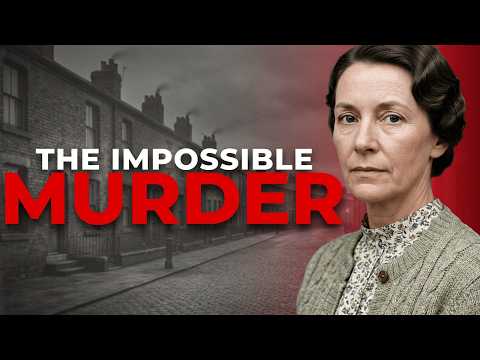
At 6:30 PM on Tuesday, January 20, a milk boy named Alan Close delivered milk to the Wallace home and spoke to Julia at the front door. She was alive. At 7:05 PM, Wallace left to catch his trams, beginning a 40-minute wild goose chase across the city. He asked a tram conductor, a policeman, and a newsagent for directions to an address that simply wasn’t there. By 8:45 PM, he returned home—and couldn’t get in. Both doors were locked. He fetched his neighbors, John and Florence Johnston, and together they entered through the back.
Inside, Julia Wallace lay dead in the front parlor—the good room, reserved for guests. She had been struck at least eleven times on the head with a heavy object, fracturing her skull. Beneath her body, partially hidden, was Wallace’s own raincoat, smeared with blood and singed by fire. The rest of the house was untouched. A cash box containing about £4 of insurance money had been rifled, but little else was disturbed. The murder weapon was never found.
The investigation immediately focused on Wallace. But his clothes showed no blood. The bathroom, sinks, and drains showed no sign of recent cleaning. In a murder this bloody, how could a man kill his wife, clean himself up, and catch his trams without leaving a single trace? The timing was impossibly tight. And then there was the voice on the phone. Samuel Beattie, the chess club captain who took the call, knew Wallace well. He was adamant: the man who called himself Qualtrough did not sound like Wallace.
No motive emerged. There was no significant life insurance on Julia. No documented marital strife. No financial gain. Yet, after thirteen days, police arrested William Wallace at his temporary lodgings and charged him with his wife’s murder. The public, gripped by the lurid details, turned against him. His union, the Prudential staff association, funded his defense. The case would hinge on circumstantial evidence—and on a medical contradiction that would prove impossible to reconcile.
Dr. John Edward MacFall, professor of forensic medicine at the University of Liverpool, performed the autopsy. He determined the cause of death as a fractured skull and brain injuries from repeated blows. But the time of death became fiercely contested. An early estimate suggested around 8:00 PM. Later, MacFall revised it to approximately 6:00 PM, relying heavily on the degree of rigor mortis—a method the defense would attack as unreliable. This revision was crucial: only if Julia died around 6:00 PM, before Wallace left the house, could he be the killer. But the milk boy, Alan Close, had spoken to Julia at 6:30 PM. The medical timeline and the doorbell testimony stood in direct contradiction.
On April 22, 1931, the trial began at St George’s Hall in Liverpool. Mr. Justice Wright presided. Edward Hemmerde, KC, led the prosecution; Roland Oliver, KC, defended. The charge was murder. Wallace pleaded not guilty. The prosecution’s case was entirely circumstantial: Wallace had invented Qualtrough, made the call himself to create an alibi, killed Julia before leaving, and arranged the pointless journey to Menlove Gardens East so witnesses would see him searching while she lay dead. The motive? Vague. Unproven.
The defense attacked every point. No blood on Wallace or in the house. The timing was impossible. Beattie’s voice identification. The absence of motive. And a plausible alternative: an intruder known to the family, someone Julia would have admitted to the front parlor. The judge’s summing-up emphasized the standard of proof beyond reasonable doubt, and legal observers considered his instructions largely favorable to the defense.
The jury retired for just under an hour. They returned with a verdict: guilty. William Herbert Wallace was sentenced to death by hanging. The verdict shocked many who had followed the trial. A man condemned on no weapon, no motive, and no blood. The Liverpool Echo covered the case extensively; The Times and national press followed. The story reached as far as New Zealand, where the Otago Witness published a report titled “Liverpool Murder” on May 26, 1931.
Wallace’s lawyers filed an appeal. On May 18 and 19, 1931, the Court of Criminal Appeal heard the case. Lord Hewart, the Lord Chief Justice, presided, with Justices Branson and Hawke. The court retired for 47 minutes—and quashed the conviction. It was the first time the Court of Criminal Appeal had overturned a murder conviction on the grounds that the verdict could not be supported by the evidence. Wallace walked free. He was never retried. The appeal did not identify the killer. It did not solve the mystery. It simply said the case against Wallace could not stand.
After his release, Wallace returned briefly to his job at the Prudential, but he was shunned in Anfield. He moved across the Mersey to Wirral, his health declining. He died of kidney disease on February 26, 1933, at Clatterbridge Hospital, aged 54. He was buried beside his wife in Anfield Cemetery. No one else was ever charged with Julia Wallace’s murder. The man who called himself Qualtrough was never identified or found.
One figure besides Wallace himself came under scrutiny: Richard Gordon Parry, a younger former Prudential colleague who had once taken over Wallace’s collection round. He knew the house, knew where the insurance money was kept, and was known to Julia. He had financial difficulties and a record of minor offenses. He was investigated in 1931 and provided a legal alibi for the Tuesday evening, supported by his girlfriend Lily Lloyd and Olivia Brine. He was never charged. Half a century later, in 1981, a garage hand named John Parkes claimed in a radio documentary that Parry had brought a car to the garage on the night of the murder, and that Parkes had found a bloodstained glove inside. The claim was made decades after the events, by a single witness, and was never tested in court. Parry was never charged. These remain allegations, not evidence.
The case entered the fabric of popular culture. A volume in the Notable British Trials series, edited by W.F. Wyndham Brown, was published. Dorothy L. Sayers wrote about it in her 1936 book “Anatomy of Murder.” Raymond Chandler called it incomparable among all murder mysteries—the impossible murder. In 1969, Jonathan Goodman published “The Killing of Julia Wallace,” a study that pointed to Parry without naming him in the first edition. In 1977, a televised mock trial was held. In law, the case is remembered as an early and striking example of the Court of Criminal Appeal quashing a murder conviction because the evidence could not support it—Regina v. Wallace. More broadly, it is remembered as the quintessential unsolved British murder.
The conviction was quashed. The question of who killed Julia Wallace was never answered. And the address that never existed remains at the heart of a mystery that has never been solved.
The second case begins in Westminster, London, in December 1895—a city at the heart of an empire, where Victoria Street was one of its grand thoroughfares. Tall stone buildings and office blocks lined the road near Victoria Station, and the district hummed with the energy of the world’s largest city. This was late Victorian London, a society ordered by rank and deference, a city of respectable single women in lodgings, calling cards, and the social currency of titles. The popular press was only beginning its rise, but the machinery of accusation—the identification parade, the magistrate’s hearing, the dock at the Central Criminal Court—was already in place. Yet the court that might later review a wrongful conviction did not yet exist. The only refuge for the condemned was the mercy of the Home Secretary.
Adolf Beck was born in Norway in 1841 and trained as a chemist. He came to England in 1865, then spent years in South America as a singer, ship broker, and dealer in real estate and mines. By the 1890s he was back in London, living modestly and precariously—a middle-aged man with grey hair and a moustache. His finances were strained. And for years, between 1893 and 1895, a swindler had been working London, targeting women. He called himself Lord Willoughby and similar titles, and he had cheated twenty-two women. His method was always the same: approach a respectable woman in the street, present himself as a wealthy nobleman, gain her confidence, and then take or borrow her jewels and valuables, leaving behind worthless cheques. Beck resembled that man in age, hair colour, moustache, and build—a resemblance that would place him in terrible danger.
The real swindler was Wilhelm Meyer, who had practised the same fraud for decades. In 1877, Meyer had been convicted under the name John Smith, and the lawyer who prosecuted him that year was a man named Forrest Fulton. Meyer appeared again in 1904 under the name William Thomas, and only then was his true identity established. The tragedy that followed lay in the confusion of Beck with John Smith of 1877—a former alias of Meyer.
On 16 December 1895, outside 135 Victoria Street, a language teacher named Ottilie Meissonier stopped Beck in the street and accused him of being the man who had swindled her and stolen her jewellery. Beck was indignant and went to a policeman to complain. Both were taken to the police station, where Meissonier identified him as the swindler. In the days that followed, a series of women who had been defrauded were brought to the station, and they too identified Beck. On the basis of these identifications, the police concluded that Beck was John Smith, convicted in 1877—a fatal misidentification on which everything else was built.
At the preliminary proceedings, a former policeman named Alice Spearling swore positively that Beck was John Smith, whom he had known in 1877. His words to the magistrate were that the prisoner was the man. A handwriting expert, Thomas Gurrin, testified that the swindler’s notes were in Beck’s own hand, but disguised. Against this, Beck had an alibi of the most basic kind: he had been in South America in 1877 and could not have been John Smith, convicted that year. But the alibi was never tested, because the prosecution deliberately framed charges that did not require proof that Beck was Smith. By this procedural manoeuvre, the 1877 identity—and with it Beck’s South American alibi—was kept from the jury.
This was the structural injustice at the heart of the case. There was a fact buried in the papers that proved the two men were different: the prison records of John Smith for 1877 recorded a physical characteristic on that man’s body that differed from Beck’s. This medical discrepancy, had it been raised, would have shown that Beck and Smith could not be the same person. But it was never presented.
Beck was committed for trial at the Central Criminal Court after the magistrate’s proceedings in which Spearling and Gurrin testified. The case moved to the Old Bailey. The trial opened on 24 February 1896, and the verdict came on 5 March. The judge was Sir Forrest Fulton, then serving as Common Serjeant—the same lawyer who had prosecuted the real John Smith in 1877, and who thus came to the case already convinced of Smith’s identity. This was a grave structural conflict at the heart of the proceedings. Horace Avory led the prosecution. The charges were fraud and obtaining money by false pretences. The prosecution relied on the identifications by the deceived women, on Spearling’s testimony, and on Gurrin’s handwriting evidence. Beck maintained his innocence and raised his South American alibi, but it was neutralised by the framing of the charges, and the jury was never allowed to consider the question of 1877.
The jury returned a verdict of guilty on 5 March 1896. The sentence was seven years’ penal servitude—seven years of hard imprisonment. Beck had been convicted of a crime he did not commit, on the basis of honest but mistaken identification, and on a charging decision that stripped him of his only real defence. The women who identified him were not liars. They were sincerely wrong, and the case became a model of how confident and honest identification can mislead a court.
Beck served most of his sentence in Portland Prison in Dorset. In 1898, a Home Office official examining the records found conclusive evidence that Smith and Beck were different men, recorded in the prison papers. Nothing was done. This was the great administrative failure of the case: the proof of innocence was in the hands of the authorities and was not acted upon. Beck was released on licence in 1901.
Then, on 15 April 1904, the pattern repeated. A servant named Pauline Scott accused Beck in the street of the same kind of theft, and he was arrested again. This second episode belongs to a different era. Queen Victoria had died in January 1901, and London in 1904 was Edwardian. Beck stood trial a second time on 27 June 1904, on the identification of five women. He was convicted a second time of a fraud he did not commit. But the judge in the second trial, Sir William Grantham, had doubts about the conviction and postponed sentencing rather than passing it immediately. That hesitation left room for the truth to emerge, and it did within days.
On 7 July 1904, a man calling himself William Thomas was arrested while trying to steal rings from two actresses. He turned out to be Wilhelm Meyer, the real swindler, and he confessed. The confession unravelled the mystery of Beck’s case. Adolf Beck was granted a free pardon—the formal declaration of innocence—on 29 July 1904. He received £5,000 in compensation, after public outrage and a press campaign led by journalist George R. Sims in the Daily Mail, which had been founded on 4 May 1896 and which drove the exoneration through its pages in the Edwardian era. The Times covered both the 1896 and 1904 cases. A committee of inquiry was appointed in 1904 to investigate the whole affair, and it concluded that Beck should never have been convicted, while condemning the reliance placed on identification and the handling of the 1898 discovery.
Beck was not executed because the crimes were fraud, not capital. He had endured seven years of penal servitude from 1896, served mainly in Portland with release on licence in 1901, then a brief further imprisonment in 1904 between the second conviction and the pardon. With the pardon in July 1904 he was free, and his innocence was no longer in doubt. After 1904 Beck lived on his compensation. It was said he squandered his money and ended up in poor circumstances again. He died in the Middlesex Hospital in London on 7 December 1909 and was buried in an unmarked grave in Highgate Cemetery.
The case left a permanent mark on English law. It was a principal, though not the sole, cause of the Criminal Appeal Act of 1907, which created the Court of Criminal Appeal. Before that Act, a convicted person in England had no court of appeal against conviction, and his only recourse was the Home Secretary’s mercy. Beck’s case showed with painful clarity how inadequate that sole remedy was: an innocent man was convicted twice and imprisoned while the evidence of his innocence lay neglected in the files. A volume in the Notable British Trials series, ‘The Trial of Adolf Beck,’ edited by Eric R. Watson, appeared in 1924, and the case became a standard reference in twentieth-century literature on mistaken identity and miscarriages of justice.
Unlike many cases still disputed, Beck’s innocence is beyond question and his exoneration is settled, confirmed by the real culprit’s confession, the findings of the committee of inquiry, and the pardon itself. The records have been well preserved through the 1904 inquiry report, the Old Bailey records, the Edwardian press, and the 1924 volume. The conviction was quashed. The court that might have saved him at the second trial did not yet exist. His case helped to build it.
The third case begins in Ilford, Essex, in October 1922. Edith Thompson was a successful buyer for a wholesale milliner, sent regularly to Paris on business—a rare independence for a woman of her background. She married Percy Thompson, a shipping clerk, and they settled into a double-fronted house at 41 Kensington Gardens. Outwardly, they were a conventional suburban couple. Inwardly, the marriage was unhappy.
Into that house came Frederick Bywaters, a young ship’s steward and family friend. Edith fell in love with him. When he was at sea, she wrote him over sixty letters—romantic, imaginative, and in places mentioning poison and ground glass in connection with her husband. Those letters would become the backbone of the case against her.
On the night of 3 October 1922, the Thompsons returned from a West End theatre. As they walked home along Belgrave Road, Bywaters stepped from the darkness and stabbed Percy Thompson to death. Edith was beside her husband when he fell. She screamed, “Oh no, oh no.”
Police arrested Bywaters and, during questioning, Inspector Frank Hall falsely told Edith that Bywaters had confessed. Told this, she named him, asking why he had done it. The tactic of using a false confession would later be among the grounds on which the fairness of the case was challenged.
The autopsy, performed by Sir Bernard Spilsbury, found no poison and no ground glass in Percy Thompson’s body. He died solely from stab wounds inflicted by Bywaters. The medical evidence thus placed the letters in stark opposition to the corpse: what Edith had written about had not happened.
Both were charged with murder. At the Old Bailey, the trial opened on 6 December 1922 before Mr. Justice Shearman, whose summing-up was notably moralistic on the subject of adultery. Sir Thomas Inskip led the prosecution; Sir Henry Curtis Bennett defended Edith. Bywaters admitted the stabbing but denied premeditation and denied that Edith had any part in it.
Against her lawyer’s advice, Edith insisted on taking the witness stand. Her emotional performance under cross-examination about her romantic, fantastical letters is widely believed to have doomed her—turning the trial into a judgment of her character and adultery rather than of any proven criminal act. Throughout, Bywaters insisted she was innocent and sought to bear the full blame himself.
On 11 December 1922, the jury convicted both. Each was sentenced to death. The verdict against Edith rested on her letters and her demeanour in the witness box, not on a proven act: the autopsy found no poison or glass, and no evidence placed a weapon in her hand. Bywaters alone struck the blow, and he said so to the end.
Both appealed. On 21 December 1922, the Court of Criminal Appeal heard the case, presided over by Lord Hewart with Justices Darling and Salter. The court dismissed both appeals, describing it as an ordinary case of a wife and lover who murdered the husband. A public petition for mercy gathered nearly a million signatures, but Home Secretary William Bridgeman refused to commute the sentence.
At nine o’clock on the morning of 9 January 1923, Edith Thompson was hanged at Holloway Prison. At the same hour, Frederick Bywaters was hanged at Pentonville. She was convicted as a party to the crime he carried out, and the strength of the case against her lay essentially in her letters. Generations of lawyers, writers, and campaigners have argued since that she was condemned for her character, her affair, and her fantastical correspondence—not for any proven act. Bywaters alone struck the blow, and to his last moments he insisted she was innocent.
Many believe her conviction was a miscarriage of justice, though the matter was never legally settled. No pardon was ever granted. In 2018, her remains were reinterred with her parents in the City of London Cemetery at Manor Park. In 2023, the Justice Secretary referred her case to the Criminal Cases Review Commission, and that referral remains under consideration. She was convicted, but it was never established as fact that she planned or committed the crime.
The case entered English literature and never left it. F. Tennyson Jesse’s 1934 novel ‘A Pin to See the Peepshow’ was directly inspired by it, and E.M. Delafield’s ‘The Suburban Messalina’ followed in 1924. A volume in the Notable British Trials series, ‘The Trial of Frederick Bywaters and Edith Thompson,’ edited by Filson Young, appeared in 1923, and later studies by René Weis and Laura Thompson returned to the case throughout the century and beyond. It became a central case in the twentieth-century campaign against capital punishment and in the debate over convicting women on evidence of character rather than of action. It is remembered as the case of the woman hanged for her letters—one of the most troubling British executions of the interwar years, and a lasting example of how private writing can be weaponised inside a courtroom.
Three cases, three eras, three riddles of guilt and evidence. Julia Wallace’s killer was never found. Adolf Beck’s innocence was proven, but only after years stolen from him. Edith Thompson was condemned for words she wrote, not deeds proven in law.
Which of these three verdicts do you find most troubling—and why?
Report this article
Select a reason for reporting:






