She was 28 years old, flying home to Nashville in April 1961, when she asked a stewardess for a piece of paper. With a steady hand, she wrote out her will—naming who should raise her children, detailing her belongings, and describing the white Western dress she wanted to be buried in. She was not ill. She was not in danger. She had a small daughter and a three-month-old son. And she had two years to live.
Her name was Virginia Patterson Hensley. The world knew her as Patsy Cline. And almost nothing the world knew about her was the whole truth.
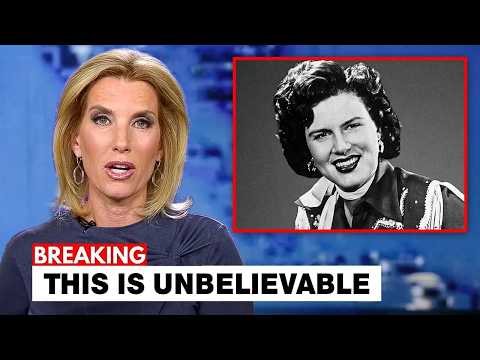
The voice was unmistakable: warm, wounded, a woman coming apart in three minutes and letting you hear every second of it. “Crazy, for feeling so lonely,” she sang, and a nation felt it. But the woman behind that voice was no fragile ingenue. She was tough, profane, and shockingly direct—a chain-smoking, joke-telling force who once told an ambulance crew to take the other car first after a near-fatal crash. She was the first woman in Nashville to walk into an office and argue about her own money.
So how did a girl from Winchester, Virginia—a girl who moved 19 times before she finished growing up—build a voice like that? And why did the biggest female star in country music spend four years being paid roughly half what everyone around her was earning?
She was born on September 8, 1932, in a rented house in Winchester, at the top end of the Shenandoah Valley. Her father was a blacksmith with no fixed prospects; her mother had married him at 16. The family moved 19 times before Ginny finished growing up—19 houses, 19 sets of neighbors, 19 towns and streets and schools across Virginia. There was no chance to belong anywhere. What she built instead was a fast read on strangers and a hard practical understanding of exactly what a household costs to keep running.
At 13, she nearly died. A throat infection turned into rheumatic fever, which in the 1940s attacked the heart and killed children routinely. She was in genuine danger. And when the fever finally broke, she said her voice had changed—that it came back deeper, fuller, with a power that had not been there before. Doctors have argued about that claim for 60 years. What matters is that Ginny believed it. She came out of that hospital bed with a full-grown instrument in her throat and no idea what to do with it.
The wounded quality in that voice was not a studio decision. It was the residue of an actual life. When her father walked out in 1947, she quit school at 15 and went to work—a drugstore counter, a poultry plant, whatever a town of a few thousand people offered a girl with no education. She handed over her wages because the household ran on them. And she sang at night, in whatever room would let a teenage girl get up and sing.
By her late teens, she was performing with local bands, and one of them, Bill Peer, gave her the name she is buried under: Patsy. The surname came from her first marriage, to Gerald Cline in 1953. He wanted a wife at home and the singing to fade away. She told him plainly that her name was Patsy Cline and that he was not to forget it. They divorced in 1957, and she kept the name—the first purely commercial choice she is on record as making.
That same year, everything changed in a single evening. On January 28, 1957, she appeared on Arthur Godfrey’s Talent Scouts and sang “Walkin’ After Midnight,” a song she had not wanted to record. She won the show. The record went to number two on the country chart and crossed into the pop top 20. And then—nothing. Four years with no follow-up hit. Four years of touring, of package shows, of driving to dates that paid badly. And all the while, she was being paid roughly half of what the standard rate should have been. She knew it. She understood exactly what was being done to her, and she kept turning up because the alternative was going back to Winchester.
By 1960, she was broke in the ordinary, unglamorous way—living in a rented place with a small child, expecting the finance company to come and take the refrigerator. A woman with a national television win and a hit record was waiting for somebody to repossess her fridge.
But Patsy Cline was not an ingenue. She was the most commercially clear-eyed woman working in Nashville. When the Grand Ole Opry did not offer her membership, she went to management and asked for it directly, on the grounds that she had earned it. In 1960, they gave it to her. That is not the behavior of the woman in the songs. That is somebody who had done the arithmetic on her own career and decided that waiting politely was not a strategy.
In 1957, she married again—Charlie Dick, a linotype operator from Winchester. The marriage was volatile from the beginning and documented as violent. Letters from the last weeks of her life indicate she had decided to ask for a divorce. Their daughter Julie was born in 1958, their son Randy in January 1961. So by the start of 1961, she had a two-year-old and a newborn, a marriage in trouble, four years of half-rate checks behind her, and a career that had produced exactly one hit four years earlier.
And in April 1961, on an airplane, she asked a stewardess for a piece of paper. She wrote out her will in the air, by hand, on airline stationery. She was 28 years old. She was in good health. She was at the beginning of what would turn out to be the best two years of her professional life. Nothing had happened yet. There was nothing to react to. She simply asked for a piece of paper and wrote it down.
Two months later, in June 1961, she nearly died in a car crash. She went through the windshield. A broken wrist, a dislocated hip, a deep cut across her forehead that missed her eyes by fractions of an inch. Two people in the other car were killed. Lying in the road with blood in her eyes, she told the people who arrived to help her to take the others first. She was not expected to survive. She spent about a month in hospital, and when she came round, she told her husband that Jesus had taken her hand and told her not now—there were other things for her to do.
Six weeks after going through a windshield, Patsy Cline walked onto the stage of the Grand Ole Opry on crutches and sang. Six weeks with a hip that had come out of its socket, a wrist still in a cast, and a forehead she now covered with wigs and headbands. The Opry crowd gave her an ovation that people were still describing decades later. She did not convalesce. She got up on crutches in front of a live audience because she had four years of being paid half rate behind her, and she was not going to hand back the ground she had finally taken.
And then, with her ribs still healing, she went into a studio to record a song by a young songwriter almost nobody had heard of. The songwriter was Willie Nelson. The song was “Crazy.” She could not sing it at first—the high notes required breath support that broken ribs simply do not permit. She tried, it hurt too much, and she went home. Then she came back, and on the second attempt, she stood in front of a microphone with her ribs still knitting and laid down the vocal in a single take. That recording became the most played jukebox record in American history. Not one of the most played—the most.
1962 was the year everything she had been owed finally arrived. “She’s Got You” went to number one. She bought a house on Nella Drive in Nashville—the first house she had ever owned. And what she did with the money says everything about her. She was, by universal agreement, the softest touch in Nashville. She paid Dottie West’s rent—not lent, paid. She took Loretta Lynn under her wing and taught her the business: how the money worked, who could be trusted, what to ask for and how to ask for it. She bought her clothes because Loretta did not have any that would do. She gave somebody a scrapbook with a check for $75 tucked inside and a note saying she knew things had been hard lately.
Then, around September 1962, she started telling people she was going to die. Not as a joke. Repeatedly, calmly, to the people closest to her. She told June Carter. She told Loretta Lynn. She told Dottie West. She said her time was running out. And through the autumn and winter, she began quietly giving her belongings away. To Ray Walker of the Jordanaires, she said she had already had two bad ones and that the third would either be a charm or it would kill her.
That is the part that reorders everything before it. Because now go back to April 1961. That will was not written after the car crash. It was written two months before it. Before the windshield. Before the hospital. Before the crutches. A healthy 28-year-old woman on a routine flight home asked for a piece of paper and calmly wrote down who should raise her children and what she wanted to be buried in. She was not reacting to anything. She was ahead of it. And nobody believed her.
Why would they? She was 30 years old. She had the biggest voice in the format and she had just survived a crash that killed two other people. Everybody in her life heard those conversations as the understandable nerves of a woman who had been through something. In the end, the one person who did not act on it was her. That is not a criticism and it is not a twist. She had been telling people for six months that she thought she was near the end. And then on the 5th of March, 1963, she got on a small plane in bad weather because she had a show and a manager and two children at home and a mortgage on Nella Drive.
Knowing a thing and being able to act on it are not the same, and they never have been.
On the 3rd of March, 1963, she played a benefit concert in Kansas City for the widow of a disc jockey she had never met. She had the flu, badly enough that people noticed. She did three shows that day anyway, for nothing. By the account of nearly everyone in that building, the last of the three was the finest singing they had ever heard her do.
The next day, the weather closed in. Dottie West was driving home to Nashville and offered her a seat in the car. Patsy said no. She told Dottie that when it was her time, it was her time, and she stayed and waited for the sky to clear.
On the 5th of March, 1963, the weather lifted enough to fly. The plane was small, her manager Randy Hughes at the controls, with Cowboy Copas and Hawkshaw Hawkins aboard. At about twenty past six in the evening, ninety miles short of home, it came down in woods outside Camden, Tennessee. Everyone aboard was killed. Patsy Cline was 30 years old.
They buried her in Winchester, three miles from where she was born, in the white Western dress. Because the will was handwritten on a plane with no witnesses, it was not legally valid; her estate passed to her husband rather than her mother. The one piece of paper she had prepared for this was the one thing that did not hold.
But two of the women in this story did something about the rest of it. At Shenandoah Memorial Park there is a bell tower, paid for with help from Loretta Lynn and Dottie West—the singer she taught the business to and the friend whose rent she paid. It plays hymns every day at 6:00 in the evening. Six o’clock, the hour her plane came down.
She recorded for about six years in total. In 1973, she became the first woman inducted into the Country Music Hall of Fame as a solo artist. “Crazy” is still the most played record in the history of the jukebox. Every female country singer who came after her worked in a business she had already argued with.
And every evening in a cemetery in the Shenandoah Valley, in the town where a girl called Ginny Hensley moved house 19 times and left school at 15 to work in a poultry plant, the bells go off at 6. They have been doing it for decades. They will be doing it tonight.
So here is the question worth asking: if a voice can outlive the woman who made it by sixty years and counting—what else did we fail to hear while she was still here to tell us?
Report this article
Select a reason for reporting:






