The residents of Oahu were still rubbing sleep from their eyes when the first explosions shattered the dawn. It was 7:48 a.m. on December 7, 1941, and the sky over Pearl Harbor was suddenly filled with the roar of engines and the whistle of falling bombs. In less than two hours, the world would change forever.
Hundreds of Japanese aircraft swooped down on the unsuspecting U.S. Pacific Fleet, turning the tranquil harbor into a raging inferno. By the time the last plane flew away, more than 2,400 Americans lay dead, and the United States was thrust into a war it had desperately tried to avoid.
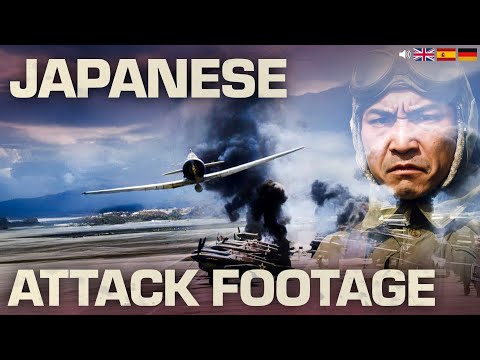
But how did it come to this? The answer lies in a complex web of ambition, desperation, and a daring plan that many thought impossible.
By late 1940, Imperial Japan was choking. The United States had imposed a crippling oil embargo, cutting off the resources Japan needed to fuel its war machine in Asia. Japan faced a stark choice: bow to American demands and abandon its expansionist dreams, or strike out to seize the resources of Southeast Asia.
They chose the latter. But they knew that attacking British and Dutch colonies would provoke a response from the powerful U.S. Pacific Fleet based in Hawaii. That fleet could sever their supply lines and doom their campaign.
Admiral Isoroku Yamamoto, the mastermind behind the attack, devised a bold plan: a surprise aerial assault on Pearl Harbor to cripple the U.S. fleet in one devastating blow. If successful, Japan would have free rein in the Pacific for at least a year.
The plan was audacious. Six aircraft carriers, the Akagi, Kaga, Soryu, Hiryu, Shokaku, and Zuikaku, would sail thousands of miles across the Pacific, undetected, and launch their planes in two waves. The targets: the U.S. battleships and aircraft carriers anchored at Pearl.
But Pearl Harbor was no sitting duck. It was heavily defended, with radar, anti-aircraft batteries, and over 50,000 troops. Yet, on the morning of December 7, a series of missed warnings and sheer luck would leave the door wide open.
At 6:37 a.m., the destroyer USS Ward fired on and sank a Japanese midget submarine attempting to enter the harbor. It was the first shot of the Pacific War. But the warning was dismissed.
Minutes later, radar operators detected a massive formation of aircraft approaching. They reported it, but their commander assumed it was a flight of B-17 bombers due in from the mainland. The chance to alert the fleet was lost.
At 7:40 a.m., the first wave of 183 Japanese aircraft approached Oahu. The harbor was still peaceful, the sailors unaware of the storm about to break.
Then, at 7:48 a.m., the attack began. Torpedo bombers swooped low over the water, their modified torpedoes designed to run shallow in the harbor’s 12-meter depths. The battleship row was about to become a killing ground.
The first torpedoes slammed into the USS Utah, a training ship, killing dozens. Then the bombers turned their attention to the main battle line. The USS Oklahoma was hit by multiple torpedoes and capsized in minutes, trapping hundreds below decks. The USS West Virginia and California were also mortally wounded.
But the worst was yet to come. At 8:06 a.m., a bomb penetrated the deck of the USS Arizona, detonating its forward magazine. The ship exploded in a cataclysmic fireball, killing 1,177 men in an instant.
The second wave arrived at 8:50 a.m., bombing and strafing the airfields and remaining ships. The USS Nevada, attempting to escape the harbor, was bombed and beached to prevent it from blocking the channel.
By 10:00 a.m., it was over. The Japanese had achieved a stunning tactical victory, but they had failed to sink the American aircraft carriers, which were at sea. And they had awakened a sleeping giant.
As the smoke cleared, the true cost became apparent: 18 ships sunk or damaged, over 300 aircraft destroyed, and more than 2,400 Americans dead. The next day, President Franklin D. Roosevelt addressed the nation, declaring December 7, 1941, “a date which will live in infamy.”
The United States was now at war. The road ahead would be long and bloody, but the attack on Pearl Harbor would unite the nation and set it on a path to victory. The stories of heroism and sacrifice that day would never be forgotten.
But behind the headlines and the staggering casualty figures, there were individual stories that would come to define the day. Men like Chief Water Tender Peter Tomich, who stayed behind in the boiler room of the USS Utah as the ship rolled over, knowing the boilers would explode if left unattended. He never made it out. Tomich was posthumously awarded the Medal of Honor, and his body remains entombed in the wreck to this day.
Then there was Doris Miller, a 22-year-old mess attendant on the West Virginia. Barred from combat roles because of the color of his skin, Miller had been collecting laundry when the first torpedoes struck. He raced topside, helped move his wounded captain to safety, and then—without any gunnery training—manned a .50-caliber anti-aircraft gun and fired back at the Japanese planes.
For his actions that morning, Miller became the first African American to receive the Navy Cross. His story would echo far beyond the harbor, becoming a symbol of courage in a segregated military that would not fully integrate for another seven years.
As the second wave withdrew, the Japanese pilots returned to their carriers with reports of success. Admiral Nagumo, the commander on the scene, faced a critical decision. His pilots urged a third wave—one that could target the fuel depots, dry docks, and repair facilities that had been spared. But Nagumo, fearing the missing American carriers might counterattack, chose to withdraw.
It was a decision that would haunt Japan for the rest of the war. The oil storage tanks at Pearl Harbor held millions of barrels of fuel. The dry docks and repair yards were largely intact. Had they been destroyed, the U.S. Pacific Fleet would have been forced back to the mainland, crippling its ability to strike back.
Instead, within six months, the Americans would be back on the offensive. The carriers that had been at sea on December 7—Enterprise, Lexington, and Saratoga—would become the spearhead of a counterattack that culminated at Midway, where four Japanese carriers would be sent to the bottom.
Back on Oahu, the days that followed were a blur of firefighting, rescue operations, and grim recovery. Divers worked in the oil-choked waters of the harbor, tapping on hulls to find survivors trapped in flooded compartments. Some were saved. Many were not.
Of the more than 2,400 dead, nearly half were aboard the Arizona, which had exploded and sunk in less than nine minutes. The ship would never be raised. Instead, its rusting hull became a war grave, and in 1962, a white memorial structure was built directly over it.
For the men who survived, the memories would never fade. Sailors recalled the smell of burning oil, the sight of bodies floating in the water, the sound of taps played over hastily dug graves. And they recalled the anger—the cold, hard resolve that settled over the base in the weeks that followed.
Pearl Harbor was not the end of American power in the Pacific. It was the beginning of something far larger. The sleeping giant had been struck, and when it awoke, it would reshape the world.
The stories of that morning did not end when the last Japanese plane disappeared over the horizon. In the hours and days that followed, ordinary men and women performed extraordinary acts of courage that would echo through history. Some would live to tell their tales. Others would become silent witnesses to the price of freedom.
On the USS Oklahoma, which had capsized with hundreds of men trapped inside, rescue teams worked frantically through the night. The sound of tapping from within the overturned hull drove sailors to tears as they cut through the steel. In total, 32 men were pulled from the darkness, but 429 never made it out.
On the USS Arizona, there was no such rescue. The ship had exploded and sunk in less than nine minutes, taking 1,177 men with her. Only 334 crew members survived. For days afterward, the wreck continued to burn, its superstructure a twisted mass of steel rising above the oily water.
But even as the tragedy unfolded, the seeds of resistance were being planted. On the island of Niihau, a Japanese pilot named Shigenori Nishikaichi had crash-landed after his Zero was damaged in the attack. Initially, the locals—unaware of the assault on Pearl Harbor—treated him with hospitality. But as news of the attack spread, the mood turned dark.
Nishikaichi, aided by a Japanese-American resident named Yoshio Harada, took hostages and attempted to recover documents from his plane. In the ensuing struggle, the pilot was killed, and Harada took his own life. The Niihau incident became a chilling reminder that the war had reached even the most remote corners of the islands.
Back on Oahu, the military scrambled to understand the scale of the disaster. In the days that followed, rumors of further attacks swept through the islands. Anti-aircraft gunners, jumpy and exhausted, fired at shadows. On the night of December 7, jittery sailors shot down several American planes returning from patrol, killing more men in friendly fire.
Martial law was declared across Hawaii. Civilians were issued gas masks and ordered to observe blackout conditions. Beaches were strung with barbed wire, and the once-luxurious hotels of Waikiki were converted into military barracks. The paradise of the Pacific had become a fortress under siege.
Yet amid the chaos, there were moments of humanity. Nurses at the naval hospital worked for days without sleep, treating hundreds of burn victims. Local families opened their homes to sailors who had lost everything. And on December 8, as President Roosevelt addressed a joint session of Congress, the entire nation paused to listen.
Roosevelt’s speech lasted just seven minutes, but it changed everything. Within an hour, Congress declared war on Japan. Three days later, Germany and Italy declared war on the United States. The conflict had become a true world war.
For the men who survived Pearl Harbor, the attack was only the beginning. Many would fight again at Midway, Guadalcanal, and Okinawa. Some would not come home. Doris Miller, the hero of the West Virginia, was among them—lost in 1943 aboard the USS Liscome Bay.
But their sacrifice was not in vain. The fleet that Japan had hoped to destroy was rebuilt, stronger than before. The carriers that had escaped the attack became the heart of a new kind of navy—one built around air power, not battleships.
Today, the USS Arizona Memorial sits directly above the sunken hull, where oil still bubbles to the surface. More than 1,100 men remain entombed below, on duty for eternity. Visitors stand in silence, reading the names carved into the marble wall.
Pearl Harbor was a day of infamy, but it was also a day of awakening. It taught America that isolation was no longer possible, and that freedom must sometimes be defended far from home.
What do you think was the most pivotal moment of that day—Yamamoto’s gamble, Nagumo’s decision to withdraw, or the courage of men like Miller and Tomich? Share your thoughts in the comments below.
Report this article
Select a reason for reporting:






