The frozen air hung heavy with the scent of gunpowder and death as Fritz Christen, a 20-year-old anti-tank gunner, stared at the smoldering wreckage of his unit. It was September 24, 1941, near Lushno on the Eastern Front, and the Soviet war machine had just unleashed hell. Artillery shells had rained down for hours, turning the forest into a graveyard. When the dust settled, Christen was the only survivor—his comrades annihilated, his position surrounded by enemy tanks and infantry. Most men would have surrendered or fled. But Christen, a blonde-haired, blue-eyed ideal of the Waffen SS, made a decision that would etch his name into legend: he would hold the line alone.
For three days and three nights, he fought with a ferocity that defied comprehension. Using a 3.7 cm anti-tank gun, he destroyed 13 Soviet tanks and cut down nearly 100 enemy soldiers. Each night, he crawled through the rubble to scavenge ammunition from fallen comrades, moving his gun to new positions to deceive the enemy. Cold, hunger, and exhaustion gnawed at him, but his will never wavered. On the fourth morning, as he prepared for a final stand, he heard footsteps—not Soviet, but German. The relief column found him alive, slumped beside his gun, a ghost of a man who had just rewritten the rules of war.
This is the story of the 12 deadliest soldiers of the Waffen SS on the Eastern Front—men whose audacity and ruthlessness became the stuff of nightmares and legends. From Fritz Klingenberg, who captured Belgrade with just 30 men, to Herbert Otto Gille, the most decorated general of the SS, their tales are a gripping blend of tactical brilliance and human endurance. But behind the medals and the myths lies a darker truth: they fought for a regime built on hate, and their legacy is stained by the atrocities they enabled.
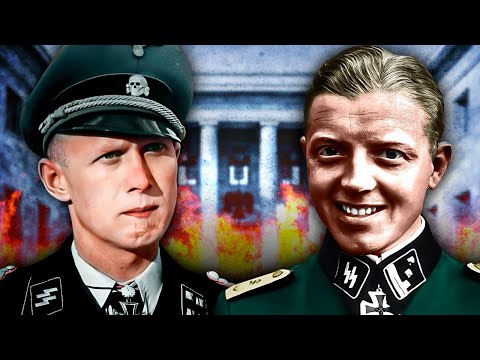
As Christen’s story spread, it became a propaganda tool for the Third Reich, but for the soldiers on the ground, it was a grim reminder of the Eastern Front’s brutality. The Soviets threw wave after wave of men and machines at the German lines, and the Waffen SS, with their fanatical discipline, stood as the spearhead of the invasion. Each of these 12 men—from tank aces like Michael Wittmann to infantry commanders like Sylvester Stadler—played a pivotal role in some of the war’s bloodiest battles. Their skills were undeniable, but their cause was indefensible.
Yet the Eastern Front was a crucible that forged and destroyed them. For every victory, there was a cost. Christen himself would later be sent to a Siberian gulag, his heroism forgotten as the tide turned. Others, like Fritz Klingenberg, would die in the final days of the war, their brilliance wasted on a lost cause. The stories of these men are not just about combat; they are about the choices that define us when the world collapses into chaos.
In the following pages, we will delve into the lives of these elite soldiers—their triumphs, their crimes, and their fates. From the snows of Moscow to the ruins of Berlin, their journeys reveal the extremes of human capability and the moral abyss of war. But first, we must understand how they rose to prominence, and why their names still echo through history. The Eastern Front was a theater of unprecedented scale, where ideologies clashed and millions perished. In this cauldron, the Waffen SS forged a reputation that was both feared and reviled.
As we begin with Fritz Christen’s lone stand, we set the stage for a saga of ambition, loyalty, and destruction. The 12 deadliest soldiers were not just warriors; they were products of their time, shaped by a regime that demanded absolute devotion. Their stories are a cautionary tale of what happens when skill and courage are enlisted in the service of evil. And as we will see, the line between heroism and horror is often blurred on the battlefield.
Fritz Klingenberg’s audacity was a different kind of weapon. In April 1941, as the German war machine ground through Yugoslavia, he didn’t wait for bridges or reinforcements. With only six men—later joined by a handful more—he crossed the Danube in a leaking boat, captured a group of Yugoslav soldiers, and marched straight into Belgrade. There, he raised a German flag over the city hall and convinced the mayor that a massive assault was imminent. The bluff worked. Belgrade surrendered without a shot, and Klingenberg became a national hero overnight.
But the Balkans were merely a prelude. When Operation Barbarossa launched in June 1941, Klingenberg and his Das Reich division were hurled into the cauldron of the Eastern Front. He fought at Kharkov, Minsk, and Kursk—battles that devoured men by the thousands. His Knight’s Cross was soon adorned with Oak Leaves, a rare honor for a junior officer. Yet the war was already consuming him. By 1945, promoted to SS-Standartenführer, he commanded the 17th SS Panzergrenadier Division “Götz von Berlichingen,” a unit of inexperienced recruits thrown into the path of the US 7th Army.
On March 23, 1945, near Herxheim, Klingenberg was struck by a shell while leading a desperate counterattack. He died at 32, his body buried in a military cemetery in Andilly, France, alongside 33,000 other German soldiers. His story, like so many, ended not in glory but in the rubble of a collapsing Reich.
If Klingenberg was the master of bluff, Christian Tychsen was the master of armored aggression. Born in 1910, Tychsen joined the SS in 1931 and rose swiftly through the ranks. By 1943, he commanded a battalion of tanks in the Das Reich division, and during the Third Battle of Kharkov, his counterattack shattered a Soviet spearhead. His tank was hit three times by anti-tank shells, but he refused to abandon it. A week later, he led his armor into the streets of Kharkov without infantry support—a suicidal move that somehow worked, blunting the Soviet encirclement and earning him the Knight’s Cross.
Tychsen’s luck ran out in Normandy. On July 28, 1944, near Trelly, his staff car was ambushed by an American tank. Severely wounded, he died shortly after. Because he carried no identification, his body was buried as an unknown soldier until later identified. He was 33—another brilliant tactician swallowed by the war he had helped unleash.
Theodor Wisch was a different breed: a methodical, unflashy commander who led from the front. Born in 1907, he joined the Leibstandarte SS Adolf Hitler in 1933 and fought in Poland, France, and the Balkans. His Knight’s Cross came in September 1941 after his battalion helped encircle Soviet forces west of Zhitomir. At Kharkov in 1943, his regiment intercepted enemy attacks and secured key positions, earning him the German Cross in Gold.
But Normandy broke him. In August 1944, during the Falaise pocket, a grenade explosion shattered both his legs. He relinquished command and spent the rest of the war in a hospital. Captured by the British in 1945, he was released in 1948 without charges and lived quietly in West Germany, working in livestock, until his death in 1995. Unlike many comrades, he never sought to rewrite history.
Sylvester Stadler was the defensive genius of the Waffen SS. Born in Austria in 1910, he joined the SS in 1933 and fought in France, the Balkans, and Russia. His finest hour came in August 1943 at Kharkov, where with limited resources he organized a defense that halted a Soviet advance and allowed several German divisions to withdraw. For this, he received the Oak Leaves to his Knight’s Cross.
Stadler’s record, however, is shadowed by Oradour-sur-Glane. In June 1944, troops under his division massacred 642 French civilians. Though he did not participate directly, he ordered an investigation and court-martial against the officer responsible—who was killed before trial. After the war, Stadler was imprisoned until 1953, then lived quietly in Germany, working in industry until his death in 1995.
Helmut Wendorff was the protégé of Michael Wittmann, the legendary tank ace. Born in 1920, Wendorff joined the Leibstandarte in 1939 and quickly proved himself in the Sturmgeschütz assault gun battery. By 1943, he was commanding a Tiger tank platoon alongside Wittmann at Kursk, where on the first day Wittmann destroyed 13 T-34s and rescued Wendorff’s surrounded unit. The two became inseparable, sharing a tactical aggressiveness that made them feared across the Eastern Front.
Wendorff’s own tally climbed rapidly. On December 25, 1943, with only four Tigers, he confronted a Soviet column at Chubarovka and destroyed 11 T-34s in a single action, preventing a German collapse. By August 1944, his confirmed kills had reached 84 tanks. But on August 6, near Messei in Normandy, his Tiger was struck by a direct hit from an Allied projectile. Wendorff died instantly, his body consumed by the explosion.
Fritz Witt was the youngest of the group, a rising star tapped to lead the Hitlerjugend division. Born in 1908, he joined the SS in 1931 and fought in Poland, France, and the Balkans. His Knight’s Cross came in September 1940, and by 1943 he was tasked with forming the 12th SS Panzer Division “Hitlerjugend,” composed largely of teenage volunteers. Witt trained them relentlessly, forging a unit that would fight with terrifying ferocity in Normandy.
On June 7, 1944, just one day after D-Day, Witt was at his command post near Venoix when a British naval shell struck the building. Shrapnel tore through his face, killing him instantly. He was 35. His death devastated the young recruits, who saw him as a father figure. He was buried with full military honors, later reinterred at Champigny-Saint-André cemetery.
Herbert Otto Gille was the most decorated Waffen SS general of the war. Born in 1897, he served in World War I before joining the SS in 1931. By 1942, he commanded the artillery regiment of the SS Wiking Division, and his leadership at the Cherkassy pocket in 1944 earned him the Diamonds to his Knight’s Cross—the highest honor for an SS officer. During the breakout, his division spearheaded the escape of nearly half the trapped German troops, though almost all heavy equipment was lost.
Gille’s later defense of Kovel, where he held out for weeks against Soviet encirclement, further cemented his legend. After the war, he became a leading figure in HIAG, the veterans’ organization that fought for the legal rehabilitation of Waffen SS members. He founded the newspaper “Wiking Ruf,” which later became “Der Freiwillige.” He died of a heart attack in 1966, leaving behind a controversial legacy as both a brilliant commander and an unrepentant apologist.
Vinzenz Kaiser was the Austrian firebrand of Das Reich. Born in 1904, he joined the Nazi Party in 1927 and the SS in 1931, quickly earning a reputation for organizing local units. Arrested by Austrian authorities in 1933 for political conspiracy, he fled to Germany and joined the SS Verfügungstruppe. By 1943, he commanded a halftrack battalion in Das Reich and played a key role in the Third Battle of Kharkov.
During the fighting, Kaiser personally destroyed four Soviet tanks with handheld weapons, a feat that earned him four Tank Destruction Badges and the Knight’s Cross. In April 1945, near Nuremberg, he disappeared on a reconnaissance mission with his assistant. His fate remains a mystery—some claim he was executed by American soldiers, others that he was killed for refusing to surrender his Knight’s Cross. His body was never found.
Vera Wolf was the young protégé of Joachim Peiper. Born in 1922, he joined the Leibstandarte in 1940 and quickly caught Peiper’s eye. At Kursk in 1943, he personally destroyed a T-34 with infantry weapons, earning the Knight’s Cross. Later that year, severely wounded in the thigh, he threatened doctors with a pistol to prevent amputation—and miraculously recovered.
In Normandy, Wolf fought at Tilly-sur-Seulles, earning the Close Combat Clasp in Silver. In March 1945, during the Lake Balaton offensive, his tank was hit by enemy fire, causing severe head injuries. He died on March 19, just two months before the war ended. He was 22.
Kurt Meyer, known as “Panzermeyer,” was the youngest general in the Waffen SS. Born in 1910, he joined the SS in 1931 and quickly rose through the ranks. His baptism of fire came in Poland, where he was accused of ordering the execution of 50 Jews in Mielnik—a charge that would haunt him. In France, his speed earned him the nickname “Schneller Meyer.”
At Kharkov in 1943, his blitzkrieg tactics were crucial in recapturing the city, and he captured the entire staff of a Soviet division. After Fritz Witt’s death in Normandy, Meyer took command of the Hitlerjugend at 33, leading them in a ferocious defense that inflicted massive casualties on the Allies. Captured in Belgium in September 1944, he was sentenced to death for ordering the execution of prisoners, but the sentence was commuted. Released in 1954, he became a vocal advocate for SS veterans and wrote his memoirs, “Grenadiere.” He died of a heart attack in 1961, his funeral attended by over 15,000 people.
These 12 men were forged in the crucible of the Eastern Front, their skills honed by years of brutal combat. They were masters of maneuver warfare, tank tactics, and defensive stands—but their talents served a regime of unparalleled evil. Their stories are a testament to the duality of human nature: the capacity for extraordinary courage and the willingness to commit unspeakable acts. As the war turned against Germany, their fates diverged—some died in battle, others in gulags, and a few lived to old age, their legacies contested to this day.
In the end, the war consumed them all—some in fire, some in silence. Fritz Christen died in 1995, a quiet man who never spoke of Lushno. Kurt Meyer’s funeral drew 15,000 mourners, yet his crimes remain debated. The Iron Crosses rusted; the myths endured.
Their stories are not meant to glorify, but to warn. Extraordinary courage in service of evil is still evil. The Eastern Front was a graveyard of ideals, where brilliance became brutality and heroism became horror.
So what do we make of these men—warriors or war criminals, legends or cautionary tales? The answer depends on what we choose to remember.
Should military brilliance ever excuse moral darkness, or does the cause always damn the deed? Share your thoughts below.
Report this article
Select a reason for reporting:






