In the summer of 1919, a small Welsh town sat in the uneasy quiet of the first peace after the Great War. Kidwelly was the kind of place where everyone knew everyone’s name, and where a Sunday lunch was as ordinary as the tide on the River Gwendraeth. But on June 15, that ordinary ritual became the center of a mystery that would grip the nation.
Mabel Greenwood, a wealthy woman in her forties, sat down with her family for a roast dinner, a gooseberry tart, and a glass of Burgundy. By the early hours of the next morning, she was dead.
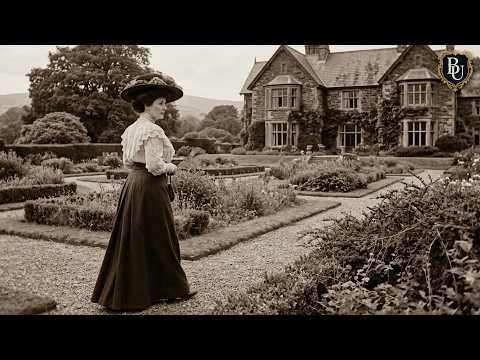
Her husband, Harold Greenwood, a respected solicitor, said she had suffered a heart attack. The doctor agreed. She was buried, and the town mourned. But gossip, as it does in small towns, began to swirl. Harold had remarried with unseemly speed—just months after the funeral. Whispers turned to suspicion, and suspicion to action.
Nearly a year later, Mabel’s body was exhumed. The autopsy revealed arsenic—enough to kill, though not enough to be certain it had. The heart disease was gone from the record. Harold Greenwood was arrested and charged with murder.
The trial that followed was a sensation. The prosecution painted a picture of a miserable marriage, a man in debt to his wife’s fortune, and a convenient half-hour spent alone in the pantry. But the defense, led by the legendary Sir Edward Marshall Hall, had a trick up its sleeve.
Harold and Mabel’s daughter, Irene, testified that she had drunk from the same Burgundy bottle and survived. If the poison was in the wine, as the Crown claimed, the daughter should be dead too. The jury deliberated and returned a verdict: not guilty.
Yet the acquittal came with a strange caveat. The jurors added a note—one that remained hidden for years—stating they believed a dangerous dose of arsenic had indeed been given to Mabel, but they could not agree on how or by whom. The question of who poisoned Mabel Greenwood was left unanswered, a ghost that haunted the town and the headlines.
As Harold Greenwood walked free, the case became a national obsession, its details dissected in newspapers from Cardiff to New Zealand. And as the curtain fell on one mystery, another was already rising—this time on a quiet country road in Leicestershire, where a young factory worker would be found shot dead beside her bicycle, and a green bicycle would become the key to a puzzle that still baffles historians.
The second case began, as these stories so often do, with an ordinary evening that refused to stay ordinary. On the fifth of July, 1919, Bella Wright, a twenty-one-year-old rubber factory worker, cycled from her home to visit her uncle in the village of Gaulby. She was not alone. A man on a green bicycle rode with her, and when they arrived, he waited outside.
Her uncle, George Measures, asked who the man was. Bella shrugged. She didn’t really know him at all, she said. They left together a short while later, vanishing into the long summer twilight.
Not long after, a farmer named Joseph Cowell found Bella Wright lying on Gartree Road, near Little Stretton. Her bicycle lay beside her. At first glance, it looked like a simple accident—a fall from a bike on a dark country lane. But then the doctor, William Williams, examined her and found a bullet wound beneath her left eye.
It was not a fall. It was a shooting.
PC Alfred Hall combed the roadside the next morning and found a .455 calibre bullet about seventeen feet from where the body had lain. That small piece of lead changed everything. The hunt was on for the man on the green bicycle—the stranger Bella had told her uncle she barely knew.
For months, the trail went cold. No one came forward. The green bicycle remained a phantom.
Then, in February 1920, a sailor named Enoch Whitehouse was working in a Leicester canal and dredged up part of a green BSA bicycle. The serial number had been filed off—but not deeply enough. A faint number remained, and it led the police straight to its owner: Ronald Vivian Light, a thirty-four-year-old former Royal Engineers officer and mathematics teacher at Dean Close School in Cheltenham.
Light was arrested on the fourth of March. Divers recovered a satchel and a box of live cartridges from the same canal—the same calibre as the bullet found on Gartree Road. The net closed.
The trial opened at Leicester Assizes in June 1920, with the Attorney General, Sir Gordon Hewart, leading the prosecution—a sign of how seriously the Crown took the case. Once again, Sir Edward Marshall Hall stood for the defence.
And then Marshall Hall did something audacious. He put Ronald Light in the witness box to testify on his own behalf.
Light admitted a great deal. Yes, he was the man on the green bicycle. Yes, he had ridden with Bella Wright to her uncle’s cottage. Yes, he had thrown the bicycle and satchel into the canal in a panic once the national manhunt began. He had lied. He had stayed silent for months. But he had not shot her.
He said they had ridden together, then parted ways. He said he had left her alive.
The defence hammered at two points. First, there was no motive—no quarrel, no shared history, no reason for Light to want Bella Wright dead. Second, the physical evidence of the shooting itself was uncertain: the distance of the bullet from the body, the angle of the wound, whether the trajectory matched the prosecution’s story of a deliberate killing on that road.
Marshall Hall’s argument was simple: a man can lie, panic, and sink a bicycle in a canal without being the person who pulled the trigger.
The jury retired. After about three hours, they returned. Ronald Light was acquitted. Cheers erupted in the courtroom. He walked out a free man, and no one else was ever charged with Bella Wright’s murder.
The case became known as the Green Bicycle Case—one of the great unsolved mysteries of English criminal history. The green bicycle, dredged from the water with its serial number filed away, became a symbol of a death that was proven to be murder and never solved.
The jury had answered only the question before them—whether the man in the dock was guilty—and they said no. Every other question raised by that summer evening on Gartree Road remained open. The case is still open. The story is still unfinished.
The third case is the hardest to hear. It begins not with a trial or a headline, but with a young mother and her child stepping off a train in the last weeks of a Victorian summer, carrying a borrowed name and a future already running out.
Great Yarmouth in September 1900 was a town in the final flush of the season. The promenade was crowded with visitors taking the sea air, the herring boats were working the coast, and the narrow medieval rows—those tight brick alleyways of the old town—were alive with lodgers and traders. Into this bustle came a woman calling herself Mrs. Hood, accompanied by her little girl, Ruby. She took rooms at 104 Row, with Mr. and Mrs. John Rudrum.
She was, to the neighbours, quiet and respectable. She had her photograph taken on the sands—a small vanity, a souvenir of a holiday. In the picture, she wore a watch and chain. It was an ordinary thing to do. That photograph would become the most important object in a murder trial.
Her real name was Mary Jane Bennett. She was about twenty-three, born in Bexley Heath, Kent, and married to Herbert John Bennett, a young man who worked at the Woolwich Arsenal. But while his wife and child lodged under a false name in Norfolk, Herbert was living a second life in London. He was courting a servant named Alice Meadows, who believed him to be a single man. He gave her gifts—clothes and jewellery that had belonged to Mary.
On the morning of September 23, 1900, a boy named John Norton found Mary Bennett’s body on the South Beach, opposite Harbord Crescent. She had been strangled with a bootlace. The woman the lodgers knew as Mrs. Hood was dead, and the first task facing the police was to discover who she really was.
The clue was a laundry mark on her clothing. It led detectives to a London laundry, and from there to her true identity. Once her name was known, the investigation turned to her husband. Detectives traced his relationship with Alice Meadows and the gifts he had given her—gifts that had belonged to his wife.
Herbert Bennett was arrested about seven weeks after the murder. In his room, police found a watch and chain that closely resembled the ones Mary had worn in the photograph taken on the sands at Yarmouth. That resemblance became the backbone of the case: the only material link between the husband in London and the dead woman on the beach in Norfolk.
The cause of death was strangulation by a bootlace—a ligature pulled tight around the neck. Beyond that, the medical evidence rested on two fixed facts: she had been strangled, and the weapon was a bootlace.
An inquest was held in Yarmouth, and the magistrates committed the case for trial. But public feeling in Norfolk ran so high against Bennett that a fair hearing there was thought impossible. The trial was moved to the Old Bailey, the Central Criminal Court in London—a change of venue notable in the legal history of the case, granted because local prejudice was deemed too strong for a fair trial near the scene of the crime.
The trial opened at the Old Bailey on February 24, 1901, and lasted five days, ending in early March. The Lord Chief Justice, Lord Alverstone, presided. Sir Edward Marshall Hall led the defence. The charge was murder, and Bennett pleaded not guilty.
The prosecution showed the jury the photograph from the Yarmouth sands, with Mary wearing the watch and chain, and placed beside it the watch and chain found in the defendant’s room. It was an early and striking use of photographic evidence in an English murder trial—a holiday souvenir transformed into proof of a crime.
Alongside the photograph, the Crown wove in the laundry mark that had uncovered the false name, and the story of the double life: a husband and wife and child lodging under an alias in Yarmouth, while the husband courted Alice Meadows in London as a single man, dressing her in his wife’s possessions.
Some thirty witnesses were called. The defence countered with an alibi. Bennett, they argued, could not have been in Yarmouth on the night of the murder. They pointed to the records of the Woolwich Arsenal and to a witness who said he had met Bennett in London that evening, placing him far from the Norfolk coast when his wife was killed.
The jury retired and was gone for thirty-five minutes. They returned with a verdict of guilty. Throughout the proceedings, Herbert John Bennett had insisted on his innocence and admitted nothing. The sentence was death.
The case of Mary Jane Bennett was the last of the three. The trial ended, but the questions it raised were not so easily closed. A woman had been strangled on a public beach in a holiday town, her identity hidden behind a false name, her husband living a lie in two cities. The watch and chain, the photograph, the laundry mark—these small, ordinary things had sent a man to the gallows.
Yet the story did not end with the verdict. There were those who wondered whether the alibi had been fully tested, whether the watch and chain were truly the same, whether a man could be hanged on a resemblance and a lie. The case joined the others—the arsenic in the Burgundy, the green bicycle in the canal—as a puzzle that refused to settle quietly into the past.
Bennett went to the scaffold protesting his innocence to the last. He was hanged at Wandsworth on 4 March 1901, still insisting he had never left London. The watch and chain were returned to the family, and the photograph of Mary on the sands was filed away in the archives of the Old Bailey.
Three cases, three verdicts, three questions left hanging in the air. Mabel Greenwood’s arsenic was proven but never explained. Bella Wright’s killer was never named. Mary Bennett’s husband was convicted, but doubt lingered like sea fog over Yarmouth.
What links them is not the poison, the bullet, or the bootlace—but the smallness of the evidence that decided everything. A daughter’s sip from a wine glass. A filed-off serial number. A laundry mark and a holiday snapshot.
In each courtroom, Sir Edward Marshall Hall stood between a defendant and the gallows, and in two of three, he won. Yet the truth of what happened on those summer nights remained locked away, as stubborn as the tide on the Gwendraeth.
Do you think any of these three verdicts got it right—or did a guilty person walk free?
Report this article
Select a reason for reporting:






