On July 2nd, 1973, a 29-year-old drug kingpin named Frank Matthews was supposed to walk into a Brooklyn federal courthouse and face charges that could put him away for 50 years. He never showed. Instead, Frank Matthews, known on the streets as Black Caesar, emptied his safety deposit boxes, picked up his girlfriend Cheryl Denise Brown, and vanished from the face of the earth. He left behind somewhere between 15 and 20 million dollars of a previous life. He left behind a mansion in Staten Island’s most exclusive neighborhood, directly across the street from Gambino boss Paul Castellano. He left behind an empire that stretched across 21 states, two drug mills in Brooklyn fortified with steel walls and armed guards, and a closet in his apartment that a visiting dealer once described as packed to eye level with stacks of cash.
But most importantly, Frank Matthews left behind three young boys and a woman named Barbara Hinton. Barbara was his common-law wife. She had stood beside him through the flashiest years of his rise, the luxury cars, the prime seats at every sporting event, the Las Vegas trips, the fur coats, the rings. She had watched him become the first black drug trafficker in American history to bypass the Italian Mafia entirely and establish direct connections to the French Connection heroin pipeline. She had watched him grow so powerful that the DEA would eventually rank him among the top 10 drug traffickers in United States history. And then, on one hot summer morning, she watched him choose his girlfriend over his family, his freedom over his sons, and $20 million over everything they had built together.
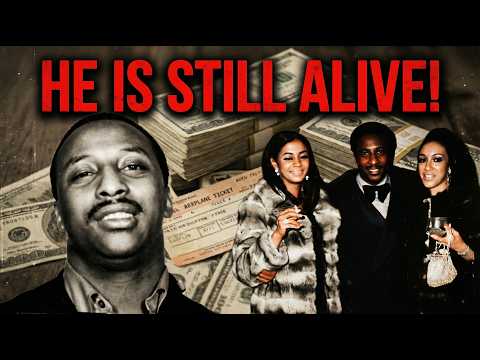
The FBI raided the Staten Island mansion. They found an empty safe. Frank Matthews was gone. That was 52 years ago. He has never been found. No fingerprints, no confirmed sightings, no body, no arrest. In December 2025, federal authorities officially ended their search. But what happened to the woman and the three boys he left behind? That story, the story nobody tells, might be the most haunting part of the Frank Matthews legend.
When Frank Matthews disappeared, the federal government did not just lose a fugitive, they lost their entire case, and they were furious. Their first move was predictable. They went straight to Barbara Hinton. Federal agents descended on the Ocean Parkway apartment in Brooklyn, where Barbara had been living with the three boys after the IRS seized their Staten Island mansion. They wanted to know where Frank was. They wanted her to cooperate. They offered full immunity, full protection, a clean slate if she would tell them anything about her husband’s whereabouts, his plans, his contacts, or his escape route. Barbara Hinton refused.
The prosecutors did not stop there. They hauled her before a federal grand jury. They pressed her. They threatened her with conspiracy charges, the same charges her husband was facing. They made it clear that if she did not talk, she would pay. Barbara still refused. When agents asked her about Frank Matthews, she gave them a response that that legendary in law enforcement circles. She said she had never heard of a man named Frank Matthews.
For 53 years, Barbara Hinton maintained that position. She never cooperated. She never gave authorities a single word. She never remarried. She raised those three boys alone in the shadow of a man the entire federal government was hunting, and she never once broke. The government eventually indicted her. In the 1975 trial of Matthews’ associates, 18 members of what the New York Daily News called a black narcotics ring, Barbara was among the defendants. Her lawyer, Gino Gallina, argued that the prosecution was an act of retaliation. He told the court that Barbara had been indicted not because she was guilty of drug trafficking, but because she refused to tell the government where Frank Matthews was hiding. According to court transcripts, Barbara maintained that she believed Matthews was dead. Government agents believed she was concealing the information, that she knew exactly where he was. Her case went through the appeals process with her attorneys arguing bad faith prosecution and claiming the government was using the indictment as leverage to force her cooperation. It didn’t work. Barbara never talked.
Think about what that means. A woman with three children, no visible income after the government seized everything, facing federal conspiracy charges, being told by prosecutors that her life could be destroyed, and she chose silence. Not once, not for a week, for over half a century.
Frank Matthews’ three sons were young children when their father vanished. The oldest was barely old enough to form memories. The youngest may not have remembered him at all. They grew up in the long shadow of a man the whole world was looking for, but who never came home.
Before the disappearance, those boys had lived a life most children could not imagine. Matthews had hired a private tutor named Keith Diamond to educate his three sons, not at a school, but personally in 1971 at the height of his empire. Diamond was later interviewed for a documentary about Matthews, and he remains one of the few people who spoke about the family’s private life. He described a household defined by wealth, loyalty, and an almost surreal level of luxury funded entirely by narcotics. The boys had everything: toys, clothes, a mansion on Todd Hill where mafia bosses were their neighbors, a father who came home in silk suits and drove cars that cost more than most people’s houses.
Diamond also described something else. He described a father who, despite everything, was present. Matthews would sit with his sons at dinner. He would ask about their studies. He was generous to a fault, not just with his family, but with strangers. Dealers who visited his apartment said he kept a closet packed to eye level with cash. And he gave away money the way other men gave away handshakes. He paid for neighborhood kids to go to college. He bought groceries for families who could not afford them. He threw parties where everyone ate for free. What they were told they should remember. A father who was powerful and generous and larger than life. A man who walked into a room and owned it. A man people respected, feared, and loved in equal measure.
And then one morning, that man was gone. What do you tell a 5-year-old whose father has just disappeared? What do you tell a 7-year-old? Barbara had to make a choice that no mother should ever have to make. She could not say he was in prison because he was not. She could not say he was dead because she did not believe that. She could not say he had abandoned them because the Christmas packages suggested otherwise. So, she said nothing. She protected them the only way she knew how, with silence.
The boys grew up with fragments. A photograph here, a story overheard from an uncle or a family friend, a name whispered in a barber shop. They knew their father was famous, but not the way athletes or musicians are famous. He was famous the way ghosts are famous. Everyone had heard of him. Nobody had seen him.
As they got older, the questions got harder. Other kids had fathers at their basketball games, at their graduations, at their weddings. The Matthews boys had a legend. They had a name that made federal agents sit up straight. They had a face on a wanted poster that was aging in a database somewhere. While their real father, if he was alive, was aging somewhere else entirely, in a country they had never been to, living a life they would never know.
The cruelest part was not the absence itself. It was the ambiguity. If Frank Matthews had died, they could have mourned. If he had gone to prison, they could have visited. But he had done something worse than either of those things. He had left the door open. He had disappeared into a question mark, and that question mark hung over every holiday, every birthday, every moment where a father should have been standing, but was not.
People who knew the sons handled it differently. Some carried anger, some carried pride. Some carried both at the same time, furious at a man who had chosen a girlfriend and a suitcase of cash over his own children, but secretly proud that their father had done something no other fugitive in American history had ever accomplished. He had beaten the FBI, the DEA, the IRS, the US Marshals, and the Italian Mafia all at the same time. And he had never been caught. That is a complicated inheritance. You cannot spend it. You cannot frame it. You cannot put it on a shelf, but you carry it everywhere.
Then it was all gone. The mansion seized, the cars taken. The money, whatever Frank did not take with him, was confiscated or spent. Barbara was fighting federal charges. The boys went from being the sons of the most powerful black drug trafficker in America to being the sons of nobody, a ghost. They never got to confront him. They never got to ask him why. They never got to hear his voice explain what he was thinking on that July morning in 1973 when he chose to walk away from everything. They never got the one thing every child of an absent father wants more than anything else in the world, a reason.
But here is where the legend gets strange. Over the decades, whispers circulated through the streets and through the networks of people who had known Frank Matthews. The stories were always the same shape. Frank was alive. Frank was somewhere warm. Frank had not forgotten his family. Money occasionally arrived for Barbara and the boys after the disappearance. Not through banks, not through wire transfers, through people, intermediaries who appeared, delivered, and vanished without explanation.
The most famous incident came during Christmas, not long after the disappearance. A package arrived at the family’s Brooklyn apartment. Inside was $300,000 in cash. No return address, no card, no signature, just banded stacks of bills, the kind of money that does not come from a savings account. The kind of money that comes from a man who left with 20 million. Barbara never reported it. She never told the authorities. She never spent it in ways that would draw attention. She simply absorbed it into the quiet life she was building for her boys, the same way she absorbed everything else, silently, without explanation, without ever acknowledging where it came from or who sent it.
But the Christmas money was not the only signal. Over the years, strange messages reached the family through channels law enforcement could never trace. A phone call from an unknown number, a letter with no return address, postmarked from a country that meant nothing to the agents surveilling the family, but everything to the people inside that apartment. Classic compartmentalization. The same method Matthews had used to run a 21-state empire without a single wiretap catching him for seven years.
The family never confirmed these contacts publicly. They never denied them, either. But people close to the family said the same thing for decades. Frank was alive. Frank was somewhere warm. And Frank had not forgotten his sons.
In December 2025, after 52 years, federal authorities officially ended their search. The FBI closed the case. The $20,000 reward was retired. For the government, it was paperwork. For the three sons of Frank Matthews, it was something else entirely.
If Frank Matthews is still alive, he would be 81 years old. He disappeared at 29. His sons are now men in their 50s, older than their father was when he vanished. They have their own children now, maybe grandchildren. An entire generation that has never met the man whose blood runs through their veins.
Barbara Hinton kept her secret, whatever it was, to the very end. She outlasted every federal agent who ever questioned her, every prosecutor who ever threatened her. She never gave them a single word.
There is no ending to this story. That’s the point. Frank Lucas got caught. Nicky Barnes got caught. El Chapo got caught. Frank Matthews has no ending, just a family that waited and a silence that lasted half a century.
Somewhere, maybe an 81-year-old man is sitting on a porch in a country with no extradition treaty, watching the sun go down, thinking about three sons he hasn’t held since they were children. Or maybe he’s been dead since 1973, and the silence was for nothing, and those three boys spent their whole lives waiting for a ghost.
Nobody knows. And after 52 years, nobody ever will.
What would you have done if you were Barbara Hinton — talk to save yourself, or stay silent to protect a ghost? Tell us in the comments.
Report this article
Select a reason for reporting:






