They are the ghosts of the intelligence world—feared, respected, and shrouded in secrecy. The Mossad, Israel’s foreign intelligence service, has been both praised and condemned for its ruthless efficiency. From the dramatic capture of Adolf Eichmann to the cyber warfare of Stuxnet, their operations have shaped history. But behind the headlines lie stories of assassination, kidnapping, and moral ambiguity. This is the untold story of the Mossad.
Born from the ashes of the Holocaust and the crucible of Israel’s War of Independence, the Mossad was created to ensure that never again would the Jewish people be defenseless. Its founders, many of them Holocaust survivors and hardened guerrilla fighters, understood that survival required more than just borders—it required eyes and ears everywhere, and the willingness to act beyond those borders.
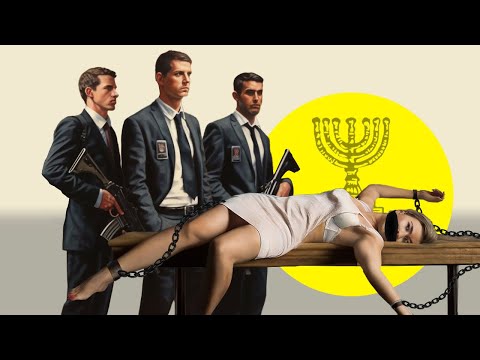
In the early years, the agency operated in the shadows, its existence barely acknowledged. But it wasn’t long before the world took notice. The capture of Adolf Eichmann in Argentina in 1960 was a turning point—a daring operation that saw Mossad agents snatch the architect of the Holocaust off a Buenos Aires street and smuggle him to Israel to face justice. The trial was broadcast live, and the world watched as Eichmann sat in a glass booth, a chilling reminder of the horrors of the past.
But Eichmann was just the beginning. The Mossad’s reach extended across the globe, from the streets of Damascus to the heart of Tehran. Eli Cohen, a Mossad agent who infiltrated the highest echelons of Syrian society, provided intelligence so vital that it arguably changed the course of the Six-Day War. His capture and public hanging in 1965 only underscored the deadly stakes of the game.
Then came Munich. The 1972 Olympic massacre, where eleven Israeli athletes were killed by Palestinian militants, shocked the world and galvanized the Mossad into action. Operation Wrath of God was born—a relentless campaign to hunt down and eliminate those responsible. The team, codenamed Bayonet, crisscrossed Europe, using bombs in phone handsets and targeted assassinations. But the operation was not without its failures; an innocent man was killed in Norway, and the agency faced fierce criticism.
Yet the Mossad pressed on. In 1976, they provided crucial intelligence for the daring raid on Entebbe, where Israeli commandos rescued over 100 hostages from a hijacked plane in Uganda. The operation was a stunning success, cementing the Mossad’s reputation as a force to be reckoned with.
As the decades passed, the threats evolved, and so did the Mossad. The rise of Iran’s nuclear program presented a new challenge. The Stuxnet worm, a joint Mossad-CIA cyber weapon, infiltrated Iranian centrifuges and set their nuclear ambitions back by years. It was a silent, invisible strike—one that never made headlines but changed the rules of warfare forever.
But the Mossad’s methods have always been controversial. The assassinations of Hamas operatives, like Yahya Ayyash and Mahmoud al-Mabhouh, were precise and daring, but they raised questions about legality and morality. In 2010, al-Mabhouh was killed in a Dubai hotel room by agents who injected him with a paralyzing agent and then smothered him. The operation was caught on camera, and the world glimpsed the cold efficiency of the Mossad.
And then there was Otto Skorzeny, Hitler’s former commando, who was reportedly recruited by the Mossad in the 1960s to eliminate Nazi scientists working for Egypt. The man once deemed “the most dangerous man in Europe” by the Allies was given a choice: work for Israel or die. It was a deal with the devil, but one that served the greater good—or so the Mossad believed.
These are just a few of the stories that define the Mossad. Each operation, each assassination, each daring raid, is a chapter in a larger narrative of survival and defiance. But the full story is far from over. The Mossad continues to operate in the shadows, its agents faceless, its missions secret. And as long as Israel faces threats, the Mossad will be there—ready to do the unspeakable.
But to understand the Mossad fully, you have to understand the world that forged it. The agency was not born in a vacuum—it was born in the shadow of annihilation. The Holocaust had taken six million lives, and the survivors who poured into the new state of Israel carried a single, unshakable conviction: never again would Jews wait for the world to save them.
That conviction shaped everything. The Mossad’s early recruits were not career spies—they were partisans, ghetto fighters, and refugees who had learned to survive by their wits. They brought with them the skills of the hunted: forgery, disguise, patience, and the cold ability to kill without hesitation.
In those first years, the agency’s reach was limited, but its ambition was not. It established networks across Europe, North Africa, and the Middle East, often using Jewish communities abroad as a cover. Agents posed as journalists, businessmen, students—anything that would let them move unnoticed through hostile capitals.
One of the earliest and most important missions was not an assassination or a kidnapping—it was a rescue. In the early 1950s, the Mossad helped smuggle thousands of Jews out of Iraq, Iran, and other Arab states where they faced persecution. Operation Ezra and Nehemiah, as it became known, airlifted over 100,000 Iraqi Jews to Israel in a matter of years.
But the Mossad’s role was never purely defensive. As the Arab states vowed to destroy Israel, the agency began to target the scientists and engineers who were building the weapons that could make that threat real. In the 1960s, Mossad agents launched a covert campaign against German rocket scientists working for Egypt—a campaign that included letter bombs, kidnappings, and at least one assassination.
The man at the center of that campaign was Otto Skorzeny, the scarred Nazi commando who had rescued Mussolini and fought for Hitler to the bitter end. How did a wanted war criminal end up working for the Jewish state? The answer is as dark as it is pragmatic: the Mossad offered him a choice between death and service.
Skorzeny, it is said, chose service. He used his contacts in the former Nazi network to track down scientists working for Egypt and, according to some accounts, eliminated them. It was a deal with the devil, and the Mossad knew it—but in the ruthless calculus of survival, the devil had his uses.
That willingness to cross moral lines became a defining feature of the agency. The Mossad has never operated under the illusion that it fights with clean hands. Its agents are trained in the art of deception, and its operations are designed to leave no trace—or, when a trace is unavoidable, to send a message.
That message was delivered with brutal clarity in 1979, when the Mossad finally caught up with Ali Hassan Salameh, the PLO operative known as the Red Prince. Salameh had been the mastermind behind the Munich massacre, and for years he had eluded the wrath of God team. But in Beirut, on a quiet January morning, a car bomb planted by Mossad agents tore through his convoy and killed him instantly.
The operation was a triumph—but it came at a cost. The bomb also killed several bystanders, including a British student and a nun. The Mossad had gotten its man, but the world was watching, and the agency’s methods were becoming harder to justify.
For the Mossad, however, the only question that mattered was whether the mission was necessary. And in the decades that followed, the missions only grew more complex, more daring, and more deeply embedded in the technological revolution that was transforming the world of espionage.
The age of the computer had arrived, and the Mossad was ready. If the twentieth century had been fought with bullets and bombs, the twenty-first would be fought with code—and the Mossad intended to win.
To win that new war, the Mossad needed a different kind of soldier. The recruiters began scouring the world’s best universities and tech hubs, looking for prodigies in mathematics, cryptography, and computer science. Many of them were young Israelis who had grown up with a keyboard in one hand and a rifle in the other, serving in the IDF’s elite cyber units before being quietly approached by the agency.
These recruits rarely carried a gun or learned to pick a lock. Their battleground was a server farm in a nondescript building, their weapon a line of malicious code. Yet their missions could be just as devastating as any car bomb—and far harder to trace.
The Stuxnet operation was their masterpiece. For years, Iranian scientists had been spinning centrifuges deep underground at Natanz, inching closer to a nuclear weapon. Mossad and CIA engineers had studied the German-made Siemens controllers running those machines and found a flaw no one had ever exploited.
They built a worm that would quietly replicate itself, then wait. When it reached the centrifuge controllers, it would spin the machines out of control—speeding them up and slowing them down until the rotors shattered. The Iranians heard explosions in their own plant and had no idea what was causing them.
For months, the Iranians blamed mechanical failure, then sabotage, then each other. By the time they understood they had been attacked by a piece of software, thousands of centrifuges had been destroyed and their nuclear timeline pushed back by years. The Mossad had struck without a single agent setting foot in Iran.
But the cyber war cut both ways. Iran’s own hackers began striking back, targeting Israeli water systems, banks, and even a hospital. The Mossad found itself fighting an enemy that could attack from anywhere, at any hour, with nothing more than a laptop and an internet connection.
And the human war never stopped. In Tehran, a covert campaign of targeted killings continued against Iranian nuclear scientists—a physicist blown up by a magnetic bomb attached to his car, another shot dead by men on motorcycles. Iran accused the Mossad of murder; Israel, as always, said nothing.
That silence is the Mossad’s oldest weapon. It never confirms, never denies, never apologizes. The agency learned long ago that a mystery is more terrifying than a confession, and that a reputation for ruthless competence is worth more than any public statement.
Yet the world keeps finding ways to peek behind the curtain. In Dubai, hotel cameras recorded the entire al-Mabhouh operation; in Malaysia, agents were caught on tape; in Norway, a case of mistaken identity left an innocent man dead. Each exposure became a lesson, and each lesson made the agency more careful.
Today, the Mossad faces threats its founders could barely have imagined—from cyberattacks and drone swarms to proxy militias and lone-wolf attackers. But the founding principle remains unchanged: the Jewish state will defend itself, by any means necessary, and it will do so far from home.
And somewhere in a quiet office in Tel Aviv, a new generation of handlers is studying a map, planning the next operation that the world will never know about—until, perhaps, it is already too late.
And yet, for all its lethal precision, the Mossad has never been merely a weapon. It is a promise etched into the soul of a people who learned that silence and patience are not virtues when survival is at stake. Every operation, every whispered name on a kill list, carries the weight of that history.
The agency’s future will be fought in cyberspace, in the shadows of social media, in the invisible wires that connect nations. But the men and women of the Mossad will remain what they have always been: the unseen shield, the quiet blade, the answer to a question the world keeps asking.
And as long as that question is asked, the Mossad will be there—watching, waiting, and ready. Because for Israel, the alternative to vigilance is extinction.
What do you think—can a nation ever truly be safe, or is the Mossad’s endless war the only price of survival?
Report this article
Select a reason for reporting:






