The summer festival was supposed to be a day of joy and community. But as the sun set on July 25, 1998, the cheerful chatter of the Matsuri in the Shinobi district of Wakayama, Japan, turned into screams of agony. One by one, festival-goers began to collapse, clutching their stomachs, their faces contorted in pain. The culprit? A batch of curry laced with arsenic. By the next morning, four people were dead and dozens more were fighting for their lives. The quiet neighborhood had become the scene of one of Japan’s most notorious mass poisonings.
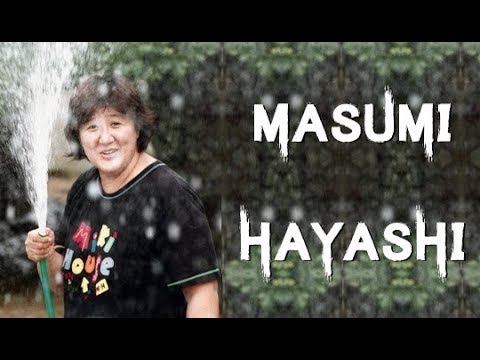
In the midst of the chaos, a reserved woman named Masumi Hayashi watched as the community she had never truly been part of fell apart. Little did anyone know that the investigation would soon point directly at her—a mother of four with a shadowy past of insurance fraud and a motive born of resentment.
The festival committee had worked tirelessly to ensure the event’s success. Invitations with food coupons were sent to every household, and the women’s association prepared a feast featuring yakitori, tonkatsu, and the ever-popular Japanese curry. The curry, cooked in large pots, was served to hundreds of attendees, many of whom took containers home. No one suspected that among the crowd, someone harbored a deadly grudge.
As the first victims arrived at the hospital, doctors initially diagnosed food poisoning. But the symptoms were too severe, too rapid. By the next day, 63 people were hospitalized, and four were dead—including the festival’s 64-year-old organizer, Takashi Tanaka, his deputy, and two children, a 16-year-old girl and a 10-year-old boy. The news spread like wildfire, and the press dubbed it the Wakayama curry poisoning. Japan was in shock.
Police quickly identified cyanide as the initial suspect, but a week later, medical experts confirmed the true poison: powdered arsenic. It had been deliberately sprinkled into the curry pots. The case was now a murder investigation, and the quiet district of Shinobi was swarmed by police and journalists. The initial investigation was slow, drawing criticism from the press and locals. But then, detectives uncovered a trail of insurance scams leading straight to Masumi Hayashi.
Two men who regularly visited the Hayashi home had been hospitalized with arsenic poisoning after eating there. Both had traces of arsenic in their hair. One had been insured by Masumi against illness, and she had allegedly collected 6 million yen in benefits. The other man’s insurance policy also listed Masumi’s address. The deeper investigators dug, the more scams they found—including one where Masumi claimed she had burned herself falling onto a bonfire while cooking spaghetti, all to collect insurance money.
The police began to form a chilling theory: Masumi had poisoned the curry to collect on insurance policies she had taken out on several people she knew would attend the festival. A search of her home revealed arsenic, presumably from her husband Kenji’s termite extermination business. It matched the traces found on cups discarded at the festival. Witnesses came forward, claiming they had seen Masumi lurking by the curry pots.
In early October 1998, detectives arrested both Masumi and Kenji. They were charged with insurance fraud, and Masumi was charged with four counts of murder by arsenic poisoning. The couple was found guilty of fraud, and Kenji was sentenced to six years in prison. But the curry poisonings had captured the nation’s attention, and in May 1999, Masumi’s murder trial began.
The prosecution’s case was built on circumstantial evidence: the arsenic match, witnesses placing her near the pots, and her history of insurance fraud. The defense argued that the arsenic was a common product, available in many stores, and that the person seen by the pots could have been Masumi’s daughter. They acknowledged the insurance frauds but insisted that didn’t prove she would poison innocent people. There was no motive, they argued, no eyewitnesses who saw her touch the curry, and no cast-iron evidence.
But the prosecution painted a darker picture. They alleged that Masumi, shunned by locals and the women’s society, wanted revenge. They believed she may have thought the arsenic would only make people sick, not kill them. The trial lasted three years, gripping the country. In December 2002, the Wakayama District Court found Masumi Hayashi guilty of murder and sentenced her to death. She continued to proclaim her innocence and appealed.
The High Court upheld the ruling in June 2005, and the case went to the Supreme Court. Her lawyers argued that the absence of motive and eyewitnesses, and the presence of other individuals near the curry pots, made the conviction unsafe. They also contended that the death penalty was too harsh given the lack of direct evidence. But on April 21, 2009, nearly eleven years after the crime, the Japanese Supreme Court upheld the death sentence and dismissed her appeal. Masumi Hayashi still claims she is innocent and remains in prison, awaiting her fate.
But the story did not end with the Supreme Court’s ruling. In the years that followed, Masumi Hayashi’s case became a lightning rod for debate in Japan—a country where the death penalty is rarely carried out and where convictions are almost never overturned. Her lawyers filed a series of retrial requests, each one arguing that the original verdict rested on flawed science and circumstantial threads too thin to hang a life upon.
One of the most persistent challenges concerned the arsenic itself. Defense experts claimed that the arsenic found in the Hayashi home was not chemically identical to the poison in the curry—a detail, they argued, that the original court had glossed over. They also pointed to the chaotic festival scene, where dozens of hands had reached into the pots, and where the curry had been left unattended for stretches of time. Anyone could have slipped arsenic into the food, they insisted—not just Masumi.
Then there was the matter of Masumi’s daughter. Witnesses had placed a young woman near the curry pots that day, and the defense had long maintained that the figure was misidentified. In 2014, the Tokyo High Court rejected a retrial petition, but the legal team refused to give up. They gathered new testimony from a former insurance colleague who claimed Masumi had never actually collected on the policies in question—a claim that, if true, would dismantle the prosecution’s central motive.
Meanwhile, life inside the prison walls was its own quiet ordeal. Masumi, now in her fifties, spent her days in a small cell, writing letters and reading legal documents. She corresponded with supporters who believed the case against her was a rush to judgment fueled by public outrage. In one letter, she wrote: ‘I have lost everything, but I have not lost the truth. It is the only thing I have left.’
Her children grew up without their mother. Kenji, released after serving his fraud sentence, lived quietly, rarely speaking to the press. The Shinobi district, once a tight-knit farming village, never fully healed. The festival was canceled for years, and when it finally returned, the curry was gone from the menu—a small but telling omission that spoke to the wound that had never closed.
In 2020, a new round of appeals reached the Tokyo High Court, this time armed with fresh analysis of the arsenic samples. The defense argued that contamination in the original lab work had tainted the evidence. The court deliberated for months, and the country waited, divided between those who saw Masumi as a calculating killer and those who saw a convenient scapegoat.
The decision, when it came, would not be the final word—but it would mark another chapter in a case that had already outlasted the festival it destroyed.
The Tokyo High Court’s ruling in 2020 was, in the end, a familiar one: retrial denied. The judges found no grounds to overturn the original verdict, and Masumi’s legal team announced almost immediately that they would appeal once more. But by then, the case had taken on a life beyond the courtroom. It had become a mirror held up to Japanese society, reflecting uncomfortable questions about justice, media frenzy, and the price of being different in a community that prized conformity.
Among the most vocal critics of the verdict were criminologists who had studied the original trial transcripts. They pointed to a troubling pattern: the prosecution’s narrative had shifted over time, adapting to fill gaps as the evidence failed to materialize. ‘The motive was invented after the fact,’ one retired professor told a documentary crew in 2021. ‘They needed a reason, so they created one—resentment, revenge, a woman scorned by her neighbors. But where is the proof that she felt any of this?’
The question of motive had always been the case’s weakest link. Masumi had been described as unsociable and unfriendly, but former classmates and coworkers painted a different picture—a quiet, meticulous woman who kept to herself but never expressed hostility toward anyone. One former colleague recalled her as ‘the kind of person who would apologize for bumping into a chair.’ Hardly the profile of a mass murderer.
Then, in late 2022, a new figure stepped forward. A man in his late sixties, a former resident of Shinobi who had moved away shortly after the poisonings, contacted Masumi’s defense team with a story that had never been told. He claimed that on the morning of the festival, he had seen a man—not Masumi—carrying a small paper packet toward the curry preparation area. The man, he said, had been acting strangely, looking over his shoulder, and had disappeared behind the tents where the food was being stored.
He had never reported it, he admitted, because he had been drinking that morning and feared no one would believe him. But the memory had haunted him for decades. ‘I saw what I saw,’ he told the defense investigators. ‘And it wasn’t her.’
The defense team scrambled to verify the account. They tracked down festival records and found that the area where the man claimed to have seen the figure had indeed been a blind spot—uncovered by the security cameras that had been installed at the main entrances. It was the first time in over two decades that a credible witness had placed someone other than Masumi near the curry pots in the critical hours before the poisonings.
Prosecutors dismissed the new testimony as unreliable, pointing to the witness’s admitted drinking and the passage of time. But the revelation reignited public interest. Newspapers that had long ago moved on from the case began running fresh features. Television panels debated the reliability of eyewitness memory. And Masumi, from her cell, wrote a letter to her lawyers that was later leaked to the press: ‘For twenty-four years, I have said the same thing. Perhaps now, someone will finally hear it.’
The 2023 retrial petition landed on the desk of the Tokyo High Court with more weight than any that had come before it. The defense submitted the new witness testimony alongside a re-analysis of the arsenic samples, this time conducted by an independent laboratory in Europe. The results were not conclusive—arsenic is arsenic, and the brand was common—but they raised enough doubt to force the court to take the petition seriously.
The hearings dragged on for months. Masumi appeared via video link from prison, thinner now, her hair streaked with gray. She spoke only once, in a voice so quiet the judge asked her to repeat herself. ‘I did not do this,’ she said. ‘I have never stopped saying it. I will never stop.’
In early 2024, the court delivered its ruling: retrial granted. The decision cited ‘newly discovered evidence’ and ‘insufficient examination of the original forensic findings.’ It was not an acquittal—but it was a crack in a wall that had stood for a quarter century.
Prosecutors vowed to fight on. The retrial would take years, they warned, and the outcome was far from certain. But outside the courthouse, a small crowd of supporters erupted in cheers. One of them held a sign that read: ‘Truth has no deadline.’
Masumi Hayashi remains in prison today, still awaiting the retrial that could finally set her free—or seal her fate forever. The curry pots are long gone, the festival a distant memory. But the question lingers, as unanswered now as it was on that summer day in 1998.
Do you believe Masumi Hayashi is guilty—or was she a scapegoat for a community’s need for closure? Share your thoughts in the comments below.
Report this article
Select a reason for reporting:






