Imagine being raised in a culture that worships self-sacrifice as the highest honor—and then failing to go through with it. For thousands of Japanese kamikaze pilots in World War II, that nightmare became real. They returned home alive, only to be branded cowards, traitors, and a disgrace to their families and their emperor. The shame would haunt them for decades.
But here’s the truth that history often forgets: not every kamikaze mission ended in a fiery plunge into an enemy ship. Some pilots turned back. Some got lost. Some survived by sheer luck—or by choice. And when they came home, they faced a society that had no place for them.
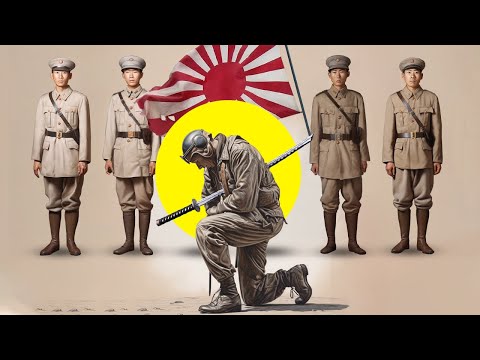
The kamikaze—meaning “divine wind”—was Japan’s desperate gamble in the final years of the war. By 1944, the Japanese navy was shattered, the merchant fleet nearly destroyed, and American submarines were prowling so close to the home islands that they photographed the coast through their periscopes. Japan’s leaders knew they couldn’t win a conventional war. So they turned to a tactic that would terrify the Allies: organized suicide attacks.
Over 3,000 kamikaze pilots died in their missions, taking roughly 7,000 Allied sailors, soldiers, and airmen with them. But historians estimate that only about 19 percent of kamikaze attacks were actually successful. That means thousands of pilots never reached a target—and many of them came back alive.
For those who returned, the war didn’t end. It simply changed shape. They were interrogated, ostracized, and sometimes even executed. One pilot who returned nine times was pulled from his cockpit after his final landing and shot. Others were told to try again—and again—until they got it right. The pressure was unbearable.
Yet the story of the kamikaze who survived is not just one of shame. It’s also a story of resistance. Some pilots deliberately turned back, feigning engine trouble or claiming they couldn’t find the enemy. Others were forced into the corps against their will, recruited by the secret police as the “glorious volunteers” myth began to crumble.
As the war entered its final months, the kamikaze became a symbol of Japan’s defiance—and its despair. The battle of Okinawa would be their largest and most deadly effort. But even as they sank 36 American ships and damaged more than 300, the tide could not be turned. The divine wind had failed.
What happened to the men who lived through that failure? How did they rebuild their lives in a country that saw them as living reminders of defeat? And what does their story tell us about honor, shame, and the human will to survive?
The answers are as complicated as the men themselves. After Japan’s surrender in August 1945, the kamikaze survivors faced a society in ruins—and a reckoning that no one had prepared them for. Many burned their flight logs, hid their uniforms, and never spoke of their service again. Some changed their names. Others moved to remote towns where no one knew their past. The silence became a kind of second death.
But the shame wasn’t just personal. It was institutional. The same military leaders who had organized the kamikaze corps now scrambled to distance themselves from it. Officers who had once ordered young men to die suddenly described the pilots as “enthusiastic volunteers” who had acted on their own initiative. The survivors were left holding the blame for a strategy their superiors had designed.
The psychological toll was devastating. Post-war Japan had little understanding of trauma. There were no support groups, no public acknowledgment, no vocabulary for what these men had endured. Many survivors suffered from what we would now call PTSD—nightmares, flashbacks, depression—without ever receiving a diagnosis. They drank. They withdrew. Some took their own lives years later, completing what the war had started.
Yet not all stories ended in silence and despair. A handful of survivors found unexpected paths forward. Some became Buddhist monks, dedicating their lives to honoring the dead—both the comrades they lost and the enemies they had been sent to kill. Others became anti-war activists, speaking out against militarism and the glorification of sacrifice.
One of the most remarkable was a former kamikaze pilot named Kanji Suzuki, who spent decades as a schoolteacher in a small fishing village. His students never knew about his past until a local historian uncovered his name in wartime records. When confronted, Suzuki reportedly said: “I did not return because I was a coward. I returned because I was ordered to live. And I have spent every day since trying to understand what that meant.”
Others found solace in the unlikeliest of places: the families of the men they had been sent to kill. In the 1970s and 1980s, a small number of Japanese veterans traveled to the United States and the Pacific islands to meet survivors of kamikaze attacks. These meetings were painful, awkward, and sometimes healing. One American sailor who had survived the sinking of his destroyer told a former kamikaze pilot: “You were doing your job. I was doing mine. We were both just trying to stay alive.”
But for every story of reconciliation, there were dozens of men who never found peace. They died alone, their secret histories buried with them. Their families sometimes learned the truth only after reading old letters or finding photographs hidden in boxes.
The legacy of the kamikaze survivors remains contested in Japan today. Some see them as tragic victims of a militarist regime. Others still view them as failures who betrayed their country. The debate reflects a deeper unease about the war itself—a conflict that Japan has never fully confronted.
And yet, the survivors’ stories offer something valuable: a reminder that history is never as clean as the myths we tell. The kamikaze who came home were not cowards. They were young men caught between an impossible order and an unbreakable instinct to live. Their survival was not a failure—it was a quiet act of defiance against a system that had already decided they were expendable.
As one elderly survivor told an interviewer in 1995, his voice barely a whisper: “I was supposed to be a god. Instead, I lived to be an old man. I still don’t know which one was the punishment.”
That question—punishment or mercy—followed many survivors into old age. But the reckoning didn’t happen in isolation. It unfolded against the backdrop of a nation rebuilding itself from ashes, and the kamikaze survivors became an inconvenient reminder of everything Japan wanted to forget.
In the immediate post-war years, the American occupation authorities actually took an interest in these men. Some were interviewed by U.S. intelligence officers eager to understand the psychology of the suicide corps. One report described the survivors as “deeply conflicted individuals, torn between relief and self-loathing.” The Americans, surprisingly, often treated them with more sympathy than their own countrymen did.
But as the occupation ended and Japan charted its own course, the door on the kamikaze story quietly closed. The 1964 Tokyo Olympics presented a gleaming new Japan to the world—bullet trains, transistor radios, economic miracle. There was no room in that bright picture for men who had flown into battle expecting to die and come home instead.
Then, in the 1970s, something shifted. A new generation of Japanese historians and journalists began digging into wartime records. They found something the official narratives had buried: the kamikaze corps was not the volunteer army of legend. It was a conscripted force, cobbled together from university students, farm boys, and reluctant recruits. Many had been given a choice between “volunteering” and facing the secret police.
The revelations sparked a quiet controversy. Families who had lost sons in kamikaze attacks were furious—their sacrifices had been framed as noble, voluntary gifts to the nation. Now historians were suggesting many of those deaths were coerced. One bereaved mother told a newspaper: “If my son was forced to die, then his death was murder, not honor. I have spent thirty years praying to a lie.”
The survivors, by then middle-aged and gray, watched this debate from the sidelines. Most still refused to speak publicly. But a few began to break their silence—cautiously, painfully. They gave interviews under pseudonyms. They wrote anonymous memoirs. They started to describe what it felt like to sit in a cockpit, engine roaring, knowing the next minutes would either end your life or condemn it.
One survivor, identified only as “Mr. K,” described the moment he turned back from his mission. “I saw the American fleet below me—hundreds of ships, guns firing everywhere. I thought of my mother’s face. I pulled the stick and flew home. The flight commander slapped me across the face and called me a dog. But I am alive. I have grandchildren. My mother got to hold them before she died.”
Not everyone could forgive themselves so easily. Some survivors carried a different burden: the guilt of outliving their comrades. They had trained together, eaten together, sworn oaths together. And then, for reasons they could never fully explain, they had come back while their friends had not. Survivor’s guilt became a silent epidemic, unrecognized and untreated.
As the 20th century drew to a close, the remaining kamikaze survivors dwindled in number. Their story, once suppressed, began to find its way into Japanese popular culture—films, novels, documentaries. But even these portrayals often softened the edges, turning complex men into tragic heroes or pitiable victims. The messy truth—that some were brave, some were coerced, some were cowards, and most were simply young men caught in a nightmare—was harder to package.
The messy truth is now fading. The last kamikaze survivors are in their nineties, and soon their voices will be gone. Museums in Japan still display the planes, the letters, the photographs—but the men who flew them are almost silent. What remains is a question each generation must answer for itself.
Was their survival a betrayal of honor, or a quiet victory of the human spirit? Perhaps the most honest answer comes from a survivor who spoke at a school in 2005, his voice trembling: “I did not choose to live. Life chose me. And I have spent sixty years learning to be grateful for a gift I once thought was a curse.”
The kamikaze who came home were neither gods nor cowards. They were young men who stared into the abyss—and blinked. In that blink, they found not shame, but a second chance.
So what would you have done, sitting in that cockpit, with the engine roaring and the fleet below? Would you have plunged into history—or turned back toward a life that might never forgive you?
Report this article
Select a reason for reporting:






