The sky over Tokyo was clear that March night in 1945, but the air itself seemed to hold its breath. Major General Curtis LeMay had made a fateful decision: his B-29 Superfortresses would fly low and drop a new kind of weapon—a bomb that would unleash a firestorm unlike anything the world had ever seen. The weapon was the M69, a six-pound hexagonal canister filled with napalm, designed not to explode but to ignite, cling, and burn with a ferocity that would reduce entire neighborhoods to cinders.
As the first bombers rumbled over the city, they released their payloads—cluster canisters that burst open at 2,500 feet, scattering hundreds of M69s like deadly confetti. Each bomblet, stabilized by cloth streamers, fell silently before impact, then erupted in a gout of jellied gasoline that stuck to roofs, walls, and skin. Within minutes, the wooden and paper houses of Tokyo became a sea of flame.
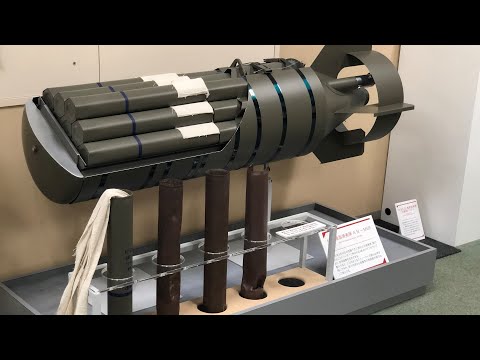
The M69 was not born overnight. Its development was a response to the stark reality that high-altitude precision bombing had failed. Weather, jet streams, and mechanical issues plagued the B-29 campaign, and American strategists realized they needed a new approach. Tests at the Dugway Proving Grounds in Utah had shown that incendiaries were far more effective against Japanese structures than high explosives. The M69 emerged as the clear winner—a weapon that could start fires that would spread uncontrollably, consuming everything in their path.
Each M69 contained 2.8 pounds of napalm, a thickened gasoline that burned at 1,000 degrees Fahrenheit for up to 20 minutes. The bomb was designed to penetrate roofs and floors before ejecting its deadly payload, ensuring that the fire started inside the building, where it could spread most effectively. “Heat is a more effective destructive agent than high explosives,” one Army Air Force report noted. Fire damage was more permanent, more difficult to repair, and more terrifying.
The results were catastrophic. On the night of March 9, 1945, 334 B-29s dropped over 1,500 tons of incendiaries on Tokyo, most of them M69s. The city’s dense wooden neighborhoods were perfect fuel. Firestorms swept through the streets, creating hurricane-force winds that sucked oxygen from the air and turned everything flammable into instant tinder. By dawn, 16 square miles of the city had been reduced to ashes, and an estimated 100,000 people were dead.
The M69 was not just a bomb; it was a weapon of psychological warfare. Japanese fire departments were helpless against it. “Three to ten M69s per house—these were far more effective than any other type of bomb used,” a Japanese fire advisor later admitted. The bomb’s hexagonal shape allowed for efficient packing in cluster canisters, and its cloth streamers stabilized its fall, ensuring it landed at the right angle to penetrate and ignite. The M69 was a marvel of engineering, but its purpose was pure destruction.
As the war continued, the M69 would be used in raids on Nagoya, Osaka, and Toyama, each time with devastating effect. By the end of the war, incendiary bombs had destroyed 42 percent of Japan’s urban core, and the M69 was the star of the show. But the story of the M69 is not just about the bomb itself; it’s about the men who flew the missions, the civilians who endured the firestorms, and the moral questions that still linger today.
In the next part, we will follow the B-29s on that fateful March night, as they execute Operation Meetinghouse, the deadliest bombing raid in history. The crews knew the stakes—and the horrors—that awaited them over Tokyo.
The crews of the 21st Bomber Command had been briefed in stark terms. “You will destroy the enemy’s ability to make war,” the intelligence officers said, though few in the briefing huts needed reminding. The target was not a factory or a dockyard but a dense, tinder-dry residential district—the kind of place where a single match could level a block.
Each B-29 was stripped of its defensive guns and ammunition, saving weight for bombs and fuel. The gunners were left behind, their positions empty. The planes would fly low, unarmed, and alone over hostile territory—a gamble that left many crewmen with a cold knot in their stomachs. The intervalometer was set to release one cluster every fifty feet, creating a carpet of fire that would stretch for two thousand feet.
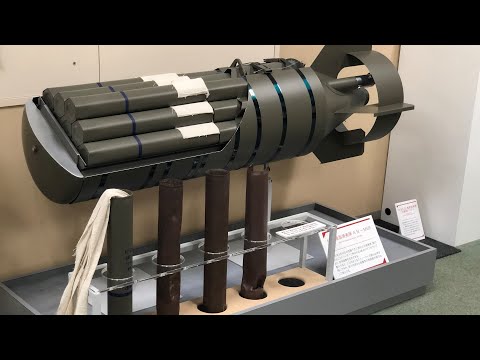
As the first aircraft crossed the coast, the bombardiers hunched over their Norden sights. The pathfinders went in first, dropping their M69s to mark a flaming X across the target area. The bombs tumbled out of the E46 canisters, the cloth streamers snapping open in the slipstream, and then the sky lit up in a chain of orange blossoms.
The fires began to merge almost immediately. Individual blazes joined into a single wall of flame that advanced down the narrow streets like a living thing. Thermal updrafts reached hurricane strength, and the wooden houses seemed to explode before the fire even touched them. Crews reported smelling burning wood and flesh as they climbed away, the smoke column rising to twenty thousand feet and beyond.
On the ground, the Tokyo fire department was overwhelmed within the first fifteen minutes. “The water in our hoses boiled before it reached the flames,” one survivor recalled. Firebreaks had been cut, but the M69s fell behind them, inside them, everywhere at once. People fled toward the Sumida River, only to find the bridges already burning and the water itself too hot to touch.
The M69 proved more terrible than any test had predicted. At Dugway, the mock Japanese village had shown an 81 percent AB fire classification—meaning the fires spread beyond the control of firefighters within six minutes. In Tokyo that night, there were no firefighters left to control anything. The bomb’s napalm stuck to roofs and skin alike, and the delayed ejection meant it often detonated inside a home, trapping families in a sudden furnace.
By the time the last B-29 turned for home, the city below was a single continuous inferno. Tail gunners looked back and saw a glow so bright it rivalled the sunrise—except the sun would not rise for another hour. Some crews vomited in their oxygen masks; others sat in silence, the roar of the engines barely drowning out the memory of what they had just done.
The M69 had done its work. But the full accounting of that night—the casualties, the destruction, the political consequences—would not be known for weeks. And for the men who flew the mission, the question of whether they had won a battle or committed an atrocity would follow them for the rest of their lives.
As the B-29s droned north toward their bases in the Marianas, the fires of Tokyo continued to burn, visible from a hundred miles at sea, a beacon of a war that had reached its most terrible chapter yet.
Back at Guam, the debriefing tents were quiet in a way that none of the veterans had ever experienced. Crews filed in smelling of smoke and aviation fuel, their faces smudged, their eyes distant. “I could see people,” one co-pilot wrote in his after-action report, then crossed it out and wrote nothing at all. The intelligence officers collected the flak vests and the mission logs, but no one asked the questions that hung in the air.
LeMay himself came out to meet the returning crews, chewing his cigar as always, but even he seemed subdued. “We knew it would be bad,” he later told an aide. “We didn’t know it would be biblical.” The photographs from the strike planes and the reconnaissance Mosquitoes told a story that words could not: sixteen square miles of Tokyo reduced to a charred plain, the grid of streets still visible only as faint lines of ash.
The damage assessment teams flew over the city at dawn, and what they saw changed the calculus of the entire bombing campaign. Where factories had once stood, there was now nothing but the skeletal frames of steel beams, twisted like dead trees. The wooden neighborhoods had simply ceased to exist—not damaged, not destroyed, but vaporized, leaving only the concrete and stone of a handful of public buildings standing like tombstones.
The Japanese government’s initial response was one of stunned silence. Radio Tokyo, which had promised that the sacred homeland could never be burned, fell back on claims of exaggerated American reports. But the foreign correspondents in neutral capitals had already begun to piece together the truth. Swedish and Swiss diplomats toured the ruins and cabled home that the reports were, if anything, understated. The smell of death hung over the city for weeks.
For the crews of the 21st Bomber Command, the aftermath brought a strange and unwelcome celebrity. War correspondents wanted interviews; the brass wanted photographs for the folks back home. But many of the men who had flown the mission refused to talk about it, even to each other. They had been trained to hit a factory, a shipyard, a rail yard—not a city of paper and wood where the streets were full of women and children.
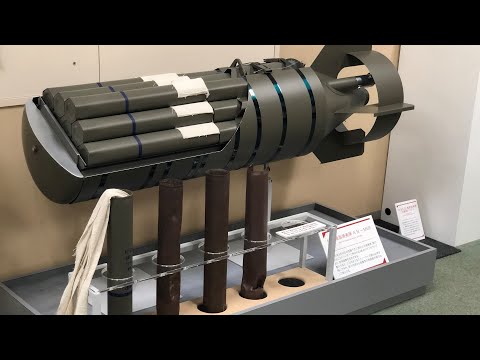
The M69 had proven itself beyond any doubt. Post-raid analysis showed that the bomblets had achieved a fire density that no fire department on earth could have countered. The hexagonal bombs had done exactly what the Dugway tests had promised: they had penetrated the flimsy roofs, ejected their napalm inside the structures, and created a firestorm that fed on itself, drawing in air from every direction and turning the city into a furnace.
Yet the mission also raised questions that the Army Air Forces were not eager to answer. The Strategic Bombing Survey teams that would later comb through the ruins found something unexpected in the pattern of destruction. The firebreaks that Japanese authorities had laboriously cut through the dense neighborhoods had actually made the firestorm worse—they channeled the flames and the wind into narrow corridors, accelerating the spread. The very measures meant to save the city had helped to destroy it.
The survivors’ accounts, collected months later, painted a picture of horror that no military report could fully capture. One woman described the Sumida River as “a river of fire,” with the water so hot that people who jumped in were boiled alive. Others spoke of the fire wind that picked up people and carried them through the air like leaves. The M69 had created a new kind of weapon—one that did not just kill but erased.
In the Marianas, the next missions were already being planned. The success of the Tokyo raid meant that the firebombing campaign would continue, and the M69 would be the centerpiece. Nagoya, Osaka, Kobe, and eventually Toyama—each would receive its own night of fire. The crews would fly again, and the bombs would fall again, and the cities would burn again.
But something had shifted in the air over the Pacific. The men who flew the B-29s had seen what their weapons could do, and they knew that the war had crossed a threshold from which there was no return. The M69 had been designed to win a war, but it had also changed the meaning of victory itself.
As the spring of 1945 wore on, the fire raids continued, and the Japanese war economy began to collapse. The M69 had done what the planners had promised it would do—it had gutted the enemy’s ability to make war. But the cost, in human lives and in the moral ledger of the men who dropped the bombs, would not be fully reckoned for decades.
The next target was already marked on the maps in the briefing rooms, and the crews were already being recalled for another mission. The fire raids were just beginning, and the M69 would light the way.
By August, the M69 had leveled Toyama—95 percent of the city gone—and the fire raids had gutted Japan’s war economy. But the men who dropped them carried a quieter burden home. Some never spoke of Tokyo again; others wrote letters to the families they would never meet.
In 1946, the Strategic Bombing Survey interviewed E. Honda, a top-level fire advisor. “Three to ten M69s per house—far more effective than any other bomb,” he said flatly. Even the enemy confirmed what the engineers had built.
The M69 was a marvel of applied science: hexagonal, streamer-stabilized, napalm-filled, 44,000 BTUs of pure fire. It destroyed 42 percent of Japan’s urban core and changed the meaning of victory forever.
So here is the question that still burns: was the M69 a necessary weapon of war—or a line no nation should ever cross again?
Report this article
Select a reason for reporting:






