The rhythmic thump of rotor blades cuts through the desert night—a sound that has signaled salvation for wounded soldiers and impending doom for enemies for over 35 years. The Sikorsky Black Hawk, a machine forged in the lessons of Vietnam and hardened in the deserts of Iraq and the mountains of Afghanistan, has become the undisputed workhorse of American air power. But after decades of upgrades, its iconic silhouette may finally be nearing the end of its storied career.
In the corridors of the Pentagon, a fierce battle is brewing—not on the battlefield, but in the boardrooms and testing grounds where the next generation of military helicopters is being conceived. The U.S. Army’s Future Vertical Lift program aims to replace not just the Black Hawk, but an entire fleet of aging rotorcraft with machines that promise to fly twice as fast and twice as far.
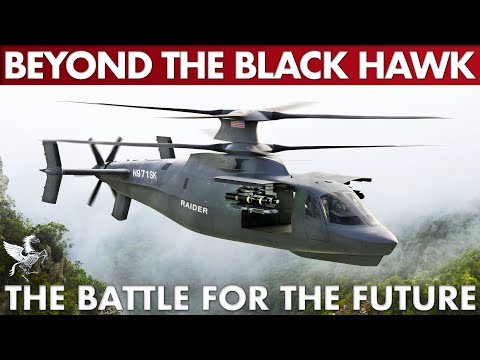
The stakes are astronomical. The winner will secure contracts worth hundreds of billions of dollars and dominate the aerospace industry for the next half-century. Two titans have emerged as frontrunners: Sikorsky-Boeing with their Defiant, a compound helicopter building on decades of coaxial rotor innovation, and Bell with the V-280 Valor, a third-generation tiltrotor that draws on the controversial legacy of the V-22 Osprey.
“We’re talking about 3,000 helicopters plus all the export market,” one analyst notes. “No one will let them just walk in and take it.”
But the path forward is anything but certain. The Army could still choose a conventional, cheaper design—or even extend the Black Hawk’s life yet again. With the replacement still two decades away, the question looms: is the wait worth it?
As engineers and pilots prepare for the next phase of competition, the ghost of Igor Sikorsky—the visionary who built the world’s first practical helicopter—watches over a new generation of dreamers. His company, now part of Lockheed Martin, faces its greatest challenge yet. The Black Hawk may have defined the last era of vertical flight, but the future belongs to whoever can redefine it.
The race is on, and the skies are about to change.
Deep inside the Sikorsky Development Flight Center in West Palm Beach, Florida, the air hums with anticipation. Engineers cluster around monitors while test pilots Bill Fell and Kevin Bredenbeck run through final pre-flight checks on a machine that could reshape the future of vertical flight. The S-97 Raider—a sleek, angular prototype with counter-rotating coaxial rotors and a pusher propeller at its tail—sits on the tarmac, its composite skin gleaming under the Florida sun.
This is the moment Sikorsky has been building toward since the X-2 Technology Demonstrator first proved the compound helicopter concept could work. The Raider is not just an aircraft; it is a statement of intent. “If we can fly this thing at 240 knots, we’ve fundamentally changed what a helicopter can do,” one engineer remarks, his voice tight with nervous energy.
The rotors spin up with a distinctive whine, different from the familiar thump of a conventional helicopter. The rigid coaxial design allows the blades to spin closer together than any Kamov design ever could—inches apart rather than feet—dramatically reducing drag. As the Raider lifts off, the pusher propeller engages, and the aircraft accelerates beyond speeds the Black Hawk could ever dream of reaching.
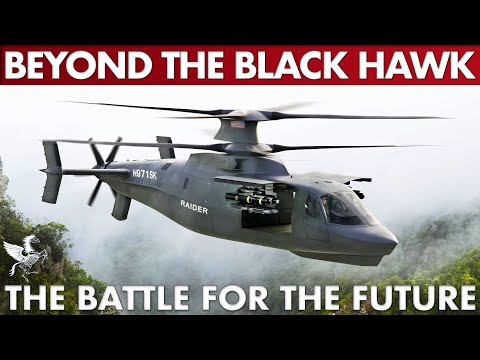
The flight lasts only minutes, but its implications stretch decades into the future. Sikorsky has now demonstrated the full envelope of its compound helicopter technology—from hover to high-speed cruise—in a package sized for real missions. The data streaming back to the engineering team confirms what years of wind tunnel testing predicted: the X-2 lineage scales.
But across the country, Bell’s engineers are watching closely. Their V-280 Valor, a third-generation tiltrotor, has already logged hundreds of flight hours. Unlike the V-22 Osprey, the Valor’s engines stay fixed while only the rotors tilt—a design choice that simplifies maintenance and allows troops to exit through side doors, just as they do from a Black Hawk.
“The tiltrotor gives us speed and range that no compound helicopter can match,” a Bell test pilot explains. “But we know the Army’s real question: can we hover and loiter like a helicopter when the mission demands it? That’s what we’re proving every day.”
The Army’s requirements are brutal: 230 knots minimum, 2,100 miles of self-deployment range, and the ability to survive direct hits from ground fire. Both aircraft can hit the speed target. Both can fly the distance. But only one will win the contract.
Back in Washington, budget analysts pore over cost projections. The V-280’s tiltrotor design promises unmatched speed, but its complexity raises questions about affordability. The Defiant’s compound helicopter approach builds on proven technology, but skeptics wonder if coaxial rotors can truly scale to the size of a Black Hawk replacement.
“The Army has a second chance to choose,” a defense official notes. “They’re not locked into high-speed rotorcraft yet. If the costs don’t add up, they could still buy a conventional helicopter—or upgrade the Black Hawk again.”
That uncertainty hangs over both teams. Sikorsky-Boeing has invested hundreds of millions of their own money, betting that the Army’s need for speed will overcome budget caution. Bell has staked its reputation on the tiltrotor, hoping to prove that the Osprey’s troubled legacy can be redeemed by a cleaner, simpler design.
As the sun sets over the flight line, the Raider returns to its hangar, its rotors slowing to a stop. The data from today’s flight will be analyzed for weeks. The Army’s decision, however, remains years away. In the meantime, the Black Hawk soldiers on—a machine that has already outlived its expected service life by decades.
The question is no longer whether the Black Hawk will be replaced. It is whether its successor will be worthy of the legacy it inherits.
The sun sets over the Florida flight line as the Raider’s rotors tick and cool. Somewhere in the distance, a Black Hawk lifts off—its familiar thump echoing across the tarmac like a heartbeat. For now, the old workhorse still flies.
But the engineers know the clock is ticking. “The Black Hawk has done everything we’ve asked of it—and more,” one Sikorsky veteran says quietly. “But the next war won’t be fought in the deserts we know. It’ll be fought somewhere we’ve never been.”
Whether that future belongs to the Defiant’s coaxial rotors or the Valor’s tiltrotor remains unwritten. What is certain is that Igor Sikorsky’s dream—a machine that rises vertically, hovers, and saves lives—will endure in whatever shape emerges victorious.
The Black Hawk’s legacy is secure. Its successor’s story is just beginning.
So, we ask you: which design do you believe will win the Army’s contract—the Defiant or the Valor? And more importantly, will the next generation of rotorcraft truly honor the legacy of the Black Hawk?
Report this article
Select a reason for reporting:






