In 1975, in a modest office in India, a mother and her son began trading silver. They had no idea they were planting the seed for a global auto parts empire worth billions. Today, that tiny venture—Motherson—is a powerhouse with over 475 facilities across 47 countries, supplying the world’s biggest carmakers. But the journey from silver to steering wheels was anything but straightforward.
The story begins not with cars, but with cables. In 1977, Vivek Chand Sehgal and his mother, Swaran Lata Sehgal, pivoted to manufacturing wires for homes and power systems. That shift from trading to making things taught them the discipline of production—reliability, capacity, and finding customers who needed their product. Little did they know, those skills would soon be in high demand.
By 1983, India’s automotive industry was taking shape, and Maruti was searching for local suppliers. Motherson had cable expertise, but making car parts was a different beast. The opportunity came in the form of a tiny plastic connector called a T-joint. Motherson produced the tooling overnight, and that small component opened the door to the automotive world. Around 600 suppliers were competing for wiring harness business, but Motherson proved it could deliver fast and meet the manufacturer’s demands.
The following year, Motherson produced its first automotive wiring harness for Maruti Suzuki. It was a humble beginning, but wiring harnesses are the nervous system of a car—without them, nothing works. Then, in 1986, a joint venture with Japan’s Sumitomo brought technical know-how and helped Motherson build deeper expertise. The pattern was set: start with one component, understand the customer’s needs, then build the capability to supply more.
But partnerships alone wouldn’t take Motherson global. The next leap came from a much bolder move—an overseas acquisition in the midst of a financial crisis. By the late 1990s, Motherson was already working with the company that would become Visiocorp, through a previous partnership in automotive mirrors. That history gave Sehgal a reason to look closely when Visiocorp ran into trouble.
In late 2008, the global financial crisis was spreading, and Visiocorp’s parent company went into administration. Visiocorp made rearview mirrors for major carmakers worldwide. If it vanished, manufacturers would lose a critical supplier mid-production. Motherson’s customers urged the company to consider acquiring it. In March 2009, Motherson acquired Visiocorp’s operating businesses for about A$49 million in cash plus 5% equity in the new company. Crucially, it bought the subsidiaries’ shares but did not take on the bankrupt parent’s debts.
The timing was risky, but the opportunity was clear: Motherson already understood the mirror business, had relationships with customers, and could combine Visiocorp’s expertise with its own manufacturing capabilities. The acquisition gave Motherson a much larger international footprint and brought it closer to becoming a major global supplier. The company says the deal nearly tripled its size. What began with cables and wires now included global mirror operations.
That was the moment Motherson’s growth strategy became clearer. It wasn’t just developing new products; it was acquiring existing operations during a crisis, then using its customer relationships and manufacturing network to build from there. And it wouldn’t be the last time.
Since 2002, Motherson has completed 48 acquisitions. The number matters, but the pattern matters more. The company typically looks for a business that adds a capability it lacks or helps it serve a customer in a new market—mirrors, interior modules, wiring systems, or other vehicle components. Each acquisition adds another piece to what the group can offer. A carmaker can work with Motherson on more parts of the vehicle, while the group leverages its existing design, engineering, and manufacturing network.
This approach depends on proximity to customers. Motherson builds and develops products in multiple regions so it can work with manufacturers on local requirements and supply parts from facilities near their production sites. The goal is to become useful across more of the vehicle program, not just sell one component and move on. That helps explain why the company kept expanding after Visiocorp—it was building a wider set of capabilities around existing customer relationships.
The result is a company that can manufacture components, develop systems, and support production across different countries. But this model has a demanding side, too. Every new business must be integrated into a much larger group with its own employees, products, customers, and production sites. Buying a company creates new potential. The harder work is making the pieces work together.
In Australia, this strategy appears more locally. Motherson’s acquisition of Lumen Group brought an established automotive supplier into its network. The question now is what this company actually does in Melbourne—and how much of the work is done here.
Let’s start in Hallam, in Melbourne’s southeast. This is the Australian base for Motherson Lumen, the company Motherson acquired in 2024. The site brings together around 200 employees, including more than 50 engineers. Their work covers product design, development, testing, and manufacturing. Lumen produces wiring harnesses, vehicle lighting, plastic components, original accessories, and safety systems such as parking sensors and reversing cameras.
That means Melbourne operations are more than a sales office. Australian teams help develop and test products for local and international markets. The site can also support vehicle conversions, including the electrical work needed to switch a vehicle from left-hand to right-hand drive. There’s another part of the Motherson story further west. In Lonsdale, near Adelaide, SMR Automotive works on mirrors and other vehicle systems. Its capabilities include engineering design, molding, electronics, surface coating, testing, and assembly.
These are separate companies within Motherson’s wider network. Lumen provides engineering and accessories from its Melbourne base. SMR works on vehicle vision systems and manufacturing in South Australia. For Australian audiences, this is the local connection—not a claim that Sehgal owns the car industry, but a group doing engineering and manufacturing work here linked to customers and operations abroad. And these local sites are just a small part of the bigger picture.
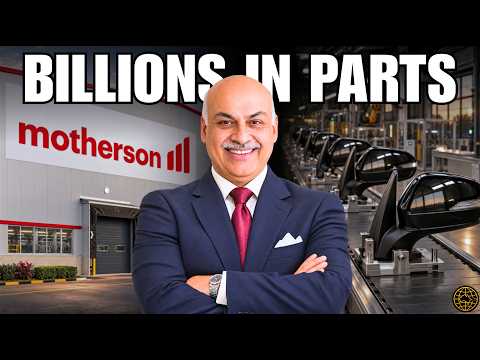
To understand the scale of the business Sehgal built, we need to look at the network behind it. Motherson now has more than 475 facilities in 47 countries and employs over 200,000 people across the group. Its companies supply components and systems to vehicle manufacturers worldwide. It’s easy to overlook this scale because drivers usually see the carmaker’s badge, not the name of the company that made the wiring harness, mirror, or lighting system. Motherson works behind the scenes, supplying parts designed into vehicles and manufactured to each manufacturer’s requirements.
The numbers are staggering. On its gross revenue measure, Motherson recorded the equivalent of about A$33.1 billion in the 2025-26 financial year. That measure includes joint venture and production revenue, so it’s not directly comparable to a standard net revenue figure. And the company’s revenue isn’t Sehgal’s personal wealth. The financial size of the group reflects the activity of a large international company, while his estimated fortune is calculated separately. That distinction matters when a founder’s name is so closely tied to a company operating at this scale.
The business has also grown beyond a handful of familiar components. Across its divisions, Motherson works in areas like wiring, mirrors, vehicle modules, aerospace, logistics, and medical products. So the story is no longer just about a cable company that found its way into the automotive industry. It’s about a network built to supply different products, customers, and markets. But how much of that network is still centered on the family that started it?
Vivek Chand Sehgal still chairs the board, and his son, Laksh Vaaman Sehgal, sits on the boards of group companies. The next generation is part of the story, but that doesn’t mean the business is privately held by the family. Samvardhana Motherson International is listed on the Indian stock exchange and operates through a sprawling web of subsidiaries and joint ventures. The Motherson name still carries its founding history, yet the enterprise behind it has become a multinational supplier with many products, partners, and shareholders.
What began in 1975 now spans industries and continents. But the thread connecting that growth remains visible. Every partnership or acquisition added something Motherson could offer its customers. That strategy is what shaped Sehgal’s fortune. By the time a car reaches the road, most of its suppliers have vanished from view. Their names rarely appear on the hood, but their work helps run the vehicle and keep the production line moving.
That kind of influence is earned over time by solving problems so well that manufacturers keep coming back. It’s the idea at the heart of Sehgal’s story: a company can shape an entire sector without becoming a household name. The tiny connector was an early sign of what Motherson could do when it found a practical answer to a customer’s need.
Back in Melbourne, that same logic is playing out on a smaller stage. The Hallam site isn’t just assembling parts—it’s where engineers test how a wiring harness will survive heat, vibration, and years of use. Some of that testing happens before a single component ships to a carmaker overseas. The feedback loop between design and production runs through the same building, which shortens the distance between a problem and its fix.
It’s a far cry from the silver trading office of 1975, but the instinct is the same. Find out what the customer needs, then build the capability to deliver it reliably. In Lonsdale, the SMR team applies that instinct to mirrors and vision systems, where electronics and surface coating must meet exacting standards. A mirror that fogs, vibrates, or fails in rain becomes a warranty problem for the carmaker—and a lost contract for the supplier.
So the Australian operations matter beyond their headcount. They keep Motherson close to local vehicle programs and give the group a testing ground for products sold globally. That proximity is the quiet advantage behind the acquisition spree.
But scale brings its own tests. Integrating 48 acquisitions means blending different cultures, systems, and expectations. A factory that worked one way for decades must adopt group-wide processes without losing what made it valuable in the first place. That tension—between standardizing and preserving local know-how—is where the next chapter of the Motherson story will be written.
For now, the group keeps moving. New programs, new markets, new components. And somewhere in Melbourne, an engineer is testing a part that will end up in a vehicle sold on the other side of the world—another small link in a chain that started with a mother, her son, and a silver trading business.
For Sehgal, the journey from silver trading to a global supplier is a reminder that empires are rarely built in a straight line. “We never planned to be in the auto industry,” he once said. “We just kept solving the next problem.” That philosophy turned a small Indian trading house into a multinational with 200,000 employees.
But the road ahead isn’t guaranteed. Electric vehicles are rewriting the rulebook on wiring, mirrors, and modules. Fewer moving parts mean fewer components to supply. Motherson’s bet on diversification—aerospace, logistics, medical—looks less like a side project and more like a survival strategy.
Whether the next generation can navigate that shift is the question. Laksh Vaaman Sehgal now sits on boards, learning the business his grandmother and father built from nothing. The family name still matters, but the company answers to shareholders and a board now.
What remains is the lesson: a business can shape an entire industry without ever becoming a household name. The tiny T-joint that opened the door in 1983 is still the perfect metaphor—unseen, essential, and quietly holding everything together.
So here’s the question for you: Would you rather build a famous brand or an invisible empire that powers the world? Let us know in the comments below.
Report this article
Select a reason for reporting:






