On a cold November night in 1884, the quiet coastal village of Babbacombe, Devon, was shattered by a crime so brutal it would echo through British justice for over a century. Inside the isolated Glen House, a wealthy spinster named Emma Keyse was found dead—her skull fractured, her throat slit, and her body partially burned. The only people inside the house were her four servants. One of them was a twenty-year-old footman named John Lee, a man with a criminal past and a motive for revenge. Within hours, he was arrested. What followed was a trial that gripped the nation, a conviction built on circumstantial evidence, and an execution that failed three times in a row. This is the story of Emma Keyse—a woman whose death became a footnote to the legend of the man who survived the gallows.
But before the legend, there was the woman. Emma Ann Whitehead Keyse was no ordinary victim. Born around 1816, she was a woman of means and reputation, rumored to have royal connections and a temper that could cut like a knife. In the weeks before her death, tensions simmered in Glen House. She had cut John Lee’s wages and threatened to dismiss him. The household was a pressure cooker of class, money, and secrets—including the pregnancy of the cook, Elizabeth Harris, Lee’s half-sister. No one spoke of it then, but it would haunt the case for decades.
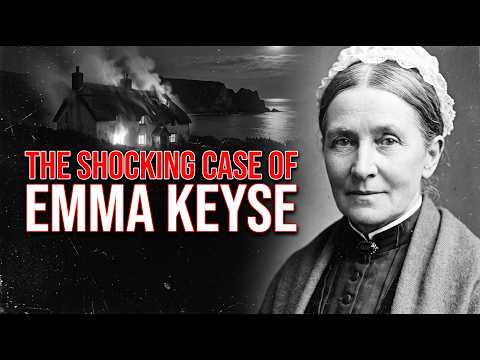
On the night of November 14, Emma stayed up late in the sitting room, writing letters by lamplight. The rest of the household retired as usual. Sometime after midnight, she walked toward the stairs, carrying a lamp. There, in the narrow passage, she was attacked. The blows came without warning—repeated strikes to the head, then the blade. No one heard a scream. No one saw a thing. But the fire that followed was no accident. Three separate blazes were set with kerosene, as if to erase the crime. The flames licked at her body, but they didn’t hide the truth.
Elizabeth Harris woke to the smell of smoke and raised the alarm. The household fought the flames, and in the chaos, they found Emma’s body. The police arrived quickly. There was no forced entry, no sign of an outsider. The investigation turned inward. John Lee, the only man in the house, became the prime suspect. A mysterious cut on his arm, his prior conviction for theft, and the tension over his wages sealed his fate. He was arrested within hours.
The trial began in February 1885 at Exeter Guildhall. The prosecution painted Lee as a resentful servant who killed his mistress to avoid dismissal. They had no weapon, no bloodstained clothes, no eyewitness. But they had motive and opportunity. The defense argued that the case was built on assumptions, not evidence. “Where is the weapon?” the defense asked. “Where is the blood?” The jury deliberated for just forty minutes. Guilty. The judge sentenced Lee to death by hanging. He showed no emotion. “I am calm,” he said, “because I trust in God, who knows my innocence.”
But the gallows had other plans. On February 23, 1885, John Lee stood on the trapdoor at Exeter Prison. The lever was pulled—and nothing happened. The doors didn’t open. They tried again. The lever bent. They tried a third time. Nothing. The doctor intervened, and the execution was halted. The Home Office investigation later blamed a mechanical fault—a misaligned drawbar that caused the hinges to bind under a man’s weight. But to the public, it was a miracle. The man they couldn’t hang.
His sentence was commuted to life in prison. He served twenty-two years, maintaining his innocence until his release in 1907. He moved to London, then to America, where he died in 1945. But the questions remained. Who really killed Emma Keyse? Was it John Lee? Or was it someone else—someone the jury never considered? The cook, Elizabeth Harris, pregnant and desperate, had as much to lose as Lee. And what of the mysterious figure from a 1936 account—a man of higher social standing whom Lee allegedly protected? The truth, like Emma herself, was buried in the ashes of Glen House.
Today, the case of Emma Keyse is remembered not for the woman who died, but for the man who lived. Her story faded; his became legend. But in the quiet archives of Devon, her name remains—a whisper of a night when fire and blood stained the cliffs of Babbacombe, and justice itself was put on trial.
Yet the question that lingered longest in the corridors of the Home Office was not whether Lee had killed Emma Keyse, but whether the state had the right to try again. Sir William Harcourt’s decision to commute the sentence was recorded in the official papers with a phrase that would be quoted for generations: “That the sentence should not be carried out a fourth time.” It was not a declaration of innocence. It was an admission of uncertainty—a quiet acknowledgment that a legal system which could not execute its own judgment had no business pretending that judgment was infallible.
Lee’s survival made him a curiosity, then a celebrity, then a symbol. In the decades that followed, his story was told and retold, each version adding a layer of myth to the man and erasing a little more of the woman he was convicted of killing. The music halls sang of him. The newspapers interviewed him. The 1912 Australian film—now lost—turned his failed execution into a spectacle of suspense and deliverance. By the time he died in Milwaukee in 1945, he had outlived Emma Keyse by sixty years and the gallows by six decades.
But Emma did not vanish entirely. In the parish records of St. Marychurch, her burial entry remains: a single line in a leather-bound volume, noting her age, her residence at Glen House, and the date of her interment. No mention of the fire. No mention of the trial. No mention of the man who stood on the trapdoor three times while the mechanism refused to work. The register records only that she was buried with the rites of the Church, attended by her neighbors and her tenants, and that the funeral was well attended.
Among the mourners was a woman whose name does not appear in any account of the funeral: Elizabeth Harris, the cook, six weeks pregnant with a child whose father was never named in any surviving document. She stood at the graveside in her dark mourning clothes, her face composed, her hands folded. No one in the crowd knew what she carried. No one asked. And no one—not the police, not the coroner, not the prosecution—ever treated her as anything other than a witness.
The question of what Elizabeth Harris knew has never been resolved. The 1936 manuscript—a fragmentary account held in a private collection in Torquay—suggests that Lee’s silence on the night of the murder was not the silence of a guilty man but the silence of one who had been paid to keep quiet. “He took the blame,” the manuscript claims, “for a man whose name would have destroyed the family.” The author of the manuscript is unknown. Its sources are unverified. But its existence has kept the case alive in local memory, feeding the suspicion that the real killer walked free while a servant boy swung—or rather, didn’t swing—in his place.
What is certain is that the investigation never seriously considered any suspect other than Lee. The Nick sisters, elderly and frail, were never treated as possible perpetrators. Elizabeth Harris, despite her pregnancy and her precarious position, was never questioned about her movements beyond the moment she raised the alarm. The mysterious man of higher social standing—if he existed—was never identified, never interviewed, never named in any official document.
The fire that consumed Emma Keyse’s body also consumed the possibility of a more thorough inquiry. The kerosene, the three separate blazes, the careful attempt to destroy evidence—all of it pointed to someone who knew the house intimately. But the investigation stopped at the first door it could open: the door to John Lee’s room. No weapon was found. No blood was found. And yet the case was closed.
In the years since, historians and armchair detectives have returned to the same unanswered questions. Why did the trapdoor fail three times? Was it truly a mechanical fault, or was it—as some whispered—an act of divine intervention? And why, after his release, did Lee never speak publicly about what really happened that night? He wrote his memoirs. He gave interviews. He told the story of the gallows again and again. But he never named another suspect. He never pointed the finger at Elizabeth Harris. He never mentioned the man from the 1936 manuscript. He took his secrets to the grave in Milwaukee, and the grave in Forest Home Cemetery kept them for sixty-four years.
The cliffs of Babbacombe have changed. Glen House still stands, though its name has been changed and its walls rebuilt. The path from the sitting room to the stairs—the place where Emma Keyse drew her last breath—is now a hallway in a private residence, unmarked and unremarkable. Tourists walk past it without knowing. The local historical society still keeps a file on the case, but the file grows thinner with each passing year as documents are lost, memories fade, and the last of those who knew the story firsthand pass away.
And yet the story refuses to die. It surfaces in true crime podcasts, in Victorian history blogs, in the occasional documentary that revisits the failed execution at Exeter Prison. Each retelling focuses on the same moment: the lever, the silence, the man standing on the trapdoor with a rope around his neck, waiting for a death that would not come. It is a moment of drama, of suspense, of deliverance. It is the moment that made John Lee famous.
But behind that moment, in the shadows of Glen House, there is another moment that no one filmed, no one dramatized, no one sang about. It is the moment Emma Keyse walked down the stairs with a lamp in her hand, unaware that she was about to become a footnote in the story of a man who survived the gallows. It is the moment the blade fell. It is the moment the fire caught. It is the moment a woman of reputation and temper and royal rumors was reduced to a body on a floor, a name in a trial transcript, a grave in a churchyard that few visit.
The archives of Devon hold her letters, her diaries, the papers she was writing on the night she died. They are kept in acid-free folders in a climate-controlled room, available to researchers who know where to look. Most of them look for John Lee. They want to know about the gallows, the prison, the escape to America. They want to know about the man who couldn’t be hanged.
But sometimes, in the quiet of the reading room, someone asks for the other file. The one labeled simply: Keyse, Emma Ann Whitehead. 1816–1884. And in that file, between the letters and the diaries and the faded photographs, there is a woman who lived a long life, who kept a household, who wrote in the evenings by lamplight, and who died in a way that history has never fully explained.
Her story does not end with a verdict, nor with a legend. It ends here, in the space between what was proven and what was never asked. The gallows failed three times, but the questions failed forever.
John Lee died free in Milwaukee, his secret intact. Elizabeth Harris vanished into the workhouse records. The Nick sisters faded into silence. And Emma Keyse—the woman whose death launched a hundred retellings—remains the least known of them all.
Perhaps that is the true injustice: not that a man was nearly hanged for a crime he may not have committed, but that the woman he was accused of killing became a footnote in his story rather than the center of her own.
So we end where we began—with a question that no court ever answered, no jury ever heard, and no historian has ever resolved: If John Lee did not kill Emma Keyse, then who did—and why has history been so content to let the question die with him?
What do you think really happened that night at Glen House? Share your theory in the comments below.
Report this article
Select a reason for reporting:






