She was found floating in the cold, dark waters off Catalina Island, a red jacket and blue wool socks her only defense against the icy Pacific. Natalie Wood, Hollywood’s golden girl, was dead at 43. But the bruises on her body told a story no one wanted to hear—a story of a life lived in the shadows, of secrets buried deeper than the ocean floor.
For decades, the world believed it was an accident. But those closest to her knew better. Natalie Wood had been hiding a double life for 30 years, and the truth was about to surface.
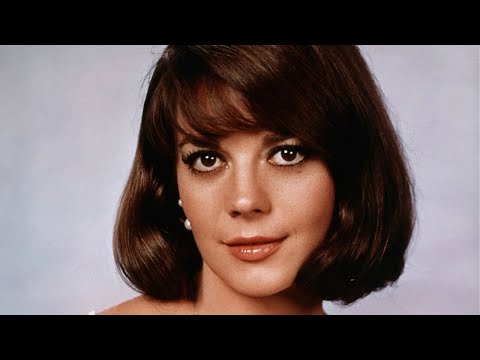
From the moment she was pushed into the spotlight at age four, Natalie’s life was a labyrinth of control, violence, and fear. Her mother, Maria, was a relentless stage mom who saw her daughter as a meal ticket. “She was never allowed to be a child,” her sister Lana later recalled. “She was a product, a brand, a machine.”
The fear of water haunted Natalie since a near-drowning on set at age 10. Yet on that fateful night, she supposedly took a dinghy alone into the darkness? The captain’s changing story, Christopher Walken’s silence, and Robert Wagner’s shadow loomed large over the mystery.
But to understand how Natalie Wood ended up in those murky waters, we must go back to the beginning. To a little girl who learned to smile on cue, even as her soul shattered behind the scenes.
Born in 1938 to Russian immigrant parents, Natalie’s childhood was anything but stable. Her father, Nikolai, was gentle but fragile, often drowning his sorrows in alcohol. Her mother, Maria, was a force of nature—ambitious, domineering, and willing to sacrifice anything for fame.
“Natalie was her mother’s project,” a family friend said. “She was groomed to be a star before she could walk.”
At just four years old, Natalie landed her first film role. While other children played with dolls, she memorized lines and stood under scorching studio lights, learning to suppress her tears. The fear of water crept in early, during a scene in The Green Promise where a bridge collapsed, plunging her into a rushing stream. Her mother urged the director to keep rolling. “It looked too real,” Maria reportedly said. Natalie nearly drowned that day, and the terror never left her.
But the trauma didn’t end there. At 16, while auditioning for Rebel Without a Cause, Natalie caught the eye of director Nicholas Ray, a man twice her age. Their relationship was ambiguous, but it marked the beginning of a pattern—older men, power imbalances, and silence.
That same year, Natalie was raped by a powerful Hollywood star, a man she had idolized. The assault lasted for hours, leaving wounds that never healed. “She didn’t dare call the police,” her sister Lana wrote in her memoir. “She didn’t dare anger her mother, who believed her career was more important than her mental devastation.”
Natalie confided in only a few, and decades later, Lana named the man: Kirk Douglas. A name so powerful that Hollywood kept silent for half a century.
From then on, Natalie’s life split into two parallel lines—one shining on screen, the other torn apart behind the scenes. She was celebrated as one of the most talented young actresses of her generation, yet she had to appear before cameras with a perfect smile while carrying the memory of an assault that both the studio and her own mother chose to hide.
But it was precisely those wounds that led Natalie to Splendor in the Grass, a role that forced her to confront her own pain. The tears, the trembling, the scenes demanding she reach the peak of vulnerability—all came from the deepest place she had tried hardest to bury.
“She wasn’t acting,” director Elia Kazan said. “She was simply telling her own story.”
That same year, West Side Story turned Natalie into a cultural icon. Though her singing was dubbed, it was Maria’s eyes—pure, yearning, tragic—that made the world fall in love with her. But behind the box office queen was a woman on the verge of collapse.
When Natalie refused to play safe roles, Warner Bros. punished her with an 18-month suspension. She watched her colleagues move ahead while she was forced out of every major project. “Hollywood wanted her obedient,” a friend said. “Natalie wanted to be herself.”
The collision marked the beginning of her inner collapse. After buying herself out of her contract, Natalie fired nearly everyone—agent, publicist, accountant, manager, lawyer—practically wiping out the entire machinery around her. But the price wasn’t just financial. Exhaustion and pressure pushed her into depression, and in a moment of despair, she took an overdose of sleeping pills. She changed her mind at the final second and called for help.
Even the most beautiful woman in Hollywood sometimes stood at the edge of the abyss.
And when Harvard Lampoon awarded her the title of worst actress in 1966, Natalie showed up in person to accept it, laughing in the face of ridicule. The press called her the queen of self-deprecation, a beauty who could rise with elegance even when being laughed at.
By the late ’60s, Natalie chose to step back from the spotlight. She became selective with her projects, moved toward television, and devoted time to family and therapy. But the old pain followed her like a silhouette, one no spotlight was strong enough to erase.
When she decided to step back from Hollywood, life pushed her into a new chapter—not on screen, but in love. And like everything else in Natalie’s life, this chapter was dazzlingly beautiful, yet so fragile that a single crack could spread into tragedy.
Since her late teens, Natalie had seen Robert Wagner as the ideal model of a Hollywood man—handsome, polished, mature. She secretly taped his photos to her bedroom wall, black and white studio portraits that a 15-year-old girl gazed at with quiet admiration. When the studio arranged their first date in 1956, Natalie was 18, Wagner 26. They became Hollywood’s golden couple within weeks.
But fairytales were never the right language for telling the life of Natalie Wood. Entering marriage, she carried within her the fractures the world never saw—career pressure, fear of abandonment, and emotional wounds still unhealed. And Wagner, though he genuinely loved her, was also a product of a deeply masculine Hollywood, a world where vulnerability was something to be hidden.
The early years were filled with vacations, parties, and red carpet appearances. But behind the perfect photos were quiet tensions—Wagner’s jealousy toward Natalie’s male costars, Natalie’s insecurity as she watched her career soar higher than her husband’s. By the early ’60s, small distances began turning into deep rifts.
The breaking point came in 1961-1962, just as Natalie had finished West Side Story and reached the peak of her career. The loneliness within a seemingly perfect marriage pushed her to seek emotional connection elsewhere. Rumors of an affair between Natalie and Warren Beatty on the set of Splendor in the Grass swept through the studios. Though neither ever confirmed it, Hollywood accepted it as the reason Natalie and Wagner divorced in 1962.
Natalie walked out of the divorce like someone stepping out of a glass cage—free, but unsteady, radiant, but breakable. And Wagner carried a sadness he later called a wound that never truly closed.
But their story did not end there. Years later, after both had known failure, growth, and exhaustion with Hollywood, they would find each other again, stepping into a second marriage entirely different in tone—quieter, more mature, but also filled with simmering tensions no one suspected would become the key to the final tragedy of Natalie Wood’s life.
After her first divorce from Wagner, Natalie entered what her friends called the whirlwind period—a time when every rule that had held her together since childhood snapped at once. Warren Beatty appeared like a spark tossed into gunpowder. Their relationship was not love but a self-destructive explosion: they drank like water, made love as if trying to silence every echo of their past, fought through long nights, and crashed back into each other like there was no tomorrow. “Warren addicted himself to Natalie,” a friend said, “while Natalie burned herself alive beside him.”
When the fire died down, all that was left was exhaustion and a Natalie more fragile than before. But Beatty wasn’t the only whirlwind. Through Dennis Hopper, she met Elvis Presley, who rented out an entire movie theater just for the two of them and brought her to Memphis to meet his family. But the closer she got, the more Natalie sensed something profoundly wrong. Elvis was unusually dependent on his mother, Gladys, who gave him a level of affection far beyond normal parenthood. The breaking point came when Gladys invited Elvis to sit on mama’s lap right in front of Natalie, smiling and stroking his hair. Natalie felt a chill run down her spine. That night, she told Elvis she had to return to Los Angeles for a family emergency, but the truth was simple: she needed to escape that house where the suffocating attachment between mother and son reminded her of everything broken in her own childhood.
After Elvis, Natalie’s love life drifted along the momentum of a woman desperately seeking an anchor, yet always meeting the wrong timing, the wrong man, the wrong version of love. Michael Caine gave her only a few weeks of ease before they realized they were searching for two different versions of happiness. David Niven Jr. became a half-hearted adventure that ended in jealous fights. Producer Ladislav Blatnik offered a proposal that seemed like it could end her chaos, yet only a few months later, the engagement ring was quietly removed. She kept repeating the same cycle: hope, immersion, disappointment, departure. Each man left her with the same unanswered question—why was her heart never enough?
Then came a relationship Hollywood never wanted to acknowledge. A famous actress known only by the initials JT, who always appeared in public with high collars and the reserved poise of a museum statue. But behind that ladylike shell was a soul suffocating under repression. Natalie and JT met at a private party, then disappeared from Hollywood’s radar for weeks. Eventually, they moved into a small beachfront villa, like two fugitives hiding from the world. They lived together like spouses, loving fiercely, depending on each other, fighting violently, reconciling even more violently. Rumors spread through Los Angeles high society about strange sexual rituals, nights when they never left the house, and moments when JT fled the villa with red eyes, only to return hours later in Natalie’s arms. “At that time, Natalie no longer believed in love,” a close friend said. “She believed in pleasure as the last form of power she could still control.”
The relationship with JT wasn’t a rebellious phase. It was a cry for help from a woman trying to feel something real in a life where everyone wanted a piece of her, but no one stayed long enough to understand her.
After the turmoil, Richard Gregson appeared—calm, intelligent, an English producer who listened and moved slowly. That slowness made Natalie believe her heart might finally land somewhere safe. They married in 1969 in a warm, intimate ceremony, and in September 1970, Natalie gave birth to her first daughter, Natasha. For the first time in years, she felt she was no longer running from the darkness. Motherhood brought out a softer, less guarded version of Natalie, as if life had finally decided to show her mercy.
But tranquility had never lasted long for Natalie Wood. In 1971, barely a year after Natasha’s birth, Natalie discovered Gregson had been unfaithful—not a loud Hollywood scandal, but the quiet kind of betrayal, the kind women fear most. In an instant, everything she had built to escape her old pain collapsed. Natalie firmly declared separation, then finalized the divorce in August 1972. It wasn’t just a failed marriage; it was a brutal reminder that no matter how hard she chased normal love, fate never seemed willing to grant it to Natalie Wood.
After Gregson, Natalie stood once again at a crossroads. On one side was the man from her past, Robert Wagner, waiting somewhere in the shadows. On the other was the childhood fear of abandonment she never escaped. And it was that fear, combined with the loneliness after divorce, that pulled her back toward the man history would forever tie to her death.
Only a few months later, Natalie shocked Hollywood. She returned to Robert Wagner, the first man she ever loved, and the one who had once broken her. In early 1972, they remarried on a yacht off Malibu’s coast. Ocean breeze, golden sunlight, the smiles of two people who seemed to have survived every wound. The press called it the fated love story rewritten. Two years later, in 1974, Courtney, Natalie’s second daughter, was born. With two little girls, a picture-perfect home, and a husband attached to both sweet and painful memories, Natalie tried to convince herself she had finally found safety.
But safety was a rare concept in Natalie Wood’s life. In this second marriage, everything felt even more fragile than the first. Family members, especially her sister Lana, later recalled that Wagner’s jealousy was suffocating. If Natalie worked with an attractive male co-star, the entire house would tense like a tightened string. Some nights, Wagner went cold and silent. Other evenings, he erupted into arguments sparked by a glance or a single interview. To Wagner, Natalie was his most precious possession and his greatest fear.
Yet the shadows didn’t come from only one side. Former FBI agent Donald G. Wilson claimed he and Natalie had a secret affair from 1973 to 1977, during the very years she was living with Wagner and pregnant with Courtney. Though widely disputed, if true, it pointed to one undeniable truth: Natalie was still trapped in her old cycle, seeking protection in love, then fleeing when it became suffocating. And before the tragedy unfolded, there was one detail Lana Wood always considered the key. Natalie had hinted she was thinking of leaving Wagner again once she finished Brainstorm. Not an angry separation, but an exhausted one—the exhaustion of a woman who had forgiven too many times, hoped too many times, and been disappointed just as often.
Unfortunately, filming never finished before the Catalina night arrived, and every question about the marital conflict brewing that evening remains suspended like a cloud that refuses to clear over the ocean where she was found.
On the Splendour that final night, alcohol and jealousy tangled into a deadly brew. Wagner smashed a bottle, shouting accusations at Natalie and Walken. “He pushed me,” a witness heard Natalie scream—words that would haunt the investigation for decades.
Captain Davern later admitted he lied to protect Wagner. “I heard the fight. I heard the silence after,” he confessed. The missing hours, the refused searchlights, the staged dinghy—all pointed to something far darker than an accident.
In 2011, the case was reopened. Bruises on Natalie’s wrists suggested she was grabbed, restrained. The cause of death was amended to “drowning and other undetermined factors.” Robert Wagner was named a person of interest but never charged.
Natalie Wood left behind three Oscar nominations and a legacy of vulnerability turned into art. But the truth of that night remains buried at sea. Was it a tragic accident—or a crime Hollywood chose to forget?
What do you think really happened on the Splendour? Share your theory in the comments below.
Report this article
Select a reason for reporting:






