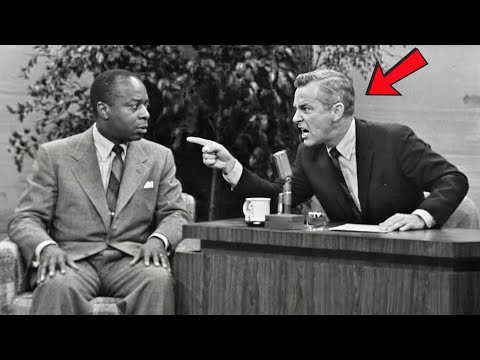
The invitation arrived on cream paper thick as a legal contract, embossed with gold letters and a Rockefeller Center return address. It was the kind of paper men use when they want you to know they believe they own you before you even walk through the door. Bumpy Johnson sat at his kitchen table with the invitation flat in front of him and a cigar burning in a glass ashtray that used to belong to a man who owed him money and did not pay. The man had paid eventually, but not with cash.
Whispers stood by the window with his arms crossed, watching the street three floors below like he expected someone to come through the door with a shotgun. “This is a setup,” Whispers said without turning around. “I know what it is.” Bumpy didn’t look up from the paper. “Then why the hell are you thinking about going?” Whispers demanded. Bumpy set the cigar down slowly. “Because if I refuse, Westbrook goes on television tomorrow night and tells three million people that Bumpy Johnson was too afraid to face him. If I go, he puts me in a chair under lights and tries to make me look like an animal. Either way, he wins—unless I change the rules.”
Whispers finally turned from the window. “You cannot hit a television host on live television, Bumpy. You do that and every cop in the city will be kicking down doors in Harlem by midnight.” Bumpy picked up the cigar and let the smoke fill his mouth before he answered. “I am not planning to hit anyone.” The smoke tasted like burnt leather and old wood, the kind of taste that reminds you nothing good comes easy.
Nat Pedigrew sat in the corner sharpening a straight razor on a leather strop. The blade made a sound like a whisper that promised violence. Nat was twenty-eight years old and had put six men in the hospital in the last two years. “You want me in the studio?” Nat asked, testing the razor edge with his thumb. “No, you stay here,” Bumpy said. “If I bring muscle, Westbrook calls it intimidation and the story becomes about the gangster who needed bodyguards to do an interview. If I walk in alone, the story stays where I want it.”
Whispers pulled a chair out and sat down hard. “And where is that?” Bumpy tapped ash from his cigar into the tray. “On Westbrook. On his gambling debts. On the fact that he borrows money from the same people he tells America are destroying the country.” Whispers leaned forward. “You have proof of that?” Bumpy nodded. “I paid Sal two hundred dollars for a photocopy of the loan receipt. Three thousand borrowed in July. Horse track at Saratoga. Westbrook has been paying twenty percent interest every month since then, which means he is into Sal for close to four thousand now.”
Nat folded the razor and slid it into his jacket pocket. “So you go on television and if Westbrook pushes you too hard, you pull out the receipt and ruin him in front of his own audience.” Bumpy nodded once. “That is the plan.” Whispers shook his head. “What if he does not push you? What if he just asks soft questions and makes you look reasonable and boring and then edits it later to make you look like a liar?” Bumpy tapped ash from his cigar. “He will push me. He cannot help himself. Men like Westbrook build their careers on making other people look small. And the only way to do that is to provoke a reaction.”
The room went quiet. Elise was Bumpy’s daughter, twenty-three years old, trying to build a life that did not include her last name following her into every job interview and every social event. She had moved out of Harlem six months ago, trying to put distance between herself and her father’s reputation. “If he brings up Elise,” Bumpy said quietly, “then I stop defending and start attacking. And when I attack, I do not stop until there is nothing left of him but a man in a chair realizing his career just ended on live television.”
Whispers leaned back and looked at the ceiling like he was asking God why he had to be friends with someone this stubborn. “You know this could go wrong a hundred different ways.” Bumpy stood and buttoned his jacket. The receipt was folded in his inside pocket, pressed against his ribs, where he could feel it every time he breathed. “It could, but it will not. Westbrook made a mistake when he sent this invitation. He assumed I would come to his studio and play by his rules. He does not understand that I have been sitting across from men who wanted to kill me since I was sixteen years old. And I am still here because I learned a long time ago that the man who stays calm controls the room even when he does not control the microphone.”
He picked up his fedora and walked out. The hallway smelled like fried onions and floor wax. Outside, the Cadillac sat idling at the curb with Spider behind the wheel. Bumpy got in the back seat. The door closed heavy as a vault. Spider looked in the rearview mirror. “You sure about this?” “No.” “Then why are you going?” Bumpy looked at his hands. They were steady. “Because if I do not go, Westbrook wins by default. If I go and lose, he wins on camera. But if I go and win, I prove that a man with a microphone is just a man. And men break when you know where to press.”
The Cadillac pulled away from the curb. The city slid past the windows, bright and cold, full of people who had no idea that in ninety minutes someone was going to walk onto a stage and either get destroyed or destroy someone else. And either way, the whole country would be watching.
The Cadillac crossed 110th Street at 8:00 sharp and the city changed. Not the buildings or the pavement or the October cold cutting through the windows, but something deeper—something you felt in your chest like crossing from one country into another without a passport. Harlem had jazz bleeding out of doorways and voices calling across streets. Midtown had clock towers and the hum of money moving through steel and glass, where the only voices were the ones giving orders or taking them.
Spider pulled up to the Rockefeller Center entrance and cut the engine. The doorman stood under the awning in a uniform that cost more than most men in Harlem made in a month. He looked at the Cadillac like it was a roach that had crawled out of a sewer grate. When Bumpy stepped onto the sidewalk in his charcoal suit and fedora, the doorman’s face went tight as a fist. He opened the door slow—the kind of slow meant to communicate that this was a favor, not a duty.
The lobby was marble and brass and cold light that made everything look clean, even when it was not. The sound of Bumpy’s shoes on the floor echoed up to the ceiling three stories above. Conversations stopped. Typewriters went silent. Every white face in that lobby turned to watch a black man in an expensive suit walk across their floor like he had a right to be there. And the silence was louder than any insult they could have shouted.
The security desk sat in the center of the lobby, manned by two guards in gray uniforms with batons hanging from their belts. The older one had a face like a knuckle that had been broken and healed wrong. He stood up when Bumpy approached. “Name. Bumpy Johnson. I am a guest on the Westbrook Hour.” The guard looked at a clipboard, found the name, then looked back at Bumpy like he was hoping the name would not be there. “We need to do a standard security check.”
“No.” The guard’s hand moved toward his belt—not to the baton, but close enough to make the threat clear. “It is policy for all guests.” Bumpy did not move. He kept his hands at his sides and his voice low enough that the people watching from across the lobby had to lean in to hear. “I am an invited guest. If you put your hands on me, I walk out that door, and your boss explains to three million people why he has an empty chair on live television tonight. You decide if that’s a conversation you want him to have.”
The guard’s jaw worked like he was chewing words he could not spit out. His hand stayed near his belt but did not touch it. Bumpy held his eyes—did not blink, did not look away—because this was the kind of fight old men understood better than young ones. The man who stays calm controls the room even when he does not control the guns or the badges or the doors. The younger guard picked up a phone and spoke quietly into it. Thirty seconds later, he hung up and nodded to his partner. “He is cleared. Send him up.”
A woman in a gray skirt and white blouse appeared from a side hallway. She did not smile. “Mr. Johnson, follow me, please.” They walked down a corridor lined with photographs of men in suits shaking hands with presidents and generals and movie stars. Every face was white. Every smile was the kind that came from knowing you owned the room and the building and the people who worked in it. Behind them, whispers started low and sharp—the kind of talk that spreads through offices like gasoline, waiting for a match.
The woman stopped at an elevator and pressed the button. The doors opened and they rode up in silence. She stared straight ahead like Bumpy was not standing three feet away. When the doors opened on the fourth floor, she led him down another hallway to a door marked GREEN ROOM in gold letters. Inside was a couch covered in beige fabric that looked like it had been chosen specifically because no one would want to sit on it. A coffee table held a bowl of fruit that was starting to brown at the edges. No champagne, no flowers, no pretense that this room was meant to make anyone comfortable. It was a holding cell with a couch—designed to remind whoever sat there that they were not guests. They were specimens being prepared for display.
Bumpy did not sit. He stood in the center of the room looking at the walls like he was measuring them for something. The woman watched him from the doorway. “Someone will be with you shortly for makeup and sound check.” “I do not need makeup.” “It is required for all guests. The lights wash out skin tones.” “I will manage.” She left without arguing. The door closed.
Bumpy walked to the window and looked down at the street four floors below. People moving like ants. Cars stacked bumper to bumper. The city grinding forward the way it always did, indifferent to whatever was about to happen in a television studio where a man with a microphone thought he could destroy another man just by asking the right questions in the right order. He checked his watch. 8:40. Twenty minutes until they walked him onto the stage. Twenty minutes until Julian Westbrook tried to break him in front of three million people who had been told to expect a monster. The receipt was still in his pocket, folded and waiting. He did not take it out. He did not look at it. He just stood there feeling the weight of it against his ribs and thinking about how paper could cut deeper than any knife if you knew where to press it.
A knock on the door. A young man in a headset and clipboard stepped in. “Mr. Johnson, we need you in makeup.” “No, sir.” “It is required.” “I said no. Take me to the stage or I leave.” The young man looked at his clipboard like it might have an answer for this situation. It did not. He spoke into his headset, listened, then nodded. “Follow me.”
They walked down a hallway that smelled like hairspray and electrical equipment. The sound of voices and music bled through the walls. At the end of the hall was a heavy door marked STUDIO A. The young man pushed it open. Inside was darkness except for a circle of light in the center where two chairs sat facing each other across a low table. One chair was leather, high-backed, positioned so whoever sat in it looked down at the other chair. The other chair was wood, hard and low, positioned so whoever sat in it had to look up. Furniture knew how to play its part in an execution, too.
Bumpy looked at the wooden chair and understood that everything about this room had been designed to make him feel small. The lights, the cameras, the audience seats arranged in tiers so hundreds of people could look down at him while he sat in the hot seat answering questions designed to make him look guilty no matter what he said. This was Julian Westbrook’s kingdom, and Bumpy had just walked into it unarmed and alone. But kingdoms fall. They always do. And the men who build them always make the same mistake. They forget that power is not about who owns the room. It is about who controls themselves when everyone else is losing control.
The red light held. Westbrook’s smile thinned as Bumpy settled into the low wooden chair, cigar smoke drifting between them. “Let me ask you about your daughter, Elise,” Westbrook said softly. “Is she ashamed of having a father like you?”
The audience stopped breathing. Bumpy reached inside his jacket—and the guards tensed. He drew out a folded paper and laid it on the desk. “You borrowed three thousand from Sal in July. Saratoga. You owe him four now.”
Westbrook’s face drained white. “Cut the cameras!” he screamed, but the director kept rolling. Bumpy stood, buttoned his jacket, and dropped a hundred-dollar bill on Westbrook’s sweat-soaked chest. “For the taxi. Sal’s taking your car tonight.”
He walked out through the marble lobby without a scratch while the lion bled out for three million witnesses. By noon, Westbrook had resigned. By 1968, he was gone—three paragraphs in the Times, no mention of that night.
Elise called two days later. “Thank you for defending me instead of explaining me.” Three minutes. Enough.
What would you have done in that wooden chair?
Report this article
Select a reason for reporting:






