May 1945. The war in Europe was over, and church bells rang across Sydney, just forty miles away. People danced in the streets. Soldiers kissed their sweethearts. But inside the wire fences of Liverpool internment camp, 600 German prisoners sat in silence. They had received their orders: in three weeks, they would board ships back to Germany. For most, this was good news. The war was done. They could go home.
But for 37 teenage boys inside that camp, home was the last place they wanted to go.
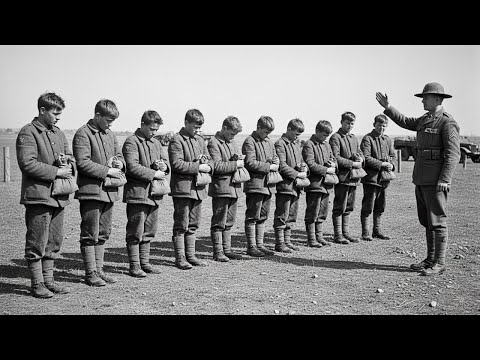
Hans Rutiger was 16 years old. He sat on his bunk bed in Barracks 7 holding a letter from the Red Cross. The letter had taken nine months to reach him. It said his mother was alive. It said she was living in the basement of a bombed-out building in Hamburg. It said she had no food. It said she was eating grass and potato peels. It said the city was 80% destroyed.
Hans read the letter three times. Then he folded it carefully and put it in his pocket. He did not smile. He did not cry. He just stared at the corrugated iron wall of the barrack and listened to the wind whistle through the cracks.
Hans had been in Australia for two years. He was captured in North Africa when he was 14 years old. He had been a soldier for less than six months before British troops found him hiding in a destroyed tank, crying and calling for his sergeant. They put him on a ship. The ship sailed for five weeks. When it finally stopped, men with strange accents pulled him onto a dock. The sun was blazingly hot. The sky was impossibly blue. Someone said the word Australia and Hans had no idea where that was. He thought maybe it was near Egypt. He was wrong by 7,000 miles.
The camp guards marched the new prisoners through gates topped with barbed wire. They walked past rows of identical barracks. Everything smelled like dust and eucalyptus trees. Hans had never seen a eucalyptus tree before. The leaves looked silver in the harsh sunlight. The bark peeled off in long strips like old paper. At night, the trees creaked and groaned in the wind. For the first six months, those sounds kept Hans awake. He thought they sounded like ghosts. By his second year, the sounds meant home. Not Germany. Australia.
Now it was May 1945 and the Australian government wanted every German to leave. The immigration minister was a man named Arthur Calwell. He gave a speech on the radio. Hans heard it in the camp mess hall. Calwell’s voice was hard and certain. He said every German must go back to Germany. He said Australia had no room for enemy aliens. He said these men were dangerous. He said their loyalty could never be trusted.
Hans was eating watery stew when he heard this. The stew had three small pieces of mutton in it. He counted them. He always counted his food. When you have been hungry, you always count.
The other boys in the camp were scared. Otto Steiner was 17. He had not seen his parents in four years. Josef Hartmann was 15. His entire village had been destroyed by bombs. He did not know if anyone from his family was alive. Werner was 16. His father had been a Nazi party member. Werner did not want to go back and face his father’s choices. They sat together in the evening, 37 boys who had been soldiers, and they talked in quiet voices about what waited for them across the ocean.
The Red Cross reports painted a nightmare picture. Seven million Germans were homeless. In Berlin, people lived in subway tunnels and cellars. They ate rats and weeds. The daily food ration was 1,000 calories. That was half of what a person needed to survive. Children had swollen bellies from hunger. Old people froze to death in the winter because there was no coal for heating. The Russian soldiers controlled the eastern half of Germany. The reports said terrible things about what the Russians did to German civilians. The boys did not talk about those reports. They just read them in silence and felt their stomachs turn to ice.
Hans had worked on Australian farms during his time in the camp. Three days each week, guards took prisoners to nearby sheep stations. The farmers needed workers. All the Australian men were overseas fighting, so they used prisoners instead. Hans learned to shear sheep. He learned to fix fences. He learned to drive a truck on dirt roads that stretched forever under an endless sky. The farmers paid him five shillings per week. The money went into a camp account. After two years, Hans had saved £43. He had no idea what he would do with that money, but he saved it anyway.
The farmer Hans worked for was named Mr. Patterson. He was 60 years old with sun-damaged skin and hands like leather. He did not talk much, but one day Mr. Patterson asked Hans about Germany. Hans told him about Hamburg before the war, the canals and bridges, the busy harbor, the smell of coffee from the warehouses. Mr. Patterson listened and nodded. Then he said something Hans never forgot.
“That place is gone, son. What matters is what you do next.”
Hans thought about those words for weeks.
By late May, the older prisoners were packing their belongings. The camp gave each man a canvas bag for his things. Most had almost nothing to pack. A few photographs, letters from home, maybe a carved chess piece or a small Bible. Hans watched them prepare to leave. He watched them look at the eucalyptus trees one last time. He watched them walk through the camp gates toward the trucks that would take them to the deportation ships in Sydney Harbor.
And Hans realized something that seemed crazy and impossible and completely true. He did not want to leave. This place with its barbed wire and guards and corrugated iron barracks felt more like home than Germany ever had.
One evening in early June, Hans sat with Otto and Josef outside their barrack. The sun was setting. The sky turned orange and purple. Kookaburras laughed in the trees beyond the fence. Hans said something out loud that he had been thinking for days.
“What if we just refused to go?”
Otto looked at him like he was insane. Josef laughed nervously. But Hans kept talking. He said they were more Australian than German now. They spoke English. They knew this place. They had nothing in Germany. “What if we fight to stay?”
The other boys went quiet. In that silence, something changed. A crazy idea became a possible plan. And 37 teenage boys who had once worn German uniforms began to imagine a future where they belonged to the country that had captured them.
Hans started asking questions. He asked the camp guards about Australian laws. He asked the Red Cross workers who visited every month. He asked anyone who would listen. Most people laughed at him. A 16-year-old German prisoner wanting to stay in Australia. It was ridiculous. But Hans kept asking.
Then in the second week of June, he found something interesting. A Red Cross worker named Mrs. Ellen Chen showed him a document. It was the 1945 immigration regulations. Mrs. Chen pointed to a section with her finger and read it out loud slowly so Hans could understand every word.
The law said that any prisoner of war could apply for residency if he could prove good character and find an employer willing to sponsor him. The person also needed to post a bond of £200. That was a lot of money—what a working man might earn in a whole year. But the law said nothing about age. It said any prisoner of war. Hans was a prisoner of war. He was also 16. The law did not say he was too young.
Hans brought this information back to the other boys. They gathered in Barracks 7 after dinner. The smell of boiled cabbage still hung in the air. Hans spread the regulations document on his bunk. Thirty-seven pairs of eyes stared at the typed words. Otto read it twice. Josef asked questions. Werner looked for tricks in the language. They talked for three hours.
The numbers seemed impossible. £200 for the bond. An employer willing to hire an enemy alien. Police clearance. Character references. Who would give character references to German soldiers?
But Hans remembered what Mr. Patterson had said. What matters is what you do next. This was next.
Otto Steiner filed the first application on June 23rd, 1945. He was 17 years old. He had worked on a dairy farm near Camden for 18 months. The farmer’s name was Mr. Robert Hughes. Mr. Hughes had three sons fighting in the Pacific. His farm was falling apart without workers. Otto was good with cows. He woke at 4:30 every morning without being told. He worked until dark. He fixed things that were broken. Mr. Hughes noticed.
So when Otto asked if Mr. Hughes would sponsor him, the old farmer said yes. He said it quickly, like he had been thinking about it already. Mr. Hughes filled out the paperwork. He wrote that Otto was honest and hardworking and that his farm needed him. Otto used his saved wages to pay part of the bond. Mr. Hughes paid the rest. The application went to the immigration department in Canberra.
Three days later, an official letter came back. It was short. It said the application was unprecedented and unacceptable. It said Otto was an enemy combatant regardless of his age. It said the matter was closed.
Otto sat on his bunk holding that letter. His hands were shaking. Josef put a hand on his shoulder. Hans felt anger burning in his chest. But he also felt something else. The department had not said the application was illegal. They had just said no. That meant maybe—possibly—someone else could say yes.
More boys started preparing applications. They wrote letters to the farmers they had worked for. Some farmers wrote back with offers of employment. Some did not write back at all. The boys who got no response felt their hope die. But 12 of the 37 boys received job offers. Sheep stations in Dubbo and Wagga Wagga, wheat farms in the Riverina, a cattle property near Tamworth. These were hard jobs in lonely places. The boys did not care. Lonely was better than destroyed. Hard work was better than starvation.
The boys also needed character references. This seemed impossible. Who would vouch for enemy soldiers? Then Otto had an idea. He suggested they ask the Australian guards who had supervised their work details. These men had watched the German boys for two years. They had seen them work in rain and heat. They had eaten lunch with them. They had taught them Australian slang and laughed at their terrible accents. Maybe some of them would help.
The boys wrote polite letters. They waited and slowly letters came back. Seventeen guards wrote character references. The letters said things like hardworking and reliable and respectful and honest and showed good character under difficult circumstances. Each letter felt like a small miracle.
But the biggest miracle came from an unexpected place. Captain Douglas Miller was an officer in the Australian Army Education Corps. He had taught English classes to the prisoners for 18 months. Three times per week, Captain Miller came to the camp with books and chalk and a portable blackboard. He taught grammar and vocabulary. He assigned essays about Australian history. He corrected pronunciation. Captain Miller was 34 years old with red hair and freckles and a patient way of explaining things. The boys liked him. He treated them like students, not enemies.
When Captain Miller heard about the residency applications, he asked to meet with Hans. They sat in the camp’s small library room. Books lined the walls. Most were donated by churches. Captain Miller asked Hans why he wanted to stay. Hans told him the truth. He said Germany was destroyed. He said he barely remembered it anyway. He said Australia felt like home now, even though it was a prison. He said the eucalyptus trees and the kookaburras and the endless sky made sense to him. He said Mr. Patterson’s sheep station was the first place he ever felt useful.
Captain Miller listened without interrupting. When Hans finished, the captain was quiet for a long time. Then he said he would write a report to the immigration department. He said he would vouch for 23 of the boys personally. He said they were not villains. He said they were victims who had been forced into uniforms. He said Australia should give them a chance.
Captain Miller’s report was 11 pages long. It included detailed observations about each boy’s character. It included test scores from English classes. It included examples of essays the boys had written. In one essay, Hans had written about the first time he saw the Blue Mountains. He described how the eucalyptus oil in the air made the mountains look blue and hazy. He described feeling small and peaceful. Captain Miller included that essay in his report. He highlighted one sentence. Hans had written, “I never knew the world could be so big and quiet at the same time.” Captain Miller told the immigration department that a boy who could write that sentence deserved a future.
The report arrived in Canberra on July 30th, 1945. For two weeks, nothing happened. The boys waited. They worked their farm details. They saved their shillings. They tried not to think about the deportation ships being prepared in Sydney Harbor.
Then on August 14th, a telegram arrived at Liverpool camp. It was addressed to Hans Rutiger. Hans’s hands shook as he opened it. The telegram had seven words. Application approved. Temporary work permit granted. Report Sydney.
Hans read it three times. He thought maybe he was dreaming. Otto grabbed the telegram from his hands and read it out loud. The other boys crowded around. Some were smiling, some were crying. Josef punched the barrack wall and shouted with joy. The sound echoed across the camp. Australian guards came running to see what was happening. When they found out, some of them smiled, too. One guard, a man named Sergeant Collins, shook Hans’s hand. He said, “Good on you, mate.” It was the first time anyone had called Hans mate. It felt better than any medal.
Hans became the first of the boys out of 37. One approval out of 600 prisoners. The statistics were brutal, but they were also proof. What seemed impossible three months ago was now real. Hans received a temporary work permit for 12 months. He had to check in with police every month. He had to stay employed. He had to post the £200 bond. Mr. Patterson had agreed to be his sponsor. The sheep station in Dubbo was waiting.
Hans packed his canvas bag with everything he owned. Three shirts, two pairs of pants, a dictionary, a photograph of his mother from before the war. On August 21st, 1945, Hans walked through the camp gates as a free person. The eucalyptus trees swayed in the wind. The kookaburras laughed. Hans breathed air that tasted different outside the wire.
By December 1946, 29 of the original 37 boys had received approval to stay. The impossible had become a pattern. But before those approvals came, there was a war. Not with guns and bombs—a war fought with paperwork and petitions and angry newspaper editorials.
The Returned Servicemen’s League heard about Hans’s approval. These were Australian soldiers who had fought against Germany. They had lost friends in North Africa and Greece and Crete. They had nightmares about German machine guns and artillery. Now the government was letting German soldiers stay in Australia. The League organized a petition. 12,000 men signed it in three weeks. The petition demanded that all Germans be deported immediately. It said these boys were enemy combatants who could never be trusted. It said letting them stay was an insult to every Australian who had died fighting them.
The petition arrived in Canberra in September 1945. It was heavy enough that two men had to carry it. Minister Arthur Calwell read the petition. He agreed with every word. In March 1946, he stood up in Parliament and gave a speech. His voice was hard and certain, just like on the radio. He said Australia was making a terrible mistake. He said these Germans would become a fifth column, a hidden enemy living among loyal Australians. He said their children would grow up hating Australia. He said blood was thicker than water and German blood could never become Australian.
Members of parliament nodded. Newspapers printed his speech on the front page. A poll in the Sydney Morning Herald asked readers if Germans should be allowed to stay. 78% said no. Only 14% said yes. 8% were not sure.
While politicians debated, the boys kept applying. Each application needed the same things. £200 bond, employer sponsor, police clearance, character references. Some boys had help, others did not. Werner Koehler had worked on a wheat farm near Parkes. The farmer refused to sponsor him. Werner never found out why. Maybe the farmer read the newspapers. Maybe his neighbors complained. Werner’s application was denied.
Josef Hartmann had better luck. The cattle station owner near Tamworth needed workers desperately. He sponsored Josef and paid half the bond himself. Josef’s application was approved in October 1945. One by one, approvals came. Each telegram felt like a victory. Each denial felt like a death sentence.
The deportation ship Duntrune sat in Sydney Harbor for three weeks in November 1945. It was supposed to carry 200 German prisoners back to Europe. But lawyers had filed injunctions. They argued that prisoners with pending residency applications should not be forced to leave. The ship waited while judges made decisions. On the Duntrune’s deck, German prisoners stood at the railing and looked at the Sydney skyline. Some wanted to stay, others just wanted to go home. The ship smelled like diesel fuel and unwashed bodies and fear. Seagulls circled overhead, crying like lost children.
Finally, on November 23rd, the injunctions were denied. The ship’s engines rumbled to life. Black smoke poured from the stacks. Eight of the 37 boys from Liverpool camp were on that ship. They had applied for residency. They had found sponsors, but their applications were still being processed when the ship was ordered to sail. The boys stood on deck and watched Australia disappear behind them.
Hans heard about this three days later. He was in Dubbo working in Mr. Patterson’s sheepyards. When he got the news, he sat down in the dust and cried.
Other solutions had been tried and failed. The British government offered to take German prisoners to the United Kingdom for re-education programs. The cost would be £3 million. Australia said no. The programs never happened. New Zealand offered to accept 50 German boys. Only two accepted. The rest did not want to start over again in another strange country.
The German government started a program in 1946 to reunite families. Red Cross workers tried to find the boys’ parents. For most, it was impossible. Cities had been destroyed. Records were lost. People had fled or died or disappeared. Only six of the 37 boys had parents who could be found and contacted. Those six faced impossible choices. Stay in Australia alone or return to parents they barely remembered in a country that was starving.
Adult German prisoners watched what the boys were doing. If teenagers could stay, maybe they could, too. By the end of 1946, 143 adult prisoners had used the same legal process. They found sponsors. They posted bonds. They proved good character. The immigration department was overwhelmed. Applications piled up in offices. Clerks worked overtime processing paperwork. Minister Calwell was furious. But the law was the law. By 1948, 2,467 former German and Italian prisoners had been granted permission to stay in Australia permanently. What started with one 16-year-old boy had become a wave.
The economic impact was immediate and measurable. Australia had a huge labor shortage after the war. All the men who went to fight were coming home, but there were not enough workers for farms and factories. The German and Italian prisoners filled that gap. In New South Wales alone, wheat production increased 34% between 1946 and 1948. Former prisoners worked on sheep stations and cattle properties and wheat farms across 127 different rural communities. They worked hard because they were grateful. They worked harder because one mistake could mean deportation. They worked hardest because they had seen what happened to people without work and without hope.
But the success brought more opposition. In September 1946, a group of former prisoners was attacked outside a pub in Wagga Wagga. Local men, many of them returned soldiers, beat three Germans badly enough to send them to the hospital. One had his jaw broken. Another lost four teeth. The attackers were arrested, but never convicted. The jury said it was just a fight between men who had too much to drink.
Hans read about the attack in the newspaper. He felt sick. He wondered if he would be next. For three months, he was afraid to go into town. He stayed on Mr. Patterson’s property and worked from sunrise to sunset. Mr. Patterson noticed. One evening, he told Hans to get in the truck. They drove into Dubbo together. They walked into the pub on Macquarie Street. Mr. Patterson bought Hans a lemonade and stood next to him at the bar. He talked to other farmers like nothing was unusual. Some men stared. Nobody said anything. After that night, Hans felt a little safer. Not completely safe, but safer.
In 1947, the first of the boys got married. Otto Steiner married an Australian girl named Margaret. She worked at the post office in Camden. They had met when Otto came in to mail letters. The wedding was small. Some locals refused to attend. Others came and smiled and wished them well. By 1950, 26 of the 29 boys who stayed had married Australian women. Together they had 127 children by 1960. Those children grew up Australian. They played cricket and went to the beach. They had no accents. They had no memories of Germany. They were proof that home is not about blood. Home is about choice.
The precedent that started with 37 teenage boys changed Australia forever. In 1947, the immigration department began using the German prisoner cases as examples when reviewing other applications. Government officials noticed something important. Character-based assessment worked better than origin-based assessment. A person’s actions mattered more than where they were born. This seemed obvious, but for Australia in 1947, it was revolutionary.
The White Australia policy had controlled immigration since 1901. It said only white Europeans could easily immigrate, and it preferred British people above all others. Germans were white Europeans, but they were also recent enemies. If enemy Germans could become Australians through good character and hard work, then maybe the system needed to change. The change came slowly, like water wearing down stone. But it came. By 1949, what began as a legal loophole had become official immigration department policy. Applications were judged on character, employment, and integration potential. Where someone was born still mattered, but it was not the only thing that mattered anymore.
The £200 bond system that seemed impossible to the boys in 1945 evolved into modern sponsorship requirements. Today, Australian immigration still uses employer sponsorship and character assessment. The system has roots in those desperate applications filed by teenage prisoners who had nowhere else to go. History is strange that way. The smallest decisions sometimes create the biggest changes.
The boys who stayed continued their lives in ways that would have seemed impossible in 1945. Hans Rutiger worked for Mr. Patterson for seven years. He learned everything about sheep. How to recognize diseases, how to help with births, how to read weather patterns by watching the sky and feeling the wind. In 1952, Mr. Patterson sold Hans 20 acres of his property. Hans paid it off over 10 years. He built a small house with his own hands. The house had three bedrooms and a porch that faced west toward the sunset.
In 1948, Hans met a woman named Elizabeth Morton at a church social in Dubbo. She was a teacher at the local school. She had brown hair and kind eyes and a laugh that reminded Hans of kookaburras. They married in 1949. Elizabeth’s father did not attend the wedding. He had fought in North Africa and could not forgive Hans for wearing a German uniform, even though Hans had been 14 years old. But Elizabeth’s mother came. She hugged Hans and called him son. It was the first time anyone had called him that in six years.
Hans and Elizabeth had five children—three boys and two girls. The children grew up speaking only English. They rode horses and played cricket and went to the Dubbo public school where their mother taught. They knew their father had been born in Germany, but Germany was just a word to them. It was not home. Home was the house with the west-facing porch and the sheepyards and the eucalyptus trees.
By the time Hans had grandchildren, there were 14 of them. By the time he had great-grandchildren, there were three. Hans never returned to Germany. He thought about it sometimes, especially in his old age. He wondered what Hamburg looked like now. He wondered if his mother’s house had been rebuilt. But he never went. He told Elizabeth once that he was afraid. Afraid that Germany would feel like visiting someone else’s memory. Afraid that he would not recognize anything. Afraid that going back would make Australia feel less like home.
In 1952, something remarkable happened. Hans received a letter from Hamburg. It was from his younger brother Klaus. Klaus had been nine years old when Hans was conscripted in 1943. Now Klaus was 18 and wanted to immigrate to Australia. He had heard about Hans from Red Cross workers who were still reuniting families. Klaus’s letter said Germany was better than 1945, but still hard, still sad, still full of ghosts. He asked if Hans could sponsor him.
Hans read the letter three times. Then he started the paperwork. Klaus arrived in Sydney in December 1952. Hans met him at the dock. They had not seen each other in nine years. Klaus was taller than Hans now. They stood on the dock and looked at each other like strangers. Then Klaus smiled and Hans saw the little brother he remembered. Klaus moved to Dubbo and worked on Hans’s property. He married an Australian girl in 1955. The circle was complete. Germany came to Australia one family at a time.
By 1952, 23 of the 29 boys who had stayed had become Australian citizens. They took citizenship tests and swore oaths of loyalty. They received certificates with their names printed in careful letters. Some cried when they received their certificates. Otto Steiner said later that becoming an Australian citizen felt more important than anything he had done in his entire life. It meant he belonged somewhere. It meant he was not just a former prisoner or a former enemy. He was Australian. The oath said he would defend Australia if needed. Otto meant those words. So did the others. They had fought for one country when they were children. Now they would defend another country by choice.
The economic success of the former prisoners was measured and documented. By 1955, the average income of the 29 boys was 15% above the regional median. They owned property. They paid taxes. They employed other workers. They contributed to their communities. Josef Hartmann became the mayor of Broken Hill in 1963. A former German soldier elected by Australians to lead their town. The newspapers wrote about it like it was a miracle. But it was not a miracle. It was just the logical end of a story that started with a desperate question. What if we refused to leave?
Not all the stories ended well. The eight boys who were deported on the Duntrune in November 1945 had harder lives. Australian researchers tried to trace them in the 1990s. Three ended up in East Germany in the Soviet-controlled zone. Their records disappeared into communist bureaucracy. Two died in the years right after the war. One from typhus, one from malnutrition and cold during the terrible winter of 1946 and 1947. Three eventually came back to Australia in the 1950s through normal immigration channels. They had survived Germany, but barely.
The mortality rate told the story. Of the eight deported, two died within two years. That was 25%. Of the 29 who stayed, none died from poverty or disease or cold. That was 0%. The choice to stay or go was literally the difference between life and death.
In 1958, Australia started the Snowy Mountains hydroelectric scheme. It was the biggest engineering project in Australian history. The scheme needed 70,000 workers. The government recruited people from all over Europe. Italians, Germans, Greeks, Yugoslavs, Poles. The placement patterns for these workers were based partly on how the German prisoners had integrated into rural communities in the 1940s. Government planners studied where the former prisoners had settled. They noticed that spreading workers across many small communities worked better than concentrating them in cities. The Snowy Mountains workers were placed the same way. What started with 37 boys shaped how Australia welcomed 100,000 immigrants over the next two decades.
The White Australia policy officially ended in 1973. By then, it had been weakening for years. Historians who study Australian immigration trace part of that weakening back to the prisoner of war decisions in 1945 and 1946. The logic was simple but powerful. If character matters more than origin, then skin color should not matter either. The boys did not set out to change immigration policy. They just wanted to stay alive and build lives. But their fight created cracks in a system that seemed permanent. Water finds cracks. So does change.
Hans Rutiger died in 2003. He was 74 years old. He died in his sleep in the house he built, surrounded by children and grandchildren and great-grandchildren. His funeral was held at the Dubbo Presbyterian Church. More than 200 people attended—former workers from his property, students that Elizabeth had taught, town council members. The mayor gave a speech. He talked about Hans arriving as a prisoner and becoming a citizen. He talked about contribution and character. He said, “Hans represented the best of what Australia could be. A place where your past does not define your future. A place where what you do matters more than where you were born.”
In 1988, 15 years before his death, Hans had received the Order of Australia Medal. The citation said it was for community service and multicultural bridge building. Hans kept the medal in a drawer. He never wore it. When people asked why, he said he did not do anything special. He just chose to stay.
That choice echoes forward to today. Australia still debates immigration, still argues about who belongs and who does not, still struggles with the balance between security and compassion. In 2015, Australia accepted 13,750 Syrian refugees. The assessment system used character-based evaluation and sponsorship. Just like in 1945, modern programs that help former child soldiers rebuild their lives cite the German prisoner cases as early examples of successful rehabilitation. The question from 1945 remains: how do we balance safety with second chances? How do we decide who deserves a future?
In May 1945, 37 teenage boys stood at an impossible crossroads. Behind them was a country that had given them propaganda and uniforms and sent them to die for ideas they barely understood. Ahead was a nation that had imprisoned them, but also strangely showed them unexpected kindness. They chose ahead. They chose forward. In doing so, they proved something profound about human identity.
You are not your birthplace. You are not your accent. You are not the uniform someone forced you to wear when you were too young to refuse. You are your choices. You are your actions. You are the place you choose to call home and the people you choose to love and the community you choose to serve.
Wars create refugees. That is always true. But sometimes, rarely, refugees create something new. They create citizens who chose their country instead of inheriting it. That choice—made by boys still too young to vote—helped build the multicultural Australia that exists today. History turned on a £200 bond and a 16-year-old’s stubborn refusal to go home to a place that was never really home.
Sometimes the most profound revolutions happen quietly. They happen in immigration department offices. They happen one manila folder at a time. They happen when one person says no to the expected path and yes to the impossible dream. And sometimes, if we are very lucky, the world changes because a boy who once wore a German uniform decided that the eucalyptus trees and the kookaburras and the endless Australian sky were worth fighting for. Not with guns, but with paperwork, with patience, with hope.
That is the revolution that matters. The quiet one.
So here is the question that lingers long after the last page: if a 16-year-old enemy soldier could convince a hostile government and a wounded nation to give him a second chance, what does that say about the boundaries we draw around who belongs—and what would you have done, standing at those gates, with nothing but a canvas bag and a stubborn refusal to let your past define your future?
Report this article
Select a reason for reporting:






