The Strait of Hormuz, a narrow choke point through which a fifth of the world’s oil passes, became the stage for a dramatic escalation. Iran, in what analysts are calling a brazen strategic blunder, threatened to close the waterway—and then attempted to make good on that threat. But the United States had a surprise waiting: a fleet of low-cost drones, each costing a mere $35,000, designed to hunt down the very missile batteries Iran had deployed to enforce its blockade.
The irony is almost too sharp to ignore. The drones are reverse-engineered from Iran’s own Shahed-136, the one-way attack drone that has become synonymous with Iranian proxy warfare. Now, those same machines—rebranded, rearmed, and reprogrammed—are being used to dismantle Iran’s air defenses.
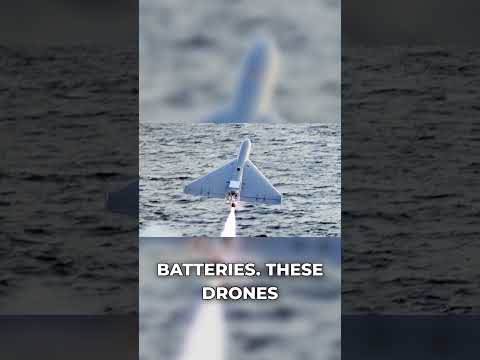
In the tense hours that followed Iran’s announcement, the US military launched a swarm of these loitering munitions. They flew low and slow, their small radar cross-section making them difficult to detect. Each drone carried a high-explosive warhead, programmed to seek out and destroy surface-to-air missile batteries—the backbone of Iran’s ability to deny access to the strait.
Iranian commanders, confident in their Russian-made S-300 systems, watched in disbelief as their radar screens flickered with dozens of tiny, slow-moving contacts. They were too small for traditional air defenses, too numerous to ignore. And they were coming in waves.
The first explosion lit up the night sky near Bandar Abbas. A missile battery erupted in flames, its crew scrambling for cover. Within minutes, another battery went silent. The drones were relentless, their operators thousands of miles away, guiding them via satellite link.
“They’re using our own tactics against us,” a senior Iranian Revolutionary Guard officer reportedly muttered, as reports of losses flooded in. The irony was not lost on him: the Shahed-136, designed to overwhelm defenses with sheer numbers, was now doing exactly that—but under a different flag.
The US had quietly developed this capability over years, reverse-engineering captured Shahed drones and improving their guidance systems. The result was a weapon that cost a fraction of a conventional missile but packed a similar punch. And now, it was being unleashed in the very waters Iran sought to control.
As the smoke cleared over the Strait of Hormuz, the strategic calculus had shifted. Iran’s attempt to close the waterway had not only failed—it had invited a devastating response that used its own technology against it. The message was clear: in the new era of drone warfare, innovation can be a double-edged sword.
But the battle for the strait was far from over. Iran’s remaining air-defense commanders, stunned by the precision strikes, scrambled to adapt. They ordered their surviving batteries to go dark—emitting no radar, firing no missiles—hoping to deny the loitering munitions their targets.
For a brief window, it worked. The drone swarm circled overhead, their seekers hunting for emissions that no longer came. For nearly forty minutes, the strait fell into an eerie silence, broken only by the distant thrum of patrol aircraft and the lap of black water against the hulls of tankers too terrified to move.
Then the US changed tactics. Rather than wait for the Iranians to slip up, the drone operators began flying their munitions in slow, deliberate patterns over suspected launch sites—visible, provocative, almost daring the Iranians to shoot.
“They want us to light up,” an Iranian colonel reportedly warned his superiors over a crackling radio channel. “The moment we do, they’ll be on us.” But the pressure was unbearable. Iranian commanders knew that every silent minute was a minute the US Navy could use to push its carrier group deeper into the Gulf.
The first battery to break silence did so out of desperation. A single S-300 radar powered up, its operators hoping for a quick shot before going dark again. They never got the chance. Two loitering munitions, loitering just beyond visual range, detected the emissions and dove in. The radar van vanished in a ball of fire.
That was the moment the Iranian defense truly began to crumble. With each passing hour, another battery fell silent—not because it chose to, but because it was gone. The US had effectively turned Iran’s own doctrine of saturation attack into a scalpel, picking apart the air-defense network piece by piece.
Back in Tehran, the mood turned from defiance to alarm. The closure of the Strait of Hormuz—once touted as Iran’s ultimate trump card—was now looking like a catastrophic miscalculation. Not only had the blockade failed, but Iran’s ability to defend its own coastline was being methodically dismantled by machines that were, in essence, copies of its own designs.
“We gave them the blueprint,” one Iranian defense official reportedly admitted in a closed-door meeting. “And now they’re using it to write our defeat.”
The Pentagon, for its part, remained tight-lipped. But the message was unmistakable: the era of cheap, one-way attack drones had changed the calculus of naval warfare forever. And the Strait of Hormuz, once a symbol of Iranian leverage, had become the proving ground for a new kind of conflict—one where innovation, not size, determined the victor.
But the Iranians had one more card to play, and it was a desperate one. As the drone swarm pressed its advantage, Iranian fast-attack boats began streaming out of hidden coves along the coast, their crews ordered to close the strait by any means necessary. If they could not defend the waterway from the air, they would clog it with mines and menace from the sea.
The US Navy had anticipated this. Aegis destroyers on station began tracking the small, fast-moving contacts, but the boats were numerous and nimble, darting between tankers and fishing vessels to complicate targeting. For the first time in the engagement, the initiative seemed to slip.
Then the drone operators adapted again. Rather than hunt radar emissions, the loitering munitions were retasked to the water’s surface, their seekers tuned to the wakes and heat signatures of the fast-attack craft. One by one, the boats were struck as they ran, their engines exploding in geysers of spray and flame.
What the Iranians had not counted on was the speed of the American learning curve. Every hour of the engagement, the drone software was updated, the tactics refined. What began as a hunt for missile batteries had metastasized into a full-spectrum campaign against anything that moved in the strait.
By dawn, the waters off Bandar Abbas were littered with the wreckage of Iran’s naval gamble. Not a single mine had been laid. The fast-attack fleet, once a source of Revolutionary Guard pride, had been reduced to burning hulks drifting on the tide.
Yet the Iranians refused to yield entirely. From a hardened bunker deep inland, a surviving commander ordered a final, desperate salvo: a volley of anti-ship ballistic missiles, launched blind toward the US carrier group, hoping sheer volume might overwhelm the defenses.
The missiles arced skyward, their fiery trails visible from miles away. Aboard the carrier, alarms blared and interceptors leapt from their cells. But the drones were already there, loitering at altitude, their sensors locked onto the launch sites. Even as the ballistic missiles flew, the loitering munitions descended on the bunker and the launchers that had spat them out.
The missiles were still climbing when the first drone struck the bunker’s ventilation shaft. The explosion collapsed the entrance, sealing the commander and his staff inside. The remaining launchers were picked off one by one, their crews never getting a second shot.
By midday, the Strait of Hormuz was quiet again—but not the silence of a standoff. It was the silence of a battle decided. The US carrier group steamed through the strait unmolested, a show of force that needed no further explanation.
Iran’s attempt to close the waterway had failed utterly. Its air defenses were shattered, its fast-attack fleet decimated, and its ballistic missile gambit had been snuffed out before it could land a blow. All of it undone by a weapon that cost less than a used car—and that Iran itself had helped perfect.
In the aftermath, analysts would debate the lessons of the Strait of Hormuz for years. “The age of the expensive, exquisite weapon is over,” one Pentagon strategist remarked off the record. “We just proved that a swarm of cheap drones can beat a billion-dollar defense network—if you’re willing to think differently.”
But the victory came with an uncomfortable truth. The drones that saved the strait were born from Iranian ingenuity, captured and copied. “We didn’t out-innovate them,” a US Navy captain admitted privately. “We out-adapted them. This time.”
As the sun set over the Gulf, the tankers began to move again, their crews still glancing nervously at the sky. The strait was open—for now. But the echoes of the battle would linger, a reminder that in the new era of warfare, the line between victory and defeat could be measured in dollars and code.
What do you think—was this a one-time lesson, or the first battle of a new kind of war? Share your thoughts in the comments below.
Report this article
Select a reason for reporting:






