In the first year of the war, near Moscow, German soldiers looked as if they had already endured Stalingrad. Their faces, etched with weariness and doubt, betrayed a truth that their letters home would slowly reveal. What were they thinking as they marched eastward? How did their mood shift from triumphant confidence to creeping despair?
The early letters from German soldiers and officers were filled with thoughts of imminent victory. They wrote of looted goods sent to loved ones, of a war that seemed all but won. “I sent you cloths and a pair of boots a few days ago,” wrote Sergeant Wilhelm Balman. “I will do my best and send anything that is of any use.” Such words painted a picture of soldiers confident in their cause, eager to share the spoils of war.
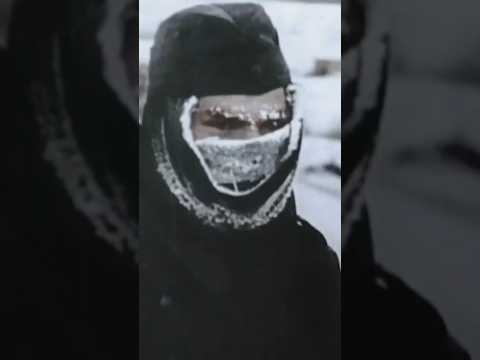
But by the winter of 1941, irritation had already crept into their correspondence. The tone shifted, and the letters began to tell a different story. “This is a very tiresome war,” confessed non-commissioned Officer Walter OS. “As the enemy Russians are clearly underestimated, every day melts the hope for a speedy victory before the onset of cold weather promised by the Führer.”
The promised victory was nowhere to be found. Instead, the soldiers faced a relentless enemy and a harsh winter that would change everything. Their letters, once filled with bravado, now carried the weight of a growing realization: the war in the East was not the quick triumph they had been led to believe.
As the German army pushed deeper into Russia, the initial euphoria gave way to a grim determination. The looted goods and confident promises faded, replaced by a stark acknowledgment of the challenges ahead. The letters from the front lines became a chronicle of a shifting mindset, a window into the minds of men who began to understand that their journey eastward was far from over—and that the cost would be far greater than they had ever imagined.
The winter of 1941 arrived not as a season but as an adversary. Soldiers who had marched in summer uniforms now huddled in holes scraped from frozen earth, their fingers too stiff to hold a pen properly. The letters that once boasted of looted cloth and boots turned into pleas for wool socks and warm gloves.
“We are fighting not only the Russians but the cold itself,” wrote Corporal Heinrich Vogt to his sister in Bavaria. “You cannot imagine what it is like when the temperature falls so low that the oil freezes in the guns. We have been promised winter clothing for weeks. It has not come.”
The confidence of the summer had curdled into something darker. Men who had once written of victory parades in Moscow now wrote of survival, of the next meal, of the comrade who had frozen to death in his sleep. The same soldiers who had looted with such enthusiasm now bartered their treasures for a single warm blanket.
What troubled the officers most was not the cold but the silence from home. Letters from Germany grew shorter, more strained. Families who had celebrated every victory announcement now asked questions that no one at the front could answer.
“My wife writes that the town is full of women in black,” recorded Lieutenant Erich Kessler in his diary. “She does not say it as an accusation. She says it as a fact, the way one reports the weather. I did not know what to write back. What is there to say?”
And still the orders came—to hold, to advance, to never retreat. The men near Moscow stared eastward at a horizon that seemed to have no end, and in their letters, a new word began to appear with unsettling frequency: why.
The word appeared first in private diaries, then in letters home, and finally—dangerously—in conversations held in whispers. “Why are we still here?” a soldier named Franz wrote to his brother in Hamburg. “We took the village three weeks ago. Then we lost it. Then we took it again. Now it is ours once more, and I cannot remember what it looks like without snow and blood on it.”
Such questions were not yet mutiny, but they were something the officers had not anticipated. The men had been told they were liberators, that the Russian people would welcome them. Instead, they found empty villages, burned fields, and a population that vanished into the forests rather than submit.
Sergeant Balman, who had once mailed home cloth and boots with such pride, now wrote a very different letter. “Do not send anything more,” he told his wife. “There is nothing here worth taking. The Russians burn what they cannot carry. We march through ashes.”
By late November, the cold had become a weapon the Germans could not answer. Tanks that had rolled across France now sat frozen in place, their engines dead. Horses collapsed in the snow and were butchered for meat. Men began to speak of the East not as a campaign but as a sentence.
“I saw a man cry today,” Lieutenant Kessler wrote. “Not from pain. He was looking at a photograph of his children and he simply began to cry. No one said anything. We all understood.”
The officers received new orders: hold the line at all costs. But the line was thinning. Companies were reduced to platoons, platoons to squads. The replacements who arrived were younger than the men they joined, boys who had never shaved and who stared at the frozen dead with wide, uncomprehending eyes.
And in the letters that went home, a new theme emerged—not the loot, not the victory, not even the cold. It was the fear of being forgotten. “Write to me,” Corporal Vogt begged his sister. “Even if you have nothing to say. Write that the sun is shining in Bavaria. Write anything. I need to remember that there is a world where people are warm.”
The mood of the German army had traveled a long road from the summer of triumph to the winter of doubt. They had come east expecting a quick war and easy spoils. What they found instead was an enemy who would not break, a winter that would not relent, and a silence from home that grew louder with every passing day.
Then came the night when the thermometer dropped so low that the sentries could not be relieved. Men who had once written of Moscow’s golden domes now wrote of nothing at all. The letters simply stopped.
“I have not heard from my son in six weeks,” a mother in Stuttgart wrote to the army. “Please tell me he is alive.” The reply, when it came, was a form letter. It offered no name, no date, no place. Only the word that every family had learned to dread: missing.
Near Moscow, the survivors no longer spoke of victory. They spoke of the road back, of the villages they had burned, of the faces they could not forget. “We came as conquerors,” wrote Lieutenant Kessler in his final diary entry. “We leave as ghosts. The East has swallowed us, and no one will believe what we have seen.”
The first year of the war had ended, but the war itself had only begun. The men who marched east in summer had believed in a quick triumph. By winter, they believed in nothing but the cold, the silence, and the hope of one more letter from home.
What do you think those soldiers truly felt in their final letters—and what would you have written if you were one of them?
Report this article
Select a reason for reporting:






