She was called ‘too good’ for Fred Astaire—but not in the way you might think. In the golden age of Hollywood, when women were expected to make their male co-stars shine, Eleanor Powell danced with such power and precision that she made the men look like amateurs. Fred Astaire himself admitted, ‘She dances like a man.’ It was a backhanded compliment that revealed everything about why this extraordinary talent was ultimately pushed aside.
Eleanor Powell was a force of nature. With minimal training, she became the queen of tap dancing in the 1930s and 40s, earning the title ‘world’s greatest tap dancer’ from the Dance Masters of America. But her assertive, athletic style—often performed in top hat and tails—was deemed ‘unwomanly’ in an era that prized delicate femininity. She was too virtuosic, too masterful, too equal to her so-called co-stars. And that, paradoxically, was her undoing.
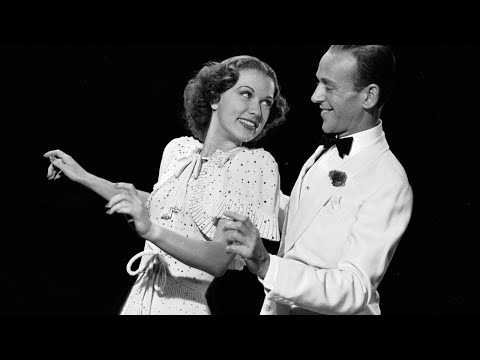
Born in Springfield, Massachusetts, in 1912, Eleanor’s path to stardom was anything but glamorous. Her parents separated when she was just 11 months old, and she was raised by her maternal grandparents while her mother worked multiple jobs as a chambermaid and waitress. ‘Everything I am as a woman I owe to my mother,’ she later said. At age seven, to overcome her shyness, she was enrolled in dance school—a decision that would change her life forever.
By 11, she was performing a buck-and-wing dance on stage under the name ‘Toria Powell.’ At 16, she learned tap dancing and soon joined the optimists at the Casino de Paris Theatre in New York City. She looked down on the tap dancers who appeared with her at the club, considering their style awkward. She was already a perfectionist, already driven.
In the fall of 1929, Powell headed to New York, where she worked at Ben Bernie’s nightclub and danced at private parties. There, she met and appeared on the same bill as Bill Robinson—the legendary ‘Bojangles’—with whom she devised a dance routine in which they challenged each other. They performed at private society parties organized by the Vanderbilts and Rockefellers, earning $500 a night. Robinson became her lifelong friend and later taught her his famous stair dance.
But it was the heel-dropping rhythm tap dancing of John Bubbles that most influenced her footwork. She remembered lying on her stomach in the wings, watching Bubbles dance between shows. ‘I often wondered if I had some coloured blood in me,’ she said later, ‘because the king of offbeat tapping I came up with was a coloured sound.’ It was a sound that would soon take Broadway by storm.
After lessons from Jack Donahue and hours of hard practice, she landed a part in Follow Through, followed by a string of shows including George White’s Musical Varieties. The New York Times raved, ‘Among the supporting company it is the lanky Eleanor Powell, an excellent tap dancer, who stands out markedly.’ Hollywood came calling.
But her path to film stardom was not smooth. Fox studio saw no potential in her ‘decidedly unglamorous appearance.’ It was only when MGM saw her dance number that they envisioned another Ruby Keeler. After a stem-to-stern makeover—including extensive dental work, voice lessons, and a sophisticated new look—Powell made her movie debut in Broadway Melody of 1936, executing dazzling tap numbers that catapulted her into overnight stardom.
With a seven-year contract at MGM, she appeared in a series of musicals tailored to her talent: Born to Dance, Broadway Melody of 1938, Rosalie, and Broadway Melody of 1940. Her tap sequence ‘Begin the Beguine’ in the 1940 film became one of the greatest tap sequences in Hollywood history. By the time she finished Honolulu, she was earning $125,000 per film—a staggering sum during the Golden Age.
But her dominance came at a cost. In 1940, MGM teamed her with Fred Astaire in Broadway Melody of 1940, expecting magic. Instead, the two lacked screen chemistry. The New York Times found her acting ‘automatic at best,’ describing her smile as ‘an essentially unamused neon.’ Further pairings were shelved. Astaire later pinpointed the issue: ‘Eleanor Powell, one of our greatest talents, is a bit too powerful for me. She dances like a man.’
By the time Powell left MGM in 1943, the public had tired of tap dancing, and the studio had no interest in renewing her contract. She married rising star Glenn Ford that year and retired to private life. But her story was far from over.
The marriage to Glenn Ford seemed, at first, like the happy ending Hollywood had denied her. The couple had one son, Peter, and for a time Powell threw herself into domestic life with the same ferocious dedication she had once brought to her footwork. ‘I was so lucky to have her as my mother,’ Peter Ford later recalled. ‘She was dedicated to whatever was placed before her.’ But the union was not built to last.
Years later, Powell would speak with startling candor about the toll it took on her spirit. ‘Glenn had such an inferiority complex—it was sheer hell,’ she confessed. In 1959, after sixteen years of marriage, the couple divorced. Ford would go on to marry three more times. Powell never remarried.
For the most part, she busied herself with community and church activities, stepping back into the spotlight only occasionally. In 1954, she came out of retirement for the Emmy-winning religious series Faith of Our Children, and her final film appearance came in a 1955 short of the same name. Religion had always played an important part in her life, and in 1964 she gave up the club circuit entirely to become an ordained minister of the Unity Church.
Yet the world was not finished with Eleanor Powell. In 1974, a documentary called That’s Entertainment!—and its later sequels—reintroduced her to audiences who had never seen her dance. A new generation sat transfixed as she blazed across the screen in top hat and tails, and the question rippled through the theaters: who was this woman, and why had we forgotten her?
The rediscovery brought a bittersweet coda. In March 1981, Powell attended an American Film Institute tribute to Fred Astaire—one of her last public appearances. When she was introduced, the audience rose to its feet in a standing ovation. The woman Astaire had once called ‘too powerful’ received the recognition that had eluded her for decades.
But the applause could not erase old wounds. In an interview the following year, she complained that she had been allowed only to ‘dance, dance, dance,’ and admitted a quiet fear. ‘I worry my fans might think of me as a tireless, automatic amazon,’ she said—’a singing, tapping top rather than a real human being.’ It was the lament of a woman who had been celebrated for her virtuosity yet never truly seen.
Eleanor Powell died of ovarian cancer on February 11, 1982, at the age of sixty-nine. She was interred at Hollywood Forever Cemetery, leaving behind fourteen films and a legacy that refused to fade. As Busby Berkeley put it, ‘Eleanor was by far the finest female dancer we ever had in films—and a very hard-working perfectionist. I’ve known very few women that talented and that gracious.’
And from an even more unlikely source came the most extraordinary praise of all. The great conductor Arturo Toscanini declared that only three things he would carry through life: the glorious sunset, the splendor of the Grand Canyon, and the dancing of Eleanor Powell. The woman Hollywood could never quite figure out how to use had, in the end, become something no studio could manufacture—a genuine marvel.
Yet for all the tributes and retrospectives, one question lingered like a held note: why had Hollywood been so quick to let her go? The answer, as with so many things about Eleanor Powell, lay in the contradiction at the heart of her art. She was a dancer who moved like a soloist even when she was supposed to be a partner—and in the studio system of the 1930s and 40s, a woman who refused to be a backdrop was a woman the cameras didn’t quite know how to frame.
Consider the evidence of the films themselves. When Powell danced with Astaire in Broadway Melody of 1940, the choreography told the story the press couldn’t. Watch the ‘Begin the Beguine’ sequence closely, and you’ll see two equals circling each other—not a leading man and his decorative partner. She matched him step for step, heel for heel, and when the number ended, she hadn’t diminished herself to make him look taller.
That was the sin. In an era when Ginger Rogers famously did ‘everything Fred did, backwards and in heels,’ Powell did everything Fred did—and made it look like she’d been born doing it. Rogers softened her partner; Powell sharpened him. Audiences sensed it, and so did the men who ran the studios.
But here is what the historians often miss: Powell didn’t stumble into that power by accident. She built it, piece by piece, in the wings of nightclubs and the back rooms of Broadway houses. She lay on her stomach watching John Bubbles, absorbing a rhythm that the white tap world had dismissed as ‘awkward.’ She drilled heel drops until her ankles ached. She practiced day and night, even for a brief appearance in a minor musical, because perfection was the only language she trusted.
That work ethic never left her—not when the roles dried up, not when the marriage ended, not even when she traded the soundstage for the pulpit. When she became an ordained Unity minister in 1964, she brought the same ferocious focus to her congregation that she’d once brought to her footwork. Her son Peter remembered a mother who was ‘dedicated to whatever was placed before her’—whether that was a dance routine or a sermon.
And yet the stage never fully released her. In 1961, with Peter’s encouragement, she dieted down to dancing weight and opened a nightclub review at the Sahara in Las Vegas. The New York Times announced, ‘Eleanor Powell has Broadway at her feet once again.’ For a few glorious years, she toured the country—the Latin Quarter in Manhattan, television appearances on the Perry Como Show—proving that the fire had never gone out.
It was a remarkable second act for a woman Hollywood had written off as ‘too powerful.’ But Powell understood something the studios never did: power wasn’t something to be apologized for. It was something to be honed, protected, and—when the moment demanded—unleashed.
That understanding is what makes her story resonate today. In an age that still struggles to celebrate women who refuse to shrink, Eleanor Powell stands as a quiet, tapping rebellion. She never softened her attack to make a co-star comfortable. She never traded her power for a more palatable femininity. And though Hollywood rewarded her with a contract, then quietly let it lapse, it could never take back what she had already proven.
Her fourteen films remain, and in each one, the truth is plain. She wasn’t ‘too good’ for Fred Astaire because she out-danced him—she was too good because she refused to be the frame around his picture. She was the picture. And the studios, built to sell men as monuments and women as mirrors, simply had no wall big enough for her.
So she built her own rooms: a Vegas stage at forty-eight, a ministry at fifty-one, a standing ovation at sixty-eight. Arturo Toscanini carried the memory of her dancing alongside sunsets and canyons—and maybe that’s the truest measure of the woman. Not a star the system could use, but a force of nature it could only stand back and watch.
Eleanor Powell never got the long career she deserved. What she got instead was something rarer: the last word. When the cameras stopped rolling and the applause finally faded, she had given everything to the work, to her son, to her faith—and asked no one’s permission.
Was Eleanor Powell truly ‘too good’ for Hollywood—or was Hollywood simply too small for a talent that danced like a man, lived like a woman, and answered to no one? What do you think—was she ahead of her time, or exactly right on time?
Report this article
Select a reason for reporting:






