November 12, 1944. Fort Stockton, Texas. The transport truck rattled to a stop outside a chain-link fence topped with barbed wire, kicking up clouds of red dust that hung in the still desert air. Inside, twenty-three Japanese women sat in rigid silence, their faces masks of controlled fear beneath the harsh afternoon sun. Among them was twenty-four-year-old Yuki Tanaka, a former communications operator from Osaka, who clutched a small silk pouch containing a photograph of her family and a letter she would never be able to send. Her hands trembled slightly despite her efforts to maintain composure. She had been taught that American soldiers were barbaric devils who showed no mercy to prisoners, especially women. Now, facing the reality of her captivity, she wondered if she would survive long enough to see Japan again.
The tailgate dropped with a metallic clang that made several women flinch. American soldiers stood waiting, their faces unreadable beneath olive drab helmets. Captain James Whitmore, the camp commander, stood before them with an interpreter at his side—a Japanese American man named George Takahashi. “You are prisoners of war under the protection of the Geneva Convention,” he translated as Captain Whitmore spoke. “You will be treated with dignity and respect as long as you follow camp regulations. You will receive adequate food, shelter, and medical care.” Yuki exchanged glances with Ko Yamamoto, a twenty-year-old nurse captured alongside her. Both women wore expressions of disbelief. Adequate food? They had been eating rice gruel and dried fish for months. The promise seemed like another American lie.
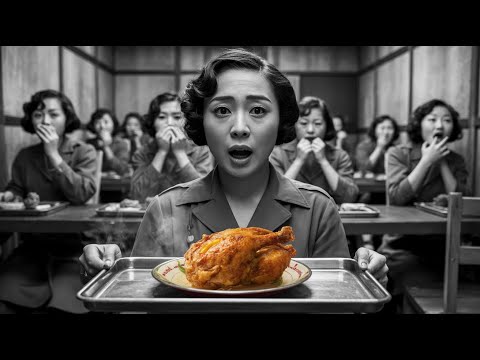
As guards led them toward the wooden barracks, Yuki noticed something unexpected. The air smelled different here—foreign, but not unpleasant. Something rich and savory drifted from a building near the center of the compound, a scent she couldn’t identify but that made her empty stomach clench with sudden, desperate hunger. The barracks smelled of fresh pine lumber and desert heat. Twenty-three women stood in two neat rows inside the long wooden structure, their eyes adjusting to the dim interior. Rows of simple cots lined both walls, each with a thin mattress, a folded blanket, and a small foot locker. It was sparse, institutional, but far better than what Yuki had expected. She had imagined concrete cells, darkness, perhaps chains. Instead, windows let in streams of afternoon light, and the building felt almost humane in its simplicity.
Corporal Rosa Martinez, a stocky woman with kind eyes and dark hair pulled back in a regulation bun, explained the rules through George’s translation. Wake up at 0600, breakfast at 0630, work assignments begin at 0800, lights out at 2200. The women listened in silence, their faces revealing nothing. Yuki had learned during her military training to show no weakness, no emotion that could be exploited. She watched Corporal Martinez carefully, searching for signs of the cruelty she had been warned about. But the American woman’s voice remained steady and professional, neither harsh nor condescending.
That first night, the women huddled together on their cots, speaking in whispers despite having been told they could speak freely in their own language. Ko sat beside Yuki, her hands clasped tightly in her lap. “Do you think they will starve us?” she asked quietly. “Or work us to death.” Yuki had no answer. She had seen American propaganda films during her service—images of smiling soldiers and abundant cities. But she had also been told these were lies, that America was a nation of barbarians hiding behind false promises. Now she didn’t know what to believe. Across the barracks, Michiko Sado sat alone on her cot, her back straight despite her exhaustion. At twenty-six, she was one of the oldest prisoners and had served as an administrative clerk in Manila before the American advance. She had watched her country’s empire crumble, seen the confidence of her superiors dissolve into desperate retreat. Now she wondered what Japan looked like, if anything remained of the world she had left behind.
The questions kept her awake long after the lights went out, staring at the wooden ceiling while desert wind whistled through gaps in the walls. In the darkness, Yuki could hear quiet crying from somewhere down the row of cots—someone trying to muffle the sound in their pillow. Grief or fear, finally breaking through military discipline. No one spoke. No one offered comfort. They were strangers bound together only by their capture and their shared uncertainty about what tomorrow would bring. Outside, American guards walked their patrol routes, boots crunching on gravel. The sound should have been menacing, but somehow it felt almost routine, ordinary. Yuki closed her eyes and tried to remember the smell of her mother’s kitchen in Osaka, the taste of miso soup and pickled vegetables. Instead, that strange, rich aroma from earlier drifted through her memory—unfamiliar and haunting, a scent that belonged to this enemy land and everything she didn’t yet understand about her captivity.
The first week passed in a blur of rigid routine and careful silence. The Japanese women followed orders with mechanical precision, their faces betraying nothing, as they learned the rhythms of camp life. They ate their meals quickly and quietly, sitting together at tables in the corner of the mess hall, always aware of the American soldiers watching them. The food was plain but abundant—more than they had seen in months. White bread, canned vegetables, powdered eggs, and meat that came in portions that seemed almost wasteful. Yuki couldn’t help but compare it to the dwindling rations they had survived on during the final months before their capture, when a handful of rice had to sustain them for an entire day.
Sergeant William Harper was a lanky young man from Georgia with an easy smile that the Japanese women learned to avoid. Smiles could be deceptive masks for cruelty that would emerge when they let down their guard. But Billy, as the other soldiers called him, seemed genuinely untroubled by their presence. He walked his patrol routes humming country songs under his breath, nodding politely when he passed the women working in the camp gardens or hanging laundry to dry in the relentless Texas sun. His grandmother, Mrs. Dorothy Harper, sent him care packages every two weeks like clockwork. They arrived wrapped in brown paper and string, filled with treasures from her kitchen back in Savannah that Billy shared generously with his fellow soldiers.
On the afternoon of November 19th, a package arrived that would change everything. Billy opened it during his break, sitting on the steps of the guard station where he could watch the prisoners working in the nearby vegetable garden. Inside, wrapped in wax paper and newspaper, was something his grandmother called her famous fried chicken. She had somehow managed to pack it so it survived the journey—the golden brown coating still crispy, the meat still tender. The smell hit the air like a revelation, rich and savory with hints of pepper and herbs that Billy’s grandmother guarded as family secrets.
Twenty yards away, Yuki stopped mid-motion, her hands frozen on the tomato plant she had been tending. The scent reached her like a physical thing, so powerful and foreign that her empty stomach clenched involuntarily. She had never smelled anything like it. In Japan, she had eaten chicken occasionally—usually boiled or grilled with soy sauce, simple preparations that honored scarcity of meat. This was something entirely different, something that spoke of abundance and indulgence, and a country that could afford to coat precious protein in flour and spices and cook it until it smelled like heaven itself. Ko knelt beside her, weeding between rows of lettuce, and she too had frozen in place. “What is that?” she whispered in Japanese, her eyes wide. Yuki shook her head slowly, unable to answer.
Around them, other women had stopped working, their attention drawn irresistibly toward where Sergeant Harper sat eating his grandmother’s gift. He noticed them watching and felt suddenly self-conscious, aware that these women—who had been half-starved before their capture—were staring at his lunch with expressions that transcended language and nationality. For a long moment, nobody moved. Then Billy Harper did something that would echo through the rest of their lives. He stood up, walked toward the garden fence, and held out a piece of chicken toward the nearest prisoner.
Haruka Nakamura stood closest to the fence when Sergeant Harper approached. At twenty-two, she had been a radio technician in the Philippines, proud of her skills and her service to the emperor. Now she stared at the piece of golden brown chicken the American soldier held toward her through the wire mesh, her mind struggling to process what was happening. This had to be a trick, a test of some kind. Perhaps he wanted to see if they would break discipline, if they would abandon their dignity by begging for food like animals. But the smell was overwhelming, impossible to ignore. Her mouth watered traitorously, and she hated herself for the weakness even as her hand moved involuntarily toward the fence.
“Take it,” Billy said softly, gesturing with the chicken. George Takahashi had wandered over, curious about the commotion, and he translated quickly. “The sergeant is offering you food. It’s okay.”
Haruka looked back at Yuki and the other women, seeking guidance. They stood frozen in various positions throughout the garden, tools hanging loose in their hands, watching this unprecedented moment unfold. Yuki felt Corporal Martinez’s presence before she saw her. The female guard had emerged from the barracks and now stood observing the scene with her arms crossed, but she made no move to intervene. If anything, she seemed curious about what would happen next.
Yuki made a decision that felt both terrifying and inevitable. She nodded once to Haruka—a small gesture of permission. Haruka’s hand trembled as she reached through the fence and accepted the chicken. It was still warm, the coating crispy under her fingers. She brought it to her mouth and took a small, hesitant bite.
The taste exploded across her tongue like nothing she had ever experienced. The crispy exterior gave way to tender, juicy meat seasoned with pepper and salt and herbs she couldn’t identify. It was salty and savory and rich in a way that seemed almost indecent after months of bland rice and thin soup. Her eyes widened in shock, and despite every effort to maintain her composure, a small sound of surprise and pleasure escaped her throat.
Billy grinned and turned back to his package, pulling out more pieces. He handed them to George, who carried them to the fence where the other women had begun to cautiously approach. One by one, they accepted the offering. Ko bit into hers and tears sprang to her eyes—whether from the overwhelming flavor or the unexpected kindness, even she couldn’t say. Michiko chewed slowly, her expression transforming from suspicion to wonder.
They had been taught that Americans were wasteful and cruel, that their abundance came from exploitation and their power from brutality. But this simple act of sharing food contradicted everything they had been told. This wasn’t cruelty. This was generosity from an enemy who didn’t seem to understand he was supposed to hate them. As the sun lowered toward the horizon, twenty-three Japanese women stood in a Texas garden eating fried chicken and beginning to question every truth they had ever been taught about America.
The fried chicken incident became a turning point that neither the guards nor the prisoners fully understood at first. In the days that followed, the atmosphere in the camp shifted in small, almost imperceptible ways. The Japanese women still maintained their disciplined silence during formations and work details, but their eyes no longer held quite the same rigid fear. They watched the American soldiers with something closer to curiosity than terror, trying to reconcile the propaganda they had been taught with the reality of men and women who shared food and smiled without malice.
Billy Harper’s grandmother continued sending her care packages, and Billy continued sharing them. He began to learn a few Japanese phrases from George Takahashi, practicing them awkwardly until he could say simple greetings that made the women’s lips twitch with suppressed amusement at his terrible pronunciation. “Ohayo gozaimasu,” he would attempt each morning, butchering the syllables so badly that even Yuki, who tried hardest to maintain her distance, sometimes couldn’t help the small smile that escaped before she could stop it.
Corporal Martinez noticed the gradual thawing and decided to encourage it. She had grown up in a Mexican-American family where food was the language of love and connection, and she recognized the power of sharing meals to break down barriers. She began assigning some of the Japanese women to kitchen duties, working alongside American staff to prepare meals for the entire camp. At first, the assignments were met with suspicion. Michiko wondered if they were being tested, if mistakes in the kitchen would result in punishment. But Lieutenant Sarah Chen, who supervised the kitchen operations, proved to be patient and encouraging rather than harsh.
Ko, with her background as a nurse, found herself drawn to the methodical precision of food preparation. She watched carefully as Corporal Martinez demonstrated how to season ground beef for hamburgers, how to bread and fry chicken the way Billy’s grandmother had taught her over letters and phone calls. The measurements seemed extravagant, wasteful—so much meat for one meal, so much flour and oil used without thought to scarcity or rationing. It reinforced everything they had observed about American abundance. The casual wealth of a nation that could afford to feed even its prisoners more than adequately.
Language became less of a barrier as shared work created common ground. The women learned words like flour, pepper, skillet, and delicious through repetition and gesture. Private Thomas Reed, a quiet young man from Iowa, taught them to say please and thank you, which they practiced carefully, wanting to get the pronunciation right. In return, they taught the Americans to say oishii when something tasted good and arigatou when they wanted to express gratitude.
These small exchanges felt safer than deeper conversations—simple enough to seem harmless, yet significant enough to build fragile bridges between former enemies. By early December, the mess hall no longer felt quite so divided. The Japanese women still sat together, but American soldiers would occasionally stop by their table to attempt conversation using broken Japanese and exaggerated gestures that sometimes resulted in genuine laughter from both sides.
December 7th, 1944—three years to the day since Pearl Harbor. The anniversary hung heavy over the camp like an unwelcome ghost. Captain Whitmore had worried about tensions rising, about old wounds reopening on both sides. But what actually happened was something far more complex and painful than anger. It was the day the Japanese women began to truly understand what their country had done—and what had been done in their names while they served proudly in their auxiliary roles.
George Takahashi brought newspapers to the camp that morning, American publications filled with anniversary coverage. Photographs of the burning harbor, of sunken battleships, of the 2,400 men who had died that morning three years ago. The images were stark and undeniable, impossible to dismiss as propaganda when they carried such weight of documented truth.
Yuki sat in the small camp library, staring at the photographs with hands that had gone cold despite the warm December afternoon. She had known about Pearl Harbor. Of course—it had been celebrated in Japan as a great victory, a necessary strike against American aggression in the Pacific. But she had never seen images like these, never been confronted with the individual faces of the dead, never read the personal stories of sailors trapped below decks in sinking ships. The humanity of it struck her like a physical blow—these men who had been sons and brothers and husbands, just as Japanese soldiers were sons and brothers and husbands.
But it was the other articles that truly shattered something inside her. Stories about Japanese treatment of prisoners of war in the Philippines, about forced marches and brutal camps where Allied soldiers died by the thousands. Reports from China about massacres and atrocities that made her stomach turn. Accounts of comfort women, of occupied territories stripped of resources while local populations starved.
She wanted to believe it was all lies—American propaganda designed to justify their own actions. But the evidence was too extensive, too detailed, corroborated by too many sources. Ko found her there an hour later, tears streaming silently down Yuki’s face as she read. Ko picked up another newspaper and began reading herself, and soon her own tears joined Yuki’s.
One by one, other women drifted into the library, drawn by some unspoken understanding that something important was happening. They read in silence, passing newspapers between them, confronting truths that rewrote everything they thought they knew about their service and their sacrifice. Michiko sat with her head in her hands, remembering the certainty she had felt when she joined the auxiliary corps—the pride she had taken in serving the emperor. Now that pride felt like ash in her mouth.
What kind of nation had they served? What kind of people had they become by participating, even in small ways, in a system capable of such cruelty? The questions had no easy answers, but they demanded to be asked. As evening fell and the women slowly left the library to return to their barracks, they carried with them a burden heavier than their captivity. They carried the weight of knowing—and they could never return to the innocence of not knowing.
The weeks following their painful revelations transformed the Japanese women in ways that surprised even themselves. The knowledge of what their nation had done, of the gap between propaganda and reality, left them adrift in a moral wilderness. But strangely, it was in the camp kitchen that many of them began to find a path toward something resembling redemption.
Corporal Martinez had noticed the change in the women, the way their shoulders seemed to carry a heavier weight after that December day. She understood instinctively that they needed purpose, needed a way to contribute that might ease the burden of guilt they now carried. She expanded the kitchen assignments, inviting more of the Japanese women to work alongside the American staff. What began as simple food preparation evolved into something more meaningful—a cultural exchange conducted through recipes and shared meals, where former enemies learned to see each other as individuals rather than representations of nations at war.
Yuki discovered she had a talent for baking. Her precise nature and attention to detail served her well as she learned to make biscuits and cornbread under Corporal Martinez’s patient guidance. The measurements still seemed extravagant to her—butter and flour used in quantities that would have fed her family for a week back in Osaka. But she was learning that abundance didn’t necessarily mean waste, that generosity could be its own form of wisdom.
One afternoon, Ko approached Corporal Martinez with a hesitant request, speaking in her careful English that improved daily. “May we,” she paused, searching for words, “may we cook Japanese food for everyone?” Corporal Martinez smiled and nodded immediately. She had been hoping for exactly this, understanding that sharing one’s own culture was an act of trust and vulnerability.
The kitchen became a classroom where recipes crossed battle lines. Michiko taught Private Reed how to prepare proper rice, explaining the importance of washing it until the water ran clear, of letting it rest before cooking. Haruka demonstrated how to roll onigiri—rice balls filled with whatever was available—her hands moving with practiced efficiency as American soldiers watched in fascination.
Billy Harper proved surprisingly adept at Japanese cooking, his natural enthusiasm overcoming his initial clumsiness. His attempts at making tamagoyaki—sweet rolled omelet—resulted in several disasters before he finally produced something edible. The Japanese women laughed openly at his failures—the first time they had laughed freely since their capture—and Billy laughed with them, understanding that this shared humor was worth more than perfect technique.
In return, the women learned to make foods they had only heard about in propaganda descriptions of American excess. Hamburgers piled high with cheese and vegetables, apple pie with lattice crusts, mashed potatoes swimming in gravy. Each dish was a revelation—not just of flavor, but of the philosophy behind it. Food in America seemed designed for comfort and pleasure, not just sustenance.
Lieutenant Chen often stood in the kitchen doorway, watching these exchanges with quiet satisfaction. This was what victory could look like, she thought. Not domination, but transformation. Not hatred sustained, but humanity rediscovered through the simple act of breaking bread together.
August 15th, 1945—the day Japan surrendered. The news arrived via radio in the early morning hours, crackling through speakers mounted throughout the camp. Emperor Hirohito’s voice, thin and formal, announcing Japan’s acceptance of the Potsdam Declaration, unconditional surrender. The war in the Pacific was over.
American soldiers celebrated with restrained jubilation, mindful of the Japanese women who stood frozen in the compound yard, their faces masks of shock and grief. For nine months, they had lived in a strange limbo between war and peace, between their old identities and uncertain futures. Now that limbo was ending, and the reality of what came next felt more terrifying than comforting.
Yuki sat on her cot that evening, her small silk pouch open in her hands. The photograph of her family stared back at her—faces from another lifetime. Her parents, her younger brother, her grandmother. Were they still alive? Tokyo had been bombed repeatedly. Osaka, too. Letters had stopped coming months before her capture, and she had no way of knowing what remained of her home or the people she loved. The thought of returning to Japan filled her with a complex mixture of longing and dread that she couldn’t fully articulate even to herself.
Captain Whitmore called a general assembly three days after the surrender. The Japanese women gathered in the mess hall, standing in neat rows as they had learned to do, but their military bearing had softened over the months. They looked less like enemy prisoners and more like young women facing an uncertain future.
“Repatriation procedures will begin within the month,” Captain Whitmore announced through George’s translation. “You will be processed and transported back to Japan. You are free to return home.”
The words should have brought joy, relief, celebration. Instead, they brought silence. A heavy, complicated silence that stretched uncomfortably through the hall. Ko looked at Yuki with eyes that reflected the same confusion she felt. Home. What did that word even mean anymore? The Japan they had left no longer existed. The beliefs they had held had been proven false. The pride they had felt in their service had curdled into shame and guilt.
But more than that, something unexpected had happened during their captivity. They had found connection here, purpose here, acceptance here. Corporal Martinez had become something like a friend. Billy Harper had taught them that enemies could show kindness. Lieutenant Chen had demonstrated that strength didn’t require cruelty. They had learned to laugh again in this place, to create rather than destroy, to build relationships across the deepest of divides. The thought of leaving felt less like liberation and more like losing something precious they hadn’t known they were building.
That night, unable to sleep, Yuki walked into the kitchen where she often went when her thoughts grew too heavy. She found Michiko already there, sitting at the long prep table in the darkness. Neither woman spoke for a long time. Finally, Michiko whispered in Japanese, “I don’t want to go back.” The confession hung in the air between them—dangerous and true.
The morning of September 5th arrived with unusual tension crackling through the camp. Captain Whitmore had scheduled the official repatriation briefing where details about transportation and processing would be explained to the Japanese women. They gathered in the mess hall as instructed—twenty-three women who had been transformed by nine months of unexpected humanity. But several of them had spent the previous nights in whispered conversations, wrestling with a decision that felt both impossible and inevitable.
Captain Whitmore stood before them with George Takahashi at his side, documents from the War Department in hand. His expression was kind but professional as he began explaining the procedures. “You will be transported to San Francisco within two weeks. From there, ships will take you to processing centers in Japan. You will be provided with basic supplies and documentation. The International Red Cross will assist in locating your families.”
Yuki’s heart pounded so hard she could hear it in her ears. Beside her, Ko’s hands were clenched into fists. Across the room, Michiko sat with her spine straight, her face revealing nothing of the turmoil within. The moment had arrived when they would have to speak the truth that terrified them—the request that contradicted everything expected of prisoners of war.
Yuki stood slowly, her legs unsteady beneath her. Captain Whitmore paused mid-sentence, surprised. “May I speak?” she asked in careful English, her accent still heavy but her words clear. “Permission granted,” the captain replied, curious about what could be important enough to interrupt an official briefing.
Yuki looked around at her fellow prisoners, seeing her own fear and determination reflected in several faces. She had been chosen to speak because her English was strongest, but the words felt heavy as stones in her mouth. “Captain Whitmore, we have been discussing among ourselves. Some of us,” she paused, gathering courage, “some of us wish to request permission to remain in America.”
The silence that followed was absolute and profound. American guards exchanged shocked glances. George Takahashi’s eyes widened in surprise. Captain Whitmore opened his mouth, closed it again, clearly struggling to process what he had just heard. This was unprecedented, unthinkable. Prisoners of war didn’t ask to stay with their captives. They went home. That was the natural order of things—the expected conclusion to captivity.
Ko stood next, then Michiko, then Haruka. Eight women in total—roughly one-third of the prisoners—rising to their feet in solidarity with Yuki’s impossible request. “We understand this is unusual,” Yuki continued, her voice gaining strength. “But Japan is not our home anymore. The Japan we served—we discovered it was not what we believed. Here we have found kindness where we expected cruelty. We have been given purpose and dignity. We have learned what it means to be treated as human beings rather than tools of empire.”
Captain Whitmore looked at the eight women standing before him, seeing not enemy prisoners but young women who had been forever changed by their time in his camp—and he had absolutely no idea what to do next.
Twenty years later—1965, San Francisco, California. Yuki Tanaka Harper stood in the kitchen of her small restaurant, the aroma of fried chicken filling the air just as it had on that transformative afternoon in a Texas prison camp two decades earlier. Her hands moved with practiced efficiency as she coated pieces of chicken in seasoned flour, using the recipe that Corporal Martinez had taught her and that Billy Harper’s grandmother had perfected over generations.
The restaurant, modest but successful, served both Japanese and Southern American food—a culinary bridge between the two cultures that had shaped her unlikely journey from enemy prisoner to American citizen. The path from that September morning, when she had stood before Captain Whitmore, to this moment had been neither simple nor easy. The War Department had eventually granted permission for the eight women to remain as displaced persons rather than prisoners of war—a bureaucratic compromise that acknowledged the unprecedented nature of their request.
Finding sponsors had been surprisingly straightforward. Corporal Martinez and her family had sponsored Yuki, providing housing and support while she learned to navigate American society beyond the camp’s boundaries. Ko had completed her nursing certification and now worked at a hospital in Houston, her gentle manner and dedication making her beloved among patients and staff alike. Michiko had married an American soldier she met during the resettlement process, raising three children who knew both Japanese and English, who celebrated both O-bon and Thanksgiving with equal enthusiasm.
Not all the women who stayed had found such clear paths forward. Two had eventually returned to Japan after several difficult years, discovering that the America they had glimpsed in the camp was easier to navigate as prisoners than as immigrants facing prejudice and cultural barriers. But those who remained had built lives that honored both their heritage and their adopted homeland. They had become living proof that transformation was possible—that former enemies could become neighbors, friends, even family.
Yuki’s restaurant had become a gathering place for others like her—Japanese war brides and immigrants who found comfort in food that tasted like both home and hope. Billy Harper, now her husband of fifteen years, managed the front of the house while she commanded the kitchen. Their marriage had raised eyebrows when it was first announced—a former prison guard marrying a former prisoner. But those who knew them understood that their love had grown from shared experience, from the recognition that they had both been changed by those months in Fort Stockton.
Sometimes late at night, when the restaurant was closed and the kitchen quiet, Yuki would take out that old silk pouch she had carried from Japan. The photograph of her family—all of whom she had eventually learned were killed in the firebombing of Osaka—remained inside. She had never forgotten where she came from or what her nation had done. But she had also never forgotten that afternoon when an American soldier offered her fried chicken through a fence, teaching her that enemies were only enemies until someone chose to see them as human.
What would you have done, standing at that fence—accept the chicken, or hold on to everything you were taught to believe?
Report this article
Select a reason for reporting:






