The cold was the first thing that killed them. Not the bullets, not the bombs, but the relentless, bone-shattering cold of the Russian winter. When the German Sixth Army surrendered at Stalingrad on February 2, 1943, approximately 91,000 soldiers were taken prisoner by the Red Army. Among them was Friedrich Konrad Winkler, a 34-year-old decorated veteran. Within a week, he was dead—weakened by malnutrition and lack of medical care in the hellish confines of Beketovka prison camp. Like him, more than 86,000 German prisoners from Stalingrad never returned home. Their families were left in agonizing uncertainty, never knowing where or how their loved ones died.
This is the story of those forgotten men—the soldiers who gave their lives for Germany and the Führer, only to be erased in Soviet captivity. It is a tale of retribution, of a war of extermination that boomeranged on its perpetrators, and of a cruelty that matched the horrors of the Eastern Front.
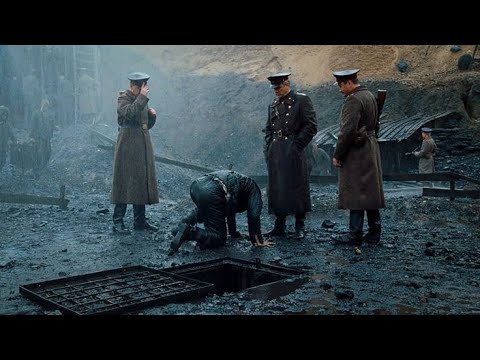
The Eastern Front was Nazi Germany’s undoing. Hitler was unprepared for the harsh winter, the Soviet discipline, and the fierce partisan activity that turned every advance into an ordeal. Nazi soldiers died in the thousands from starvation, cold, and the countless skirmishes and traps laid by Soviet partisans. But even these deaths became preferable to what the Soviets did with captured Germans.
Soviet men and women were looking for an opportunity to get back at the Germans for all the atrocities they committed during the invasion of the Soviet Union—a campaign they named Barbarossa. Throughout Operation Barbarossa, Hitler had ordered his soldiers to liquidate all so-called Bolsheviks and anyone who could be considered their allies or accomplices. For the German Army, the order was clear: all Slavic peoples had to be eliminated. The war waged by Germany against the Soviet Union was a war of extermination, quite contrary to how they acted on the Western Front and the treatment of the French.
Moreover, the Germans were ordered by Hitler to scorch the earth on their retreat. With these orders, Nazi soldiers massacred entire villages and destroyed towns, leaving only death and destruction in their wake. But when the Red Army started to retaliate, all the German actions quickly came back to haunt them. These terrible genocidal actions on the part of Hitler’s soldiers stuck in the collective imagination of Soviet soldiers. In fact, it did not take much propaganda on Stalin’s part to demonize the Germans. Many of these Russians who fought against the Nazis were themselves victims—their homes destroyed, their mothers, brothers, and sisters massacred.
The Soviet people undoubtedly bore the brunt of the war, with more than 27 million people killed. With all this accumulated resentment and hatred for the Germans, Soviet youth answered Stalin’s call to arms to push the Germans back in what can only be described as a truly destructive passion. Stalin ordered the Red Army to initiate a scorched-earth policy to deny the Germans and their allies basic supplies as they advanced eastward. To carry out that order, destruction battalions were formed in frontline areas, having the authority to summarily execute any suspicious person.
The destruction battalions burned down villages, schools, and public buildings as part of this policy. The Red Army and the Soviet secret police massacred thousands of anti-Soviet prisoners. The Soviet secret police was in charge of the prisoners of war—they were responsible for bringing them from the front line where they were captured to the prisoner-of-war camps in Russia. But as most transports were used for the war effort, Stalin’s secret police decided to save resources by making the prisoners march through the frozen Russian steppes in Ukraine and Western Belarus. 60,000 prisoners were forced to evacuate on foot. Official Soviet records show 9,800 were reportedly executed in prisons, 1,443 executed in the process of evacuation, 59 killed for attempting to escape, 23 killed by German bombs, and 1,157 deaths from other causes.
Not all of these prisoners were German—many were political prisoners that had been captured before the war even began. In total, the Soviet Union killed almost a million captured Nazis. Out of the 90,000 captured in the Battle of Stalingrad, the bloodiest of the whole campaign, only 5,000 Germans were lucky enough to be sent back to their country alive.
The key to understanding this bloodbath lies in the fact that Soviet authorities did not punish—and sometimes actually encouraged—brutality against the German prisoners. They were not committing war crimes nor violating international treaties, but barely doing a service to the motherland by erasing the fascist pigs from the land. With the advancement of the war, the political administration of the Red Army tried to limit the practice of killing prisoners, as they could be valuable sources of intelligence that could be used against the enemy. But their efforts were fruitless. In battle, Red Army men and commanders did not bother capturing soldiers and officers. There are known cases of captives that were strangled and stabbed to death with knives or bayonets. Seeing that they could not stop their soldiers from murdering captured Germans, the Red Army chose to take an administrative approach, asking officers to at least make an inventory of the weapons and personal belongings taken from the dead Nazis.
Leningrad and Stalingrad became symbols of Nazi cruelty and bloodshed. The Germans attacked Leningrad in August 1941. The following months would be known in Soviet history books as the black months. 400,000 residents of Leningrad worked to build the city’s fortifications, while 160,000 others joined the ranks of the Red Army. Worker battalions and even schoolboy units were formed all over the city, who joined in digging trenches as they prepared to defend the city.
On the 8th of September, the German 20th Motorized Division seized the town of Shlisselburg, cutting off all land routes to Leningrad. The Germans severed the railroads to Moscow and captured the railroad to Murmansk with Finnish assistance, inaugurating the start of a siege that would last for over two years. The siege became one of the longest and most destructive sieges in history, and it was possibly the costliest siege in history due to the number of casualties suffered throughout its duration. An estimated 1.5 million people died because of the siege, in what effectively was a genocide perpetrated by the German Army.
When Hitler was sure that no roads to and from the city of Leningrad remained open, he ordered the final destruction of Leningrad with no prisoners taken. On 9th September, the final push began. Within 10 days, it had advanced within 11 kilometers of the city. However, the push over the last kilometers was very slow and casualties mounted. Hitler, now out of patience, ordered that Leningrad should not be stormed but rather starved into submission. Army Group Center remained static and was subjected to numerous Soviet counterattacks, in particular the Yelnya offensive, in which the Germans suffered their first major tactical defeat since their invasion began. This Red Army victory also provided an important boost to Soviet morale.
These attacks prompted Hitler to concentrate his attention back to Army Group Center and its drive on Moscow. The Germans ordered the Third and Fourth Panzer Armies to break off their siege of Leningrad and support Army Group Center in its attack on Moscow. Soviet troops, many of whom had friends and family in Leningrad, were not willing to let the Germans get their way. There are countless stories of bravery in fighting the Nazis during this time of the war.
One of these Heroes of the Soviet Union was Emir Lumanov, a Crimean senior lieutenant in the Red Army. Since he spoke German, he was sent on a mission on the 20th of July 1941, where he dressed up in a Nazi military uniform, pretending to be a Nazi commanding officer checking on a unit. All the members of the unit laid their weapons aside in order to present their identifying papers to Lumanov, only for him to then take the entire company as prisoners of war. As his mission consisted in hindering the advance of the German Army and there were no high-ranking officers that could provide him with valuable information, he chose to have a squad of Soviet soldiers execute the prisoners by shooting them against a brick wall.
One year later, the battle for Stalingrad began with a similar death toll for both the Soviets and the attacking army. The Germans faced many problems securing their supply lines, and the sheer scale of destruction meant that many of the German soldiers captured by the Soviets were already half dead from the cold and malnutrition. This was aggravated when prisoners were marched for days to the nearest available railhead and then shipped to collection camps that were themselves little more than enclosures. Medical attention was minimal, sanitary arrangements non-existent, and heating impossible. Between 3rd February and 10th June 1943, half of the 27,000 inmates in the camps had died.
110,000 soldiers of the German Sixth Army were captured in the first stages of the battle for Stalingrad. Only 90,000 made it as far as the collection camps, and 75% of them died in the winter of 1943. Chilling estimates show that of all the Germans captured in 1941 and 1942, approximately 95% did not survive until the end of the war. Early 1943 saw the end of the siege of Stalingrad and more Germans falling into Soviet hands, but because of the extended siege and the harsh winters, they were in even worse condition than their counterparts from earlier months.
Rounded up by the Red Army, they were often systematically plundered of watches, rings, clothing, leather belts, and boots at gunpoint—and fingers were cut off where rings could not be removed. From collection points, they were moved to camps in the vicinity, but these were again often little more than enclosures. The marches themselves claimed many lives. Conditions were appalling, and many men died on the marches to the camps or just from exposure to the bitter frosts, where temperatures could be as low as 50 degrees Celsius below zero at night. Typhus was almost endemic and food scarce. Vitamin deficiencies began to manifest in those who survived long enough, but mortality rates were extremely high.
For the survivors, liberation did not mean redemption. Erich Bühkart, a Stalingrad veteran who lost 44 kilos in the Urals, was finally certified critically ill in August 1945 and sent home to Saxony. But upon arrival, he was warned to remain silent. In the DDR, the suffering of German POWs was a forbidden subject—erased from memory, denied to history.
It was not until 1990, after reunification, that Bühkart could finally speak. He met other Stalingrad veterans, including former Soviet soldiers. In their youth they were mortal enemies; today they meet as friends and comrades.
Of the 3.3 million German soldiers captured by the Soviet Union, 1.3 million never returned. The death train to Uzbekistan, the frozen marches, the camps where 95% perished—these were not accidents of war. They were the terrible arithmetic of retribution.
Friedrich Winkler, dead within a week of capture, was one of 86,000 whose bodies were never recovered. Their families waited decades for answers that never came. The soldiers who gave their lives for Germany and the Führer were forgotten in Soviet captivity, erased from memory by the very regime they had served.
What do you think—was this vengeance justice, or simply another tragedy written in the same cruel ink?
Report this article
Select a reason for reporting:






