When we think of the Vietnam War, the spotlight often falls on the major players—the United States, Australia, South Korea. But there is a story that remains largely untold, a story of quiet courage, unwavering dedication, and a small nation’s outsized impact. New Zealand’s involvement in Vietnam is a chapter of history that few know, yet its legacy is profound.
From the bustling streets of Saigon to the remote jungles of Phuoc Tuy, Kiwi soldiers, medics, and engineers carved out a reputation for excellence and compassion. Their contributions went beyond the battlefield, touching lives and shaping the course of the war in ways that are still felt today. This is the story of the Kiwis in Vietnam—a tale of heroism, sacrifice, and the true meaning of service.
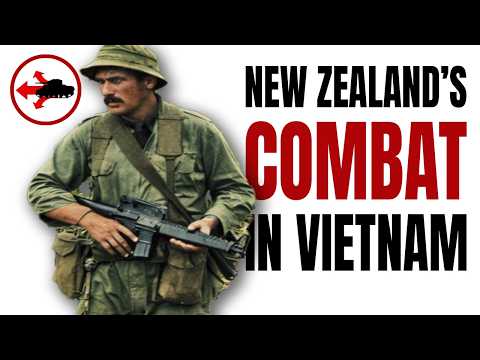
It began not with a bang, but with a quiet commitment. In June 1964, a small contingent of 25 Army Engineers arrived in Bien Hoa, just north of Saigon. Their mission: reconstruction. They built roads, bridges, and facilities, laying the groundwork for what would become a much larger effort. These engineers were the first of over 3,000 New Zealand military personnel who would serve in Vietnam, a number that would leave an indelible mark on the conflict.
But the Kiwi contribution wasn’t just about infrastructure. It was about saving lives. In 1967, a 19-strong Services Medical Team deployed, bringing hope to the civilian population and military personnel alike. They took over from a US Army medical team in Bong Son, treating everyone—including Viet Cong prisoners. Their hospital, operating at near capacity with an average of 92 beds occupied, treated approximately 46,000 outpatients annually. For four and a half years, these medics were a lifeline, their compassion transcending the horrors of war.
And then there were the gunners. The 161 Battery, Royal New Zealand Artillery, arrived in July 1965, equipped with 105mm howitzers. They were pivotal in major battles, including Long Tan and Binh Ba, their fire support proving decisive. Initially under US command, they later joined the Australian Task Force, their forward observers patrolling with infantry companies to direct artillery when needed. Their courage earned them the US Meritorious Unit Commendation and, in 2019, the first Australian Unit Citation for Gallantry ever awarded to a New Zealand unit.
But the story doesn’t end there. The Kiwis also had a hidden hand in the war—the Special Air Service. In November 1968, four troops of the NZ SAS deployed, conducting long-range reconnaissance and ambushes. They mounted 155 patrols over three tours, their stealth and skill earning them a fearsome reputation. And high above, the Royal New Zealand Air Force provided crucial transport and resupply missions, while pilots served with US and Australian squadrons.
This is just the beginning. The full extent of New Zealand’s contribution—from economic aid to medical assistance—is a testament to a nation that punched far above its weight. But what drove these men and women to serve? And what legacy did they leave behind? The answers lie in the untold stories of the Kiwis in Vietnam.
To understand that legacy, you have to look beyond the battlefield. Between 1966 and 1975, New Zealand poured the equivalent of nearly 350 million US dollars into South Vietnam—a staggering 3.3 billion dollars in today’s money. This wasn’t bombs or bullets. It was mobile health teams, refugee camp support, vocational training, and even a science building at the University of Saigon.
Consider what that meant on the ground. A village medic trained by Kiwis could treat a child’s infection. A refugee family could find shelter. A student could study in a modern classroom. This was nation-building in its purest form—quiet, unglamorous, and utterly essential.
But the most remarkable chapter may be the one that unfolded in Bong Son. When the New Zealand Services Medical Team took over the dispensary in Binh Dinh Province, they inherited a facility that was stretched to its limits. The numbers tell the story: 92 beds occupied on average, 46,000 outpatients a year, and a staff of just 19.
They treated ARVN soldiers, Viet Cong prisoners, and civilians—often side by side. In a war where the line between friend and foe was blurred by jungle and ideology, the Kiwi medics drew a different line: everyone deserved care. Their hospital became a strange oasis of humanity in a landscape of fear.
When the team withdrew in December 1971, they left behind more than a rebuilt hospital. They left behind 98 personnel who had cycled through over four and a half years—47 from the Army, 27 from the Air Force, 24 from the Navy. Each one carried home memories of lives saved and lives lost. The hospital itself was rebuilt and reopened in 1998, a quiet monument to their service.
And yet, for all this, the Kiwi story remains overshadowed. Why? Perhaps because New Zealand never sought the spotlight. Their engineers built roads without fanfare. Their gunners fired in support of others. Their SAS patrols vanished into the jungle and returned with intelligence, not headlines.
But history has a way of catching up with quiet courage. In 2019, the Australian Army formally honored the 161 Battery with the Unit Citation for Gallantry—the first time such an award had ever been offered to a New Zealand military unit. It was a recognition long overdue, a nod to the gunners who had stood shoulder to shoulder with their Anzac cousins.
The story of the Kiwis in Vietnam is not one of grand strategy or political ambition. It is a story of individuals—medics, engineers, gunners, pilots, and special forces—who answered a call and served with distinction. Their legacy is written not in monuments, but in the lives they touched and the quiet respect they earned.
But to truly grasp what the Kiwis accomplished, you have to follow the gunners into the field—where the war was measured in meters, not miles. The forward observers of the 161 Battery did not sit safely behind the howitzers. They patrolled with Australian and New Zealand infantry companies, carrying radios into the jungle and calling down fire from positions that were often terrifyingly close.
Picture it: a patrol pinned down by automatic weapons fire, the enemy dug into bunkers that seemed invisible in the green murk. The observer’s voice on the radio is calm, precise—grid coordinates, adjustments, fire mission. Seconds later, the sky screams. The 105mm shells land exactly where they are needed, and the patrol moves again.
This was the reality of Long Tan in August 1966, when New Zealand gunners fired through torrential monsoon rain to break up a massive Viet Cong assault on Australian infantry. They fired so many rounds that barrels glowed, and crews worked until they collapsed from exhaustion. The battle became legend, but for the Kiwi gunners, it was simply the job—support the infantry, no matter the cost.
And the cost was real. Thirty-seven New Zealanders were killed in Vietnam, 187 wounded. Behind those numbers were names, faces, families. A young gunner from Auckland who never came home. A medic who died treating a patient. An engineer crushed by a collapsing bridge he was trying to rebuild.
New Zealand’s sacrifice was proportionally enormous—a nation of just over two and a half million people sending over three thousand of its sons and daughters to a war halfway around the world. The political debate back home was fierce, protests grew louder, and by the early 1970s, the withdrawal had begun. But the men on the ground did not have the luxury of politics. They had each other.
What sustained them was a peculiar brand of Kiwi pragmatism—a refusal to complain, a dark humor that could make even a firebase feel like home, and a fierce loyalty to the mates beside them. They called it ‘getting on with it.’ The Australians called it Anzac spirit. Whatever the name, it was real.
When the last New Zealand combat troops withdrew in 1972, they left behind a country scarred by war but also marked by their presence. Roads that still carried traffic. A hospital that still treated patients. Villagers who remembered the strange soldiers with the funny accents who had shared their rice and patched their wounds.
And in the years that followed, something unexpected happened. The quiet service of the Kiwis began to be recognized—not with parades, but with something more durable. In 2019, the Australian Unit Citation for Gallantry finally honored the 161 Battery, and the words spoken that day echoed what the gunners had always known: they had done their duty, and they had done it well.
But there is one more chapter to this story, one that unfolded far from the guns and the jungle—in the corridors of power and the hearts of a nation that was beginning to ask hard questions about its role in Vietnam. The political fallout would shape New Zealand’s foreign policy for decades.
As the 1970s wore on, the war back home became a different kind of battlefield. Protests filled the streets of Wellington and Auckland, and the Labour government that swept to power in 1972 moved swiftly to end New Zealand’s combat role. By 1975, the last Kiwi personnel were gone—but the debate over whether they should ever have been there would linger for generations.
Yet something remarkable happened in the decades that followed. Veterans who had returned to a divided country slowly found their place in the national story. The 161 Battery’s Australian citation in 2019 was a turning point—proof that quiet service, however overlooked, eventually earns its due. Bong Son Hospital reopened in 1998, a living monument to Kiwi medics.
Today, the Kiwis in Vietnam are remembered not for grand victories, but for competence, compassion, and a stubborn refusal to seek glory. They were the allies who built roads, healed prisoners, and called in fire from the edge of the jungle—and then went home without fanfare. Their legacy lives on in rebuilt bridges, saved lives, and the Anzac bond forged in mud and monsoon rain.
So here is the question that remains: in a war so controversial and so distant, what does it mean to have served with honor—and who gets to decide how that story is told?
Report this article
Select a reason for reporting:






