You think you know the Old West? Think again. The Hollywood version—with rugged cowboys and pristine saloons—is a lie. The real frontier, especially in the 1870s and 1880s, smelled like a dumpster behind a seafood restaurant in August. And that’s just the beginning.
Forget everything you’ve seen in movies. The truth is far more revolting—and far more fascinating. From bathing in horse troughs to sharing a single toothbrush with an entire town, the hygiene habits of the Old West will make you grateful for modern plumbing.
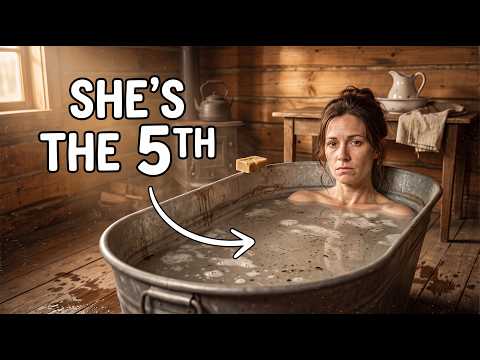
Let’s start with bathing—or the lack thereof. On the frontier, most people bathed in any nearby water source: a river, a pond, a stream. If none was available, they climbed into a horse trough—the very thing livestock drank from. Yes, they bathed in water filled with horse slobber. I’ve seen some rough living conditions in my life, but I’ve never looked at my dog’s water bowl and thought, “Hey, that looks refreshing.” No.
And it gets worse. Even when water was available, there was a good chance “Billy Bob” had built his outhouse right next to it. Not a nice outhouse with a deep pit—just a shallow hole with a wooden board over it. So your bathwater might be someone else’s toilet water. That’s a level of recycling I’m not comfortable with.
For those who could afford a real bath, it came at a price. Cold water and used water were the cheapest options. Used water—a tub filled with water someone else had just been in. I can picture it now: you’re waiting your turn, and someone comes out saying, “Ah, that feels great. I haven’t washed that area in weeks.” I’d say, “Yeah, I think I’m clean enough. Let someone else take my spot.”
Hot water cost extra. Soap and towels were optional add-ons. If you had homemade lye soap—made from wood ash and animal fat—you were doing well. Castile soap, made from olive oil, was considered a luxury. Bathing in the Old West was like buying a truck from a dealership: the base model comes with nothing, and every extra is in the premium package.
If you wanted a bathtub at home, you had to wait until Sears released its mail-order catalog in 1894. The tub cost $22.50—about $800 in today’s money. When tubs became available, families shared them. They shared the same bathwater, one after another. Usually, the father went first because he was the dirtiest, then the mother, then the children. By the time the youngest child got in, the water had more personality than most people I know.
The whole family bathed on Saturday night—not because Saturday was special, but to look their best for church on Sunday. As you know, the Lord was the only motivation strong enough to get some of these folks near water.
And here’s what really amazes me: many people on the frontier believed that bathing too much was dangerous. Not because they’d drown—but because they thought washing opened their pores and made them vulnerable to disease. They feared clean skin would make them sick. All the while, they walked around covered in months of dirt, which is what actually made them sick.
It wasn’t until the 1880s that Louis Pasteur proved the link between germs and disease. In 1882, a German doctor named Robert Koch took it further by identifying the tuberculosis bacterium under a microscope. But even before Koch, Florence Nightingale pushed for hospital sanitation reform—though she ironically believed that foul air caused disease. She got the right result for the wrong reason.
Even after Pasteur and Koch’s breakthroughs, many frontier doctors still believed diseases came from bad smells in the air. They called it miasma—foul air. Which meant, by their logic, they should have been afraid of each other. They hadn’t bathed in weeks. Oh boy.
Now, let’s talk about teeth. Dental care in the Old West was a real nightmare. Most people on the frontier didn’t practice any form of dental hygiene at all. If you were lucky, you had a “chewing stick”—a piece of birch wood you chewed until one end frayed, then rubbed that frayed end across your teeth. That was a toothbrush for most people.
Toothbrushes did exist—carved from cattle bone with bristles made from wild boar or horse hair—but they were so expensive that entire families shared one. And sometimes, even worse, entire towns shared one. A community toothbrush. Doesn’t that sound great? Stealing one of those brushes was considered grand larceny and could land you in jail or cost you a $25 fine—a full month’s wages at the time.
As you might expect, the average person lost all their teeth by age fifty. But the good news is you wouldn’t have to worry about that cursed community brush anymore.
By the end of the Civil War, there were only three dental colleges in the entire country. Dentistry didn’t become common on the frontier until the 1870s. And when I say dentist, I use the term loosely. Most of the time, your barber—the guy who cut your hair—was also your dentist. He’d cut your hair, shave your beard, then yank out your tooth with pliers. Pain relief was optional. And by “optional,” I mean your choices were whiskey or nothing.
Doc Holliday was the exception. He graduated from the Pennsylvania College of Dental Surgery in 1872. He headed to the frontier because he had tuberculosis and needed dry air. He practiced dentistry by day and played cards by night. He was very talented—not just at poker, but at dentistry too. He even won an award for the best set of gold dentures.
But most people got their dental care from someone with no training. And as you guessed, the tools were dirty. But if you think dentistry was bad, wait until you hear about dentures. Oh yes. This one cracked me up. I don’t want to say dentists used so-called Waterloo teeth—real human teeth extracted from corpses. They’d pull the teeth, boil them to kill bacteria, then wire them into a living person’s mouth. That’s not dentistry. That’s something else entirely. Like something haunted.
This practice only began to fade after the Goodyear brothers developed vulcanite—a hard rubber material that allowed dentists to make affordable denture bases from something that wasn’t previously in someone else’s skull. It was an improvement, but it didn’t take much to beat what they were doing before.
Outhouses were barely considered a thing. The first commercially available toilet paper wasn’t sold until 1857. A man named Joseph Gayetty started marketing moistened hemp paper soaked in aloe. He was so proud of his invention that he printed his name on every sheet. That’s worse than Charmin. The man wanted credit for what you wipe your… backside with.
Before that, the most common option for most people was dried corn cobs—which I’m told are softer than you’d expect, but I won’t try it. Even after toilet paper became available, some people in the western states still preferred corn cobs. The Sears catalog eventually became the most popular toilet paper alternative in rural America. By 1900, most farms received a free catalog every year. That’s like free toilet paper, right? Because it served a dual purpose.
The bad thing was when Sears switched to glossy paper in the 1930s, many customers complained—not about the product, but about the paper quality. The glossy pages didn’t do the job. You know, waste doesn’t stick to them well.
Indoor plumbing only existed in major cities like New York in the 1840s. Everyone else used outhouses or chamber pots. They also called them “thunder mugs.” Sounds logical. Exactly. Every morning, those pots were emptied right out the window. Don’t walk that way.
Saloons weren’t any better. Men chewed tobacco and spat on the floor all day. They had spittoons to collect it, but just like urinals today, most men missed. So they covered the floor with sawdust to absorb the mess. That sawdust became a breeding ground for tuberculosis and pneumonia—the disease that struck down Doc Holliday. Tuberculosis was one of the leading causes of death in frontier Texas after the Civil War. It caused an astonishing number of deaths. Towns like Deadwood weren’t tough just because of gunfights. They were tough because of what was spreading in the air of every saloon.
Between 30 and 40 percent of American children didn’t reach age five. Tuberculosis, cholera, smallpox, diphtheria, and dozens of other diseases thrived in those conditions and wiped out those children. Life expectancy in the 19th century hovered around 30 years. Today, it’s nearly 73. The two main reasons for that improvement are better nutrition and, as you guessed, better sanitation.
So the next time you complain about your water bill or the price of toothpaste, just remember: your options 150 years ago were a corn cob or a horse trough. It’s a little better today, I think. Though I still think a visit to the dentist makes me want a shot of whiskey.
Now, here’s the part that really gets me. Even when water was available from a nearby stream, there was a good chance Billy Bob had built his outhouse right next to it. So your bathwater might be someone else’s toilet water. That’s a level of recycling I’m not comfortable with.
And the community toothbrush? Entire towns sharing one brush. Stealing it was grand larceny—a $25 fine, a full month’s wages. You’d lose all your teeth by fifty, but at least you wouldn’t have to touch that cursed brush again.
Doc Holliday was the exception—a real dentist who practiced by day and played cards by night. Most people got their teeth yanked by a barber with dirty pliers. Pain relief was whiskey or nothing.
Dentures made from corpse teeth—Waterloo teeth—were boiled and wired into living mouths. That’s not dentistry. That’s something haunted. It only faded after vulcanite came along.
Outhouses were barely a thing. Chamber pots—”thunder mugs”—were emptied out the window every morning. Don’t walk that way. Saloons covered floors with sawdust to absorb spit, breeding tuberculosis. Towns like Deadwood weren’t tough just because of gunfights—they were tough because of what was in every saloon’s air.
Between 30 and 40 percent of children didn’t reach age five. Life expectancy hovered around 30. Today it’s nearly 73. The reasons? Better nutrition and better sanitation.
So next time you complain about your water bill, remember: 150 years ago, your options were a corn cob or a horse trough. It’s a little better today, I think. Though a visit to the dentist still makes me want a shot of whiskey.
If you enjoyed this episode, hit that like button and don’t forget to subscribe. See you next time on The Hidden Lens. But tell me—would you have survived a single day in the Old West?
Report this article
Select a reason for reporting:






