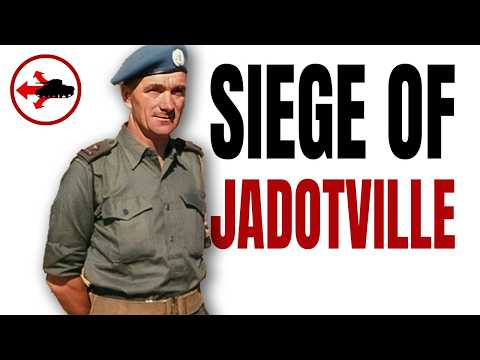
The order was simple: hold the town, protect the civilians, and do not fire unless fired upon. But as Commandant Pat Quinlan scanned the hostile faces of Jadotville, he felt a cold knot tighten in his stomach. The locals weren’t just unwelcoming—they were waiting for something. And his men, a company of Irish peacekeepers, were sitting ducks.
It was September 1961, and the Congo was a powder keg. Katanga had declared independence, and the United Nations had sent peacekeepers to keep the lid on. Quinlan’s men were part of that mission, but the rules of engagement were a bureaucrat’s nightmare: they could only fire in self-defense, and even then, only as a last resort. Quinlan, a veteran of counter-insurgency, knew that restraint could get his men killed.
So he ignored protocol. He ordered his men to dig deep trenches, stockpile water, and carry their rifles at all times. The locals watched with narrowed eyes as the Irish soldiers transformed their compound into a fortress. Quinlan’s instincts screamed that an attack was coming—and he was right.
On September 13, most of the company was attending mass when the first wave hit. Over 600 fighters, led by European mercenaries, swarmed the Irish position. But Quinlan’s preparations paid off. The Irish troops on guard duty opened fire, cutting down the attackers before they could overrun the compound. The mercenaries fell back, stunned by the ferocity of the defense.
But the respite was brief. Within hours, the attackers had encircled Jadotville with thousands of men—some estimates say up to 5,000. They came in waves, 500 to 600 at a time, backed by aerial bombing and strafing runs. Yet the Irish line held. Not a single Irish soldier was killed. The attackers, however, were mowed down in droves, their bodies piling up in the African sun.
By the third day, ammunition and water were running low. Quinlan pleaded for reinforcements, but his calls were ignored. A relief column was ambushed at the Lufira River bridge. A UN helicopter dropped water drums, but they were contaminated with petrol. The men were on their own.
Quinlan negotiated a ceasefire to collect the dead and wounded, but the truce was repeatedly broken. Skirmishes erupted, and the noose tightened. With no supplies and no hope of rescue, Quinlan faced an impossible choice: fight to the last man or surrender to save his soldiers.
On September 17, he raised the white flag. His men had held out for six days against overwhelming odds, inflicting over 300 killed and 1,300 wounded on the enemy. They had destroyed more than half the attacking force. But back home, they would be branded cowards.
The surrender was a bitter pill. As the Irish soldiers were led away, their captors—a mix of Katangese gendarmes and white mercenaries—stared in disbelief at the trenches littered with their own dead. One mercenary, a Belgian with a scarred face, reportedly muttered, ‘These men fought like lions. Why did they give up?’ The answer was simple: Quinlan had traded glory for lives.
The prisoners were marched to a makeshift camp near Jadotville, where they were held in squalid conditions. For weeks, they endured interrogation and threats, but their spirits remained unbroken. Quinlan kept his men together, organizing daily drills and maintaining discipline. He knew that surrender was not the end—it was merely a pause in the fight.
Meanwhile, the world was watching. The siege had made headlines, and the United Nations was under pressure to secure the release of the Irish contingent. Behind the scenes, diplomats scrambled to negotiate. The Katangese, aware that their treatment of the prisoners could sway international opinion, finally agreed to let them go.
On October 25, 1961, the men of A Company were released and handed over to UN officials. They walked out of captivity with their heads held high, their uniforms tattered but their pride intact. But their ordeal was far from over. Instead of being sent home, they were redeployed to the Elizabethville area, where fighting still raged.
The men were exhausted, both physically and mentally, but they had no choice. They rejoined the 35th Battalion and were thrust back into the fray. Quinlan, despite the criticism he faced, continued to lead with the same tactical brilliance that had saved his men at Jadotville. They saw further combat for several more weeks, until their tour of duty finally ended in December 1961.
When they returned to Ireland, there was no hero’s welcome. The public, fed by media reports that focused on the surrender rather than the incredible defense, branded them cowards. Some even received hate mail. The men were ostracized, their reputations tarnished by a nation that didn’t understand the impossible situation they had faced.
Quinlan, a man of few words, never publicly defended himself. He quietly returned to his civilian life, but the memories of Jadotville haunted him. He knew the truth: his men had fought valiantly, and their surrender had saved lives. The military establishment, however, seemed content to sweep the whole affair under the rug.
It would take decades for the truth to emerge. In the 1990s, a series of articles and books revisited the siege, highlighting the tactical genius of Quinlan’s defense. Military academies around the world began studying the battle as a textbook example of how a small, well-prepared force could hold off a much larger enemy. The men of A Company were finally recognized for their bravery.
In 2004, the Irish government issued a formal apology and awarded the unit a Presidential Unit Citation. Quinlan, who had died in 1997, was posthumously honored. His family accepted the award on his behalf, and the men who had served under him finally received the recognition they deserved.
But the story of Jadotville is more than just a tale of military prowess. It is a story of leadership, of a commander who prioritized the lives of his men over his own reputation. It is a story of courage in the face of overwhelming odds, and of a country that failed to recognize its heroes until it was too late.
Today, the siege is remembered as one of the most remarkable episodes in Irish military history. The men of A Company, once shunned, are now celebrated. Their legacy lives on in the training manuals and the hearts of those who understand the true cost of peacekeeping.
And as for Commandant Pat Quinlan, his name is now spoken with reverence. He was a man who saw the storm coming and did everything in his power to save his men. In the end, that is the mark of a true leader.
But the road to that recognition was paved with silence. For years, the veterans of Jadotville rarely spoke of what happened. They carried the weight of a nation’s misunderstanding like a second uniform. Some left the army entirely; others quietly served out their careers, never mentioning the siege to their own families.
It wasn’t until the 1990s that the silence began to crack. A young Irish historian named David Kearns stumbled upon a declassified UN report that mentioned the battle. He was stunned—why had he never heard of it? Intrigued, he began tracking down survivors, many of whom were reluctant to talk at first.
One by one, the men opened up. They spoke of the trenches, the endless waves of attackers, the stench of cordite and blood. They spoke of Quinlan, calm under fire, moving from position to position with a quiet word of encouragement. And they spoke of the surrender—not with shame, but with a weary acceptance that it had been the only way to keep them alive.
Kearns’s research caught the attention of a documentary filmmaker, and soon the story of Jadotville was being told to a new generation. The public reaction was one of shock and outrage—not at the men, but at how they had been treated. Letters of apology poured in from ordinary citizens. Schools invited the veterans to speak. The tide had finally turned.
In 2004, the Irish government formally acknowledged the unit’s valor. The ceremony was held in Dublin, with full military honors. Surviving members of A Company, many now elderly men, stood proudly as the Presidential Unit Citation was read aloud. Some wept openly. Others simply nodded, their eyes distant, lost in memories of the dusty compound and the friends they had lost.
Quinlan’s widow, Carmel, accepted the award on her late husband’s behalf. She had always known the truth, she said. Pat never doubted his decision. He saved his men, and that was all that mattered to him. The room fell silent as she spoke, the weight of her words settling over the assembled dignitaries and soldiers.
But even as the honors were bestowed, a new generation of Irish peacekeepers was already deployed in conflict zones around the world. They carried with them the lessons of Jadotville—the importance of preparation, of leadership, and of knowing when to fight and when to preserve lives. Quinlan’s defensive strategy, once criticized, was now taught in military academies from Dublin to West Point.
And yet, the story of Jadotville is not just a military history. It is a reminder of how easily heroes can be forgotten, and how long it can take for the truth to surface. The men of A Company waited forty years for their country to say thank you. Some did not live long enough to hear it.
As the years passed, the siege became a symbol of something larger. It was a testament to the courage of ordinary soldiers, the wisdom of a commander who refused to sacrifice his men for pride, and the power of history to correct its own mistakes. Jadotville was no longer a defeat—it was a victory of a different kind.
Today, a memorial stands in the town of Jadotville, a simple stone marker bearing the names of the Irish soldiers who held the line. Visitors come from all over the world to pay their respects, to stand where the trenches once were, and to remember. The locals, once hostile, now speak of the Irish with respect. They, too, have come to understand what happened here.
And in the quiet corners of military history, the name Pat Quinlan is spoken with reverence. He was not a man who sought glory. He was a man who did his duty, and in doing so, saved the lives of his men. That, in the end, is the truest measure of a leader.
The years rolled on, and the memory of Jadotville faded into the quiet corners of Irish military history. But the men who had been there never truly left the trenches behind. They carried the dust of the Congo in their bones, the echo of gunfire in their dreams.
In 2016, a film brought their story to the world. Audiences wept as they watched the desperate defense, the impossible choice, the long-delayed honor. For the survivors, it was a strange experience—watching their youth replayed by actors, their pain made public.
One by one, the veterans passed away, but their legacy endured. Schools taught the siege as a lesson in leadership and humanity. The memorial in Jadotville became a place of pilgrimage for soldiers seeking inspiration.
And in the quiet of a Dublin cemetery, Pat Quinlan’s grave bears a simple inscription: “He saved his men.” It is enough.
But the story of Jadotville asks us something: How do we honor those who serve, when the cost of their courage is measured in silence? What will you do to remember them?
Report this article
Select a reason for reporting: