The silence after the bombing was never truly silent. It was a living thing—thick with dust, smoke, and the distant wail of sirens that seemed to come from another world. For Jerry Shrivever, known to his men as Mad Dog, that silence was the calm before a storm he knew would be his last.
He stood at the edge of the airfield, the acrid smell of napalm still clinging to his uniform. The B-52s had done their job, but confirmation was needed. Someone had to go in, to see with their own eyes what remained of the enemy’s command post. That someone was him.
“You don’t have to do this, Jerry,” his lieutenant had said, voice low. “We can send another team.” But Mad Dog had only shaken his head. This was his mission, his responsibility. He had led his men through hell and back, and he wasn’t about to let them go into the unknown without him.
The intel was clear: the target was a Cosman compound, now a smoking ruin, but believed to be crawling with high-ranking enemy officers desperate to salvage what they could. The team’s job was simple—confirm the damage, destroy any remaining assets, and get out. Simple, in theory. But war had a way of making the simple impossible.
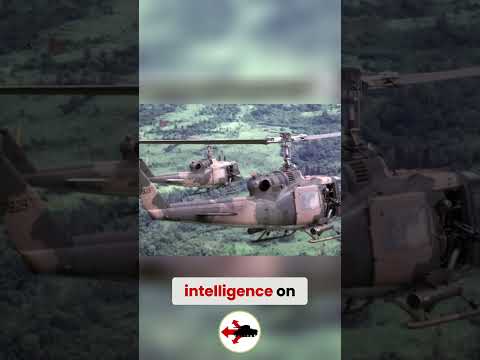
As the helicopter blades began to whir, Mad Dog felt the familiar weight of his rifle in his hands. It was a comfort, a promise. He looked at the faces of his team—young, scared, but determined. They trusted him, and he would not let them down.
The jungle below was a dark, tangled sea, hiding secrets and dangers. Mad Dog’s mind drifted to the letter he had written, tucked away in his locker. He hadn’t planned to write it, but something had urged him to. Maybe it was the way the sun had set the night before, blood-red and final.
“Thirty seconds!” the pilot shouted over the intercom. Mad Dog chambered a round, the metallic click echoing in the cramped cabin. He closed his eyes for a moment, picturing his wife’s smile, his daughter’s laughter. Then he opened them, cold and focused.
The helicopter descended, and the jungle swallowed them whole.
They hit the ground running, boots sinking into mud that smelled of rot and cordite. The compound’s outer wall loomed ahead, jagged teeth of concrete torn open by the B-52s. Mad Dog raised his fist, and the team fanned out, silent as ghosts.
Private First Class Kowalski—a kid from Detroit with hands too big for his rifle—took point. He moved like he’d been born in the bush, though Mad Dog knew this was his first real op. “Eyes sharp, Kowalski,” Mad Dog whispered through the comms. “Anything moves, you call it.”
The breach in the wall was wide enough to drive a truck through. Inside, the courtyard was a graveyard of twisted metal and shattered concrete. A radio tower leaned at a drunken angle, its antennae snapped like broken fingers. Bodies lay where the bombs had caught them—some in uniform, some not. Mad Dog didn’t look twice. There’d be time for counting later.
Doc Reyes, the team’s medic, crouched beside a fallen officer, checking for a pulse. He shook his head. “This one’s been gone since the strike,” he murmured. “But look at his insignia. Colonel. Intel was right—they were here.”
Mad Dog nodded, but something gnawed at him. The compound was too quiet. No return fire, no movement in the shadows. Either the enemy had been wiped out completely, or they were waiting.
They pushed deeper, toward the main command bunker—a squat concrete structure half-buried in the hillside. The blast door hung open, warped by heat. Inside, the air was thick with the smell of burnt electronics and something else. Something sweet and cloying.
“Gas masks on,” Mad Dog ordered. The team complied, their breathing becoming a mechanical chorus. Flashlights cut through the smoke, illuminating a scene of chaos. Maps were scattered across the floor, still pinned to a table that had somehow survived. A radio crackled with static, a voice speaking in rapid Vietnamese, too fast to follow.
Then Kowalski froze. “Sarge,” he hissed, “we’ve got a live one.”
In the corner, slumped against a filing cabinet, was a man in a bloodied uniform. His eyes were open, glassy but aware. He clutched a pistol in one hand, though it hung limp at his side. Mad Dog approached slowly, rifle trained on the man’s chest.
“Drop it,” he said, his voice flat. The man didn’t move. He just stared, lips moving silently, as if reciting a prayer. Mad Dog repeated the order in Vietnamese, the words rusty but serviceable. The pistol clattered to the floor.
Reyes moved in to secure the prisoner, but Mad Dog held up a hand. Something was wrong. The man’s eyes flicked to the left—just a fraction, but enough. Mad Dog spun, rifle raised, as a shadow detached itself from the darkness behind a fallen beam.
“Contact!” he shouted, and the world erupted.
The muzzle flash lit the bunker in stuttering bursts, throwing wild shadows across the walls. Mad Dog fired twice, three times, his rounds chewing through the beam and into the figure behind it. The enemy soldier crumpled without a sound, a rifle slipping from his fingers. But the shooting had broken the spell.
From the far corridor, boots hammered against concrete. More of them. “Kowalski, left flank! Reyes, get that prisoner down!” Mad Dog barked, already moving. The team snapped into formation, years of training overriding the fear that tightened every chest.
The firefight was close and ugly. Tracers zipped through the smoke, sparking off the concrete. Doc Reyes dragged the wounded colonel behind a toppled cabinet, shielding him with his own body while he fired one-handed over the top. Kowalski, for all his inexperience, held his ground, his big hands steady on the trigger.
Then, as suddenly as it began, the firing stopped. The corridor fell silent except for the hiss of a ruptured pipe and the ragged breathing of men who had stared death in the face and blinked first.
Mad Dog swept his flashlight down the corridor. Three enemy soldiers lay dead, their weapons scattered. But one of them was still moving, crawling toward a fallen radio, fingers stretching for the handset.
Mad Dog was on him in two strides. He kicked the radio away, pressed his boot to the man’s shoulder. “Who were you calling?” he demanded in Vietnamese. The soldier laughed—a wet, broken sound—and spat blood onto the floor. “You are already dead, American. You just don’t know it yet.”
The words settled over the team like a shroud. Kowalski’s face went pale beneath the grime. Even Reyes, steady as stone, exchanged a glance with Mad Dog that said everything. This wasn’t a mop-up. It was a trap, and the jaws were closing.
Mad Dog keyed his radio. “Command, this is Mad Dog. We have confirmation of the strike—target neutralized. But we’ve got enemy activity, more than intel reported. Requesting immediate extraction. Over.”
Static. Then a voice, thin and distant. “Mad Dog, Command. Extraction is… unavailable at this time. Repeat, unavailable. Hold your position and await further orders.”
The radio clicked dead. The silence that followed was worse than the gunfire. They were on their own, deep in enemy territory, with prisoners and no way out but through the jungle.
Mad Dog looked at the faces of his men—young, scared, but still standing. He had promised he wouldn’t let them down. Now that promise would be tested in ways none of them had imagined.
“Alright,” he said quietly, “we move on foot. Light gear, weapons hot. We’re not waiting for a rescue that isn’t coming.” He turned to the wounded colonel, still slumped against the cabinet. “And he comes with us. He knows something, and I intend to find out what.”
Outside, the jungle waited—dark, patient, and hungry.
The team slipped out of the bunker into a rain that had begun to fall, soft and steady, washing the ash from their faces. Mad Dog took point, the wounded colonel slung over Kowalski’s broad shoulders. Every step was a gamble, every shadow a potential ambush.
They hadn’t gone half a klick before the colonel stirred. His voice was a dry rasp. “The radio… you heard them. They know you are here. The jungle has ears tonight.” Mad Dog didn’t slow. “Then you’d better tell me something worth the walk,” he said. “Where’s the secondary post? The one your people would fall back to?”
The colonel was silent a long moment. Then, quietly: “The old French bunker. Two kilometers east, past the river bend. But you will not reach it. They have already sealed the trail.”
Mad Dog keyed his comms, voice barely a whisper. “Change of plan. We take the river. Slower, but they won’t expect it.” Reyes nodded, already adjusting his pack. Kowalski shifted the colonel’s weight and muttered something about never learning to swim. It was almost a joke. Almost.
The river was black and cold, moving like oil between the trees. They waded in up to their chests, weapons held high, breath fogging in the humid air. Mad Dog kept his eyes on the far bank, counting the seconds, waiting for the first muzzle flash.
It came just as they reached the shallows. A single shot, then a dozen, tracers skipping off the water like stones. “Contact right!” Mad Dog roared. “Kowalski, get the colonel across! Reyes, suppressive fire!”
The team answered as one. Reyes laid down a brutal wall of lead while Kowalski dragged the prisoner up the muddy bank. Mad Dog held the rear, firing in controlled bursts, watching his men disappear into the treeline one by one.
He was the last to leave the water. A round tugged at his sleeve, another grazed his helmet. He didn’t feel them. He felt only the weight of the promise he had made.
Dawn found them huddled in a shallow ravine, exhausted and bleeding but alive. The colonel had stopped talking. His eyes were fixed on something far away, something none of them could see. Reyes checked his pulse and shook his head slowly.
Mad Dog crouched beside him. “You said the jungle has ears. What else does it have?” The colonel’s lips twitched into something like a smile. “Teeth,” he whispered. “And it is still hungry.” Then his eyes went still.
Mad Dog rose. The radio on his hip crackled—finally, blessedly—with the voice of an extraction pilot. “Mad Dog, we’ve got your beacon. Two minutes out. Mark your position.”
He popped smoke and watched it curl into the pale morning sky. Around him, his men gathered their gear, their faces drawn but steady. They had done the impossible. They had confirmed the kill, destroyed the nest, and walked out of the fire.
But as the helicopter descended and the rotors drowned out the jungle’s silence, Mad Dog looked back at the ravine. The colonel’s words hung in the air like smoke. You are already dead. You just don’t know it yet.
He climbed aboard, and the jungle closed over the ravine behind them. The mission was over. But somewhere in the dark green sea below, the teeth were still waiting.
What do you think—was the colonel’s warning just the rambling of a dying man, or did Mad Dog and his team leave something far worse behind in that jungle?
Report this article
Select a reason for reporting:






