In the chaotic aftermath of World War II, while most Red Army soldiers lugged home silver spoons, harmonicas, and razors as trophies, one soldier made a decision that would change his life forever. He threw away everything except a suitcase filled with sewing needles. It seemed like madness—until he started selling them for a ruble apiece and became a millionaire.
This isn’t just a tall tale from the front lines. It’s a story of cunning, desperation, and the harsh realities of a postwar Soviet Union where the smallest things could mean the difference between poverty and wealth.
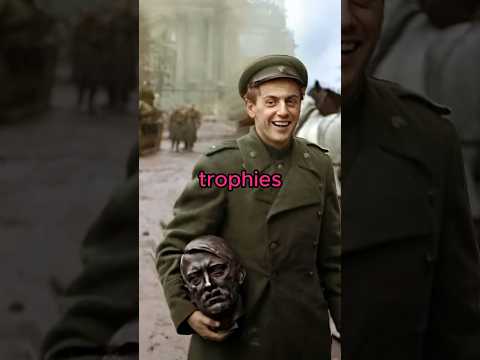
The year was 1945. The war in Europe had ended, and millions of Soviet soldiers were returning home, many carrying souvenirs from defeated Germany. Families waited anxiously for their men, hoping for a piece of the victory—a silver spoon, a harmonica, a lighter. These trophies were more than just objects; they were symbols of survival, of triumph over the enemy.
But one soldier had a different idea. He discarded the usual trinkets and filled his suitcase with something far more valuable: sewing needles. In the war-torn Soviet Union, where factories had been converted to produce weapons and ammunition, household goods were scarce. Sewing needles, essential for repairing clothes, were in desperately short supply.
The soldier understood this. He knew that while silver spoons might fetch a pretty penny, they were luxuries. Needles, on the other hand, were necessities. Every family needed them, and there were none to be found. He began selling them at a ruble each—a small fortune in those days—and watched his wealth grow.
His fellow soldiers mocked him at first, laughing at the man with a suitcase full of needles. But as the months passed and the shortage worsened, their laughter turned to envy. The soldier became a millionaire, not through luck, but through a keen understanding of what people truly needed.
This story, passed down through families, is more than just a curiosity. It’s a testament to the ingenuity and resilience of those who lived through the war. While others focused on the glamour of trophies, one man saw an opportunity in the mundane. He turned a simple item into a fortune, proving that sometimes the smallest things hold the greatest value.
But how did he manage to transport thousands of needles across the border? And what happened when others caught on to his scheme? The answers lie in the untold chapters of his journey—a journey that would test his wits and his luck in ways he never imagined.
The border crossing at Brest was a gauntlet of suspicion and bureaucracy. Soldiers returning from Germany were scrutinized by customs officials who had seen every trick in the book—gold hidden in boot heels, watches sewn into coat linings, even diamonds smuggled inside bars of soap. When the soldier placed his battered suitcase on the inspection table, the officer barely glanced at it. Needles? Who would bother? He waved him through with a dismissive flick of his hand.
That was the first stroke of luck. The second came in Moscow, where the black market for household goods operated in the shadows of crumbling apartment blocks. He didn’t sell his needles on street corners like a common speculator. Instead, he sought out the wives of factory managers, women who had connections and knew exactly who was desperate for what. A single needle, he discovered, could be traded for a favor—a favor that could later be converted into cash, food, or influence.
Within weeks, his suitcase was empty. But his pockets were not. He had turned a handful of metal slivers into a small fortune, and he had done it without drawing the attention of the authorities. The secret, he later told his grandchildren, was not in what he carried, but in what he understood. Everyone else saw trophies. He saw solutions.
Of course, word eventually spread. Other soldiers, hearing of his success, began stuffing their own bags with needles before leaving Germany. But they were too late. By the time they arrived, the market was flooded, and the price had plummeted. The soldier had already moved on—this time to something even more unexpected.
He opened a small workshop in a converted basement, hiring demobilized soldiers who had no other prospects. They repaired sewing machines, then began manufacturing spare parts for them. The needles had been just the beginning; now he was building something lasting. Within five years, his name was spoken in the same breath as the factory directors and party officials who had once dismissed him as a lucky fool.
But success in the Soviet Union always came with a price. The war had made men suspicious of one another, and the peace was proving no different. A letter arrived one morning, stamped with an official seal. It was an invitation—or perhaps a summons—to appear before a committee investigating “unexplained wealth.” The soldier read it twice, folded it carefully, and placed it in his pocket.
He had outsmarted the market. Now he would have to outsmart the state.
The committee met in a drafty room on the fourth floor of a ministry building that still smelled of cordite and coal smoke. Three men sat behind a long table, their uniforms crisp, their faces unreadable. “Comrade, you returned from Berlin with nothing but needles,” the chairman said, tapping a folder. “And now you own a workshop. Explain.”
The soldier had rehearsed this moment for weeks. He spoke calmly about supply and demand, about the crippled factories, about how he had simply filled a gap the state itself had left open. He did not mention the favors, the wives of managers, the quiet trades in dim hallways. He framed his fortune as a service to the people—needles for their clothes, parts for their machines. The committee listened, scribbled notes, and exchanged glances.
What saved him, in the end, was paperwork. He had kept meticulous records—every needle sold, every ruble earned, every part manufactured. He had paid his taxes, such as they were, and had even donated a portion of his profits to a veterans’ fund. The state could forgive ambition; it could not forgive carelessness. The chairman closed the folder and dismissed him with a curt nod.
But the investigation left a mark. Neighbors who had once greeted him warmly now crossed the street to avoid him. His workers grew nervous, and two of them quit without notice. He understood the message: he had been warned, not absolved. The state had long arms and a longer memory.
So he adapted. He sold the workshop to a cooperative and took a modest position as its chief engineer, drawing a salary that raised no eyebrows. The fortune he had built did not vanish—it simply went underground, converted into gold coins and hidden in the walls of his dacha. He had learned the first rule of Soviet survival: never look richer than your neighbor.
Years passed. The dacha walls held their secret, and the soldier lived quietly, repairing neighbors’ sewing machines for free and refusing all payment. The children on his street called him “the needle man,” and he would smile and hand them small metal trinkets he had fashioned himself. He never spoke of Berlin, of the suitcase, or of the committee.
But his grandchildren knew. On long winter evenings, when the samovar hissed and the windows frosted over, he would lean close and tell them the story—not as a boast, but as a lesson. “The war gave us many things,” he would say. “But the greatest trophy was knowing what tomorrow would need.”
And somewhere in the walls of that dacha, wrapped in oilcloth and forgotten by time, the last of his gold coins waited for a day when the country would need to be rebuilt once more—and someone with the same quiet cunning would know exactly what to do.
Decades later, after the Soviet Union itself had crumbled, his grandson returned to the old dacha. The roof sagged, the samovar had rusted through, but the walls still stood. With a crowbar and trembling hands, he broke open the plaster behind the stove.
Inside, wrapped in oilcloth gone stiff with age, was a small canvas sack. He untied it and poured the contents into his palm—a dozen gold coins, dull with dust, and beneath them, a single sewing needle. It was the last one, kept as a keepsake, not for sale.
He sat on the floor for a long time, turning the needle between his fingers. His grandfather had never been a hero of the war, never stormed a barricade or captured a flag. But he had understood something the generals and commissars never did: that survival is its own kind of victory.
Outside, the market stalls of the new Russia buzzed with cheap imported goods—needles from China, spoons from Poland, harmonicas from Japan. The shortages were gone. The cunning was not.
He pocketed the coins, wrapped the needle in a clean handkerchief, and walked out into the cold. Some inheritances are measured in gold. Others are measured in the quiet knowledge of what tomorrow will need.
And when his own son grew old enough to ask about the strange metal sliver on the mantelpiece, he would tell the story just as it had been told to him—and wonder, as his grandfather had, what the next generation would find when the walls came down.
So tell me—if you had been that soldier, standing at the border with one battered suitcase, what would you have filled it with?
Report this article
Select a reason for reporting:






