In the heart of Southeast Asia, a nation that had never been colonized stood at a crossroads. It was 1941, and the world was on fire. While bombs rained on London and tanks rolled across the Russian steppes, Thailand—then known as Siam—was about to make a decision that would shock the Allies and forever stain its reputation. The man at the center of it all was Plaek Phibunsongkhram, a military strongman with a vision of a Greater Thai Empire. He admired Hitler’s propaganda machine and dreamed of uniting all Tai-speaking peoples under one flag. But his ambition would lead him into a Faustian bargain with Imperial Japan.
On the night of December 7, 1941, as Japanese planes approached Pearl Harbor, another fleet was heading for Thailand’s shores. At 11 PM, the Thai government received an ultimatum: allow Japanese troops to pass through unopposed, or face invasion. Phibun, caught off guard, gave no answer. Within hours, Japanese forces landed on Thai beaches and poured across the border from Cambodia. The fighting lasted just five hours before Phibun ordered a ceasefire. “We must cooperate with Japan to survive,” he reportedly told his cabinet. A week later, he signed a formal alliance with Tokyo, and on January 25, 1942, Thailand declared war on the United States and Britain.
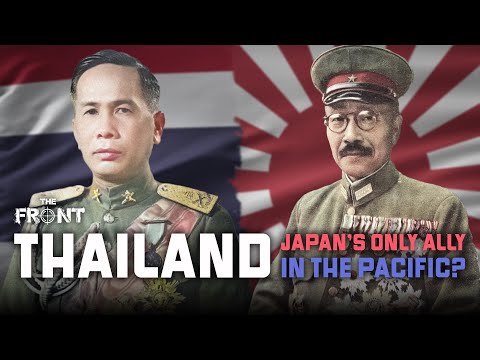
But this was not a simple story of aggression. Phibun’s decision was born of fear and opportunism. He had watched France fall to Germany in 1940 and saw a chance to reclaim lost territories in French Indochina. With Japanese backing, he launched a brief but bloody war against Vichy French forces, winning back some land but earning the enmity of the Allies. Japan, eager to secure a springboard for its invasions of Burma and Malaya, was happy to oblige. Thai troops would soon march alongside Japanese soldiers, invading Shan State in Burma and battling British forces in Malaya. The alliance was far from smooth—Phibun resented playing second fiddle to Tokyo—but for a time, it seemed Thailand had chosen the winning side.
Yet beneath the surface of collaboration, a resistance was brewing. In Washington, the Thai ambassador, Seni Pramoj, refused to deliver Phibun’s declaration of war. Instead, he founded the Free Thai Movement, a clandestine network that would grow into a guerrilla force of 50,000 fighters.
Back in Bangkok, the regent, Pridi Banomyong, secretly organized sabotage and intelligence operations from his office at Thammasat University. “We fight not for the Allies, but for Thailand’s soul,” he told his recruits. As the war turned against Japan, Phibun’s grip on power weakened. A disastrous flood in 1942 crippled rice production, and his grandiose plans to relocate the capital to Phetchabun infuriated both the Japanese and his own officials. In August 1944, the National Assembly ousted him, and a civilian government took over, quietly aiding the resistance while pretending loyalty to Tokyo.
When Japan surrendered in August 1945, the Free Thai Movement emerged from the shadows. Pridi declared Phibun’s declaration of war illegal, and because of the guerrillas’ support, the Allies chose not to treat Thailand as a defeated enemy. The kingdom returned the land it had annexed and escaped occupation. But the story was far from over. In November 1947, Phibun staged a coup and returned to power, ruling for another decade. His legacy remains a cautionary tale of ambition, survival, and the high cost of picking the wrong side—or was it the right one?
The war was over, but the reckoning had only begun. In the corridors of the Foreign Ministry, Pridi Banomyong worked feverishly to draft the legal arguments that would save Thailand from the hangman’s noose. “We cannot undo what Phibun did,” he wrote in a confidential memo, “but we can prove that the Thai people never truly consented.” The argument hinged on a technicality: because the declaration of war had been signed under Japanese pressure and never ratified by parliament, it was void under international law. The Allies, weary of war and eager to stabilize Southeast Asia, accepted this legal fiction.
But victory in diplomacy did not mean peace at home. The Free Thai Movement, which had fought so bravely, was now a political liability. Its leaders were heroes to some, traitors to others. In the bars of Bangkok, former guerrillas traded stories with former collaborators, and the line between the two grew dangerously thin. “We were all just trying to survive,” a former Thai army colonel told an American journalist in 1946. “The ones who shout loudest about patriotism are usually the ones who changed their coats the fastest.”
Phibun, meanwhile, was not finished. He had been forced into retirement, but he retained a loyal following within the army and a talent for reinvention. From his villa outside Bangkok, he cultivated a new image: no longer the dictator who had allied with Japan, but a staunch anti-communist who could be useful to the West. The Cold War was beginning, and Washington needed allies in Southeast Asia.
In 1947, Phibun struck. A military coup ousted the civilian government, and within months he was back in power. This time, he had learned his lesson. He courted the United States, sent Thai troops to fight in Korea, and opened the country to American bases. The man who had once dreamed of a Greater Thai Empire now positioned himself as a bulwark against communism.
But the ghosts of the war years refused to stay buried. In 1949, a group of former Free Thai members staged a counter-coup. It failed, and its leaders were executed or exiled. Pridi, who had been living abroad, was accused of plotting against the state. “History is written by the victors,” he wrote from exile in China, “and in Thailand, the victors are whoever holds the guns.” He would never return to his homeland.
Phibun’s second reign lasted until 1957, when yet another coup—this time led by Field Marshal Sarit Thanarat—toppled him. He fled to Japan, where he died in 1964, far from the nation he had once ruled with an iron fist. His ashes were scattered in a temple in Tokyo, and back in Bangkok, his name became a curse word among the educated elite and a footnote in military history.
Yet the story of Thailand in World War II remains a mirror for the present. It is a tale of a small nation caught between empires, of leaders who made terrible choices for what they believed were good reasons, and of ordinary people who resisted in silence. The Free Thai guerrillas never launched their grand offensive, but their very existence changed the calculus of power. They proved that collaboration was not the only option—and that survival, in the end, is not the same as victory.
But the mirror does not end there. The war’s deepest scars were not on the map, but on the national memory. In the decades that followed, Thai schoolchildren learned a sanitized version of the era: the Japanese were occupiers, the Free Thai were heroes, and Phibun was an aberration. The uncomfortable truth—that thousands of Thais had cheered the alliance, that Thai soldiers had fought and died alongside the Japanese in Burma, that the Greater Thai Empire was a dream shared by many—was quietly folded away like a flag no one wanted to fly.
Yet history has a way of leaking out. In the 1970s, as student movements swept through Bangkok, a new generation began digging into the archives. They found the twelve cultural mandates, the propaganda posters, the photographs of Phibun standing shoulder to shoulder with Japanese generals. “We were taught that we were always the victims,” one university lecturer recalled. “But the documents told a different story.” The debate that followed was fierce and painful—was Thailand a reluctant ally or a willing accomplice? The answer, historians concluded, was both.
Consider the Burma Railway. Thousands of Allied prisoners of war died building it, and the Thai countryside became a graveyard. Yet Thai villagers along the route also suffered—forced into labor, their rice confiscated, their sons conscripted. The railway was a Japanese project, but it ran through Thai land with Thai permission. “We cannot blame the Japanese alone,” a Thai historian wrote in 1982. “The tracks were laid in our name.”
And what of the ordinary soldiers? The Thai Phayap Army that invaded Shan State in 1942 numbered some 35,000 men. Many were peasant boys who had never left their villages. They fought for a nation they barely understood, against an enemy they had no quarrel with. Some returned home to find their families starving, their farms flooded, their country transformed. “I don’t know why we went to Burma,” one veteran told an interviewer in 1990, his voice cracking. “They told us it was for Thailand. But I never saw any Thai land there.”
The war also reshaped Thailand’s relationship with the West in ways that endure today. The United States, which had never treated Thailand as an enemy, became its patron. American aid flowed in, American bases dotted the landscape, and American culture seeped into Bangkok’s streets. The alliance that began with Phibun’s anti-communist pivot in the 1950s deepened through the Vietnam War, when Thai airbases were used to bomb North Vietnam. Thailand had traded one patron for another.
But the bargain came with a price. The communist insurgency that simmered in Thailand’s north and northeast during the 1960s and 70s was fueled in part by resentment over the American presence. Young Thais who studied abroad returned with radical ideas. The Free Thai legacy of resistance was invoked not by the government, but by its opponents. “Pridi was right,” student leaders declared in 1973, as they marched through Bangkok’s streets. “The fight for Thailand’s soul never ended.”
Pridi himself died in Paris in 1983, still in exile. His ashes were eventually returned to Thailand, but the ceremony was low-key, almost apologetic. The man who had saved his country from the consequences of its worst choices was remembered not as a hero, but as a troublemaker. “He was too honest for politics,” a former colleague said. “And too clever for his enemies.”
Today, Thailand’s role in World War II remains a subject of quiet controversy. The museums in Bangkok focus on the Free Thai movement, on the bravery of the guerrillas, on the nation’s eventual redemption. The awkward questions—about collaboration, about ambition, about the seduction of power—are left for academic journals and late-night conversations.
Yet perhaps that is the nature of history itself. Nations do not like to remember their compromises. They prefer the clean lines of heroism and villainy. But the truth is always messier, always more human. And in that messiness, there is something valuable: a reminder that survival is not a virtue in itself, and that the choices we make in the dark have a way of finding the light.
The story of Thailand in World War II is not just a story about the past. It is a story about how nations construct their memories, how they bury their shame, and how they decide what to teach their children. It is a story about the difference between what happened and what we choose to believe happened. And it is a story that, in an age of rising nationalism and great-power rivalry, feels more relevant than ever.
Today, as Thailand navigates new great-power rivalries, the wartime generation has nearly vanished. “My father never spoke of Burma,” a granddaughter in Chiang Mai told a researcher. “Only on his deathbed did he whisper a name—a friend he buried there.” Such silences are their own kind of history.
Phibun’s ashes are scattered in Tokyo; Pridi’s in Paris. Neither man rests in the land they fought over. Perhaps that is fitting. The nation they shaped chose survival over purity, pragmatism over principle—and paid for it in memory.
So when you see Thailand today—never colonized, never conquered, always negotiating—remember the tightrope walkers of 1941. Survival, it turns out, is a skill learned in the dark.
But here’s the question history leaves us: when your nation’s survival required a deal with the devil, how would you want your grandchildren to remember it—as shame, as necessity, or as something in between? Tell us in the comments.
Report this article
Select a reason for reporting:






