The gaslights of Victorian London flickered over streets where danger lurked in every shadow, and for three women, those shadows would become their graves. In an era before forensic science and dedicated detective branches, their brutal murders sent shockwaves through a city already gripped by fear. Each woman—Eliza Grimwood, Harriet Buswell, and Matilda Hacker—met her end in a locked room, her throat savagely cut, her killer never brought to justice. These are not tales of fiction, but real cases that baffled Scotland Yard, inspired Charles Dickens, and left behind haunting questions that still echo today.
What connects these three tragedies? A pattern of violence, a trail of circumstantial evidence, and a justice system struggling to adapt. In the spring of 1838, Eliza Grimwood’s blood-soaked room on Waterloo Road became the first of these macabre puzzles. Decades later, Harriet Buswell’s Christmas Eve murder in 1872 and Matilda Hacker’s gruesome discovery in a coal cellar in 1879 would add to the grim ledger. Each case ended without a conviction, leaving families shattered and the public hungry for answers.
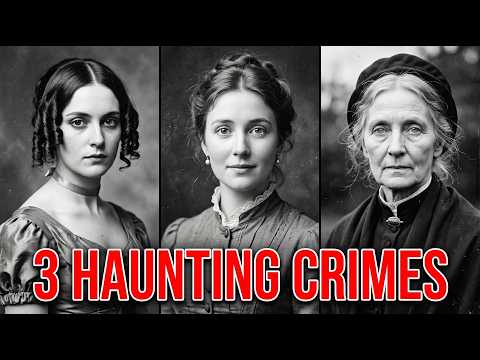
“The room was drenched in blood,” newspapers reported of Eliza’s death, a detail that shocked even hardened Londoners. “Her throat was cut so deeply that her head was nearly severed.” Such sensationalism sold papers, but it also highlighted the brutal reality of violence against women in the Victorian era—especially those who lived on the fringes of society.
Eliza Grimwood was no stranger to hardship. Born in rural Suffolk around 1813, she had been seduced and abandoned as a teenager, then made her way to London, where she survived as a kept woman and occasional prostitute. By 1838, she was living with William Hubbard, a married man who accepted her lifestyle. On the night of May 25th, she left their lodgings for the Strand Theatre, returning near midnight with a foreign-looking man. Hours later, she was dead, and the mysterious stranger had vanished.
Inspector Charles Frederick Field, a seasoned officer and friend of Dickens, led the investigation. Despite extensive inquiries, the killer was never found. A letter from a man claiming to be the escort, one John Walter Cavendish, led to Hubbard’s brief arrest, but the case collapsed when the bloodstains on his clothing didn’t match the savagery of the attack. “The identity of John Walter Cavendish was never established,” and the file closed on July 14, 1838, unsolved.
Thirty-four years later, another woman would meet a similarly gruesome end. Harriet Buswell, a part-time actress and courtesan, spent Christmas Eve 1872 at the Alhambra Theatre and Hotel Cavour before returning to her room at 12 Great Coram Street with a German-accented man. The next morning, she was found with her throat cut, a half-eaten apple on the table—a bite mark that didn’t match her teeth. The investigation led to Dr. Henry James Bernhard Gottfried Hessel, a ship’s chaplain, identified by three witnesses in a Ramsgate lineup. But the case against him crumbled under conflicting testimony and a lack of direct evidence. He was released, and Harriet’s murder joined Eliza’s in the annals of unsolved crimes.
The final case, that of Matilda Hacker, was perhaps the most perplexing. A eccentric spinster from Canterbury, Matilda lived under the alias “Miss Whish” in a Bloomsbury boarding house. In 1879, her mummified remains were found in the coal cellar, her throat still wrapped in a cord. She had been dead for months, and her jewels had been pawned by the housemaid, Hannah Dobbs. Dobbs was arrested and tried, but the jury acquitted her, swayed by the lack of direct proof and the questionable character of the boarding house’s owner. “The case remains open,” the records state, a chilling reminder that justice can be elusive.
These three women— Eliza, Harriet, and Matilda— shared more than a violent death. They were independent, unconventional, and unapologetic about their lives. In a society that judged them harshly, their murders exposed the vulnerabilities of women who defied Victorian norms. Their stories, preserved in yellowed newspapers and police files, continue to haunt us, asking: who killed them, and why?
As the gas lamps of London dimmed on these unsolved mysteries, the city moved on, but the questions lingered. In the next part, we will delve deeper into the investigations, the suspects, and the cultural impact of these cases—how they shaped detective fiction, fueled public outrage, and left an indelible mark on the history of crime.
To understand why these cases remained unsolved, we must first understand the men tasked with solving them. In 1838, when Eliza Grimwood’s body was discovered, the Metropolitan Police was barely nine years old. There was no dedicated detective department—that would not exist until 1842. Officers like Inspector Charles Frederick Field worked without the institutional procedures, forensic tools, or centralized records that later generations would take for granted.
Field kept a personal diary of the Grimwood investigation, a document that survived and became the primary source for historian Ian Bonderson’s 2017 reconstruction. From its pages, we learn that Field was diligent, methodical, and ultimately defeated by the limits of his era. He questioned cab drivers, theater staff, and neighbors. He pursued the mysterious foreigner relentlessly. But the man vanished into the London fog, leaving behind only contradictory descriptions and a letter signed by a name that may have been entirely fictitious.
The Cavendish letter remains one of the case’s most tantalizing puzzles. It arrived at the Surrey coroner’s office weeks after the murder, its author claiming to be the very man who had escorted Eliza home. He described entering the house, being attacked by Hubbard, and fleeing into the night. Was it a genuine confession, a calculated attempt to deflect suspicion, or the work of a morbid prankster? The letter led to Hubbard’s arrest, but the blood evidence exonerated him—or at least failed to condemn him. He walked free, and the real killer remained a ghost.
By the time Harriet Buswell was murdered in 1872, the police had evolved, but only marginally. The Detective Branch existed in an informal capacity, still years away from the professionalization that would come after the 1877 ‘Trial of the Detectives’ scandal. Superintendent Thompson of the Bow Street Division coordinated the investigation, but the case against Dr. Hessel collapsed under the weight of inconsistent witness testimony.
The Ramsgate lineup was a textbook example of identification gone wrong. Three witnesses—the waiter Stoker, the fruit seller, and the Alhambra barmaid—each picked Hessel from the lineup. Yet their descriptions of the man they had seen with Harriet varied wildly. One described a rough-faced man with a large beard; another recalled a gentleman; a third placed his appearance somewhere in between. Such contradictions, the magistrates concluded, were fatal to the prosecution’s case.
What the magistrates could not know was that forensic science was already beginning to reshape criminal investigation. The bite mark on the half-eaten apple found beside Harriet’s bed had been carefully preserved—a dental impression taken and stored in Scotland Yard’s ‘Black Museum.’ It was one of the earliest examples of forensic odontology in British criminal history. Yet without a suspect to compare it against, the evidence remained inert, a silent witness to a crime that would never be solved.
The Hessel affair also revealed the precarious position of foreign nationals in Victorian London. A German ship’s chaplain, Hessel was vulnerable to suspicion simply because of his accent and his nationality. The witnesses who identified him may have been sincere, but their memories were shaped by prejudice and the sensational newspaper coverage that had already convicted him in the public mind. When the case against him fell apart, he returned to his ship, his reputation damaged but his liberty intact.
By the time Matilda Hacker’s remains were discovered in 1879, the Criminal Investigation Department had finally been established—born from the ashes of the corruption scandal that had shamed the Metropolitan Police two years earlier. Inspector Charles Hagen, described in contemporary records as a rising figure in the new department, took charge of the investigation. He had the advantage of a professionalized force, centralized records, and the beginnings of forensic pathology. Yet even he could not secure a conviction.
The trial of Hannah Dobbs at the Old Bailey was a sensation. The prosecution painted her as a thief and a liar who had pawned her victim’s jewels and spun a web of deceit. The defense countered that circumstantial evidence—pawn tickets, a bloodstained carpet, a gold watch—proved only that Dobbs had stolen from a woman she believed had abandoned her lodgings. ‘The prosecution has shown you a thief,’ the defense argued, ‘but not a murderer.’ The jury agreed, and Dobbs walked free.
What happened next was almost as dramatic as the murder itself. Dobbs sold her story to publisher George Purkiss, and the resulting pamphlet contained explosive allegations about Severin Bastendorff, the boarding house’s leaseholder. She claimed a relationship with him that went far beyond that of landlady and lodger. The allegations led to a separate perjury trial, at which Bastendorff was convicted and sentenced to twelve months’ hard labor. His marriage collapsed. His reputation was destroyed. Tenants fled the house. He died years later, a broken man, after multiple stays in mental asylums.
Hannah Dobbs herself vanished from the historical record after the publication of her pamphlet. No trace of her later life has ever been found. Like the mysterious foreigners in the Grimwood and Buswell cases, she slipped into the anonymity that Victorian London offered to those who wished to disappear.
The cultural aftershocks of these cases proved as enduring as the mysteries themselves. Dickens, who had followed Eliza Grimwood’s murder closely during the summer of 1838, was then serializing Oliver Twist. Scholars have long noted the uncanny parallels between Eliza’s death and the brutal murder of Nancy by Bill Sikes—both women were sex workers killed in their own lodgings by men they knew, both deaths described as unusually savage. Dickens never acknowledged the connection, but the resemblance is impossible to ignore.
Inspector Field’s legacy fared better. He became the model for Inspector Bucket in Bleak House, the first detective in English literature. In a strange twist of fate, the man who failed to solve Eliza’s murder achieved immortality through the very author who may have borrowed from her death.
Matilda Hacker’s case left its own mark. The residents of 4 Houston Square, horrified by the discovery in their coal cellar, successfully petitioned to have the street renamed Ensley Gardens. The house itself survived until the 1960s, when it was demolished during the reconstruction of Houston Station. Nothing remains of the building where Matilda’s mummified body lay hidden for months—only the records, the newspaper clippings, and the questions.
Three women. Three investigations. Three files closed without a conviction. Eliza, Harriet, and Matilda were independent, unconventional, and unapologetic—women who defied Victorian norms and paid for it with their lives. Their killers vanished into the fog of history, leaving behind only contradictions, false confessions, and forensic evidence that pointed nowhere.
The gas lamps of London have long since been replaced by electric light, but the shadows they cast remain. The files are still open. The questions still echo. And somewhere in the archives, a bite-mark mold, a bloodstained handkerchief, and a letter signed by a man who may never have existed wait for someone to finally piece together the truth.
What do you think—were these murders the work of cunning killers who outwitted the police, or ordinary men whose crimes were simply never proven? Share your theories in the comments below.
Report this article
Select a reason for reporting:






