General George S. Patton was a name that struck fear into the hearts of enemies and awe into the minds of his own troops. His relentless drive and aggressive tactics had helped crush Nazi Germany, cementing his place as one of America’s greatest battlefield commanders. But in the quiet aftermath of victory, a different Patton emerged—one whose words would prove far more dangerous than any enemy fire.
As the guns fell silent, Patton’s attention turned to the uneasy peace. He watched with growing alarm as the Soviet Union’s influence spread across Europe. To him, the real threat wasn’t a defeated Germany, but the looming shadow of communism. In private diaries and candid conversations, he railed against Allied occupation policies, dismissing denazification as excessive and arguing that former German officials were merely professionals caught in the gears of history.
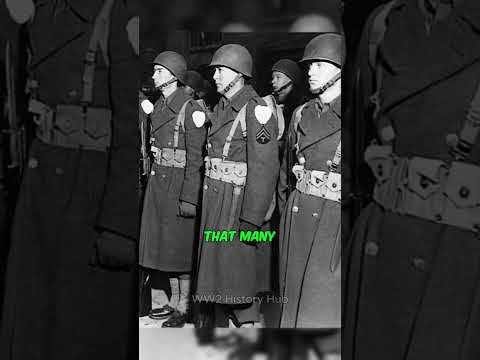
These views, delivered with Patton’s trademark bluntness, sent shockwaves through Washington. He wasn’t removed for what he achieved in war, but for what he said in peace. Within months, the general who had led armies to victory found himself sidelined, his voice silenced by the very government he had served.
But Patton’s story didn’t end there.
In December 1945, a car accident would claim his life, leaving behind a legacy as complex as the man himself—brilliant in battle, controversial in victory. A general who helped win the war, but struggled to navigate what came next.
The sidelining was swift and surgical. Patton was stripped of his beloved Third Army and reassigned to a ceremonial post in Bavaria, overseeing the collection of historical records—a bureaucratic exile designed to keep him quiet. But silence was never Patton’s forte. He continued to speak his mind, often to reporters and visiting dignitaries, warning of Soviet expansion and praising the discipline of former Wehrmacht officers. Each utterance was a grenade tossed into the delicate diplomacy of the postwar world.
Washington grew increasingly nervous. General Dwight D. Eisenhower, Patton’s longtime superior and friend, sent pointed warnings. Secretary of War Robert Patterson considered court-martial. But Patton was a hero, and public opinion was a fickle beast. To punish him too harshly would risk a scandal; to let him speak freely would undermine the fragile alliance with Moscow.
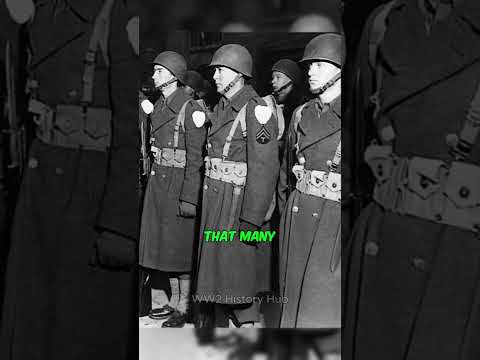
Then came the incident that sealed his fate. In a press conference in late September 1945, Patton compared the Nazi Party to the Democratic and Republican parties in the United States—a clumsy attempt to explain the mechanics of totalitarianism that was instantly twisted into headlines. “Patton Praises Nazis!” the papers screamed. The backlash was immediate and bipartisan. Calls for his resignation echoed from Congress to the Oval Office.
Eisenhower, now Army Chief of Staff, summoned Patton to Frankfurt for a private reckoning. The meeting was tense, the air thick with unspoken accusations. Patton, ever the soldier, saluted sharply and accepted his reprimand—but his eyes betrayed no regret. “I did my duty,” he reportedly said. “I told the truth. If that’s a crime, then the Army has changed.”
Behind closed doors, however, Patton was more reflective. He wrote to his wife, Beatrice, of his frustration and isolation. “I am a man out of time,” he confessed. “The war I knew how to fight is over. This peace is a stranger to me.” The letters revealed a vulnerability he never showed in public—a general who felt abandoned by the nation he had served.
As autumn turned to winter, Patton’s health began to decline. He complained of fatigue and persistent pain, but dismissed it as the aches of an old soldier. His staff noticed a new heaviness in his step, a dimming of the fire that had once driven him across Europe.
Then, on a cold December morning, Patton set out for a hunting trip near Mannheim. The roads were slick with frost, the sky a flat, unforgiving gray.
His staff car moved slowly through the countryside, Patton in the back seat, lost in thought. What happened next would become the subject of endless speculation and conspiracy theories—a collision with a military truck that seemed almost too mundane for a man of his legend.
The impact was not catastrophic—at least not at first. Patton, thrown forward against the partition, struck his head and complained of a sharp pain in his neck. “I think I’ve broken my neck,” he murmured to his driver, his voice eerily calm. The truck’s driver, a young soldier named Robert Thompson, was unharmed, and for a brief moment, it seemed the general might simply walk away with a bruise and a story.
But the injury was far graver than anyone realized. Patton was paralyzed from the neck down, rushed to a military hospital in Heidelberg where doctors worked frantically to stabilize him. Word spread through the corridors like wildfire—the old lion was down. Soldiers who had served under him stood vigil outside the ward, their faces pale with disbelief.
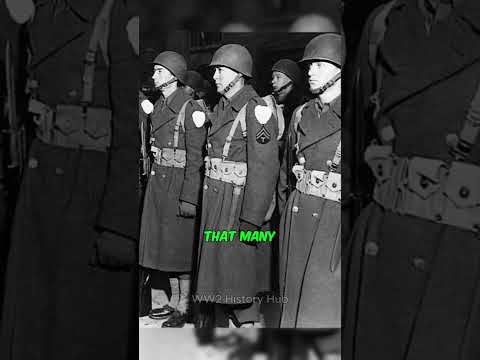
In Washington, the news triggered a quiet panic. Officials who had spent months trying to muzzle Patton now faced the prospect of his death—and with it, the uncomfortable questions that would inevitably follow. What had they done to him? Had they broken the spirit of a man who had given everything for his country? The political calculations of the past year suddenly seemed petty and cruel.
Beatrice Patton flew from Boston, crossing the Atlantic in a blur of sleepless nights and silent prayers. When she finally reached his bedside, she found her husband diminished—a shadow of the towering figure who had once commanded armies. Yet even in his weakened state, Patton’s mind remained sharp. He spoke of the war, of his men, of the unfinished business in Europe. “I should have been allowed to finish it,” he told her, his voice barely a whisper. “The Russians… they don’t understand what’s coming.”
The days that followed were a slow, agonizing vigil. Visitors came and went—old comrades, junior officers, even a few German officials who owed their positions to his quiet interventions. Each one left the hospital shaken, carrying with them the image of a legend fading before their eyes.
On December 21, 1945, George S. Patton died of a pulmonary embolism, his body finally succumbing to the injuries it could not overcome. He was sixty years old. The official cause of death was listed as heart failure, but those close to him knew better—the war had never truly ended for Patton, and the peace had killed him.
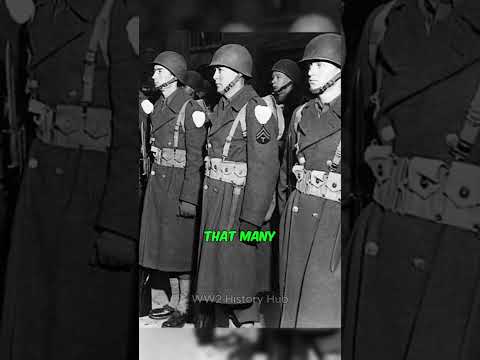
His funeral was a grand affair, filled with generals and politicians who had spent the final months of his life trying to silence him. Eisenhower delivered a eulogy that praised Patton’s battlefield genius while carefully sidestepping the controversies of his final year. “He was a soldier’s soldier,” Eisenhower said, “and his place in history is secure.” But the words rang hollow to those who knew the truth—that Patton had been abandoned by the very institution he had served with such ferocity.
In the years that followed, his legacy would be debated, dissected, and mythologized. Some remembered him as a brilliant tactician, others as a loose cannon who nearly derailed the fragile peace. But for those who had served under him, the memory was simpler—a general who never asked his men to do what he wouldn’t do himself, who led from the front, and who paid the ultimate price for speaking truths that the world wasn’t ready to hear.
The controversy did not die with him. In the decades that followed, historians would return again and again to those final months, searching for the man behind the legend. Some argued he was a casualty of his own honesty, a soldier who fought the wrong war at the wrong time. Others insisted he was a relic, dangerously out of step with a world struggling toward a new order.
Beatrice Patton spent her remaining years guarding his papers, editing his diaries, and quietly correcting the record whenever she could. She never forgave Washington for what she saw as its cold abandonment of a man who had given everything. “They used him when they needed him,” she once told a confidant, “and discarded him when they didn’t.”
In Germany, the story took a stranger turn. Veterans of the Wehrmacht who had once faced Patton across the battlefield now spoke of him with grudging respect, recalling how he had treated defeated officers as professionals rather than criminals. In the shadow of the Cold War, some whispered that Patton had been right all along—that the Soviet threat was real, and that the West had been slow to see it.
Yet the official narrative held firm. The general who had raced across France and smashed the Bulge was remembered for his victories, not his warnings. His statue stood at West Point, his name graced barracks and boulevards, and his words were quoted by officers who never quite grasped the price he paid for them.
What remains, then, of George S. Patton? A paradox, perhaps—a man who won the war and lost the peace, whose brilliance and bluntness were inseparable, whose loyalty to his soldiers never wavered even as his own country turned away. He was, in the end, a soldier out of time, fighting a war the world had already decided to forget.
And so the question lingers, unanswered and uncomfortable: when a nation asks its warriors to speak only when spoken to, and then punishes them for telling the truth—what does that say about the peace they fought to build?
Was Patton a victim of his own candor, or a warning we still refuse to hear? Share your thoughts below.
Report this article
Select a reason for reporting:






