You’ve heard that Navy SEALs are the apex predators of modern warfare—the men who took down bin Laden, who operate in the world’s darkest corners. But there’s a story the History Channel won’t tell you. A story about the day 47 legendary warriors walked into a jungle training exercise in 1969 and met a group of Australians who made them question everything they thought they knew about combat.
All 47 SEALs walked out. But only 19 volunteered for a second rotation with the Australian SAS. The other 28 requested immediate reassignment—not because they feared the enemy, but because they were disturbed by their allies. One SEAL lieutenant’s report was immediately classified. Its opening line: “We thought they were joking when they said they’d been in position for six days.” Then we found the evidence.
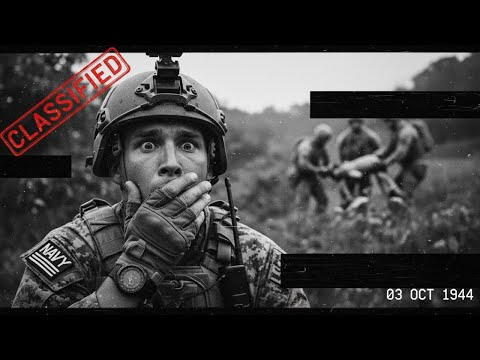
Rung Sat Special Zone, South Vietnam. October 3rd, 1969. Zero Dark Thirty. The darkness was absolute—the kind that erases depth perception and turns the world into a suffocating void. Lieutenant Marcus Webb of SEAL Team 2 had operated in this hellish mangrove swamp a dozen times. He knew the smell of rotting vegetation, the way mud tried to suck boots off with every step. He was good at this. His team was good at this. They were SEALs, after all—the best maritime special operators on the planet.
But tonight was different. Tonight, they were operating with the Australians. And from the moment Webb met them at the briefing, something felt wrong.
The Australian patrol leader—a sergeant they called Scarecrow because of his gaunt frame—explained the mission in a flat, emotionless monotone. Insert by small boat, move three kilometers inland, establish observation on a suspected Viet Cong supply route, gather intelligence for 72 hours, extract. Standard reconnaissance patrol. Webb had done a hundred of them.
What bothered Webb was how the Australians prepared. The SEALs loaded their Stoner 63 light machine guns, M16s with M203 grenade launchers, fragmentation grenades, smoke grenades, and enough ammunition to fight their way out of hell twice. Each SEAL carried approximately 80 pounds of gear. They were a walking arsenal, ready for violence at any moment.
The Australians carried almost nothing. Each man had a single rifle, maybe 200 rounds of ammunition, a canteen, and a small pack that looked half empty. No grenades visible, no heavy weapons, no radio antennas.
Webb watched as Scarecrow pulled items from his pack and left them on the dock. First aid kit reduced to bare minimum. Rations cut in half. Spare socks discarded entirely. Webb approached him, genuinely concerned. “Scarecrow, you need more ammo, mate. Three days in the bush, you might hit contact.”
Scarecrow looked at Webb with eyes that seemed to focus on something a thousand yards away. “If I fire 200 rounds on this patrol, I’ve already failed. We’re not here to fight. We’re here to watch.”
Webb laughed. He actually laughed. “Right. Watch. Okay. What happens when Charlie finds you?”
Scarecrow didn’t smile. “He won’t find us. And if he does, we’ll know about it long before he does. Then we’ll decide if he lives or dies. But he won’t find us.”
Webb thought it was bravado. Tough guy talk from a lean operator trying to impress the SEALs. This was going to be an educational experience—just not the way Webb expected.
The insertion went smoothly. Two Zodiac boats, blacked out, engines muffled, slipped into the mangrove channels at 0200 hours. The SEALs moved with practiced efficiency, weapons at ready, spacing perfect, scanning sectors with night vision. They were a coordinated machine.
The Australians moved differently. They didn’t scan with heads on a swivel. They moved slowly, almost lazily, as if taking a stroll through a park. But Webb noticed something odd. Every few steps, Scarecrow would stop completely. Not crouch, not take a knee—just stop. He would stand there for thirty seconds, sometimes a full minute, then continue moving. Webb had no idea what he was doing.
After 400 meters, Webb keyed his radio to check in with his team. The click of the handset seemed thunderous. Scarecrow turned, moved back to Webb with movements that made no sound, and put his hand over the radio. He didn’t speak. He just shook his head slowly, then pointed at the radio, then made a slashing motion across his throat. “No radio.”
Scarecrow pulled out a waterproof notepad and wrote in tiny letters: “Radio only for emergency extraction. Sound travels 800 meters in this terrain. Every transmission tells them exactly where we are.”
Webb wanted to argue. SEALs used encrypted radios. But something about the way Scarecrow looked at him made Webb shut his mouth and nod.
Three hours into the movement, Webb started to understand he had been catastrophically wrong about these men. They had covered barely two kilometers, but it wasn’t about speed. Every single step the Australians took was deliberate, calculated. They would place the outside edge of their boot down first, roll the weight inward, feel for sticks, then commit to the step. It took three to four seconds per step. At that pace, they moved maybe 100 meters per hour.
Webb’s team was getting frustrated. One of his SEALs, Rodriguez, keyed his radio to complain. Webb shot him a look and Rodriguez backed off, but the frustration was visible. They were operators, not statues. This glacial pace felt wrong, inefficient, cowardly even.
Then, just before dawn, everything changed.
Scarecrow froze—not the normal stop-and-listen, freeze. His entire body went rigid, one foot still in the air mid-step. He held that position, balanced on one leg like a heron, for over two minutes. Webb watched, mesmerized, as Scarecrow slowly, incrementally, lowered his raised foot without making contact. He shifted his weight backward, reversed his last step, and signaled the patrol to halt and go prone.
Webb dropped. They lay in the mud, mosquitoes immediately swarming. They waited five minutes. Ten. Twenty. Webb had no idea what they were waiting for. He could hear nothing except normal swamp sounds. Then he heard it—faint, so faint he almost missed it. The sound of wood knocking against wood. Then voices speaking in low Vietnamese.
Webb’s heart rate spiked. The enemy was close—very close.
Twenty meters away, barely visible in the gray light of approaching dawn, a sampan moved through the channel. Four Viet Cong soldiers, weapons slung, relaxed, talking among themselves. They passed within spitting distance of the patrol’s position. The SEALs didn’t breathe. The Australians didn’t exist. They had become part of the swamp.
The sampan continued on, voices fading. After ten more minutes of absolute stillness, Scarecrow slowly raised his head and signaled to continue.
When they stopped for a security halt an hour later, Webb crawled over to Scarecrow. “How did you know they were coming? I didn’t hear anything.”
Scarecrow looked at him with those thousand-yard eyes. “The bird stopped singing 400 meters east, then 300, then 200. Something was moving toward us, disturbing the canopy. The sampan was the only thing that made sense. I didn’t know for certain until I heard the wood, but the jungle told me they were coming five minutes before they arrived.”
Webb stared at him. The birds. The fucking birds. Webb had been listening to birds his entire patrol and never once thought about what their behavior meant. He had been trained to listen for enemy movement, for weapons, for voices. He had never been trained to listen to the jungle itself.
And in that moment, Lieutenant Marcus Webb realized he didn’t actually know how to operate in the jungle. He knew how to fight in it, but he didn’t know how to become part of it.
They reached the observation point at 1000 hours—eight hours after insertion for a three-kilometer movement. By SEAL standards, it was embarrassingly slow. By Australian standards, it was exactly right.
The position overlooked a trail intersection where intelligence suggested the Viet Cong moved supplies every three to four days. The mission was simple: observe, record, photograph if possible, gather intelligence. Do not engage unless compromised. Standard reconnaissance doctrine for both units.
The Australians immediately began doing something that made Webb’s jaw drop. They didn’t dig fighting positions. They didn’t establish fields of fire. They didn’t set up a security perimeter with overlapping sectors. Instead, they arranged themselves in the existing vegetation in a pattern that made them completely invisible.
One man positioned himself inside a hollow log. Another lay beneath the exposed root system of a mangrove tree, his body contorted to fit the natural space. Scarecrow lay in a shallow depression filled with leaf litter, and over the course of twenty minutes, he buried himself using only his hands, pulling debris over his body until only his eyes and the barrel of his rifle were visible.
The fourth Australian—a man they called Dingo—did something that disturbed Webb on a visceral level. He stripped down to his underwear, covered his entire body in mud from the swamp, and then put his uniform back on over the mud. The stench was immediate and overpowering, like rotting meat mixed with sulfur. Webb’s SEAL corpsman actually gagged.
Dingo saw the reaction and spoke for the first time since insertion. His voice was barely a whisper. “Smell is the first sense. Humans smell like humans—soap, deodorant, toothpaste, gun oil, clean fabric. The enemy can smell you from 100 meters if the wind is right. If I smell like the swamp, I’m invisible.” He smiled, showing teeth that hadn’t been brushed in days. “Welcome to the real jungle, mate.”
The SEALs set up their position with professional competence. They established good concealment, interlocking fields of fire, and maintained security in shifts. It was textbook special operations. But watching the Australians, Webb started to feel like he was watching a different species operate. These men weren’t setting up a military position. They were disappearing.
Within thirty minutes, Webb couldn’t locate three of the four Australians, even though he knew exactly where they were. They had become ghosts.
The first twenty-four hours passed in relative silence. The SEALs rotated security, ate their rations, maintained their weapons, whispered quietly when necessary. Professional, disciplined, good soldiers doing a good job.
The Australians did not move. Webb watched Scarecrow’s position for eleven straight hours and never saw him shift his weight, adjust his rifle, or even appear to breathe. At one point, Webb became convinced the man had died. He signaled Rodriguez to crawl over and check.
Rodriguez moved carefully, using proper low-crawl technique, taking twenty minutes to cover fifteen meters. When he reached Scarecrow’s position and was about to tap him on the shoulder, Scarecrow’s hand shot out and grabbed Rodriguez’s wrist with a grip like iron. Rodriguez nearly screamed.
Scarecrow turned his head with movements that seemed mechanical and whispered a single word. “Don’t.”
Rodriguez crawled back, shaking. “LT, that dude is not human. He was awake the whole time. He was watching me crawl toward him, and he let me get within touching distance before he moved. He’s been laying in that pile of leaves for eleven hours, and I swear to God, he hasn’t blinked.”
Webb nodded slowly. He was starting to understand. These men had trained themselves to shut down their bodies, to enter some kind of meditative state where they could remain alert while appearing completely inactive. It was a level of discipline Webb had never encountered. Not in SEAL training. Not in combat. Not anywhere.
On the second day, the Viet Cong came.
Not a small patrol—a reinforced company. Maybe forty to fifty men moving in tactical formation down the trail, weapons at the ready. They were alert, scanning the jungle, moving with the confidence of soldiers who owned this terrain.
The SEALs tensed, fingers moving to triggers, ready to spring the ambush if the order came. This was it. This was what they trained for—a target-rich environment. They could call in gunships, drop artillery, light these bastards up, and rack up a massive body count.
Scarecrow’s hand appeared from the leaf litter, signaling a simple message. Do nothing. Watch only.
Webb wanted to argue. This was an opportunity—fifty enemy combatants practically begging to be destroyed. But he trusted Scarecrow enough by now to hold his fire.
The SEALs watched, every muscle tense, as the enemy company walked past their position at a distance of less than thirty meters. Close enough to see their faces. Close enough to hear their conversations. Close enough to throw a grenade into their formation.
But they did nothing. They watched. And the Australians recorded everything. Scarecrow had somehow produced a tiny camera and was photographing individual soldiers. Dingo was sketching the unit’s formation and equipment in a waterproof notepad. Another Australian, hidden in the hollow log, was counting them and noting rank insignia.
They weren’t hunting these men. They were studying them like scientists observing animals in the wild.
The enemy company passed. The jungle returned to its normal rhythm, and Scarecrow signaled to continue observing. Webb was confused, frustrated, and impressed all at the same time. The Australians had just let a company-sized enemy force walk away unmolested. In SEAL doctrine, that was a failure. You find the enemy, you kill the enemy. That’s the job.
But six hours later, Webb understood why Scarecrow had held fire.
Another enemy element appeared on the trail. Smaller—only eight men—but they carried heavy loads and, behind them, walked an NVA officer in a clean uniform, rank insignia visible even at distance. A high-value target.
Scarecrow signaled: “This one. This is the one we take.” The Australians shifted incrementally into perfect firing angles. No rush. No urgency. The officer walked closer, now twenty meters away, utterly unaware he was about to die.
One shot. The officer dropped. Two bodyguards spun—Dingo fired twice. Both fell. Three seconds. Three dead. Surgical.
Then the Australians did something that made Webb’s blood run cold. Scarecrow walked to the corpse, propped it upright against a tree, crossed its arms, and tucked an Ace of Spades into the collar. A grotesque tableau. Theater. A message written in bodies.
Two hours later, a recovery team found them. One soldier vomited. Another screamed. They grabbed their dead and ran—and the story would spread, mutating, growing. Fear, Scarecrow explained, removes 300 soldiers from the war for a month.
Webb understood now why 28 SEALs requested reassignment. Not fear of the enemy—fear of becoming what the Australians already were.
So here’s the question the Pentagon buried: if being the best means losing your humanity, would you still volunteer?
Report this article
Select a reason for reporting:






