April 1945. The Soviet guns could be heard from the Oder, just 70 kilometers from Berlin. Inside the Führerbunker, the air was thick with denial. General Gotthard Heinrici, a man the Nazi leadership detested but desperately needed, had been summoned to deliver a truth no one wanted to hear. He entered the small room and saw Hitler for the first time in months. What he saw chilled him to the bone.
Heinrici later described the German leader as “a man who had no more than 24 hours to live”—a walking corpse. The general hated these meetings, considering them a waste of time. He preferred the front, where soldiers still fought and died. But today, he had no choice. He had to make them understand.
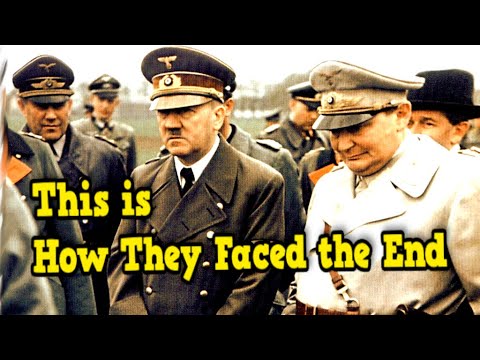
The conference began. Krebs, the chief of operations, gestured for Heinrici to speak quickly so he could return to the front. Heinrici’s intention was clear: to convey that the situation was desperate, that resisting the next Soviet offensive was impossible. But he couldn’t say it directly. Not to this audience. So he started slowly, describing the two armies defending the Oder.
He spoke of Busse’s Ninth Army, positioned where the main Soviet attack was expected. Efforts had been made to strengthen it, but the Third Panzer Army on the northern flank was in precarious condition. It couldn’t contain the enemy onslaught once the river waters receded. The shortages were total: weapons, ammunition, tanks, fuel, experienced soldiers. “The best Panzer units had been sent to Prague,” Heinrici explained, “leaving no reserves to plug any breakthrough.”
The room fell silent. These men were not used to such blunt clarity, especially in Hitler’s presence. Krebs responded dismissively: “Don’t worry, you’ll receive all necessary reinforcements.” Heinrici knew it was an empty promise. He decided to raise the tone.
“My Führer, I do not believe the forces on the Oder front will withstand the enormous attacks the Russians are going to launch,” he said. “The forces we have now are just chips of the old military capacity of our army.” Most units lacked training and combat experience. Officers were civil servants promoted in haste. Ammunition and weapons were scarce. Hitler responded calmly: “Everything necessary must be done to prepare these formations. We still have time.”
Heinrici shook his head. It was too late. The little extra training wouldn’t give them real combat experience. A debate ensued. Hitler claimed the Soviets were throwing in their last reserves—poor quality men who would balance the situation. Heinrici corrected him: the Soviets had very experienced troops and were not at their limit. “I must warn you,” Heinrici said, raising his voice again, “in view of the transfer of armored units to Prague, I have no reserves. After the heavy Soviet bombings, our troops will withstand the initial impact maybe for a while. Then they will be reduced little by little without replacements. Everything will be lost. In a few days, everything will be over.”
Silence. Then Göring spoke: “My Führer, I will immediately place 100,000 Luftwaffe men at your disposal. In a few days they will appear on the Oder front.” Not to be outdone, Himmler added: “The SS has the honor of providing another 25,000 fighters.” Dönitz declared: “I will send 12,000 sailors who will immediately leave their ships.” Heinrici watched in disbelief. “It had become an auction,” he later said, “seeing who could offer the most.”
Hitler turned to him: “Well, you already have 150,000 men—about 12 divisions. There you have your reserves.” Heinrici couldn’t contain himself. These troops were not prepared for land combat. They would only increase casualties. His words did not sit well with Himmler, Göring, or Dönitz, who insisted their troops were of the highest quality. Heinrici replied that all those men would be sacrificed without positive result. He only wanted his armored formations back. Hitler refused.
Finally, Hitler said: “The most important thing is for you to maintain faith in victory. Your defeatist character is of no use.” His last phrase to Heinrici was: “I tell you, Colonel General, if you are aware that this battle must be won, it will be won. If you manage to transmit the same belief to your troops, you will achieve victory and with it the greatest success of the war.” It was the last hope Hitler clung to—repelling the Soviet attack to reach a ceasefire.
Heinrici gave up. He had failed to make them understand. He picked up his papers and left. Outside the bunker, he told his assistant: “It’s no use anymore. Everything is useless. All useless.”
A few days later, on April 8th, another meeting took place—this time with Hermann Göring as the protagonist. Göring invited Heinrici to lunch at his private palace, Carinhall, 30 kilometers from the Oder. The Reich Marshal was nervous. The Soviets were approaching, and his luxurious estate was in their path. But the invitation was not just about strategy. It was about settling scores.
The bad blood between the two men went back years. Heinrici had never forgiven Göring for the Luftwaffe’s failure to supply the Sixth Army at Stalingrad in 1942—promises made and never kept, an entire army starved and destroyed while Göring dined on fine china. The general had said so publicly, and Göring had never forgotten the humiliation. Now the Reich Marshal accused Heinrici of insubordination, of ignoring orders, of insulting his parachute divisions in front of Hitler. “As punishment,” Göring declared, “I will remove them from your command and send them south under Schörner—a real soldier.”
Heinrici said nothing. He knew Schörner was a fanatic, not a soldier. But arguing was pointless. They sat down to lunch in the vast, marble-floored dining hall of Carinhall, surrounded by stolen paintings and hunting trophies.
Göring attacked again, this time with details from his recent tour of the Oder front. “I have visited all the armies under your command,” he said indignantly. “In one sector after another I found men who did nothing. I even saw some hiding, playing cards. Others from the labor organization didn’t even have shovels. In some places soldiers had no field kitchens. In others, almost no defenses had been built. Everywhere I saw your men lazing around, going from place to place without doing anything. I intend to tell the Führer all of this.”
Heinrici felt his jaw tighten. The anger rose in his chest like a wave. He wanted to unleash everything—the years of empty promises, the Stalingrad disaster, the fat man’s vanity and incompetence. But he restrained himself. He is not worth it, he thought. Nothing is worth it anymore.
When lunch finally ended, Heinrici rose from his chair and prepared to leave. At the door, he paused and looked back at the magnificent estate—the gardens, the columns, the lakeside view. “Hopefully my slackers can save this beautiful estate of yours from the battles to come,” he said quietly.
Göring stared at him with cold fury. Then he turned and walked back into his mansion without a word.
Heinrici later remarked that if Göring had asked him how long Carinhall would stand, he would have answered: not more than a week. He was nearly right. The Soviet offensive under Zhukov began on April 16th, though it fell slightly south of Carinhall. Göring benefited from Rokossovsky’s army launching a few days later—his troops had less time to organize. But on April 28th, Carinhall was blown to the ground by Göring’s own order. He would not let his most prized mansion fall into Soviet hands.
The Reich Marshal spent the last days of the war in another residence in the Alps, under house arrest and surveillance on Hitler’s orders. The telegram he had sent to the bunker had been interpreted as a bid for power. As everyone knows, Göring surrendered to the Western Allies, was imprisoned, and tried at Nuremberg—possibly committing suicide just before his official execution.
But all of that lay in the future. For now, Heinrici returned to the Oder front, to his command post, to the men he knew were doomed. The guns were already rumbling in the distance. The waters of the river were receding. And the clock was running out.
The days that followed the lunch at Carinhall were a blur of frantic preparation and quiet despair. Heinrici returned to his command post and threw himself into his work, inspecting defensive positions, reorganizing what little he had, and pleading with Berlin for reinforcements that never came. The 150,000 men promised in the bunker—the Luftwaffe ground troops, the SS fighters, the sailors—arrived in dribs and drabs, and what Heinrici saw confirmed his worst fears.
They were not soldiers. They were clerks, mechanics, cooks, and teenagers, many of them without proper uniforms or weapons. Some had never fired a rifle. Others had never dug a trench. “They were lambs being led to slaughter,” Heinrici would later write, “and I was the one holding the rope.”
He tried to integrate them into his defensive lines, but there was no time. The Soviet build-up on the Oder was massive—thousands of tanks, millions of men, artillery pieces lined up wheel to wheel. Heinrici’s scouts reported movement day and night. The final offensive was coming.
On the morning of April 15th, Heinrici stood on a hill overlooking the Oder and watched the Soviet positions through his binoculars. He could see the glint of metal, the movement of troops. He knew what was coming. That evening, he called his corps commanders together one last time.
“Gentlemen,” he said quietly, “tomorrow morning the Russians will attack with everything they have. We cannot stop them. We can only delay them. I want every man to fight as long as he can, then fall back. No heroic last stands. No pointless sacrifices. We buy time—nothing more.”
One of his commanders, a young colonel, asked: “And what are we buying time for, General?” Heinrici looked at him for a long moment. “For the people in Berlin to realize the truth,” he said. “Though I doubt they ever will.”
At 3:00 AM on April 16th, the Soviet artillery opened fire. It was the largest bombardment in history—over 40,000 guns firing in unison, a roar so loud it could be heard in Berlin. The earth shook. The sky turned red. Heinrici’s headquarters was rocked by the concussion, dust falling from the ceiling as he stood over his maps.
The first Soviet attacks came at dawn, waves of infantry and tanks rolling forward through the smoke and dust. Heinrici’s men fought back—the Ninth Army, the Third Panzer Army, the remnants of a dozen shattered divisions. They held for hours, then days. But the line began to crack.
On April 18th, Heinrici called Berlin. He reached Krebs. “The front is broken,” he said flatly. “We cannot hold. I am requesting permission to withdraw.” There was a long pause. Then Krebs replied: “The Führer orders you to hold your positions. Every meter must be defended.”
Heinrici closed his eyes. “Then the Führer will have his last stand,” he said, and hung up.
He knew what would happen now. The Soviets would pour through the gap, surround Berlin, and crush it. The war was lost—truly, finally lost. And yet the killing would go on. Heinrici looked at the map one last time, then turned to his staff. “Burn the papers,” he said. “We’re moving.”
Heinrici’s retreat became a rout. Soviet tanks swept past shattered German positions, and the road to Berlin lay open. In the bunker, Hitler still moved phantom divisions across his map, unaware that the men he commanded no longer existed. “The Führer will have his last stand,” Heinrici had said—and so he did.
On April 30th, as Soviet shells rained on the Chancellery, Hitler took his own life. Göring, far away in the Alps, learned of it by radio. The auction of armies was over; the bidders were dead or captive.
Heinrici himself surrendered to the Americans, a general who had told the truth and been ignored. “Everything is useless,” he had said outside the bunker. He was right.
What do you think—was Heinrici a coward for retreating, or the only honest man in the room?
Report this article
Select a reason for reporting:






