The jungle was alive with the sound of death. On the night of August 23, 1968, the air at Forward Operating Base 4 grew thick with the stench of cordite and fear as a barrage of mortar fire shattered the darkness. For the elite Green Berets stationed there, this was no ordinary attack—it was the beginning of a nightmare that would etch itself into the annals of military history.
“The ground began to shake when the next trip flare went off. They were under attack.” The words of a survivor echo the chaos that erupted as Viet Cong fighters, shadows in the night, launched a ferocious assault. The base, a strategic hub for covert operations deep in hostile territory, was suddenly a cauldron of explosions and gunfire.
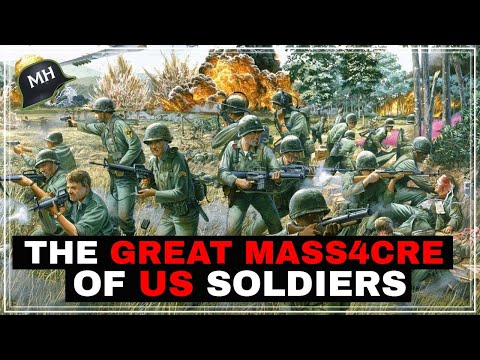
The Viet Cong had observed FOB 4 for days, meticulously noting patrol patterns and weaknesses. They moved like phantoms through the dense foliage, their knowledge of the jungle their greatest weapon. As the first rockets streaked across the sky, the American soldiers scrambled to their posts, hearts pounding, minds racing. “Get up here! They’re coming!” shouted a young lieutenant, his voice barely audible over the din.
The battle raged with unrelenting fury. Explosions lit the night like hellish fireworks, casting grotesque shadows on the faces of men fighting for their lives. The Green Berets, though outnumbered, fought with a ferocity born of desperation and training. They held their ground, but the enemy’s relentless assault threatened to overwhelm them.
In the midst of the chaos, memories of home flickered—a mother’s smile, a lover’s touch—only to be shattered by the crack of rifle fire. The Viet Cong, undeterred by the defenders’ resistance, pushed forward, their determination matched only by the Americans’ will to survive. “We thought we were okay for a couple of tanks,” one soldier later recalled, “but they had never been used before against tanks. This was the first time in the history of the weapon that they were ever used.”
As the night wore on, the base became a maelstrom of destruction. The medics worked frantically, their hands stained with blood, while the living stepped over the fallen to repel yet another wave of attackers. The jungle, once a silent observer, now echoed with the screams of the wounded and the thunder of war.
But this was only the beginning. The ambush at FOB 4 would become a symbol of the war’s brutality, a single day that cost the United States its highest casualty toll in the conflict. And as the first light of dawn crept through the canopy, the survivors knew that nothing would ever be the same.
The Viet Cong assault had been meticulously planned, and as the initial barrage lifted, waves of fighters surged toward the perimeter wire. “They came from everywhere,” recalled Sergeant First Class Miller, his voice still trembling decades later. “One minute it was quiet, the next the jungle was vomiting men with rifles.” The defenders, though elite, were stretched thin, and the enemy’s ferocity was unmatched.
Inside the command bunker, Lieutenant Colonel Harris radioed for reinforcements, but the nearest relief column was hours away. “We’re on our own,” he muttered, gripping the handset. Outside, the Green Berets fought with everything they had—M16s chattering, grenades arching into the dark, and the occasional whoosh of a LAW rocket. The Viet Cong, however, seemed endless.
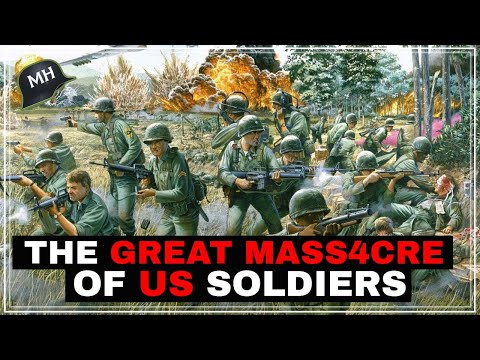
One particularly harrowing moment came when a sapper team breached the eastern perimeter, lobbing satchel charges into a bunker. The explosion killed three Americans instantly and wounded five more. “I saw men I’d trained with for years torn apart like rag dolls,” said Staff Sergeant Rodriguez, his eyes hollow. “That’s when I knew we were in for the fight of our lives.”
Despite the carnage, the Green Berets refused to break. They consolidated their positions, forming a tight defensive ring around the command center. Medics, under fire, dragged the wounded to safety, while others manned the radios, calling in artillery strikes on the enemy’s approach routes. The jungle lit up with the thunder of distant howitzers, but the Viet Cong kept coming.
As the battle entered its third hour, ammunition began to run low. Soldiers scavenged magazines from the fallen, their faces grim. “We were down to our last grenades,” remembered Specialist Davis. “I thought we were done for.” But then, a stroke of luck: a flight of F-4 Phantoms, diverted from another mission, roared overhead, dropping napalm on the enemy’s flank. The jungle erupted in a wall of fire, and the Viet Cong assault faltered.
Seizing the moment, the Green Berets launched a counterattack, pushing the enemy back through the wire. The fighting was hand-to-hand in places, knives and rifle butts against bayonets. “It was primal,” said Miller. “Kill or be killed.” By dawn, the Viet Cong were in full retreat, leaving behind dozens of bodies and the stench of defeat.
But the cost was staggering. Seventeen American soldiers lay dead, their bodies draped in ponchos, while thirty-two Viet Cong fighters were counted among the fallen. The base, though battered, still stood. “We held,” Harris later wrote in his after-action report, “but at what price?”
The ambush at FOB 4 sent shockwaves through the American command. It was a stark reminder that even the most elite units were vulnerable in the jungles of Vietnam. The survivors, many of them wounded, were evacuated to hospitals, their war over. But the memories would haunt them forever.
For the men who walked away, the silence after battle was worse than the noise. “You don’t hear the screams anymore, but you still see the faces,” Davis admitted. He would wake for years afterward with the smell of napalm in his nostrils, convinced the jungle was closing in again.
The official report called it a defensive victory. The men who lived it called it something else entirely. “We didn’t win anything that night,” Miller said flatly. “We just survived it.”
News of the ambush reached the American public through grainy photographs and terse wire reports, but it landed on ears already numb from the Tet Offensive months earlier. The country had begun to turn its back on the war, and FOB 4 became another grim statistic in a conflict that seemed to have no end.
At the Pentagon, the casualty figures were analyzed, debated, and filed away. Seventeen dead in a single night at an outpost few Americans had ever heard of. For the families, it was everything. For the war machine, it was a number.
Yet the men of MACV-SOG drew a different lesson. “They hit us where we thought we were strongest,” Harris wrote in a confidential memo. “We must assume the enemy is always watching, always patient, always willing to pay a price we are not.” The base was reinforced within weeks, its perimeter widened, its watchtowers doubled.
But the jungle did not forget. Nor did the Viet Cong. The survivors of the assault melted back into the darkness, carrying with them the knowledge that they had struck the Americans at their most sacred stronghold and lived to tell of it.
For the soldiers still stationed at FOB 4, every rustle of leaves, every snapped twig, carried a new weight. “You stop trusting the quiet,” Rodriguez said. “The quiet is when they come.”
In the months that followed, the war ground on. New faces arrived to replace the fallen, young men with fresh boots and nervous eyes. The veterans who remained taught them what they could—how to listen to the jungle, how to read the shadows, how to fight when the darkness itself seemed to be shooting at you.
But some lessons could only be learned in blood.
The ambush at FOB 4 faded from the headlines, but it never faded from the men. Years later, long after Saigon fell and the jungle swallowed the base back into itself, the survivors still gathered at reunions where the handshakes lingered a beat too long. “We don’t talk about the war,” Miller said. “We talk about each other. That’s enough.”
Historians would later argue about what the battle meant—whether it was a tactical victory or a strategic warning shot. But for the seventeen families who received a folded flag, the debate meant nothing. The war had already taken what it came for.
And in the dense green heart of Vietnam, where the trees have grown tall over old foxholes and the rain has washed away the last traces of cordite, the jungle keeps its secrets. The men who fought there know the truth: “The quiet is when they come.”
So the question remains, hanging in the humid air like smoke from a distant fire—when the jungle goes silent, do you trust the stillness, or do you reach for your rifle?
Report this article
Select a reason for reporting:






