For over half a century, Hollywood whispered Angie Dickinson’s name like a secret code—the woman who knew every powerful man’s truth. But only in her final years did she start lifting that glittering curtain, spilling stories nobody dared to tell. And one name refused to fade from her memory: Dean Martin, the smooth-talking legend with a glass in his hand and a grin that could melt ice.
Behind the fame and charm, Angie carried the hidden tales of the most untouchable names in showbiz. Now, she’s breaking her silence loud and clear—and her confessions peel back the layers of Dean’s world in ways that will shock even his most devoted fans.
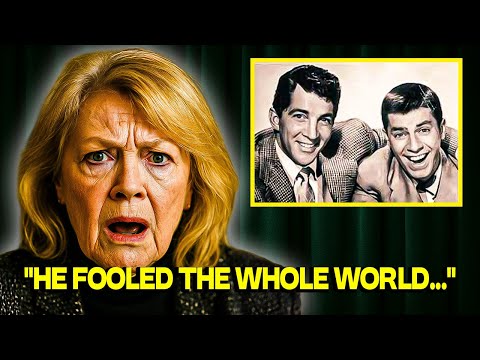
“I never really understood Dean,” she admits. “He was a mystery even Hollywood couldn’t unlock.” For decades, Angie stood beside the brightest lights in Hollywood, smiling for cameras while hiding what she knew. As one of Dean’s closest friends, she watched the real man behind the icon—a man layered in charm, pain, and secrets that no one dared expose until now.
To the world, Dean Martin was the man with endless charm, smooth voice, perfect smile, always in control. But when the curtain dropped, those close to him saw something else. A man wrapped in shadows, secrets, and silent contradictions.
The gossip never stopped in the 1960s, especially whispers about his love life that few dared to mention out loud. Hollywood, drenched in glamour and lies, protected its golden image like a sacred treasure. It was a world where the spotlight blinded everyone, filled with late-night parties, hidden affairs, and smiles that disguised the truth.
While stars like Frank Sinatra and Sammy Davis Jr. laughed their way through public scandals, Dean moved differently—quiet, mysterious, even a little hard to read. By the time Angie worked with him on Rio Bravo in 1959, people were already whispering, “What’s really up with Dean?”
His charm on screen was undeniable, but off camera, he was unpredictable, never staying long at parties, slipping away like smoke before midnight. Angie saw what others missed. He didn’t crave chaos or attention. He stayed in his own lane, calm yet untouchable.
Even those closest to him couldn’t fully unlock who Dean Martin really was. He was distant, reserved, and full of unanswered questions that left people guessing. During filming, Angie felt drawn to his quiet intensity. It was magnetic but puzzling, and as rumors grew louder, Hollywood insiders started asking behind closed doors, “Was Dean Martin hiding something?”
Some gossip columns even hinted at unusually close ties with his Rat Pack brother, Sammy Davis Jr. Even among Hollywood’s biggest legends, Dean Martin stood apart. His quiet distance from women and his habit of slipping out of parties early only made the whispers louder.
Rumors kept circling that his ties with certain men in the Rat Pack came from a kind of closeness no one could quite explain. Behind the scenes, Angie often found herself asking the same questions during late-night chats with other stars. She couldn’t figure Dean out. He wasn’t mysterious because he lacked emotion. He was mysterious because he hid it so perfectly.
Angie once said that being near him felt like standing in front of an invisible wall. He was warm enough to pull you in yet distant enough to keep you guessing. Privacy wasn’t something Dean practiced—it was part of his DNA. Even as Hollywood buzzed with endless chatter about his coldness, his lonely nights, and the endless stories people made up, Angie sensed the truth. What the world saw on stage was only half of him. The other half stayed locked behind charm, music, and silence that only a few could sense but never touch.
Dean Martin’s world sparkled bright for the cameras, yet behind that glow, there were shadows only a few dared to notice. And now, as Angie finally breaks the silence, the curtain lifts on secrets Dean took to his grave.
But before the truth about their own hidden romance could surface, there was another story—one that began with a friendship that defined an era and ended in a silence that lasted twenty years.
Their friendship didn’t just fade—it shattered into a silence so deep it was as if Dean Martin and Jerry Lewis had never shared a single laugh together. From 1946 to 1956, they were Hollywood’s unstoppable duo, the kings of comedy who ruled movies, radio, and television with unmatched chemistry and timing. Together, they made over 16 films that had America roaring with laughter, but behind those smiles, cracks were already forming.
What the world saw was magic, but what brewed backstage was tension. Two men cut from completely different worlds were bound to collide sooner or later. Jerry Lewis, hailed as the father of modern comedy, lived and breathed perfection. Before every show, he’d rewrite scripts, fine-tune jokes, and rehearse until exhaustion, chasing flawlessness like an obsession. Every gesture, every punchline had to land just right, no matter the cost.
Dean Martin, on the other hand, was the complete opposite—cool, easygoing, and effortlessly funny. Dean didn’t care for all the rules and routines. To him, the magic came from being natural. Walk on stage, do your thing, make them laugh, and move on. He couldn’t stand the endless rehearsing or the pressure of Jerry’s perfectionism. It drained him, stripped the fun right out of the act.
As time went on, that creative clash turned personal. What started as small differences began to cut deep. Every disagreement left another mark. Even with all their fame and fortune, the gap between them only grew wider. Behind the spotlight and the applause, the laughter that once united them was slowly turning into the silence that would tear them apart.
It was only a matter of time before Dean and Jerry’s differences exploded. Jerry Lewis, the man who worshipped perfection, started seeing Dean Martin as careless, even lazy—someone who didn’t care enough to polish his craft. They were total opposites in every sense. Jerry was a lightning bolt of energy, obsessed with precision and control, while Dean lived by instinct—smooth, spontaneous, and never one to overthink anything.
Their clashing work styles turned every rehearsal into a silent battle. Jerry constantly pushed to rewrite scenes, tweak jokes, and fine-tune timing, but Dean brushed it off like it was nothing. While Jerry spent hours drilling lines and rehearsing endlessly, Dean preferred to stroll in, deliver his part with that natural charm, and call it a day.
To Jerry, it felt like disrespect. He was pouring his soul into every detail while Dean acted like the magic just happened by itself. Each ignored suggestion chipped away at Jerry’s patience. The tension kept boiling until Jerry couldn’t hold it in anymore. He felt betrayed, like Dean had checked out of the partnership they’d built together. And to make things worse, the public’s praise only deepened the wound. Critics hailed Jerry as a comic genius, while Dean was reduced to “the guy next to him.” That cut deep. Dean’s pride couldn’t take it.
Dean’s calm attitude, his refusal to chase perfection, and his quiet rebellion against Jerry’s control became too much to ignore. Their worlds no longer fit together. As rehearsals turned colder and Jerry’s pressure grew heavier, Dean began to pull back—emotionally, mentally, completely. That slow withdrawal became the spark that ended it all.
On July 24th, 1956, at the legendary Copacabana, Martin and Lewis performed together for the very last time. The night that closed an era of laughter and left an entire audience stunned in silence. That final night at the Copacabana shimmered with lights and applause, yet underneath the glamour, the air was ice cold. When the curtain fell, Dean Martin didn’t say a single word to Jerry Lewis—no handshake, no “good job,” no goodbye. He just walked straight out the back door into the night, leaving everything they’d built behind without even glancing back.
The silence was deafening—sharp, final, and impossible to ignore. That wasn’t just the end of a show; it was the death of a brotherhood that had once lit up Hollywood. The silence between them didn’t last a few weeks or months—it stretched for 20 long years. Two entire decades of nothing. No calls, no letters, no chance meetings. Dean shut the door on Jerry completely, and once Dean closed the door, he never opened it again.
Angie Dickinson once summed it up perfectly when she said, “When Dean closes a door, he never opens it again.” That was Dean’s way—quiet, proud, and absolute. Whenever he was hurt or disappointed, he didn’t argue, he didn’t explain. He just vanished. That same cold finality that ended his partnership with Jerry would echo through other relationships in his life, too.
The aftermath of their breakup left a scar that never healed. For 20 years, there were no reunions, no apologies, no closure—just two legends walking separate paths under the same Hollywood sky. Dean Martin went on to conquer fame alone, his charm shining brighter than ever, but deep down, that split with Jerry Lewis remained an invisible wound, one that success could never truly cover.
While Dean moved forward without looking back, Jerry Lewis struggled in the aftermath. Fame began to slip through his fingers as he fought to reclaim the glory they once shared, all while feeling deeply betrayed. Angie Dickinson, who had watched their partnership fall apart, saw it clearly. Dean Martin was a man who could love deeply, but once he decided to walk away, that was it. No one on Earth could change his mind.
Dean’s silence wasn’t coldness—it was finality. He let the past dissolve quietly, never to be reopened again. That unspoken distance between Dean and Jerry became one of the deepest wounds in Dean’s life, a cut that time could never stitch back together. Even if they had lived to be a hundred, that fracture would have stayed frozen forever.
And then there was the other fracture—the one Angie kept closest to her chest. On the set of Rio Bravo, something real unfolded between them, quiet and undeniable. “If those two aren’t dating, then Hollywood’s running out of magic,” producer Jerry Bresler joked. But Dean and Angie never confirmed a thing.
She later called what they had “sweet but fragile.” A love never labeled, never flaunted—just protected. Dean hated noise, and going public would have brought exactly that. So they kept it sealed, and the silence became the heartbeat of their story.
Because silence was Dean’s language. He used it to end things with Jerry, to shield himself from the mob’s smoky rooms, to keep his family at arm’s length. His son Dean Paul said it best: “My father was in the room, but his mind was somewhere far away.”
Angie saw it too. “Dean always lived in his own world, never letting anyone in—not even the people he loved.” The king of cool, adored by millions, was quietly trapped behind his own walls.
So was he the ultimate performer, or a lonely soul lost inside his own legend? Maybe both. Maybe that’s the truth Angie finally set free.
What do you think—was Dean Martin a master of illusion, or a prisoner of it? Tell us in the comments below.
Report this article
Select a reason for reporting:






