In the sweltering darkness of Phuoc Tuy Province, February 1966, the Viet Cong high command was drowning in paranoia. Their most secure supply convoys and mail runners were vanishing without a trace, obliterated with surgical precision by five-man Australian patrols that seemed to materialize from the jungle itself. Convinced that the Allies had deployed secret surveillance technology or turned a high-level traitor, Viet Cong generals launched desperate internal purges to explain the unexplained killings.
How did a handful of Australian Special Air Service (SAS) operators uncover the Viet Cong’s secret routes and predict their every move with near-prophetic accuracy, while half a million regular soldiers failed? The answer begins deep in the jungle, where sunlight never touched the ground—a dark, humid, green world teeming with danger at every step. Something strange was about to happen. Something that would keep Viet Cong generals awake for years.
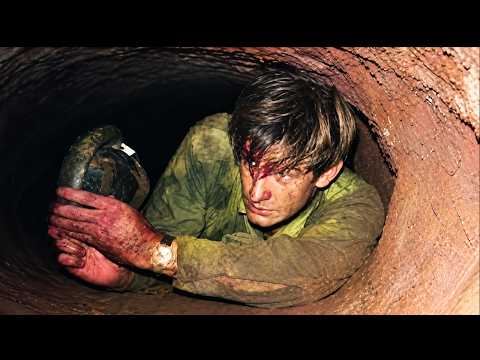
The Viet Cong couldn’t understand it. Every time they moved down a hidden trail, the Australians were already there. Waiting. Hiding in the bushes with weapons ready and eyes wide open. It made no sense. The generals questioned their spies, their best scouts, their sharpest thinkers. No one had an answer. The Australians seemed to know everything—the routes, the timing, the numbers, the cargo. It was as if they could see the future.
But they couldn’t. The real reason was far simpler and far more terrifying for the Viet Cong. To understand this story, you need to grasp the big problem. In early 1966, the American way of fighting in Vietnam wasn’t working at all. Americans used large groups of soldiers—40 or 50 men walking in long files, moving fast through the jungle, covering 4 to 8 miles a day. They talked on radios every 30 minutes. They used helicopters that made noise you could hear from miles away. They fired big guns before they arrived, warning everyone in the area that they were coming.
The Viet Cong heard them long before they got close. The enemy had plenty of time to hide or flee. The Americans crashed through the jungle like a loud storm. Then the jungle went quiet again. And the Viet Cong were already gone. The Americans found empty camps and cold cooking fires. They counted a few enemy dead and called it a victory, but the Viet Cong controlled the battle. They chose when to attack and when to vanish among the trees. The large American patrols were too loud and too slow to chase an enemy that moved like shadows.
Now imagine the jungle itself. Phuoc Tuy Province in the monsoon season was unbearable. The temperature soared above 35°C every day. The air was so humid it felt like breathing warm water. Rain fell so hard you couldn’t see more than a few feet ahead. The ground was covered in deep mud, rotting leaves, and sharp vines that snagged your clothes and cut your skin. Leeches climbed up your legs in the dark. Mosquitoes bit your face, hands, and neck. Millions of cicadas screamed in the trees day and night without stopping. The smell was thick and sweet, like old fruit left too long under the hot sun. Your uniform was always wet. Your heavy pack weighed 27 kilograms and pressed on your tired shoulders until you felt the burning pain.
Into this green nightmare came the Australians. In early 1966, the 1st Australian Task Force arrived and established Nui Dat base in the heart of enemy territory. It was a bold move. The Viet Cong controlled this area. They had deep tunnels underground and hidden camps in the hills. The main enemy force was the 5th Viet Cong Division, including the 274th and 275th Regiments and the local D445 Battalion. Together they had thousands of fighters who knew every trail and hiding place in the entire province.
But the Australians brought something completely different. Their force included small teams from the Australian SAS. These elite soldiers operated in groups of only five. They had learned jungle fighting in previous wars in Malaya and Borneo. They spent 12 long years tracking hidden enemies through dense forests. They knew how to read every small sign the jungle left behind. A bent blade of grass told them which way someone had gone. A wet footprint told them how long ago someone had passed. A torn spiderweb at shoulder height told them a man had walked through that exact spot.
These small teams didn’t crash through the jungle. They slipped through it so quietly you’d never know they were there. They moved so slowly they might cover only one mile in a whole day. They made no sound at all. They used hand signals instead of words. They ate cold food because the smell of cooking smoke could give them away. At first, Australian commanders tried to fight the American way. They sent large patrols into the jungle. They walked fast and made lots of noise. And just like the Americans, they found nothing at all. The Viet Cong simply stepped off the trail and watched them pass. The large patrols were completely useless. They wasted fuel, energy, and time. The enemy laughed at them from the shadows.
Then something changed. The SAS teams began going out alone, deep into the jungle. They disappeared for two weeks at a time. They came back dirty, thin, and covered in leech bites. Often they hadn’t fired a single shot. To the senior commanders, this looked like failure. But the SAS teams brought back something far more valuable than enemy bodies. They brought knowledge. They drew detailed maps of enemy trails. They counted how many Viet Cong fighters used each path and at what time of day. They found secret supply caches filled with rice and weapons. They learned the patterns and rhythm of the enemy’s daily life.
Then, on a quiet morning deep in the jungle, an SAS team sat hidden beside a trail they had watched for three long days. They waited in complete silence as cold rain fell on their heads and insects crawled on their skin. When a group of Viet Cong soldiers walked into their trap, the Australians opened fire. The fight lasted less than 10 seconds. When it was over, the Australians vanished back into the green darkness as if they had never been there. Viet Cong commanders stared at their maps in total confusion. How did the Australians always know exactly where to be? How did they always choose the perfect ambush site?
That burning question would haunt them for the rest of the war. The big idea behind the Australian SAS was so simple it seemed wrong. They didn’t try to find the enemy. Instead, they tried to find where the enemy walked. That small shift in thinking changed everything. While American soldiers marched through the jungle looking for a fight, Australian SAS teams sat perfectly still and watched the ground. They studied the soil, the leaves, the broken twigs. They read the jungle floor the way you might read a story in a book. Every small mark on the ground told them something important.
Here’s how it worked. A five-man SAS patrol flew into the jungle by helicopter, but they didn’t land at just one spot. The helicopter touched down at three or four different places to fool the enemy. The Viet Cong might see the chopper and think they knew where the soldiers had landed, but the real landing zone was a secret. Once on the ground, the five men headed for the thickest parts of the forest and began walking very, very slowly. How slowly? An American patrol might cover 4 to 6 miles in a day. An Australian SAS team covered one mile. Sometimes they advanced only half a mile in a full day of walking.
They took tiny steps. They placed their boots carefully on rocks and tree roots because those made no sound. They never walked on dry leaves because they crackled under their weight. The last man in the file walked backwards to brush away their footprints with a branch. They didn’t use large knives to cut through bushes because the sound of chopping carried far in the quiet jungle. If a creeping vine blocked their path, they pushed it gently and let it swing back into place behind them. They stayed in the jungle for 14 days at a time, sometimes up to 21 days. Imagine living in a hot, wet, insect-filled forest for three full weeks with only four other people.
They carried all their food on their backs. They ate cold canned meat and dry biscuits because they couldn’t light a fire. Even a small cooking fire sends smoke above the trees where enemy watchers could see it. They couldn’t even use small fuel tablets to heat their food because the smell of burning carried on the wind. So they ate cold, wet, tasteless food for weeks. They lost weight fast. A strong soldier might drop 10 pounds in a single patrol. Their clothes rotted on their bodies from constant sweat and rain.
Noise was their greatest enemy. The Americans checked their radios every 30 minutes with loud voice calls. Australian SAS teams rarely used radios at all. When they did, they whispered into the handset and kept their messages very short. They talked to each other using hand signals. A flat hand raised in the air meant stop and freeze in place. Two fingers pointing forward meant move ahead. A closed fist meant danger nearby. They practiced these signals so much they became automatic. They could communicate in total silence even on the darkest nights.
The hardest thing these soldiers had to learn was how to hold back their urge to fight. This might sound strange, but it’s true. In the American army, soldiers were rewarded for killing the enemy. The more you killed, the better your reports looked. Commanders wanted big body counts. They wanted field operations. They wanted firefights. But for the SAS, contact with the enemy was a sign of failure. If the enemy saw you, you had destroyed your mission. Your job was to watch, listen, and learn—not to shoot.
A patrol that returned after two weeks without a single firefight, but with a notebook full of trail maps and enemy movement schedules, was considered a huge success. A patrol that got into a noisy fight, killed five enemies, but revealed its position, was a failure. This was the exact opposite of what most soldiers believed, and it seemed very wrong to many.
The tracking skills the SAS used came from years of practice in earlier jungle wars. They learned from Aboriginal trackers in Australia who could follow a person across a barren desert by reading the smallest marks in the sand. In the jungle, the signs were different, but the idea was the same. A line of crushed ants on the ground meant someone had passed recently. Grass bent in the wrong direction told them which way a person was heading. The dampness of a footprint told them how many hours ago it was left. A pile of human waste near a stream told them how many people were in the group. Tiny grains of rice dropped on the trail told them the enemy was carrying food supplies.
All these small clues formed a clear picture. The SAS teams built a map in their minds of how the Viet Cong moved through the jungle, when they moved, and how many there were. When they finally decided to set an ambush, they chose the perfect spot based on all this careful observation. They found places where two or three trails met near a stream. They knew the enemy stopped at these points to rest and fill their water bottles. The SAS team hid in the bushes and waited. Sometimes they waited for two full days without moving. They lay flat on the wet ground with insects crawling on their faces and raindrops running down their necks. They barely slept. They barely moved. They just watched and waited with their fingers on their triggers.
The results were shocking. When the ambush finally came, it was over in seconds. A five-man SAS team might kill 10 or 15 Viet Cong soldiers in less than 15 seconds of firing. The Australians took almost no casualties because they always struck first from hidden positions at very close range. Their kill ratio was extraordinary. For every Australian SAS soldier wounded or killed, they killed or wounded hundreds of enemy fighters. Some estimates suggest the ratio reached 500 to 1 throughout the war.
At first, the Viet Cong didn’t take the Australians seriously. They thought the small patrols were weak and easy to avoid, just like the noisy American columns. But then their mail runners began disappearing on trails that had been safe for years. Their supply groups fell into deadly traps at locations they thought were secret. Their scouts went out to check the paths and never came back.
Viet Cong commanders were confused, then angry, then truly afraid. They began calling the Australians “Ma Rung”—ghosts of the jungle. They believed the ghosts could see everything and hide anywhere. They searched their own ranks for spies, but there were no spies. The Australians simply read the jungle better than anyone else.
Back at the Australian base, some commanders still didn’t understand. They looked at SAS reports showing no contact and no kills and shook their heads. They wanted big battles and big numbers. They didn’t understand that the real victory was invisible. It was a map full of enemy trail markings that would save dozens of lives in the weeks ahead.
The SAS soldiers knew the truth even when their bosses didn’t. They knew that patience was the deadliest weapon in the jungle, far more dangerous than any rifle or bomb. And deep in the green darkness of Phuoc Tuy, the Viet Cong were learning that truth too, slowly, one deadly ambush at a time.
So what do you think—could a handful of silent, patient soldiers ever truly win a war that politics had already decided to lose?
Report this article
Select a reason for reporting:






