In the freezing skies over Europe, American bomber crews faced a relentless onslaught from German fighters. Every mission was a deadly dance with interceptors, and gunners were desperate for any advantage. In late 1944, a new weapon was introduced: the M21 headlight tracer, a bullet designed to burn three times brighter than standard tracers. The hope was that its blinding glare would terrify enemy pilots, causing them to break off attacks earlier. But did it work, or was it just hype?
The M21 was a modified .50 caliber round, filled entirely with igniter compound instead of the usual tracer mix. When fired, it created a brilliant streak of light visible from both front and rear. Bomber gunners loved it, and initial reports claimed German pilots were indeed breaking away sooner. But the full story is more complicated.
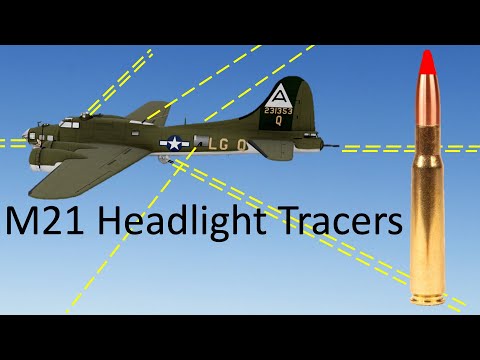
To understand the M21, we must first look at why tracers were removed from bomber ammo belts in the first place. In late 1943, the Eighth Air Force eliminated tracers from most bomber ammunition mixes. The reason? Tracers were meant to help gunners aim, but studies showed they actually hindered accuracy. Gunners became too focused on the tracer’s path, leading to poor marksmanship. Without tracers, accuracy improved. However, enemy fighters grew more aggressive, pressing their attacks closer than before. The lack of tracers seemed to remove a psychological deterrent.
The M21 was the solution: a tracer so bright it would restore the fear factor without sacrificing accuracy. The bullet’s compound, known as I-276, burned intensely for 550 yards, three times brighter than the standard M1 tracer. Its ballistic performance matched the M1, but its psychological impact was expected to be far greater.
Field reports from late 1944 were enthusiastic. Gunners reported that German fighters broke off attacks sooner when faced with the dazzling headlight tracers. The 20th Bomber Command ordered 50,000 rounds for testing in B-29s, and widespread adoption was planned. But there was a catch: gunners who weren’t trained in tracer usage became confused, using the tracer as their sole aiming point—the very problem that led to tracers being removed earlier.
Then came the postwar revelations. Interviews with captured German pilots painted a different picture. They admitted that tracers, including the headlight variety, actually helped them identify weak points in bomber formations. Instead of being terrified, they used the tracers to plan their attacks more effectively. The fear factor was largely a myth.
So the M21 headlight tracer was discontinued after the war. It was a clever idea, but in the end, it didn’t live up to the hype. The story of the headlight tracer is a fascinating chapter in aerial warfare, a tale of innovation, psychology, and the gap between expectation and reality.
Yet the M21’s failure was not simply a matter of German pilots calling the gunners’ bluff. Declassified documents reveal a deeper problem: the tracer’s brilliance cut both ways. While it was designed to intimidate interceptors approaching from the front, it also served as a beacon for any fighter pilot trying to locate the bomber stream in poor visibility.
One 1945 report from the 20th Air Force noted that headlight tracers, when fired in volume, created a “veritable curtain of light” that could silhouette the very bombers the gunners were trying to protect. In low-light conditions, the tracers acted like flares, illuminating the formation for miles around.
This unintended consequence was particularly troubling for B-29 crews operating over Japan, where night missions and bad weather were common. A gunner who fired a long burst of M21s might as well have lit a flare over his aircraft.
There was another factor the wartime reports glossed over: the physical toll on the gunners themselves. The M21’s intense flash, especially when fired from the tight confines of a B-17 or B-24 turret, caused temporary night blindness. Gunners reported seeing spots for several seconds after firing, leaving them unable to track incoming fighters during critical moments.
Training manuals from early 1945 began to address this, recommending that gunners fire headlight tracers in short, controlled bursts rather than sustained streams. But in the chaos of combat, such discipline was hard to maintain. Veteran gunners often ignored the guidance, reverting to long bursts out of fear or habit.
Meanwhile, the Luftwaffe adapted. By early 1945, German fighter units were instructing pilots to use the tracer trails as aiming references, adjusting their deflection shots based on the visible bullet paths. What was meant to scatter the attackers had become a targeting aid for them.
The M21 program quietly faded, but its legacy lingered in postwar ammunition research. The idea of using light as a psychological weapon didn’t die—it simply evolved, reappearing in later studies of tracer dynamics and even in modern efforts to develop non-lethal deterrents for aircraft defense.
The archival trail, however, does not end with the war. A 1946 Office of Scientific Research document titled Analytical Studies in Aerial Warfare laid out the gunner’s three objectives in stark terms: prevent your bomber from being shot down, keep other bombers in the formation from being attacked, and destroy enemy aircraft with your defensive guns. Judged against those goals, the M21 was a paradox—a round that may have helped with the first two while quietly undermining the third.
Postwar surveys added a final twist. When researchers asked gunners whether they wanted tracers back in their belts, a majority said yes. Without tracers, many gunners simply could not convince themselves their fire was striking anything at all. The psychological crutch the Eighth Air Force had tried to remove in 1943 was still there, buried under improved accuracy statistics.
That finding helps explain why the headlight tracer felt so promising in the field and so disappointing in the debrief. It was never really about German fear. It was about American confidence—gunners who saw their bullets burn bright believed they were fighting back, and that belief shaped how aggressively they defended their formations.
By 1945 the Luftwaffe’s own instructions had turned the M21’s brilliance against its makers, and captured pilots later admitted the glare was far less frightening than bomber crews had claimed. The headlight tracer was discontinued, a victim of its own light. Yet the lessons endured in tracer dynamics studies and in later attempts to weaponize perception itself.
In the end, the M21 was a brilliant solution to a problem that was only half real. It lit up the sky, boosted morale, and gave postwar analysts a case study in the gap between what gunners felt and what enemy pilots actually saw. The bullet burned three times brighter than any tracer before it—and still could not burn away the fog of war.
So here is the question for you: if you were a bomber gunner in 1944, would you rather have a tracer that made you feel deadly, or no tracer at all and the cold discipline of pure marksmanship? Let us know in the comments below.
Report this article
Select a reason for reporting:






