In the predawn darkness of September 15, 1942, a single Japanese submarine commander made a decision that would haunt the U.S. Navy for decades. His boat, the I-19, slipped through the escort screen southeast of Guadalcanal and unleashed a spread of six oxygen-powered torpedoes. Three slammed into the carrier USS Wasp, turning her flight deck into an inferno. The remaining torpedoes ran on—one crippled the battleship North Carolina, another doomed the destroyer O’Brien. One boat. One spread. Three American warships hit. It was the kind of devastating strike the Imperial Japanese Navy had trained for, dreamed of, and built its entire submarine force to achieve.
And yet, just three years later, that same force would be annihilated—128 boats lost out of 174, most with all hands, their crews never heard from again. How did the hunters become the hunted? The answer lies not in courage or technology, but in a single, fatal idea that Japan refused to abandon.
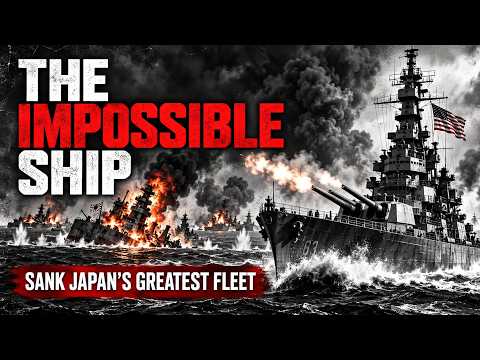
In December 1941, Japan possessed one of the most powerful submarine forces on Earth. Its I-class boats were marvels of engineering: some displaced over 2,000 tons, could cruise 14,000 miles without refueling, and carried a floatplane folded inside a watertight hangar. Their Type 95 torpedo was the best in the world—faster, longer-ranged, and nearly wake-less compared to American models. The crews were elite volunteers, trained for years in the art of hunting warships.
But they were built for the wrong war.
Japan’s naval strategists had spent two decades preparing for a single, decisive fleet battle—a rematch of Tsushima, where Admiral Togo had annihilated the Russian fleet in 1905. Submarines were to scout ahead, shadow the American battle fleet, and whittle it down with torpedo attacks on battleships and carriers. Merchant ships? They were beneath contempt—secondary targets not worth the torpedoes of a warship built to fight warships.
The Americans, by contrast, had no such illusions. Their submarines, though initially plagued by faulty torpedoes, were sent to do the one thing Japan ignored: strangle the enemy’s economy. By 1944, American boats were sinking Japanese tankers, transports, and cargo ships in staggering numbers, cutting off oil from the East Indies and starving island garrisons.
Meanwhile, Japan’s submarines were sent on missions that squandered their potential. They ran supplies to cut-off garrisons, surfacing nightly at predictable locations. They carried human torpedoes—Kaitens—into hopeless attacks. And all the while, American codebreakers and radio direction finders were reading their orders, plotting their patrol lines, and sending destroyer escorts to wait for them.
By 1944, the hunter had become the hunted.
The same boats that had sunk Wasp and damaged North Carolina were picked off one by one. I-19, the hero of Guadalcanal, was depth-charged in November 1943. I-175, which sank the escort carrier Liscome Bay, was hunted down in February 1944. In a single year, Japan lost over 50 submarines—more than its shipyards could ever replace.
The final irony came on July 30, 1945. The submarine I-58 sank the heavy cruiser USS Indianapolis—the ship that had just delivered the components of the atomic bomb to Tinian. It was the perfect target, the kind Japan’s submariners had trained their whole lives to destroy. But it came too late. The war was already lost.
When the surrender came, the Americans towed the last 24 Japanese submarines out to sea and sank them in an operation called “Road’s End.” Among them was I-400, the largest submarine of the war, designed to bomb the Panama Canal. She never fired a shot in anger.
Japan’s submarine force failed not because its men were cowardly or its technology inferior, but because it was sent to fight the wrong war. The Americans understood that the Pacific was a war of logistics—of oil, rubber, and supply lines. Japan’s submarines were built to hunt warships; America’s were built to sink everything. That difference, more than any battle, decided the war beneath the waves.
But to understand why that difference proved so decisive, you have to go back further—to a treaty signed in Washington in 1922, and to a room full of Japanese officers who saw it as an insult.
The Washington Naval Treaty capped Japan’s battleship tonnage at roughly sixty percent of America’s. To many in the Imperial Japanese Navy, that ratio was a humiliation and a death sentence. If war came, the American fleet would be larger. Japan would have to make up the difference somehow.
The answer they devised was attrition. The Americans would have to sail across the Pacific to relieve the Philippines—weeks of open ocean, thousands of miles from home. During that voyage, Japanese submarines, aircraft, and night-fighting destroyers would wear the American fleet down, whittling it to a size the Japanese battle fleet could crush in a single, decisive clash.
They even had a name for it: the decisive fleet battle.
At Tsushima in 1905, Admiral Togo had destroyed a Russian fleet that had sailed halfway around the world. A generation of Japanese officers grew up believing the next great naval war would end the same way—one battle, one afternoon, one annihilating victory. Every branch of the Navy, submarines included, was built to make that battle happen on Japan’s terms.
So the submarines were designed accordingly. They had to be fast enough on the surface to keep pace with a battle fleet. They needed enormous range to cross the Pacific and get ahead of the Americans. They carried powerful torpedoes and, in some cases, floatplanes to scout beyond the horizon. Their crews trained relentlessly—shadowing battleships, practicing torpedo spreads on carriers, again and again until they could do it in their sleep.
What they almost never practiced was attacking convoys.
Here was the fatal blind spot. Japan’s naval leadership believed wars would be decided by fleets, not by the slow, unglamorous work of cutting supply lines. The cargo ships, tankers, and transports that fed an enemy’s armies and fueled its factories were not the heart of the matter. The battle fleet was.
It was a decision nobody recorded as important at the time. It was simply the way the Navy thought about war.
Japan had been building submarines almost as long as anyone. Its first boats were bought from the United States in 1904 and 1905, during the war with Russia. After the First World War, Japan received several German U-boats as part of its share of the spoils, and German engineers went to work in Japanese shipyards. Their experience shaped the large, long-range boats Japan built through the 1920s and 1930s.
But Japan took the German designs without taking the German idea.
The Germans had used their U-boats mainly against merchant shipping—and had nearly starved Britain into defeat. Japan looked at that lesson and set it aside. In the Japanese Navy, the submarine would serve the battle fleet. That was the doctrine, and it was never seriously questioned.
What nobody in Tokyo understood yet was this: the United States would never send its fleet across the Pacific in the way Japan expected. It would come instead as an endless stream of ships—transports, tankers, cargo vessels, warships—island by island, supplied across thousands of miles of ocean.
The supply ships were the war. And Japan’s submarines had been built and trained to ignore them.
When the war came, the boats built for that plan were formidable. In December 1941, the Imperial Japanese Navy had roughly 63 submarines in commission, and more were on the ways. The largest, the I-class fleet boats, displaced more than 2,000 tons on the surface—far bigger than the German U-boats. The fastest could make better than 23 knots on the surface, fast enough to keep pace with a battle line. The longest-legged could cruise over 14,000 miles without refueling.
Some carried a small floatplane folded inside a watertight deck hangar and launched by catapult. Others were built to carry a two-man midget submarine strapped to their hull. Still others were command boats, packed with extra radio gear to lead groups of submarines against an enemy fleet. Beside the I-boats were the smaller RO boats, medium-range submarines for coastal and regional work.
And every fleet boat carried the Type 95 torpedo—the submarine version of the oxygen-powered weapon that Japanese destroyers and cruisers also carried. It ran faster and farther than any Allied torpedo, left almost no trail of bubbles on the surface, and carried a warhead heavy enough to open the side of a carrier or break a destroyer in two. Unlike the American torpedo of 1942, it worked.
The crews were volunteers, carefully selected and trained for years. Submarine service in the Japanese Navy was demanding and dangerous, and its men took pride in it. Life aboard a fleet boat was hard even by the standards of the time. The boats were large but packed with fuel, torpedoes, stores, and machinery, and the crew lived wherever there was space. Patrols could last two months or more. Fresh food ran out in the first weeks. The air grew foul when the boat stayed submerged for long periods. In the tropics, the heat inside the hull became almost unbearable.
The men endured it because they believed they were the Navy’s spearhead—the force that would find the American fleet and strike it before the great battle.
The first mission of the war showed both the strength of the force and the limits of the plan. For the attack on Pearl Harbor, the Japanese Navy sent around 25 fleet submarines into the waters around Hawaii. Five of them carried midget submarines to be launched into the harbor itself. The fleet boats were to wait outside, sink any American warships that tried to escape, and report on the American fleet.
It did not work as planned. None of the midgets did significant damage, and all five were lost. The fleet submarines outside the harbor sank no American warships. In the days after the attack, aircraft from the carrier Enterprise found and sank the submarine I-70 north of Oahu—the first Japanese warship sunk by American aircraft in the war.
But over the following year, Japan’s submarines struck hard. In January 1942, a Japanese submarine torpedoed the carrier Saratoga southwest of Hawaii and put her out of action for months. In February, another surfaced off the coast of California and shelled an oil installation near Santa Barbara—the first attack on the American mainland in the war. In June, one shelled a fort at the mouth of the Columbia River in Oregon. In September, a floatplane launched from a submarine dropped incendiary bombs on the forests of Oregon.
At Midway, a Japanese submarine found the damaged carrier Yorktown under tow, sank the destroyer Hammann alongside her, and finished Yorktown off. In the second half of 1942, the submarines had their greatest months. In August, a submarine torpedoed Saratoga again, and she was out of action for another three months. In September, a single spread of six torpedoes from I-19 sank the carrier Wasp, damaged the battleship North Carolina, and hit the destroyer O’Brien, which later broke apart. In November, a submarine sank the damaged light cruiser Juneau in seconds.
By the end of 1942, Japanese submarines had sunk or finished off two American fleet carriers, damaged a third twice, damaged a battleship, and sunk a cruiser and several destroyers.
The attack on Wasp showed the Japanese submarine force at its best. On September 15, 1942, southeast of Guadalcanal, I-19 found an American carrier group covering a convoy of reinforcements. Her commander worked his boat into position inside the screen and fired a spread of six torpedoes. Three struck Wasp, whose hangar was full of fueled aircraft. Fires spread through her in minutes. The other torpedoes ran on for miles into a second American task group, where one struck North Carolina and another the destroyer O’Brien.
One boat, one spread, three ships hit. It was exactly the kind of attack the Japanese Navy had trained its submarines to make for twenty years. No other submarine force in the world had a record against enemy capital ships to match it.
The Japanese submarine force reached far beyond the Pacific Islands as well. On the night of May 31, 1942, midget submarines launched from larger boats entered Sydney Harbor in Australia. One of their torpedoes struck the depot ship HMAS Kuttabul, which was being used as accommodation, and killed 21 sailors. The same night on the other side of the Indian Ocean, a submarine attacked the British anchorage at Diego Suarez in Madagascar, damaging the battleship HMS Ramillies and sinking a tanker.
Japanese submarines operated off the coast of East Africa, in the Arabian Sea, and along the sea lanes to India. They were bold, far-reaching operations—but they were raids. They were not a campaign to cut the enemy’s lifelines.
On the American side in 1942, there was very little to stop them. The United States Navy had entered the war expecting to fight a battle fleet, not a submarine force. Its destroyers were few and in constant demand—screening carriers, escorting convoys, fighting night battles off Guadalcanal. Their sonar was adequate, but their operators were often inexperienced. Anti-submarine weapons were mainly depth charges dropped from the stern of a ship that had to pass over a submarine to attack it.
The Navy’s best anti-submarine forces were fighting the U-boats in the Atlantic, where the crisis was greater. The Pacific got what was left.
By 1945, the arithmetic was merciless. Of roughly 174 submarines commissioned, 128 were gone—most with all hands. The men who had sunk Wasp and finished Yorktown now vanished without a trace, their families told only that the boat was missing.
Japan’s submarines had been built to hunt warships. America’s were built to sink everything. That difference decided the war beneath the waves.
On April 1, 1946, the Americans towed 24 surrendered submarines—including the giant I-400—out to sea and sank them in Operation Road’s End. The hunters had become the hunted, and the sea kept its silence.
If Japan had sent those same boats against the supply lines in 1942, when they were most vulnerable, could the Pacific war have ended differently?
Report this article
Select a reason for reporting:






